
2 Piece Sleeper Sectional with Chaise: The Complete Buying Guide
Everything you need to choose a two-piece sleeper sectional with a chaise — sizing, mattress types, modular flexibility, upholstery choices, and layout planning for a living room that hosts guests in comfort.
Why a 2 Piece Sleeper Sectional with Chaise Works So Well
A two-piece sleeper sectional with a chaise combines three highly practical functions in a single footprint: everyday lounge seating, a dedicated reclining spot for one person, and a fold-out sleeping surface for overnight guests. Because the sectional is delivered in two modular pieces, it is easier to move through doorways, stairwells, and narrow hallways than a single monolithic sofa — a detail that matters in apartments and townhomes.
This configuration is especially popular with households that host occasionally but do not want a permanent guest bedroom. The chaise section adds an extended lounging area during the day, while the sleeper mechanism converts the main seating section into a bed at night. The result is a living room that stays livable while quietly doubling as a guest-ready space.
Sizing and Layout: Getting the Footprint Right
The most common mistake buyers make with a sectional is underestimating how much floor space the chaise extension consumes. A chaise projects forward from the main seating line, so measure the total depth of the sectional and compare it against your room's walkway requirements. As a working rule, leave at least 30 to 36 inches of clear walking space between the chaise edge and any adjacent furniture, doorway, or wall.
When the sleeper is deployed, the bed extends further into the room. Measure the open footprint before committing, and check that the fold-out path is not blocked by a coffee table, media console, or rug edge that could catch the mechanism. Rooms with a natural focal point — a fireplace, television wall, or large window — usually accommodate a chaise sectional best when the chaise sits on the open side of the room rather than against a traffic path.
Space Planning Checklist
- Measure the total width of the two pieces joined together, plus the chaise depth.
- Confirm the sleeper's open extension length and the clearance needed at the foot of the bed.
- Check doorway widths, elevator dimensions, and stair turns before ordering.
- Decide whether the chaise should face left or right relative to the main seating area.
- Plan outlet and lighting access so the sleeper area remains usable at night.
For tighter rooms, compare this configuration against a 2 piece sectional with chaise and ottoman, which swaps the fold-out mechanism for a movable ottoman and can suit households that rarely host overnight guests.
Sleeper Mechanisms: What to Compare
Sleeper sectionals generally use one of three mechanisms. Each has a distinct trade-off between comfort, storage, and long-term durability. Understanding these differences is the single most useful piece of research you can do before buying.
| Mechanism | How It Works | Best For | Tier Notes |
|---|---|---|---|
| Fold-out / pull-out frame | A metal frame unfolds from beneath the seat to support a thin mattress. | Occasional guests; rooms where the sofa is used mostly for seating. | Entry-level and mid-range models vary widely in frame gauge; reinforced frames last longer. |
| Click-clack / futon style | The backrest folds flat to create a sleeping surface. | Multi-purpose rooms, casual lounging, lighter use. | Simple and durable mechanism, but flatter sleeping surface. |
| Inflatable air mattress system | A built-in air mattress inflates inside the sofa cavity. | Frequent hosting where guest comfort is the priority. | Mid-range to premium; mattress quality and pump reliability matter most. |
Mechanism smoothness is one of the clearest differentiators between tiers. Mid-range models typically offer a more consistent glide and better weight distribution than entry-level frames, while premium and luxury models often add reinforced steel, quieter hinges, and a locking position for safety. If the sleeper will be opened frequently, prioritize mechanism quality over decorative details.
If you prefer a dedicated bed-style conversion rather than a sectional, a 2 seater couch pull out bed is a simpler alternative for smaller rooms, while a 3 piece sleeper sectional with chaise adds a third module for larger households.
Mattress and Cushion Comfort
The sleeping experience of a sleeper sectional depends on the mattress thickness, support layer, and how evenly the frame supports it. Thinner mattresses are lighter and easier to fold but offer less pressure relief; thicker mattresses sleep better but require a sturdier mechanism. Look for models that describe the mattress construction — foam density, fiber fill, or coil support — rather than only the mattress thickness.
Seat cushions deserve equal attention. High-resilience foam wrapped in fiber tends to hold shape better than low-density foam, and removable, reversible cushions extend the usable life of the sofa. For households with pets or children, a performance fabric sofa construction is worth considering, since these fabrics are engineered for easier cleaning and greater abrasion resistance.
Upholstery Choices for a Sleeper Sectional
Because a sleeper sectional is used more intensively than a standard sofa — seating by day, sleeping by night — the upholstery needs to handle frequent contact. Leather and faux leather are easy to wipe clean and resist odors, making them a strong match for guest-heavy homes. Fabric upholstery offers more color and texture variety, and performance fabrics now close much of the durability gap.
- Leather: durable, easy to clean, develops patina; compare against a 2 piece leather couch if you prefer a non-sleeper configuration.
- Performance fabric: stain-resistant and family-friendly; ideal for high-traffic living rooms.
- Velvet: visually rich and soft, but requires more careful maintenance; see our velvet sofa guide.
- Standard woven fabric: broad style range, but check the rub count and cleaning code.
Whichever upholstery you choose, confirm the cleaning code and whether cushion covers are removable. Removable covers are a meaningful long-term advantage for a sofa that doubles as a bed.
Chaise Orientation and Modular Flexibility
Two-piece sleeper sectionals are usually offered in left-facing and right-facing chaise configurations. The correct choice depends on the room's traffic flow and where the television or focal point sits. As a rule, place the chaise on the side where you want an open lounging lane, and keep the taller backrest against the wall or room divider.
Modular construction also affects future flexibility. Some two-piece models can be separated and used as independent seating, which is useful during rearranging or moving. Others lock together with brackets for a more rigid, seamless look. Decide which behavior suits your household: a rigid connection feels more like a single sofa, while a modular connection is easier to reconfigure.
If you are comparing chaise layouts, review the 2 piece sectional with left chaise configuration to see how orientation changes the usable floor area.
Quality Tiers: How to Read the Market
Sleeper sectionals are sold across a wide quality spectrum. Rather than comparing numbers, compare construction signals. The table below groups the market into tiers and highlights what typically distinguishes each one.
| Tier | Typical Construction | Best For |
|---|---|---|
| Entry-level | Lighter frame gauge, basic foam, thinner sleeper mattress. | Guest rooms, occasional use, first apartments. |
| Mid-range | Reinforced frame, higher-density foam, smoother mechanism. | Primary living room used daily with occasional hosting. |
| Premium | Hardwood frame, high-resilience cushions, quality sleeper system, performance upholstery. | Frequent hosting and long-term daily use. |
| Luxury | Kiln-dried hardwood, tailored cushions, premium mattress system, detailed upholstery finishing. | High-use living rooms where comfort and longevity are priorities. |
Entry-level models can be a sensible choice for a spare room, but a mid-range or premium sleeper sectional is usually the better long-term investment for a room that is used every day. Focus on frame material, cushion density, and mechanism quality — these three factors predict durability more reliably than surface styling.
Styling a Sleeper Sectional
A sleeper sectional reads as a large, low visual mass, so styling should lighten the composition. Use a small number of larger throw pillows rather than many small ones, and add a throw blanket folded over the chaise back to signal the lounging function. A area rug that extends slightly beyond the sectional footprint visually anchors the seating group without making the room feel smaller.
Keep the sleeper's fold-out path clear. Choose a coffee table that can be moved easily, or use a pair of end tables and a storage ottoman instead of a fixed central table. This preserves the convertible function while still giving the room a finished, designed look.
Frequently Asked Questions
Is a 2 piece sleeper sectional with chaise good for everyday sleeping?
It can work for regular guests, but the mattress quality matters. Models with a built-in air mattress or a thicker foam mattress sleep closer to a standard bed than thin fold-out mattresses. For nightly use, prioritize premium mattress systems.
How much floor space does the sleeper need when open?
Plan for the sectional's depth plus the sleeper extension, and keep at least 24 to 30 inches of clearance at the foot of the bed for safe entry and exit. Measure the open footprint before purchasing.
Should the chaise face left or right?
Choose the orientation that keeps the chaise out of the main walking path and places the backrest against a wall or divider. If the room has a clear focal point, put the chaise on the open side.
What upholstery is best for a sleeper sectional?
Performance fabric and leather are the most practical choices for frequent use. Both resist stains and odors better than standard woven fabrics and are easier to maintain.
Can the two pieces be used separately?
Some modular models allow the pieces to be separated and used as independent seating, while others are designed to stay connected. Check the connection system before buying if flexibility matters to you.
Recommended 2 Piece Sleeper Sectionals with Chaise
⚠️ AFFILIATE DISCLOSURE: This website contains affiliate links. As an affiliate Associate, we earn from qualifying purchases. If you make a purchase through these links, we may receive a small commission at no additional cost to you. Read our full affiliate policy.

Signature Design by Ashley 2-Piece L-Shaped Sectional Couch with Chaise | Textured 97% polyester and 3% nylon microfiber, Medium plush sectional sofa with chaise for living rooms, Marleton
Check price on Amazon
Howjoe 100" Sleeper Sofa Couch, Sectional Sofa Bed, Dark Grey | 100 inch 2 in 1 Pull Out Couch with Double Storage Chaise, Sectional Sleeper Sofa Bed with Side Pocket for Living Room
Check price on Amazon
ERYE L-Shaped Pull Out Sleeper Sofa Bed, Modern Chenille Upholstered Button Tufted Corner Reversible Sleeper Sectional Sofa Couch with Storage Chaise, Drop-Down Table, Cup Holders and Charging Ports
Check price on Amazon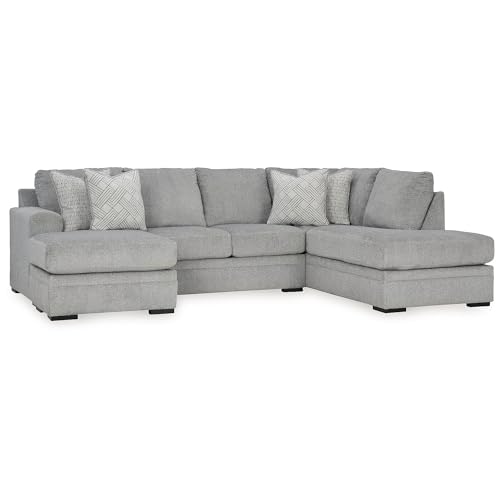
Signature Design by Ashley Gray 2-Piece Sectional with Chaise, Casselbury | Sectional couches for living room, 124-inch U-shape layout, Cement gray 100% polyester velvet, Platform foundation system
Check price on Amazon
JOCISLAND 104" Sofa Bed, Sectional Sleeper Sofa with Pull Out Bed-Gray | U Shaped 7 Seat Sectional Couches for Living Room, Sleeper Sofa with Storage, Side Pockets & Plush Armrest Pillow
Check price on Amazon
Signature Design by Ashley Altari Full Size Sleeper Sectional, Alloy Gray | 2-piece layout with corner chaise, Full size memory foam mattress, Sag-resistant platform foundation, Alloy gray chenille
Check price on Amazon
Signature Design by Ashley Sectional Sleeper Sofa Couch | Pebble beige chenille pull out sofa bed steel frame, Anti-sag platform foundation, Full memory foam mattress, Mahoney Series
Check price on Amazon