
60 Inch Loveseat Recliner for RV: The Complete Buyer's Guide
Upgrade your camper's comfort with a space-saving reclining loveseat that actually fits. Learn how to measure, choose a mechanism, and install it safely.
A 60 inch loveseat recliner is one of the most practical upgrades you can make to an RV living area. It replaces a flat, tired jackknife sofa with two genuinely comfortable reclining seats, yet stays narrow enough to fit in most Class A, Class C, and travel trailer slide-outs. The catch is that an RV is not a living room. Depth clearance, door width, weight, and secure mounting all matter far more than they do at home. This guide walks through each of those constraints so you can buy with confidence.
Why 60 Inches Is the Sweet Spot for RV Seating
Sixty inches is a common width because it seats two adults comfortably while leaving enough room for a walkway or slide-out edge. Larger four person couches and sectional couches rarely fit an RV slide without consuming the entire floor. A 60 inch frame typically splits the difference: two reclining positions, a center console in some models, and enough remaining floor space for a small table or clear passage to the galley.
It helps to think of this size as the RV equivalent of a compact standard sofa. If your slide-out measures 70 to 75 inches across, a 60 inch loveseat leaves useful margin on each side. If your space is closer to 50 inches, a traditional loveseat without reclining mechanisms may be the safer choice.
Measuring Your RV Before You Buy
Measure three things before anything else: the slide-out width, the depth from the wall to the nearest opposing obstacle, and the entry door. Width is the easiest — the loveseat's listed width should leave at least two to three inches of clearance. Depth is where most buyers get surprised. In a fully reclined position, a standard recliner can need 18 to 24 inches from the wall. That number does not work in most RVs.
Wall clearance is the reason wall-hugger mechanisms exist. A wall-hugger recliner slides the seat forward instead of tipping the backrest backward, so it can sit roughly 4 to 10 inches from the wall depending on the model. Always check the manufacturer's stated "wall clearance" or "reclined depth" figure rather than assuming from the product title. If you are also replacing a sleeper, compare what an RV-friendly couch bed would require in the same footprint.
Wall-Hugger vs. Standard Recliner Mechanisms
There are three mechanism types you will encounter in this category:
- Wall-hugger (wall-away): The seat base travels forward as the back tilts. Requires the least wall clearance and is the default choice for RVs. Entry-level and mid-range units usually use this design.
- Zero-wall: A variant that needs even less clearance, often marketed for tight spaces. More common in premium and high-end tier models.
- Standard recliner: The backrest pivots backward. Fine at home, generally unsuitable in an RV unless you have unusually deep floor space.
Mechanism quality varies noticeably by tier. Entry-level mechanisms work but can feel stiff and develop looseness over years of travel vibration. Mid-range and premium models typically use heavier gauge steel and smoother glides. If the loveseat will travel thousands of miles, that difference is a long-term investment worth weighing.
Materials That Survive the Road
RV furniture endures temperature swings, humidity, and constant vibration. Fabric selection matters more than it would in a stationary home. Durable woven fabrics and performance fabrics resist pilling and clean up well, while bonded leather and lower-grade vinyl can crack in cold weather and peel over time. If you prefer leather, look for top-grain or a well-rated polyurethane blend rather than a thin vinyl shell.
The cushion core matters too. High-density foam holds its shape through repeated compression during travel. Low-density foam feels plush on day one but flattens within a couple of seasons. Ask about the foam density or the manufacturer's cushion warranty before committing. For a broader comparison of upholstery options, see our guide to leather sofas and fabric sofas.
Getting It Through the Door
This is the step that ruins otherwise good purchases. A 60 inch loveseat will not fit through a typical RV entry door as a single assembled unit. Most RV-specific models ship with removable backrests and a base that either folds or splits in two. Confirm in the product details or with the seller that the unit is designed for RV delivery and disassembly.
Before ordering, measure your door opening width, the door height, and the diagonal space just inside the door. Then compare those numbers to the largest packed component, not the assembled loveseat. If the seller does not publish component dimensions, ask. A model that cannot enter the coach is not a bargain at any tier.
Installation and Safe Securing for Travel
Replacing a factory sofa usually means removing the old unit, which may be bolted through the floor or attached to a slide-out frame. Many RV loveseat recliners are built to drop onto an existing platform or to be anchored with L-brackets. Whatever the method, the loveseat must be secured for travel. An unsecured recliner becomes a heavy projectile in a sudden stop.
Check three things during installation: the mounting hardware rating, whether the mechanism locks in the closed position, and whether the base needs a tie-down strap in addition to floor brackets. If you are also rethinking the surrounding layout, our living room layout resources translate well to compact RV interiors.
Comfort Features Worth Prioritizing
Once the size and mechanism are settled, comfort features separate a good RV loveseat from a great one. A center console with cup holders is genuinely useful on the road. Padded armrests reduce pressure on longer trips. Some models include a drop-down back or a fold-out footrest for occasional overnight guests. Heated seats and massage functions exist but draw power, so check your coach's electrical capacity before choosing those options.
Weight is another factor. Lighter units are easier to install and put less strain on slide-out mechanisms, but very light frames can feel less solid. A balanced mid-tier model usually offers the best combination of manageable weight and stable construction.
Tier Comparison at a Glance
The table below summarizes how this product category typically differs by tier. It uses relative positioning only, since specifications and features vary by model.
| Tier | Best For | Typical Mechanism | Material Quality |
|---|---|---|---|
| Entry-level | Occasional weekend trips, light use | Basic wall-hugger, firmer action | Standard woven fabric |
| Mid-range | Regular travel, full-time couples | Smoother wall-hugger or zero-wall | Performance fabric or good PU leather |
| Premium | Full-time RV living, long tours | Zero-wall, heavy-duty steel | Top-grain leather or premium weave |
| Luxury | High-end coaches, custom builds | Enhanced zero-wall with power options | High-grade leather, reinforced frame |
Across every tier, the practical questions are the same: does it fit your slide-out, does it fit through your door, and does it lock down for travel. Answer those first and the rest is comfort preference. If your coach has a larger seating zone and you want to compare wider options, browse our three seater couch and four seater couch guides for context on how footprint scales.
Common Mistakes to Avoid
- Ordering based on width alone without checking reclined depth and wall clearance.
- Assuming a standard home recliner will work because the dimensions look close.
- Skipping the entry door measurement and discovering the unit will not fit.
- Leaving the loveseat unsecured for travel instead of using proper floor brackets or straps.
- Choosing very low-density foam that flattens after one season of use.
Frequently Asked Questions
What does a 60 inch loveseat recliner for an RV actually measure?
The 60 inch figure refers to overall width. Depth matters more in an RV: a wall-hugger model may need only 4 to 10 inches of wall clearance when fully reclined, while a standard recliner might need 18 to 24 inches. Always check the reclined depth spec.
What is a wall-hugger recliner and why does it matter in an RV?
A wall-hugger slides the seat forward as the backrest tilts instead of pushing the backrest into the wall. That is what makes it possible to place the loveseat near an RV wall without wasting floor space. It is the standard mechanism for RV seating.
How do I get a 60 inch loveseat recliner through my RV door?
Most RV-specific models ship disassembled, with removable backrests and a base that folds or splits. Measure your door width and diagonal clearance, then compare against the largest packed component rather than the assembled width. Confirm disassembly details with the seller.
Can I replace my RV's built-in jackknife sofa with a loveseat recliner?
Yes, and it is a common upgrade. You will remove the old sofa and may need to build or adapt a mounting platform. Check the new unit's weight, tie-down requirements, and whether it needs floor anchoring for safe travel.
Is fabric or leather better for RV seating?
Performance fabric and durable woven fabrics handle temperature swings and cleaning well. Bonded leather and thin vinyl can crack in cold or peel over time. If you want leather, look for top-grain or a well-rated polyurethane blend.
Recommended 60 Inch Loveseat Recliners for RVs
⚠️ AFFILIATE DISCLOSURE: This website contains affiliate links. As an affiliate Associate, we earn from qualifying purchases. If you make a purchase through these links, we may receive a small commission at no additional cost to you. Read our full affiliate policy.
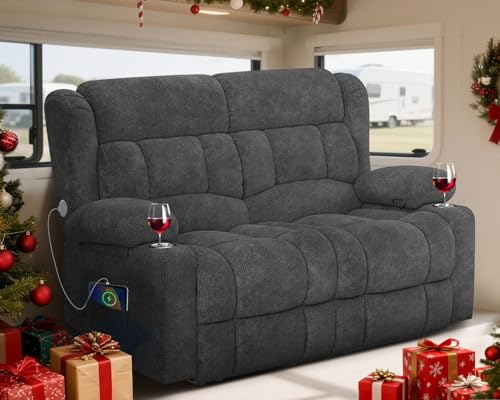
MisUMis RV Loveseat Recliner Sofa, Wall Hugger Reclining Loveseat RV Couch with USB Ports, Cup Holders, Pockets, 150° Adjustable RV Furniture Velvet Fabric Recliners for Travel & Home Theater Seating
Check price on Amazon
MOSGAT RV Loveseat Recliner Sofa, Reclining Loveseat Home Theater Seating with USB Ports, Cup Holders, Insert Pockets, Wall Hugger RV Recliners for Movie Room, Recline Movie Seats Gaming Sofa
Check price on Amazon
MisUMis RV Loveseat Recliner Sofa, Wall Hugger Reclining Loveseat RV Couch with USB Ports, Large Pockets, Cup Holders, 150° Adjustable RV Recliners Furniture for Travel Trailers & Home Theater Seating
Check price on Amazon
RV Loveseat Recliner Wall Hugger, Power Reclining Loveseat (Pu,Grey) | Wall Hugger Loveseat Recliner with Hidden Storage, RV Recliner Loveseat with Removable Armrest, RV Sofa with Cup Holders, USB
Check price on Amazon
RV Loveseat Recliner Sofa, Wall Hugger Reclining RV Couch with USB | RV Reclining Loveseat with Massage, Pocket, Cup Holder, 150° Recline for RV Furniture, Travel Trailers & Home Theater Seating
Check price on Amazon
MOSGAT RV Loveseat Recliner Sofa, Reclining Loveseat Wall Hugger Recliners with USB Ports, Cup Holders, Insert Pockets, RV Recliners for Travel Trailers & Living Room, RV Furniture | RV Couch
Check price on Amazon
AIWOEN Recliner Loveseat Sofa with Cup Holders, 2-Seater Fabric Reclining Couch, Manual Recliner Wall Hugger for Living Room, Small Spaces, Home Theater (Light Brown)
Check price on Amazon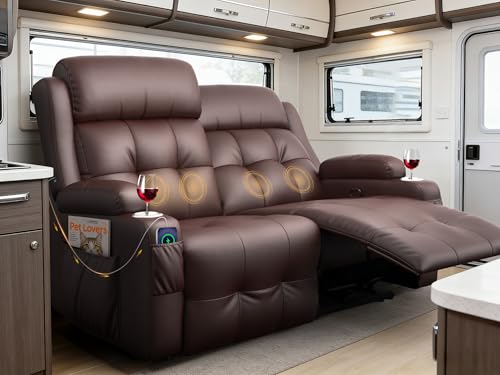
Furgatti Reclining Loveseat Sofa, RV Loveseats Recliner Sofas Wall Hugger, Double Recliners Couch with USB-A/Type C, Cup Holder, PU Leather Love Seat for Home Theater Seating & Gaming Room
Check price on AmazonReady to make the switch? The models above are selected for RV-friendly dimensions and mechanisms. Compare their wall clearance and door-fit details against your coach's measurements, and you will have a clear shortlist.