
Affordable Leather Sectional Couches: Your Complete Buying Guide
Everything you need to know about choosing a leather sectional couch — from leather grades and frame construction to layout planning and long-term care — so you can buy with confidence.
Why this guide matters: A leather sectional is one of the largest furniture investments most households make, yet the category is full of confusing jargon. This guide cuts through the noise and explains exactly what separates an entry-level sectional from a premium one, how to measure your room correctly, and which layout suits your lifestyle. By the end, you will know precisely which type of leather sectional matches your needs.
Why Choose a Leather Sectional Couch?
Leather sectionals combine the expansive seating of a sectional with the durability and easy maintenance of leather upholstery. For households that entertain often, have children, or own pets, leather is frequently the most practical choice because it resists spills, wipes clean quickly, and develops a rich patina over time rather than showing wear the way fabric can.
A sectional layout also solves a common living room problem: it defines a seating zone without requiring a separate loveseat and armchair combination. Corner configurations make efficient use of floor space, which is why sectionals are popular in both compact apartments and large open-plan homes.
If you are still exploring the broader category, our guide to sectional sofas covers layout basics and size considerations. For a deeper look at leather as a material, see our leather sofas overview, which explains tanning methods and finish options.
Leather vs. Fabric: A Quick Comparison
- Durability: High-grade leather typically outlasts most fabrics and resists cracking when conditioned properly.
- Maintenance: Leather needs occasional conditioning but rarely requires deep cleaning; fabric often needs professional cleaning for stains.
- Comfort: Leather feels cool in warm weather and warms to body temperature; fabric feels softer immediately but can trap heat.
- Allergens: Leather does not harbor dust mites or pet dander the way woven fabric can.
- Aesthetics: Leather reads as polished and traditional; fabric offers more color and pattern flexibility.
For households with pets specifically, our pet owner guide explains which leather finishes hold up best against claws and accidents.
Understanding Leather Grades Before You Buy
The single biggest factor separating an entry-level leather sectional from a premium one is the leather itself. Marketing terms are loosely regulated, so it helps to understand what each label actually means in practice.
Full-Grain Leather
The top layer of the hide, retaining its natural grain. Full-grain leather is the most durable and develops the richest patina, but it sits in the premium to luxury tiers. It is the best long-term investment if you plan to keep the sectional for a decade or more.
Top-Grain Leather
The top layer with the surface lightly sanded to remove imperfections. Top-grain is softer and more uniform than full-grain, and it occupies the mid-range to premium tiers. It is a balanced choice for most households.
Corrected-Grain Leather
The surface is sanded and embossed with an artificial grain pattern, then finished with a protective coating. Corrected-grain leather is highly stain-resistant and sits in the entry-level to mid-range tiers. It is a solid choice for busy family rooms where easy cleanup matters most.
Bonded Leather and Faux Leather
Bonded leather is made from leather scraps bonded to a backing; faux leather (polyurethane or vinyl) contains no leather at all. Both sit in the entry-level tier. They can look convincing at first but typically show wear sooner than genuine leather. If longevity is your priority, step up to at least corrected-grain.
| Leather Type | Tier | Best For | Durability |
|---|---|---|---|
| Bonded / Faux Leather | Entry-Level | Low-traffic rooms, rental furnishing | Moderate |
| Corrected-Grain Leather | Mid-Range | Family rooms, pet owners | High |
| Top-Grain Leather | Premium | Primary living rooms, daily use | Very High |
| Full-Grain Leather | Luxury | Long-term investment pieces | Exceptional |
For a detailed breakdown of cleaning approaches by leather type, see our leather cleaning guide and our leather conditioning recommendations.
Frame, Cushion, and Suspension Construction
Leather quality gets most of the attention, but the frame and suspension determine whether your sectional still feels supportive after several years. Here is what to look for at each tier.
Frame Materials
- Entry-level: Particleboard or plywood frames with stapled joints. Adequate for light use but prone to squeaking over time.
- Mid-range: Hardwood plywood frames with corner blocks and reinforced joinery. A solid choice for daily family use.
- Premium and luxury: Kiln-dried hardwood frames with doweled, glued, and screwed joints. These frames are built to last decades.
Cushion Fill
- Entry-level: Standard polyurethane foam, which softens noticeably within a couple of years.
- Mid-range: High-resilience foam, often wrapped in fiber for a softer hand-feel.
- Premium and luxury: High-density foam cores wrapped in down or feather blends, offering the best balance of support and plushness.
Suspension Systems
- Entry-level: Sinuous wire springs — lightweight and adequate for occasional seating.
- Mid-range: Pocketed coils or heavier sinuous wire with more anchoring points.
- Premium and luxury: Eight-way hand-tied springs, the gold standard for even support and longevity.
Choosing the Right Sectional Layout for Your Room
Sectionals come in several configurations, and the right one depends on room dimensions, traffic flow, and how you use the space.
Common Configurations
- L-shaped sectional: The most versatile configuration. Fits most living rooms and works well against a wall or floating in an open plan.
- U-shaped sectional: Maximum seating capacity, ideal for large rooms and conversation-centered layouts.
- L-shaped with chaise: Adds a lounge spot without expanding the footprint dramatically. See our 2-piece sectional with left chaise overview for a typical example.
- Modular sectional: Individual pieces can be rearranged or expanded later, which is useful if you move or reconfigure the room.
Measuring Your Space
Before shopping, measure the room and mark the sectional footprint on the floor with painter's tape. Leave at least 18 inches of walkway between the sectional and other furniture, and confirm that the longest piece can pass through doorways and hallways. Our measurement guide walks through this process step by step, and our walkway planning article explains traffic flow in more detail.
For smaller rooms, an apartment sofa or a compact 2-seater sectional couch may be a better fit than a full-size sectional. For larger open plans, our open floor plan layout guide explains how to zone seating areas.
Left-Facing vs. Right-Facing
Chaise orientation is determined by the side the chaise sits on when you face the sectional. Left-facing chaise sectionals place the extended seat on your left as you look at the couch. Getting this wrong is one of the most common ordering mistakes, so confirm the orientation against your floor plan before checkout.
Styling a Leather Sectional
Leather is a strong visual anchor, so styling works best when you add texture and warmth rather than competing patterns. A few guidelines:
- Throw pillows: Mix one or two smooth leather-friendly fabrics with a nubby wool or linen. Two to four pillows on a sectional is usually enough. See our throw pillows guide for sizing formulas.
- Throw blankets: Drape one over the chaise or arm to soften the look and add color. Our throw blankets article covers fabric choices for leather seating.
- Area rug: Anchor the sectional with a rug that extends at least a few inches beyond the front legs. See our area rugs guide for sizing rules.
- Lighting: A floor lamp beside the chaise balances the visual weight of a large leather piece.
- Coffee table: Choose a table roughly half to two-thirds the length of the sectional. Our coffee tables guide covers proportion in detail.
For seasonal styling ideas, see our autumn decor and holiday decor guides, which both work well with leather seating.
Care and Maintenance for Long-Term Value
Leather sectionals age well when cared for correctly. A simple routine keeps the upholstery supple and prevents cracking:
- Weekly: Dust with a dry microfiber cloth to remove abrasive particles.
- Monthly: Wipe with a slightly damp cloth using a mild leather cleaner, then dry immediately.
- Every few months: Apply a leather conditioner to maintain moisture balance, especially in dry climates.
- Immediately: Blot spills rather than rubbing. See our stain removal guide for specific spill types.
- Ongoing: Keep the sectional out of direct sunlight to prevent fading. Our sun damage prevention article explains protective options.
If you have pets, our pet damage prevention guide covers scratch-resistant finishes and protective covers. For deeper cleaning, our dry cleaning upholstery and steam cleaning guides explain when each method is appropriate.
Recommended Leather Sectional Couches
⚠️ AFFILIATE DISCLOSURE: This website contains affiliate links. As an affiliate Associate, we earn from qualifying purchases. If you make a purchase through these links, we may receive a small commission at no additional cost to you. Read our full affiliate policy.

EASE MOOSE Modular Sectional Sofa, Leather Sectional Couch, Deep Brown | Pet-Friendly Faux Leather, Wide Deep Seat, Removable Covers, Solid Wood Frame, Easy Assembly, Scratch Resistant
Check price on Amazon
Kalafini Faux Leather Modular Sectional Sofa Wide U Shaped Couches Brown | Oversized Couches for Living Room, Extra Large 9 Seater Comfy Luxury Deep Seat Couch
Check price on Amazon
Reclining Sectional sofa, Reclining Sofa, Leather Sectional, Beige Brown | Power Reclining Sofa with Storage & USB, Adjustable Headrest & Cup Holders, Leather Sectional Couches for Living Room
Check price on Amazon
Topcomfy Faux Leather L-Shaped Couch Set, 98"L x 71"W Sectional Sofas Black | Synthetic PU Leather Stain-Resistant, 4 Seat Modular Couches with Cup Holder & Ottoman & Chaise, Apartment/Living Room/Office
Check price on Amazon
SITJOY Cloud Couch Sectional, 3 Seater Sofa Couch, Faux Leather in Brown | Pet-Friendly Faux Leather, Removable Cover, Solid Wood Frame, Easy Assembly, Oversized Wide Couch for Living Room
Check price on Amazon
POYISOU Faux Leather Sectional Couches for Living Room, 3 Seats L Shaped Sofa with Storage Ottoman & 2 Cup Holders, Modern Convertible Couch Small Sofas for Small Space, Apartment, Office, Black
Check price on Amazon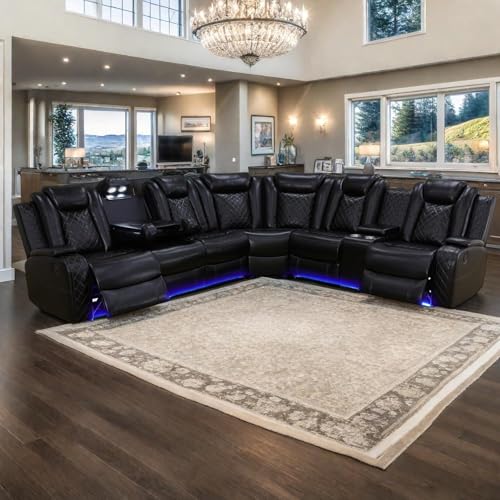
Power Recliner Sofa Sectional Sofa with LED Light for Living Room, Air Leather Reclining Corner Sectional Sofa Set, Cup Holder, Storage Console for Home Theater Seating (Black, Sectional)
Check price on Amazon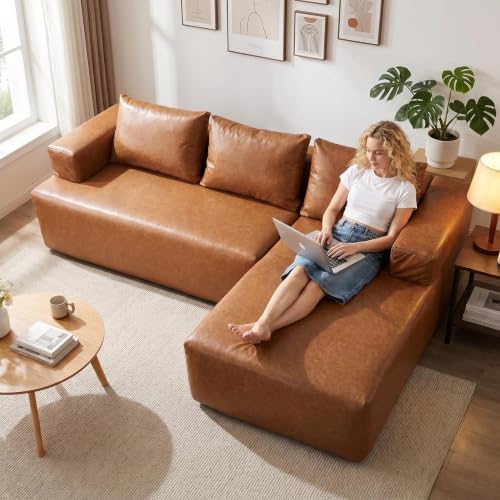
96" Boneless Faux Leather Sectional Couches for Living Room | Module Combination Spring Cushions Sofa, L Shaped Chaise Lounge, No Assembly, Deep Seat,Stain Resistant Abrasion, Apartment
Check price on AmazonLeather Sectional Buying Checklist
Use this checklist to evaluate any leather sectional before committing:
- Confirm the leather grade and ask whether the sides and back use the same material as the seating surfaces.
- Verify the frame material and joint construction.
- Sit for at least ten minutes and check cushion rebound.
- Measure the room, doorways, and stairwells against the sectional dimensions.
- Confirm chaise orientation (left-facing or right-facing) against your floor plan.
- Check the warranty length and what it covers.
- Ask about delivery, assembly, and return terms. Our delivery preparation and assembly guide articles explain what to expect.
- Review the care instructions so you know what maintenance the leather requires.
If this is your first major furniture purchase, our first time buyer guide provides additional context, and our style selection article helps narrow down aesthetics.
Frequently Asked Questions
Is a leather sectional a good choice for a family room?
Yes. Leather resists spills and wipes clean quickly, which makes it well suited to family use. Choose at least a corrected-grain leather in the mid-range tier for the best balance of durability and easy maintenance.
How do I know if the leather is genuine?
Ask the retailer directly whether the upholstery is full-grain, top-grain, corrected-grain, bonded, or faux leather. Genuine leather has a natural grain that varies slightly across the surface, while faux leather is perfectly uniform. Request a material specification sheet if ordering online.
What size sectional fits a small living room?
A two-piece L-shaped sectional or a 2-seater sectional couch is usually the right fit for a compact room. Measure your space and keep at least 18 inches of walkway clearance around the seating. See our small space layout guide for detailed recommendations.
Do leather sectionals work with pets?
Corrected-grain and top-grain leathers hold up well against pet claws, and leather does not trap dander the way fabric does. Protective covers and regular conditioning extend the life of the upholstery. See our pet owner guide for detailed advice.
How long does a leather sectional last?
With proper care, a premium or luxury tier leather sectional can last well over a decade. Entry-level options typically show wear sooner. Frame construction and leather grade both influence lifespan, which is why checking both is essential before buying.
What is the difference between left-facing and right-facing sectionals?
The orientation refers to the side the chaise sits on when you face the sectional. Left-facing means the chaise is on your left when you look at the couch. Confirm this against your room layout before ordering to avoid a return.
Ready to Choose Your Leather Sectional?
Use the recommendations above to compare leather grades, frame construction, and layouts. When you are ready, explore the curated options in the product section above to find a sectional that matches your room and your tier.