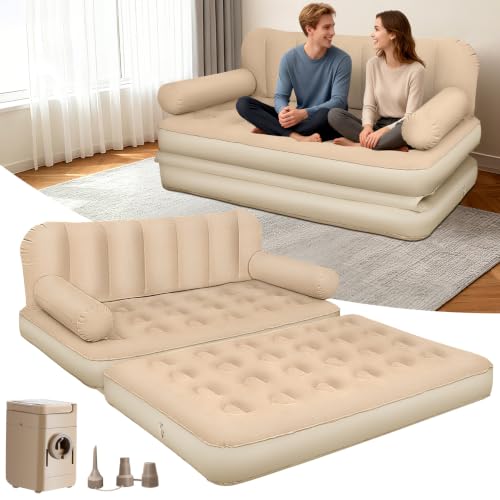
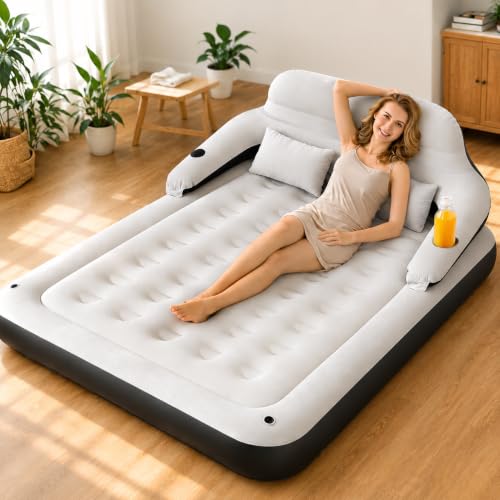
What Is an Air Mattress Couch?
An air mattress couch — also called an inflatable sofa, blow-up couch, or air couch bed — is a seating unit that uses air chambers for support instead of foam, springs, or pocket coils. Most models inflate in minutes using a built-in electric pump or a manual foot pump, and many convert into a flat sleeping surface for overnight guests.
The category has matured considerably. Early inflatable couches were essentially pool floats with backrests. Today's mid-range and premium models use multi-chamber construction, flocked or velvet-touch surfaces, and reinforced seams that hold pressure for days rather than hours. If you are comparing this format against a traditional convertible, our guide to a couch with a bed in it covers the broader sleeper-couch landscape.
Who Should Consider an Inflatable Sofa?
This format is not a universal replacement for an upholstered couch. It excels in specific scenarios:
- Small apartments and studios: When floor space is shared between living and sleeping zones, an inflatable couch can be deflated and stored between uses.
- Guest rooms and spare rooms: A dual-purpose unit gives occasional visitors a place to sleep without dedicating a full room to a bed.
- Renters and frequent movers: Lightweight construction and compact storage make relocations simple.
- Dorm rooms and temporary housing: Setup requires no tools, and the unit can be packed away at the end of a term.
- Outdoor and camping use: Several models are rated for patios and tents, though you should confirm weather resistance before committing.
If you need permanent daily seating with long-term structural support, a conventional standard sofa or a 2-seater couch with ottoman will generally serve you better. An inflatable couch is a specialist tool, not a universal one.
How Air Mattress Couches Are Built
Understanding construction helps you evaluate what a product listing actually delivers. There are three main build approaches:
Single-Chamber Construction
A single air chamber supports the entire seat and backrest. These are the simplest and most compact designs, typically found in the entry-level tier. They inflate quickly and pack small, but weight distribution is uneven — two adults sitting on opposite ends will cause noticeable sinkage in the middle. Best suited for solo use or short occasional seating.
Dual-Chamber Construction
The seat and backrest are separate air chambers, often with independent valves. This allows you to adjust firmness in each zone — a firmer seat for support and a softer back for lounging. Dual-chamber models in the mid-range tier are the sweet spot for most buyers, offering meaningfully better comfort than single-chamber units without the bulk of premium designs.
Multi-Chamber / Coil-Reinforced Construction
Premium and top-tier inflatable couches use multiple internal chambers, sometimes with integrated air coils or vertical tension beams. These distribute weight more evenly, resist bottoming out, and hold their shape better over repeated inflation cycles. They are heavier and take longer to inflate, but they deliver the closest experience to a traditional couch. If you are furnishing a space where the couch will be used daily, this is the tier to target.
Comfort Factors That Actually Matter
Surface Material
Flocked (velvet-touch) surfaces feel softer against skin and reduce the "sticky plastic" problem. PVC is durable and wipe-clean but less breathable. Look for a flocked top layer on seating surfaces and PVC on the base for a balance of comfort and longevity.
Seat Height & Depth
Inflatable couches sit lower than upholstered sofas. A seat height around 15–17 inches is comfortable for most adults; anything below 13 inches starts to feel like floor seating. Check seat depth too — 20 inches or more supports proper thigh contact.
Weight Capacity
Manufacturers list a maximum load. Entry-level units often support one adult comfortably; mid-range and premium models frequently handle two adults plus a child. Always leave a safety margin rather than loading to the stated maximum.
Inflation System
Built-in electric pumps are the most convenient and typically inflate a full couch in 2–4 minutes. Manual foot pumps take longer but work without power. External pump valves are the least convenient but reduce unit weight and complexity.
Air Retention
Quality is measured in how long the couch holds pressure. Premium models with reinforced seams and thick chambers can hold firmness for several days. Entry-level units may need a top-up every 24 hours. Read owner feedback on retention before choosing.
Storage Footprint
Deflated, most inflatable couches fold to roughly the size of a large suitcase. If storage is your primary motivation, check the deflated dimensions and folded weight — these vary significantly across tiers.
Quality Tiers: What to Expect at Each Level
To keep comparisons honest and durable over time, we classify inflatable couches by market tier rather than by any numeric figure. The table below describes what each tier typically delivers.
| Tier | Best For | Construction | Comfort & Durability |
|---|---|---|---|
| Entry-level / Starter tier | Occasional solo seating, dorm rooms, short-term use | Single chamber, basic PVC, external or foot pump | Adequate for brief use; may need daily top-ups; thinner material |
| Mid-range / Balanced tier | Guest rooms, small apartments, regular dual-use | Dual chamber, flocked surface, built-in electric pump | Noticeably better support and retention; suitable for multi-day use |
| Premium / High-end tier | Daily seating, primary guest bed, frequent conversion | Multi-chamber or coil-reinforced, thick flocked top, reinforced seams | Closest to traditional couch feel; strong air retention; heavier build |
| Luxury / Flagship tier | High-frequency hosting, design-conscious spaces | Advanced chamber systems, premium upholstery-style surfaces, smart pumps | Maximum comfort and longevity; largest storage footprint; heaviest |
As a rule, mid-range models deliver the most balanced ownership experience. The jump from entry-level to mid-range improves comfort and air retention meaningfully; the jump from mid-range to premium adds refinement and longevity but at a steeper relative step. Choose according to how often the couch will actually be used, not according to the highest tier available.
Pros and Cons of Air Mattress Couches
Advantages
- Dual-purpose seating and sleeping in one unit
- Compact deflated storage for small spaces
- Lightweight and easy to move between rooms
- Quick setup with built-in pumps on most models
- No tools or assembly required
- Useful for temporary or transitional housing
Limitations
- Lower seat height than conventional couches
- Air chambers can lose firmness over several days
- Puncture risk from sharp objects or pets
- Less structural support than upholstered frames
- Surface can feel warm in hot weather without breathable covers
- Not a permanent replacement for daily long-term seating
How to Choose the Right Model
Work through these decision points in order — each one narrows the field quickly:
- Define primary use. Occasional guest sleeping points to a convertible model with a flat sleep surface. Daily living-room seating points to a multi-chamber unit with a firm seat.
- Measure your space. Inflated footprint matters as much as deflated storage size. Leave at least 18 inches of walkway clearance around the couch.
- Check the pump type. A built-in electric pump is worth prioritizing if the couch will be inflated and deflated frequently.
- Confirm weight capacity. Match the stated capacity to the heaviest expected combination of users, with margin to spare.
- Read retention feedback. Owner reviews about how long the couch holds firmness are the single most useful durability signal.
- Verify the surface material. Flocked tops are more comfortable for skin contact; PVC bases are easier to wipe clean.
If your space is genuinely tight, it is also worth comparing this format with a 2-seater sectional couch or an arm chair couch — both offer permanent seating with a smaller footprint than a full-size sofa. For a pure inflatable alternative without the couch form factor, see our guide to an air couch bed.
Setup, Care, and Longevity
An inflatable couch rewards a small amount of routine care with a considerably longer service life:
- Inflate on a clean, flat surface. Debris under the base is a leading cause of punctures.
- Do not over-inflate. Stop when the surface is firm but still yields slightly under hand pressure. Over-inflation stresses seams.
- Keep pets' claws away. Trimmed claws and a protective throw reduce puncture risk significantly.
- Wipe clean with a damp cloth. Avoid harsh solvents on flocked surfaces.
- Store fully dry and deflated. Fold loosely rather than compressing tightly, and keep away from sharp objects in storage.
- Top up pressure as needed. Air expands and contracts with temperature; a brief top-up every few days is normal.
For overnight sleeping use, a fitted cover or a thin mattress topper dramatically improves comfort and protects the surface. Our article on an air mattress for fold out couch covers compatible sizing and topper options in more detail.
Common Mistakes to Avoid
- Buying an entry-level unit for daily use — the comfort and retention gap versus mid-range is substantial.
- Ignoring the inflated footprint and discovering the couch blocks a doorway or walkway.
- Choosing a manual pump model for a couch that will be inflated weekly.
- Placing the couch directly against a heater or in prolonged direct sun, which stresses the material.
- Assuming all "queen" or "full" labels are standardized — always check the actual inflated dimensions.