
Bed That Doubles as a Couch: The Complete Guide
One piece of furniture, two essential functions. Understand how convertible couch beds work, which styles fit your space, and how to choose a model you will be happy with for years.
Why this guide matters: A bed that doubles as a couch is one of the most practical furniture investments for apartments, guest rooms, home offices, and multi-purpose living areas. But the category is broad, and not every convertible design suits every household.
This guide explains the main types, the trade-offs between sleeping comfort and seating comfort, the materials that hold up over time, and the measurements you need before you commit. By the end, you will know exactly which configuration fits your room and your routine.
What Is a Bed That Doubles as a Couch?
A bed that doubles as a couch is a dual-purpose furniture piece engineered to serve as seating during waking hours and as a sleeping surface at night. Instead of buying a separate sofa and guest bed, you get one item that transforms between the two roles. The concept is not new, but modern mechanisms, mattress technology, and upholstery materials have made convertible designs far more comfortable and durable than older generations.
The category includes several distinct designs. Some rely on a folding mechanism, others on a pull-out trundle or a pop-up frame, and some use a modular system where sections rearrange. Each approach has its own strengths, and the right choice depends on how often the piece will be used for sleeping, how much space you have, and whether the couch will be the primary seating in your main living area.
If you are exploring the broader furniture category, you can review the full range of couches with a bed inside to see how different mechanisms compare side by side.
The Main Types of Convertible Couch Beds
Understanding the mechanism is the single most important step. The conversion system determines how comfortable the piece is as a couch, how supportive it is as a bed, and how much floor space it needs when open. Below are the primary types you will encounter.
Sleeper Sofa
A traditional sofa with a folding metal frame and mattress hidden inside the seat. The bed pulls out and unfolds flat. Entry-level models use thin foam mattresses, while mid-range and premium versions include thicker, higher-density mattresses and reinforced frames.
Best for: Living rooms that need to host occasional overnight guests without sacrificing daily seating comfort.
Pull-Out Couch Bed
Similar to a sleeper sofa but often with a simpler pull-out tray or trundle design. The sleeping surface may sit lower to the floor. These designs are usually lighter and easier to move, making them a popular choice for apartments and small rooms.
Best for: Compact rooms and renters who need a lightweight, easy-to-handle solution. Explore couch beds with a pull-out design for more detail.
Futon
A frame with a thick folding cushion that converts from sofa to flat bed by lowering the backrest. Futons are mechanically simple, which makes them durable and easy to maintain. The sleeping surface is firmer than most sleeper sofas, which some sleepers prefer.
Best for: Guest rooms, home offices, and households that prefer a firm sleeping surface.
Convertible Sofa Bed
A broad category that includes pop-up frames, click-clack mechanisms, and modular systems. Mid-range and high-end tier versions often use independent cushioning and stronger frames, delivering better support in both seating and sleeping modes.
Best for: Daily use in studios or small homes where the piece serves as the main couch and the main bed.
Modular Couch Bed
Individual sections can be rearranged into a sofa, a chaise, or a flat sleeping platform. Modular designs are increasingly popular because they adapt to changing room layouts and can be expanded over time.
Best for: Open-plan spaces and households that rearrange furniture frequently.
Loveseat Sleeper
A two-seat couch with a hidden bed mechanism. These are smaller than full sleeper sofas and fit into tight corners, but the sleeping surface is usually narrower. They work well in studio apartments and small guest rooms.
Best for: Tight spaces where a full-size sleeper sofa will not fit.
Seating Comfort vs. Sleeping Comfort: The Core Trade-Off
Every convertible couch bed involves a compromise. A piece optimized for seating tends to have firmer cushions and a more upright back, while a piece optimized for sleeping tends to have a flatter, softer surface. Understanding this trade-off helps you choose the right balance for your household.
If the couch is your primary seating
Prioritize seat depth, cushion density, and back support. Look for models with high-resilience foam or pocket-spring cushioning. These hold their shape through daily use and feel closer to a traditional sofa. The sleeping surface can be a secondary consideration if guests stay only a few nights per year.
If the bed is your primary sleeping surface
Prioritize mattress thickness and support. A mattress that is too thin will bottom out under body weight, causing discomfort over multiple nights. Mid-range and premium sleeper sofas typically include thicker mattresses or accept a standard mattress replacement, which is a significant long-term advantage.
If the piece serves both roles daily
Look for a high-end tier convertible with independent cushioning, a reinforced frame, and a mattress designed for repeated folding. These cost more than entry-level models, but the difference in comfort and durability is substantial when the piece is used every day.
Quick Comparison by Type
The table below summarizes how the main convertible types compare on the factors that matter most. Use it as a starting point, then verify the specific dimensions and materials of any model you are considering.
| Type | Best For | Seating Comfort | Sleeping Comfort | Space Needed When Open |
|---|---|---|---|---|
| Sleeper Sofa | Living rooms with occasional guests | Good to excellent (mid-range and up) | Moderate to good | Moderate to large |
| Pull-Out Couch Bed | Apartments and compact rooms | Moderate | Moderate | Moderate |
| Futon | Guest rooms and home offices | Moderate to good | Good (firmer surface) | Moderate |
| Convertible Sofa Bed | Daily use in studios | Good to excellent | Good to excellent | Varies by mechanism |
| Modular Couch Bed | Open-plan and flexible spaces | Good to excellent | Good | Large (configurable) |
| Loveseat Sleeper | Small guest rooms and studios | Good | Moderate (narrower surface) | Small to moderate |
Materials and Durability: What to Look For
Because a convertible couch bed is folded, unfolded, and sat on repeatedly, material quality matters more than it does on a static piece of furniture. The frame and the upholstery are the two areas where quality differences show up most clearly.
Frame construction
- Hardwood or engineered hardwood frames offer the best balance of strength and weight. They resist warping and hold screws and joints securely over time.
- Metal frames with reinforced joints are common in sleeper mechanisms. Look for heavy-duty steel and welded rather than riveted connections where possible.
- Entry-level particleboard frames are lighter and less durable. They can be adequate for guest-room use but are not ideal for daily conversion.
Upholstery options
- Performance fabric is a strong choice for households with pets or children. It resists stains and cleans easily, and modern performance fabrics feel soft rather than technical.
- Leather and faux leather are easy to wipe clean and develop a pleasant patina over time. Leather is a long-term investment, while faux leather is a more accessible alternative that still cleans well.
- Velvet and textured weaves look luxurious but require more careful maintenance. They are best for guest rooms where the piece is not used daily.
- Microfiber and tight weaves are durable, neutral, and forgiving. They work well in multi-purpose rooms.
Mattress and cushioning
- High-density foam holds its shape longer than low-density foam and is the minimum standard for a piece used regularly for sleeping.
- Pocket-spring or hybrid mattresses provide better support and airflow. They are more common in premium and luxury tier sleeper sofas.
- Removable, replaceable mattresses are a major advantage. If the mattress wears out, you can replace it without replacing the entire couch.
- Independent cushioning on the seat means the sleeping mechanism does not create pressure points when you sit. This is a hallmark of well-designed mid-range and high-end tier models.
Measure Before You Buy: A Practical Checklist
The most common mistake buyers make is measuring only the closed footprint of the couch. A convertible couch bed needs clear floor space in front of it when open, and the open footprint is often much larger than the closed one. Use this checklist before you commit to a model.
- Closed dimensions: Measure the width, depth, and height of the couch as it will sit in the room. Confirm it fits through doorways and around corners on delivery day.
- Open dimensions: Note how far the bed extends into the room. A typical pull-out extends 60 to 80 inches, but the exact figure varies by model and mattress size.
- Clearance for walking: Leave at least 18 to 24 inches of walkway around the open bed so sleepers can get in and out comfortably.
- Wall clearance: Some mechanisms require a gap behind the couch. Check whether the model is a wall-hugger design or needs rear clearance.
- Ceiling height: If the piece sits under a window or a sloped ceiling, confirm the open height does not interfere with curtains or fixtures.
- Door swing and hallway width: Verify the delivery path. A couch that fits the room but not the hallway is a problem.
If your room is on the smaller side, consider a compact configuration such as a two-seater couch with a fold-out bed, which balances seating and sleeping without dominating the floor plan.
Who Should Buy a Bed That Doubles as a Couch?
A convertible couch bed is not the right solution for every household. It shines in specific situations and is less suitable in others. Here is a clear breakdown to help you decide.
Strong fit
- Studio apartment residents who need one piece to serve as both living room seating and a bed.
- Guest room owners who want a room that functions as an office or hobby space most of the year and as a bedroom when visitors arrive.
- Frequent hosts who regularly accommodate overnight guests and want a comfortable, dignified sleeping arrangement.
- Renters who move periodically and want furniture that adapts to different floor plans.
- Homeowners with a den or bonus room that needs flexible seating and occasional sleeping capacity.
Weaker fit
- Households with a dedicated guest bedroom where a standard bed offers better sleeping comfort at a similar tier.
- Daily sleepers who need orthopedic support — a dedicated mattress is usually the better choice.
- Very small rooms where the open footprint of a pull-out would block walkways or doors.
- Formal living rooms where the visual bulk of a sleeper mechanism may not suit the design intent.
Features Worth Prioritizing
Beyond the mechanism and materials, a few specific features separate a well-designed convertible from a frustrating one. These are the details experienced buyers check first.
- Smooth conversion mechanism: Test the fold and unfold motion. It should be smooth, require moderate effort, and lock securely in both positions. Mid-range models usually offer noticeably smoother mechanisms than entry-level ones.
- Reinforced mattress platform: The platform supporting the mattress should be rigid and free of sharp edges or gaps that could damage the mattress over time.
- Removable and washable covers: For daily use, removable covers make maintenance far easier and extend the life of the upholstery.
- Storage space: Some models include built-in storage under the seat or in the chaise. This is especially useful in small apartments.
- Weight and maneuverability: If you rearrange furniture often or move between apartments, a lighter model with smooth-glide feet is easier to handle.
- Warranty coverage: Check what the warranty covers — frame, mechanism, mattress, and upholstery are often covered separately and for different periods.
Caring for a Convertible Couch Bed
A convertible couch bed has more moving parts than a standard sofa, so maintenance is slightly more involved. A few simple habits keep the mechanism smooth and the upholstery fresh.
- Vacuum the mattress surface monthly to remove dust and debris that can degrade foam over time.
- Rotate or flip the mattress if the design allows it. This distributes wear and extends the usable life of the sleeping surface.
- Lubricate the mechanism sparingly according to the manufacturer's instructions. A dry silicone spray is often recommended for metal joints.
- Clean spills promptly with a mild detergent and cool water. Avoid soaking the fabric, which can damage the foam beneath.
- Keep the piece out of direct sunlight to prevent fading and fabric degradation.
- Store bedding separately rather than leaving it compressed inside the mechanism, which can strain the fold.
Ready to Choose Your Convertible Couch Bed?
Use the comparison table and measurement checklist above to narrow your options. When you have a shortlist, review the recommended models below to compare features and find the configuration that fits your room and your routine.
Recommended Bed That Doubles as a Couch
⚠️ AFFILIATE DISCLOSURE: This website contains affiliate links. As an affiliate Associate, we earn from qualifying purchases. If you make a purchase through these links, we may receive a small commission at no additional cost to you. Read our full affiliate policy.

VINGLI Loveseat Sleeper Sofa Couch with Pull Out Chair Bed for Living Room | Rustic Convertible Futon Sofa Bed, Gold Foil Fabric Couch Bed with USB Port, Cup Holder, Side Storage for Bedroom, Apartment
Check price on Amazon
Asahree 112'' U Shaped Sectional Couch,Sleeper Sofa with Pull Out Couch Bed | 5-Second Smooth Convertible Sofa Bed with Double Chaise, Deep Seat Sleeper, Removable Washable, for Living Room&Apartment
Check price on Amazon
VINGLI Loveseat Sleeper Sofa Couch with Pull Out Chair Bed for Living Room | Green Convertible Futon Sofa Bed, Corduroy Couch Bed with USB Port, Cup Holder, Side Storage for Bedroom, Apartment, Playroom
Check price on Amazon
Gizoon Convertible Sofa Bed Small Couch Bed & Modern Loveseat Sleeper, Grey | 3 in 1 Sofa Cama, Space-Saving Design, 5-Position Adjustable Futon Sofa Bed for Living Room, Apartment, Guest Room
Check price on Amazon
Twin Extension Cord Power Strip - 12FT Dual Extension with Flat Wall Plug, Split Extension Cord with Multiple Outlets,Double Head Outlet for Behind Bed, Couch,Indoor Flush Design(White)
Check price on Amazon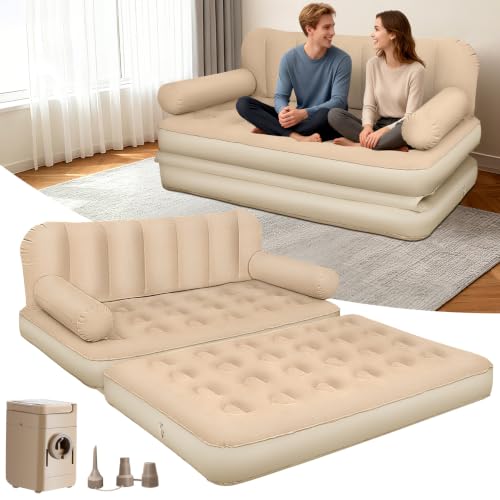
ChlorBlu Small Queen Size Air Sofa Bed Mattress,Blow Up Couch,74"x62"x33'' | Inflatable Bed w/ Pump&Headboard,Flocked Inflatable Bed for Home,Folding Inflatable Couch for Camping,2-in-1 Inflatable Sofa
Check price on Amazon
BSHOMGI Convertible Futon Sofa Bed, Boneless Couch for Living Room,Modular Futon Couch with Fixed-Shape Frame Corduroy Loveseat Sleeper Sofas with Pull-Out Couches for Small Space Apartment
Check price on Amazon
feliz home Foldable Mattress Full, 54" Folding Sofa Bed, 3-in-1 Convertible Sofa Bed Floor Couch for Living Room, Guest Room
Check price on AmazonFrequently Asked Questions
What is a bed that doubles as a couch called?
The most common terms are sleeper sofa, sofa bed, convertible couch, pull-out couch, and futon. Each term describes a slightly different mechanism, but all refer to furniture designed to serve as both seating and sleeping space.
Is a sleeper sofa comfortable for daily sleeping?
It depends on the mattress and frame quality. Premium sleeper sofas with thick, high-density mattresses and reinforced frames offer better support for regular use. Entry-level models are generally better suited to occasional guests.
How much floor space does a pull-out couch need?
A pull-out couch needs clear space in front of it roughly equal to the bed extension, often around 60 to 80 inches depending on the model. Always measure the open footprint and the surrounding walkway before choosing a design.
Are convertible couch beds good for small apartments?
Yes. A convertible couch bed lets a studio or small apartment serve as both a living area and a guest sleeping space without a separate bedroom. The key is choosing a model whose open footprint fits your floor plan.
Can I replace the mattress in a sleeper sofa?
Many mid-range and premium sleeper sofas use standard or semi-standard mattress sizes that can be replaced. Check the manufacturer's specifications before buying — a replaceable mattress is a significant long-term advantage.
What is the difference between a futon and a sleeper sofa?
A futon uses a folding cushion and an adjustable frame to convert between seating and sleeping. A sleeper sofa hides a folding metal bed frame and mattress inside the seat. Futons are mechanically simpler; sleeper sofas generally offer better seating comfort in the upright position.