
Why Choose a Big Sectional Couch With Pull Out Bed
A large sectional already solves the most common living room problem: seating enough people without adding a second sofa. Adding a pull out bed turns that same footprint into overnight accommodation. For households that host guests regularly — or simply want a backup sleeping surface without dedicating a room to it — this combination is hard to beat.
The practical advantages are straightforward. You get wrap-around seating for movie nights and gatherings, a chaise or extended section for lounging, and a full sleeping area that folds away when not in use. Compared with buying a separate sofa and a guest bed, a sleeper sectional consolidates two large pieces of furniture into one. That matters most in open-plan living areas and apartments where floor space is a fixed constraint.
There are trade-offs worth understanding before you commit. A sleeper mechanism adds weight, so a big sectional with a pull out bed is heavier and harder to move than a standard sofa. The mattress sits inside the frame, which limits how thick and plush it can be compared with a dedicated bed. And the bed must extend into the room, so the open footprint — not just the closed footprint — determines whether the piece works in your space. The rest of this guide walks through each of these factors in detail.
If you are still comparing broad options, our overview of big sectional couches covers seating-focused configurations, while this article focuses specifically on the sleeper variant. For households where the bed is the primary feature, the guide to a big couch that turns into a bed explores alternative formats.
Anatomy of a Sleeper Sectional: Frame, Mechanism, and Mattress
Three components determine how a big sectional couch with pull out bed performs over time: the frame, the conversion mechanism, and the mattress. Buyers often focus on fabric and color, but these three hidden elements decide whether the piece still works smoothly after years of use.
The Frame
Sectional frames are typically built from kiln-dried hardwood, engineered wood, or metal. Hardwood frames with reinforced corner blocks resist racking — the twisting motion that develops when a heavy sectional is repeatedly folded and unfolded. Entry-level frames often use a mix of engineered wood and thinner hardwood, which is acceptable for occasional guest use but less suited to daily conversion. Look for descriptions of corner-block reinforcement, doweled joints, and a stated weight capacity for the seating area.
The Pull Out Mechanism
There are two dominant mechanisms. The classic pull-out uses a metal slide system that unfolds a folded mattress onto the floor; the mattress typically rests on a metal deck or spring platform. The newer pop-up or trundle-style mechanism lifts a concealed mattress out of the base, which keeps the sleeping surface higher off the floor and often feels more like a real bed. Pop-up designs generally cost more and take up more internal storage space, but they are easier on the back and tend to suit older guests better.
Mechanism quality varies widely by tier. Entry-level models use lighter-gauge steel and simpler glide tracks. Mid-range and premium models use heavier-gauge steel, smoother roller systems, and sometimes a locking latch that keeps the bed stable once deployed. If the bed will be used frequently, prioritize the mechanism above almost everything else.
The Mattress
Sleeper sectional mattresses are thinner than standard bed mattresses, usually in the range of four to six inches. Thickness is a compromise: a thicker mattress sleeps better but folds less cleanly and may prevent the mechanism from closing flush. Higher-tier models often use a coil or hybrid mattress with a foam comfort layer, while entry-level models may use a basic foam block. See the mattress comparison section below for a full breakdown.
Buyer tip: Ask whether the mattress is replaceable and what size it is. A standard-size replacement mattress is far easier to source later than a proprietary one, which extends the useful life of the entire sectional.
Sizing and Room Layout Requirements
Sizing is where most buying mistakes happen. A big sectional couch with pull out bed has two footprints: the closed footprint you live with every day, and the open footprint you need when a guest actually sleeps on it. Both must fit your room comfortably.
Closed Footprint
Large sleeper sectionals commonly measure around 100 to 130 inches across the longest side, with a depth of 38 to 44 inches for the main seating and 60 to 70 inches for a chaise or extended section. In a living room, plan for at least 30 inches of walkway between the sectional and other furniture, and more in high-traffic paths. A sectional pushed directly against three walls limits both access and visual breathing room.
Open Footprint
When the bed is extended, you need clearance in front of the sectional equal to the mattress length plus room to stand. A queen sleeper mattress is roughly 80 inches long, so the open bed can project six to seven feet into the room. That is the number that rules out many small living rooms. Before ordering, mark the open footprint on the floor with painter's tape and walk around it — this simple test prevents most fit problems.
Room Size Guidance
| Room Size | Typical Fit | Considerations |
|---|---|---|
| Under 150 sq ft | Compact sleeper sectional or loveseat sleeper | Full-size open bed may not clear walkways; consider a pop-up mechanism |
| 150–250 sq ft | Mid-size L-shaped sleeper sectional | Verify open bed clearance against coffee table and TV console |
| 250–400 sq ft | Large sectional with chaise and pull out bed | Room for full queen open bed with comfortable walkway |
| 400+ sq ft | Oversized U-shaped or multi-piece sleeper sectional | Can accommodate king or expanded queen sleeping area |
Ceiling height and window placement matter too. A very tall sectional can crowd a room with low ceilings, and a sectional placed under a window may block the pull out bed from extending. For narrow or awkward rooms, the guidance in our narrow room layout guide is a useful companion read. If you are considering adding a slim table behind the sectional for lamps and outlets, the options in behind couch table with outlet are worth reviewing before finalizing the room plan.
Mattress Types Compared
The mattress is the single biggest factor in whether guests actually sleep well — and in whether the mechanism continues to operate smoothly. Here is how the main types compare.
| Mattress Type | Comfort Profile | Best For | Durability Notes |
|---|---|---|---|
| Innerspring | Firm, supportive, familiar feel | Frequent guests, heavier sleepers | Coil count and gauge drive longevity; look for reinforced edge support |
| Memory Foam | Contouring, quiet, pressure-relieving | Occasional guests, lighter sleepers | Lower-density foam can flatten over time; higher-density foam holds shape longer |
| Air-Over-Coil | Adjustable firmness via air chambers | Households with mixed preferences | Requires an air pump; chambers can develop leaks with heavy use |
| Hybrid (Coil + Foam) | Balanced support with a soft top layer | Most households — the versatile default | Generally the best long-term balance of comfort and durability |
Mattress thickness interacts directly with the mechanism. A mattress that is too thick may prevent the frame from closing flush or put strain on the hinge. Stick with the manufacturer's specified thickness range, and if you replace the mattress later, match the original dimensions and thickness closely. If you are weighing a sleeper sectional against other convertible formats, our comparison of convertible couch formats may help clarify the trade-offs.
Upholstery and Fabric Considerations
A sleeper sectional is a high-contact surface — sat on daily, folded and unfolded regularly, and sometimes used as a bed for pets and children. The upholstery should be chosen for durability first and aesthetics second.
Performance Fabrics
Performance fabrics such as solution-dyed acrylic blends, tight-weave polyesters, and treated cotton blends resist staining and fading. They are the most sensible choice for families and pet owners. Smooth, tight weaves also let the mechanism fold without fabric bunching at the hinge line.
Leather and Faux Leather
Leather is easy to wipe clean and ages gracefully, but it can feel cold in winter and hot in summer, and the folds at the sleeper hinge experience more stress than other areas. Faux leather is a practical alternative with similar maintenance benefits. If leather is your preference, review the maintenance guidance in leather conditioning to keep the material supple around moving parts.
Velvet and Textured Fabrics
Velvet and bouclé look luxurious but trap debris and show crushing at fold points. They suit low-traffic living rooms and adult-only households. Textured weaves hide wear better than flat weaves but are harder to clean deeply.
Color and Maintenance
Light neutrals show stains quickly; deep colors show lint and pet hair. Mid-tone greys, warm taupes, and heathered fabrics are the most forgiving in daily use. Removable, washable cushion covers are a major advantage on any sleeper sectional — check whether the covers are zippered and machine-washable before ordering.
Choosing the Right Configuration
Big sleeper sectionals come in several shapes, and the right one depends on how you use the room and where the bed needs to extend.
- L-shaped with chaise: The most common configuration. The chaise adds lounge seating, and the pull out bed usually sits in the main sofa section. Confirm that the chaise does not block the bed's extension path.
- U-shaped: Maximum seating capacity, ideal for large rooms and entertaining. These are heavy and may need to be assembled in place; check whether the pieces are modular.
- Reclining sleeper sectional: Combines power or manual recliners with a sleeper mechanism. These are premium-tier pieces with complex mechanisms — inspect the recliner motor and the sleeper track separately.
- Modular sectional: Individual pieces can be rearranged, and the sleeper module can be positioned where the open bed fits best. Modular designs are the most flexible but often the most expensive tier.
Orientation matters as much as shape. A left-facing chaise and a right-facing chaise are not interchangeable in a fixed room layout. Measure the wall where the sectional will sit, note door swings and window positions, and decide the facing direction before ordering. If you plan to place a console behind the sectional for storage or outlets, browse the behind couch table with storage options to plan that layer early.
Quality Tiers and What They Mean
Rather than anchoring on numbers, it helps to understand sleeper sectionals by tier. The table below describes what each tier typically delivers in construction and longevity.
| Tier | Frame & Mechanism | Mattress | Best For |
|---|---|---|---|
| Entry-level | Engineered wood frame, lighter-gauge steel slide | Basic foam, 4 inches | Occasional guest use, secondary living spaces |
| Mid-range | Hardwood frame with corner blocks, smoother roller mechanism | Hybrid foam-and-coil, 4.5–5 inches | Regular guest use, primary living rooms |
| Premium | Kiln-dried hardwood, heavy-duty locking mechanism | High-density foam or pocket-coil, 5–6 inches | Frequent conversion, long-term investment |
| Luxury | Hardwood with reinforced steel chassis, pop-up mechanism | Premium hybrid or air-over-coil | Daily use, guest-room-quality sleeping comfort |
As a rule, mid-range models offer a noticeably smoother mechanism and a more supportive mattress than entry-level pieces, and the difference in longevity is substantial for households that host guests often. Luxury-tier sleeper sectionals justify their position mainly through mechanism refinement and mattress quality — the frame construction advantage over premium tier is smaller than the jump from entry-level to mid-range.
How to judge value: Compare tiers on the same criteria — mechanism smoothness, mattress density, frame joinery, and upholstery durability. A well-specified mid-range sectional often represents the most balanced choice for a primary living room.
Measurement and Delivery Checklist
Before ordering, complete these checks in order. Each one has prevented a failed delivery for countless buyers.
- Room dimensions: Measure the wall the sectional will occupy, the distance to opposing furniture, and the ceiling height.
- Open bed clearance: Mark the extended mattress footprint on the floor with tape and confirm walkway space around it.
- Door and hallway clearance: Measure door width and height, hallway width, stairwell turns, and elevator dimensions if applicable.
- Packaging dimensions: Compare the largest boxed component against your tightest doorway or turn. Modular sectionals ship in pieces, but chaise and recliner sections can be the limiting factor.
- Floor protection: Sleeper sectionals are heavy. Plan for felt pads or a rug under the feet, and check the floor rating if you live above a garage or on a suspended floor.
- Assembly plan: Confirm whether assembly is required, what tools are included, and whether the seller offers in-home setup.
If the sectional needs to pass through a narrow entry, review the doorway guidance in our doorway clearance guide. If the room is small, the space-saving strategies in the small space layout guide explain how to place a sleeper sectional without crowding the room.
Care and Maintenance for Sleeper Sectionals
Maintenance on a sleeper sectional focuses on two areas: the upholstery and the mechanism.
Upholstery Care
Vacuum the seating surfaces weekly with a soft brush attachment, and vacuum the mattress compartment monthly to prevent dust buildup. Treat spills immediately by blotting rather than rubbing. For deeper cleaning, follow the manufacturer's cleaning code — 'W' means water-based cleaners, 'S' means solvent-based, and 'WS' means either is safe. Our fabric cleaning guide covers the method in detail, and stain removal addresses specific spill types.
Mechanism Care
Lubricate the metal tracks and hinges according to the manufacturer's schedule — typically every six to twelve months. Remove the mattress and vacuum the deck to clear debris from the glide path. Never force the mechanism if it binds; identify the obstruction first. If the bed feels loose after deployment, check the locking latch or the support legs.
Cushion and Mattress Longevity
Rotate seat cushions regularly to distribute wear, and flip the sleeper mattress where the design allows. Air out the mattress compartment after guests leave to prevent moisture buildup. If cushions begin to sag, the guidance in our cushion repair guide covers replacement options. For households with pets, the pet damage prevention guide is a useful preventive read.
Frequently Asked Questions
What size room do I need for a big sectional couch with a pull out bed?
A large sectional with a pull out bed typically needs a room of at least 12 by 14 feet to allow the bed to fully extend. Leave roughly 30 to 36 inches of walkway around the open mattress, and confirm the extended footprint against your room dimensions before ordering. Rooms under 150 square feet are better served by a compact sleeper sectional.
What mattress types are used in sectional sleeper sofas?
Most sectional sleeper sofas use an innerspring, memory foam, hybrid, or air-over-coil mattress. Memory foam tends to suit lighter sleepers, while innerspring and hybrid designs hold up better for frequent overnight guests and heavier use. Hybrid mattresses offer the most balanced comfort and durability for typical households.
How do I measure a doorway for a big sectional couch?
Measure door width, door height, and the diagonal clearance of any tight turns or stairwells. Many large sectionals ship in modular pieces, but a chaise or extended recliner section can still be the limiting factor. Compare the widest and deepest boxed components against those measurements, and verify whether the legs detach.
Is a big sectional couch with a pull out bed a good choice for everyday use?
Yes, when you choose a mid-range or premium model with a reinforced frame and a quality mattress. Entry-level sleeper mechanisms are more prone to sagging with daily conversion, so prioritize heavy-duty frames and higher-density foam or coil mattresses if the bed will be used regularly.
Can the sleeper mattress be replaced later?
In most mid-range and premium sleeper sectionals, yes — the mattress can be replaced with a standard-size sleeper mattress of the same dimensions. Entry-level models sometimes use proprietary mattress sizes that are harder to source. Confirm replaceability with the seller before ordering, as a replaceable mattress significantly extends the sectional's useful life.
Do I need a special rug or floor protection under a sleeper sectional?
Because sleeper sectionals are heavy, felt pads under the feet protect hard floors from scratches. A low-pile rug or rug pad beneath the open bed area also reduces wear from the mechanism's movement. Avoid thick, high-pile rugs under the pull out path, as they can interfere with the slide mechanism.
Recommended Big Sectional Couches With Pull Out Bed
⚠️ AFFILIATE DISCLOSURE: This website contains affiliate links. As an affiliate Associate, we earn from qualifying purchases. If you make a purchase through these links, we may receive a small commission at no additional cost to you. Read our full affiliate policy.

Ihanherry 86" Modular Sectional Sofa with Pull Out Bed, 4-Seater L Shaped Sectional Sleeper Couch with Storage Ottoman, Chenille Convertible Couches for Living Room, Apartment (Green)
Check price on Amazon
85'' Modular Sectional Sofa with Pull Out Bed, Sleeper Sofa, Black | L Shaped 5 Seat Sectional Couches for Living Room, Cloud Modular Couch with Storage, Pull Out Couch, Removable Sofa Cover
Check price on Amazon
Ihanherry 86" Modular Sectional Sofa with Pull Out Bed, 4-Seater L Shaped Sectional Sleeper Couch with Storage Ottoman, Chenille Convertible Couches for Living Room, Apartment (Sand)
Check price on Amazon
WUNSTANTE Sectional Sleeper Sofa with Pull Out Bed, Plush Corduroy 5 Seat Modular Sectional Sofa with Storage Chaise and Adjustable Backrest, Cloud Couches for Living Room, Apartment, Dark Grey
Check price on Amazon
Marsail 110" Modular Sectional Sleeper Sofa, Pull Out Sofa Bed with Storage | 7 Seat Comfy Cloud Sofas for Living Room, Chenille Sectional Couches with USB Ports & Cup Holders, Dark Gray
Check price on Amazon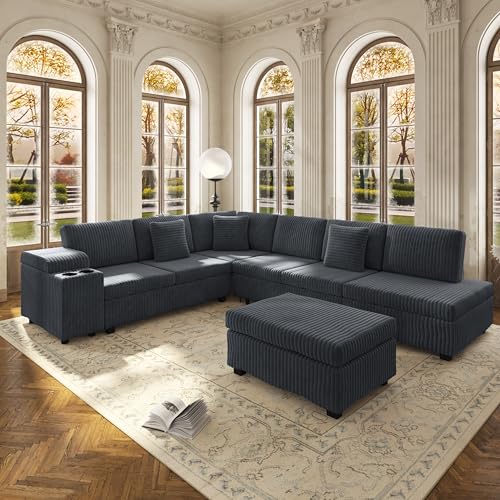
KEIKI 110" L-Shaped Oversized Plush Corduroy Modular Sectional Sofa with Pull-Out Bed, Convertible 6-Seater Sleeper Couch Bed with 1 Ottomans & USB & Cup Holders, Easy Assembly, for Living Room, Gray
Check price on Amazon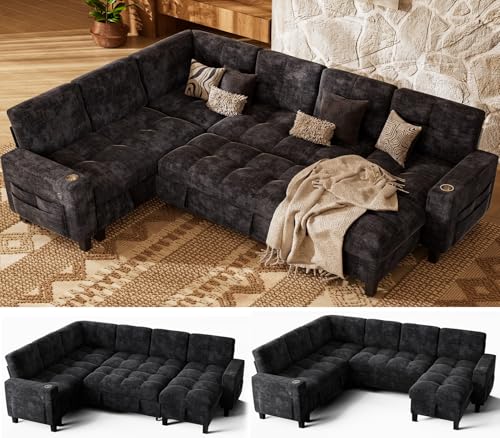
Marsail 7 Seat Modular Sectional Sofa with Pull Out Bed, Charcoal Gray | 110″ Modern Sectional Sleeper Sofas for Living Room, Chenille Comfy Cloud Couch with Storage, USB Ports & Cup Holders
Check price on Amazon
108'' Modular Sectional Sleeper Sofa Couches for Living Room, Dark Grey | L/U Shaped Sleeper Sofa, Pull Out Couch Bed, Hidden Storage, Modular Design, Comfy Corduroy, Removable Cover, Movable Ottoman
Check price on AmazonRelated Reading
Ready to Choose Your Sleeper Sectional?
Compare the recommended models above, then complete the measurement checklist for your room and entryway. A big sectional couch with pull out bed is a long-term investment — the extra time spent verifying dimensions, mechanism quality, and mattress type pays off in years of comfortable use.
View Recommended Models