
Comfortable Futon Couch: The Complete Guide to Smart, Versatile Seating
A futon couch can be the hardest-working piece in your home — a sofa by day, a guest bed by night. But comfort varies dramatically. This guide breaks down frames, mattresses, and real-world tips so you choose a futon you'll actually love sitting on.
Explore Top PicksWhy this guide matters: Most futon regret comes from one mistake — treating the frame and mattress as separate afterthoughts. Comfort depends on how they work together. Below you'll learn the exact features that separate a genuinely comfortable futon couch from a stiff, creaky disappointment.
What Actually Makes a Futon Couch Comfortable?
A futon is a convertible couch, and its dual-purpose nature means comfort is a balancing act. A mattress thick enough for sleeping can feel too firm for lounging, while a plush sofa cushion may not support a guest overnight. The sweet spot comes from three components working in harmony: the mattress core, the frame geometry, and the support surface beneath.
1. The Futon Mattress: The Single Biggest Comfort Factor
The mattress does most of the heavy lifting. Entry-level futon mattresses are typically thin cotton wraps over foam — adequate for occasional sitting but notorious for bottoming out. Mid-range models layer high-density foam with cotton or wool batting, which holds shape far longer. Top-tier and premium futon mattresses often use pocket coils, latex, or multi-layer memory foam, delivering a feel closer to a traditional sofa bed.
Thickness matters, but density matters more. A thick low-density mattress compresses quickly; a moderately thick high-density one keeps its resilience for years. If you plan to sleep on it regularly, look for mattresses in the mid-tier or high-end tier with reinforced edge support and a removable, washable cover.
For a broader look at convertible options beyond the classic futon, our guide to a couch that turns into a bed covers how different mechanisms compare for daily use versus occasional hosting.
2. The Frame: Wood, Metal, or Wall-Hugger
Frames determine both durability and the seating angle. Solid hardwood frames (oak, ash, or birch) are the traditional benchmark — heavy-duty, stable, and quiet. Metal frames are lighter and often easier to assemble, but lower-grade steel can squeak over time. Look for reinforced joints and a rust-proof finish on any metal futon frame.
Wall-hugger designs slide forward as they recline, so you can place the futon closer to the wall without leaving a large gap. If space is tight, this is a meaningful upgrade. For rooms where every inch counts, pair a wall-hugger frame with compact seating strategies from our small space layout guide.
3. Fill and Support Layers
Beyond the core, comfort comes from how the mattress distributes weight. Quality futons use a layer of cotton batting for breathability, a foam or coil core for support, and a soft top layer for surface cushioning. Cheaper models skip the support core entirely, which is why they feel fine in the showroom but flatten within months.
Futon Comfort Tiers at a Glance
To avoid hard numbers, here's how futon couches generally map across quality tiers. Use this as a shopping filter rather than a specification sheet.
| Tier | Best For | Typical Comfort Profile |
|---|---|---|
| Entry-level | Occasional seating, guest rooms, dorms | Firm feel, thin cotton-foam mattress, basic frame; adequate for short sitting sessions |
| Mid-range | Daily lounging, mixed sitting and sleeping | Balanced firmness, high-density foam core, hardwood or reinforced metal frame; holds shape well |
| Premium | Primary seating, frequent overnight guests | Plush yet supportive, coil or latex layers, solid hardwood frame with wall-hugger option |
| Luxury / high-end tier | Living room centerpiece, full-time sleeper | Sofa-grade cushioning, multi-layer pocket coil mattress, premium upholstery, near-traditional bed comfort |
How to Choose a Comfortable Futon Couch for Your Space
Match the Futon to Its Primary Job
Be honest about usage. A futon that is 90% seating and 10% sleeping should lean toward sofa comfort — softer top layers, a supportive back angle, and fabric that feels good against skin. A futon used for regular overnight guests should lean toward mattress quality: higher density, better edge support, and a flatter sleeping position. If you need both, the mid-range to premium tier is where the compromise feels smallest.
Measure the Room — and the Doorway
Futons are bulky. Measure the intended footprint, then confirm the frame will fit through doorways, stairwells, and hallways. Many buyers forget that a fully assembled futon frame may not navigate tight corners. Choosing a model with tool-free or partial assembly solves this. Our measurement guide walks through the doorway and clearance checks step by step.
Consider Upholstery and Maintenance
Futon covers take more wear than standard sofa fabric because the mattress flexes every time it converts. Removable, machine-washable covers are a practical choice for households with pets or kids. Performance fabrics resist stains and fading, while microfiber offers a soft hand at the mid-tier. For households with animals, pair your choice with the preventive strategies in our pet damage prevention guide.
Try Before You Commit (or Read Carefully)
If shopping in person, sit for at least ten minutes and lie down for five. Check for pressure points at the frame bar and listen for squeaks when shifting weight. Online, read reviews specifically mentioning long-term comfort and mattress compression — those are the most reliable signals of real-world performance.
Making a Futon Couch Feel Like a Real Sofa
The reputation of futons as "college furniture" comes from styling neglect, not inherent design flaws. A few deliberate choices close the gap:
- Layer a thick throw or quilt over the seat to add surface softness and hide mattress seams.
- Use structured pillows to define the backrest and add lumbar support — a futon's flat back benefits enormously from two or three firm pillows.
- Choose a fitted cover in a neutral, textured fabric to give the futon a tailored, sofa-like silhouette.
- Add an area rug and side table to anchor the futon visually and make it read as intentional seating rather than a spare bed.
- Keep the frame visible if it's hardwood — a quality wood frame is a design asset, not something to hide.
For pillow pairing and color layering ideas, our throw pillows guide covers arrangements that work especially well on low-back futon frames.
Recommended Comfortable Futon Couches
⚠️ AFFILIATE DISCLOSURE: This website contains affiliate links. As an affiliate Associate, we earn from qualifying purchases. If you make a purchase through these links, we may receive a small commission at no additional cost to you. Read our full affiliate policy.

Marsail 70" Convertible Futon Sofa Bed, Small Recliner Sleeper Sofa with Adjustable Backrest, Corduroy Loveseat Futon Couch for Apartments, Living Room, Office, Guest Room (Grey)
Check price on Amazon
COMHOMA Futon Sofa Bed, 72″ Convertible Sleeper Sofa, Upholstered Loveseat | Adjustable Fabric Foldable Couch,Multi-angle Reclining Loveseat with Pillows,Futon Set for Living Room,Apartment,Office
Check price on Amazon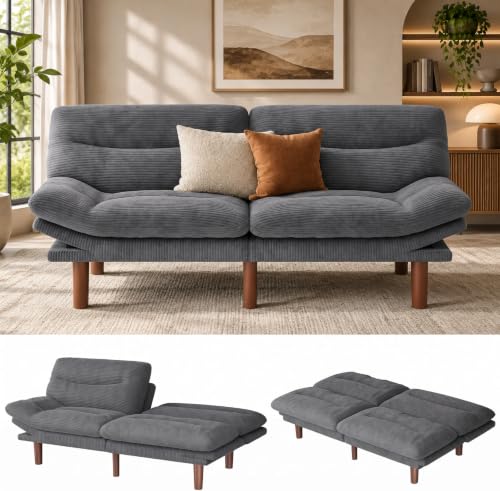
Marsail Futon Sofa Bed, Small Convertible Loveseat Couch, Grey | 66" Versatile 2-in-1 Sleeper Couch with Adjustable Backrest & Armrest, Corduroy Futon Couch for Small Apartment & Living Room
Check price on Amazon
Flamaker Futon Sofa Bed, Black Faux Leather Convertible Loveseat Couch | Modern Adjustable Folding Futon Set with 2 Cup Holders & Removable Armrests, Recliner Lounge for Living Room & Apartment
Check price on Amazon
78" 5-in-1 Convertible Futon Sofa Bed, Boneless Corduroy, Green | 5-in-1 Modular Sleeper Sofa for Living Room, Guest Room or Apartment, Fixed-Shape Frame, Corduroy Covers, No Assembly
Check price on Amazon
COMHOMA 72″ Futon Sofa Bed, Sleeper Sofa with Adjustable Backrest,Black | Convertible Fabric Futon Couch with Pillows,Upholstered Recliner Lounge,Multi-angle Loveseat,Living Room Furniture
Check price on Amazon
78" 5-in-1 Convertible Futon Sofa Bed, Boneless Couch for Living Room | Thick Corduroy Boneless Sofa Bed, 4-Bracket Frame, Storage Pocket, Modular, No Assembly for Guest Room or Apartment | Green
Check price on Amazon
COMHOMA 72″ Convertible Futon Sofa Bed, Adjustable Backrest, Black | Breathable Fabric Futon Couch with Pillows,Multi-angle Ergonomic Reclining,Space-saving Sleeper Sofa for Living Room
Check price on AmazonFinal Buying Checklist Before You Commit
Run through these points before finalizing any futon couch purchase. They catch the most common sources of post-purchase regret.
- Frame material and joint quality — solid hardwood or reinforced metal with no visible gaps at the joints.
- Mattress density and layering — high-density foam or coil core, not just thick cotton batting.
- Conversion mechanism — smooth operation without pinching, tested at least three times in person or verified through detailed reviews.
- Sleeping surface flatness — the frame should create a level sleeping platform, not a noticeable dip.
- Cover removability — zippered, washable covers extend the futon's usable life significantly.
- Delivery and assembly — confirm whether the frame arrives assembled and whether it fits your entry path.
- Warranty coverage — frame and mattress warranties are often separate; read both.
A Note on Long-Term Comfort
A comfortable futon couch is not a one-time purchase decision — it's a maintenance relationship. Rotate and flip the mattress every few months, tighten frame bolts periodically, and vacuum under the seat cushion to prevent debris buildup. These small habits keep a mid-range futon performing like a higher tier for years. If you're furnishing a rental or a first apartment, our rental furnishing guide offers additional strategies for choosing furniture that moves well and lasts.
Frequently Asked Questions About Futon Comfort
Is a futon couch comfortable for everyday sleeping?
It can be, but only with the right mattress. Entry-level futons are not designed for nightly sleep. Look for mid-range or premium models with high-density foam, coil, or latex cores. A mattress topper can bridge the gap for occasional guests, but regular sleepers should invest in mattress quality from the start.
How thick should a comfortable futon mattress be?
Thicker is not automatically better — density matters more than raw thickness. A high-density mattress at moderate thickness often outperforms a thick low-density one. For sleeping, prioritize mattresses described as high-density or multi-layer rather than simply "extra thick."
Can I use a regular sofa mattress on a futon frame?
No. Futon frames flex and fold, and standard sofa cushions are not designed for that motion. Using the wrong mattress can damage both the frame and the cushion. Always pair a futon frame with a purpose-built futon mattress.
Do futons work in small apartments?
Yes — futons are one of the most space-efficient seating and sleeping solutions available. A wall-hugger frame maximizes floor space, and a loveseat-sized futon fits tight rooms without sacrificing function. Pair it with compact layout principles from our apartment sofas guide for the best fit.
How do I stop a futon from squeaking?
Squeaks usually come from loose frame joints or metal-on-metal contact. Tighten all bolts, add felt pads at wood-on-wood contact points, and check that the mattress isn't shifting against the frame. A lubricant applied sparingly to metal hinges resolves most remaining noise.
What's the difference between a futon and a sleeper sofa?
A futon folds flat using the mattress itself as the sleeping surface, while a sleeper sofa hides a separate folding mattress inside a traditional sofa frame. Futons are generally lighter, simpler, and easier to move. Sleeper sofas typically offer a more conventional sofa feel when seated. Our comparison of a couch and bed in one covers the trade-offs in more detail.
The Bottom Line
A comfortable futon couch is entirely achievable — the key is refusing to treat the mattress and frame as interchangeable parts. Prioritize a high-density mattress, a solid frame with good joint construction, and a cover you can actually clean. Match the tier to how often you'll sleep on it, style it deliberately with pillows and throws, and maintain it with regular flipping and tightening. Do those things, and your futon will earn its place as the most versatile seat in the house.
Ready to compare options? The recommendations above are filtered for comfort-first construction across the tiers discussed in this guide.