
Couch Ottoman: The Complete Buying Guide
Learn how to choose a couch ottoman that fits your sofa, your room, and the way you live. From storage options to upholstery materials, this guide covers everything you need before you decide.
Explore Ottoman TypesWhy a couch ottoman matters: A well-matched ottoman turns a sofa into a multi-purpose centerpiece. It works as a footrest, an extra seat, a surface for trays, or a hidden storage compartment. Choosing the right one comes down to size, material, mechanism, and how it fits into your daily routine. This guide walks you through each decision so you can buy with confidence.
What Is a Couch Ottoman?
A couch ottoman is an upholstered, backless seating piece designed to pair with a sofa, sectional, or loveseat. Unlike a standalone accent stool, a couch ottoman is sized and styled to complement the seating it sits beside. It can be placed in front of the couch as a footrest, tucked against the end of a sectional as an extension of the seat, or positioned to bridge two seating groups in an open-plan living room.
The versatility is the main appeal. In a small living room, an ottoman can replace a coffee table and double as a seat when guests arrive. In a larger room, it acts as a visual anchor that ties the sofa and surrounding furniture together. If you are still mapping out your seating plan, our living room layout guides can help you decide where an ottoman fits best.
Main Types of Couch Ottomans
Ottomans are not a single category. They vary by function, mechanism, and construction. The table below compares the most common types so you can match one to your needs.
| Type | Best For | Key Feature | Considerations |
|---|---|---|---|
| Standard upholstered ottoman | Footrest, extra seat, casual living rooms | Soft top, simple construction | Lightweight and easy to move; not a stable surface for drinks |
| Storage ottoman | Small rooms, families, decluttering | Lift-off or hinged lid with interior compartment | Check hinge quality and lid support before use |
| Coffee table ottoman | Living rooms without a traditional table | Firmer top or tray-topped surface | Choose a firm cushion if you plan to set down trays |
| Modular or sectional extension | Sectionals, chaise-style layouts | Designed to attach or align with a specific sofa | Measure the sofa depth and seat height first |
| Round or circular ottoman | Softening rectangular rooms, conversation areas | Curved silhouette, often large diameter | Takes up more floor space than a square of similar seat area |
| Sleeper or convertible ottoman | Guest space, multi-use rooms | Folds out into a small bed or lounger | Verify the mechanism and mattress thickness |
Storage Ottoman
Ideal for keeping throws, pillows, and remotes out of sight. Look for a reinforced lid and a soft-close hinge if children use the room. Pair it with a storage ottoman guide for deeper comparisons.
Coffee Table Ottoman
A firm-top ottoman can replace a coffee table without hard edges. Choose a tight, high-density cushion and add a serving tray for stability. See our coffee table guides for sizing and placement tips.
Sectional Extension
Some modular sofas accept a matching ottoman that clips into place. This works well for modular sofa setups and open-plan rooms where seating needs to flex.
Round Ottoman
A round ottoman softens the hard lines of a rectangular sofa and works well in conversation layouts. It pairs naturally with circular seating arrangements.
How to Choose the Right Size
Size is the most common mistake in ottoman buying. An ottoman that is too large crowds the room; one that is too small looks disconnected from the sofa. Use these guidelines as a starting point:
- Length: Aim for an ottoman that is roughly half to two-thirds the length of your couch. A three-seat sofa usually pairs well with a medium or large rectangular ottoman.
- Height: The top of the ottoman should sit close to the seat height of the couch, usually within a small margin, so it reads as part of the same seating group.
- Depth: Keep at least 14 to 18 inches of walkway between the ottoman and other furniture or walls.
- Room scale: In a compact room, a single square ottoman may be enough. In a large room, a pair of matching ottomans can create a longer, more balanced line.
If you are furnishing a compact space, our small space layout guide explains how to place an ottoman without blocking traffic. For larger rooms, the large room layout guide covers grouping and scale.
Upholstery Materials and Durability
The material affects comfort, cleaning, and how the ottoman ages. Here is how the main options compare:
- Performance fabric: Resists stains and moisture, making it a strong choice for family rooms and pet-friendly homes. Often found in mid-range and premium tiers.
- Leather: Durable and easy to wipe down, but can show scratches. A leather sofa guide explains how to match leather tones and finishes.
- Velvet: Soft and visually rich, but requires more careful cleaning. Best for low-traffic living rooms or adult-only spaces.
- Microfiber: A practical mid-tier option that handles daily use well and cleans easily.
- Woven or textured fabric: Adds visual interest and hides minor wear, but check the rub count if the ottoman will be used daily.
If pets or children share the room, consider a waterproof couch or a waterproof couch cover for dogs to protect nearby upholstery. For maintenance routines, see our couch care and maintenance guides.
How to Match an Ottoman to Your Couch
Matching is part practical, part visual. Start with the sofa you already own or plan to buy, then work outward:
- Exact match: Same fabric and color creates a tailored, built-in look. This works best with sectional sofas and modular pieces.
- Complementary contrast: A leather sofa with a fabric ottoman, or a neutral sofa with a textured ottoman, adds depth without clashing.
- Shape pairing: A rectangular ottoman aligns with a standard sofa; a round ottoman softens a boxy frame; a square ottoman suits a loveseat or loveseat arrangement.
- Color strategy: Pull a secondary color from your rug or throw pillows so the ottoman feels intentional rather than added on.
For styling ideas, our couch decor and styling section covers pillow arrangements, throws, and tray styling that work well with ottomans.
Storage vs. Non-Storage Ottomans
Storage ottomans add hidden functionality, but they are not automatically the better choice. A non-storage ottoman is usually lighter, simpler, and easier to move when you rearrange the room. A storage ottoman is better when floor space is limited and you need a place for blankets, games, or children's items.
Before choosing storage, check the lid mechanism. A soft-close hinge reduces the risk of pinched fingers, and a reinforced lid can double as a seat. If the ottoman will mainly be a footrest, a simpler non-storage design may be more comfortable and easier to maintain.
Placement Ideas for Your Living Room
Where you place the ottoman changes how the room functions. These are the most common and effective arrangements:
- In front of the sofa: The classic footrest position. Leave enough walkway on both sides so people can pass without stepping over it.
- At the end of a sectional: Acts as a chaise extension or a landing spot for drinks and trays.
- Between two sofas: Bridges a conversation area and provides shared surface space.
- In a corner or reading nook: A small round ottoman works as a footrest beside an armchair. See our reading nook guide for layout ideas.
- Under a window: A low ottoman can add seating without blocking light.
If your room has a television as the focal point, the TV viewing layout guide explains how to keep sightlines clear while still using an ottoman for comfort.
Buying Checklist Before You Decide
Use this checklist to narrow your options before you commit:
- Measure the sofa length, seat height, and available floor space.
- Confirm the primary use: footrest, seat, table substitute, or storage.
- Check the upholstery material against your household: pets, children, sunlight, and cleaning habits.
- Test the lid or mechanism if the ottoman is convertible or has storage.
- Confirm the ottoman can be returned if the color or scale does not work in the room.
- Review the warranty and care instructions for the upholstery.
For a broader planning framework, our buying guides section covers measurement, material selection, and post-purchase steps.
Recommended Couch Ottomans
⚠️ AFFILIATE DISCLOSURE: This website contains affiliate links. As an affiliate Associate, we earn from qualifying purchases. If you make a purchase through these links, we may receive a small commission at no additional cost to you. Read our full affiliate policy.

JINGLING 37.4" Rectangle Ottoman Foot Rest for Couch - Corduroy Upholstered Compressed Memory Foam, Cloud Ottoman for Modular Sectional, No Assembly Required, DIY Combination, Camel
Check price on Amazon
ChilternCasa 25.6" Boneless Ottoman for Couch, Plush Corduroy Foot Stools Ottomans, Compressed Memory Foam Sofa Foot Rest for Living Loom, No Assembly Require, Black
Check price on Amazon
Fabulcozy 23.6in Pouf Ottoman, Corduroy Footstool Foot Rest Floor Seating | Dual-layer support with soft chunk-foam top & firm base. Ideal floor footrest & extra seating for living room, Dark Gray
Check price on Amazon
Vellorise Ottoman Module for Cloud Modular Sectional Sofa | Add-on Module for Refurb & Expansion, Footrest Unit with Detachable Comfort Seat Cushion, Warm White
Check price on Amazon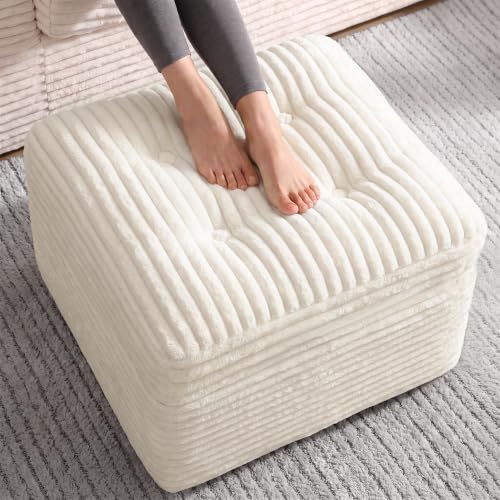
Fabulcozy 23.6in Pouf Ottoman, Corduroy Footstool Foot Rest Seating, Beige | Dual-layer support poofy pouf with soft chunk-foam top & firm foam base. Ideal floor foot stool & seating for living room
Check price on Amazon
Boneless Ottoman, Modern Corduroy Cloud Foot Rest Foam Support, Oversized Modular Sectional Sofa Stool for Living Room, Bedroom & Small Spaces, No Assembly Required
Check price on Amazon
HONBAY Modern Corduroy Ottoman Module Sofa, Ottoman Bench with Storage, Dark Grey
Check price on Amazon
VANOMi Upholstered Square Modular Ottoman for Modular Sectional Sofa, Ottoman Footrest and Seat Cube for Living Room, Chenille
Check price on AmazonFrequently Asked Questions
What size ottoman should I pair with my couch?
A common guideline is to choose an ottoman that is roughly half to two-thirds the length of your couch for a balanced look. For a standard three-seat sofa, a medium or large rectangular ottoman usually works well, while a loveseat pairs better with a square or smaller rectangular ottoman.
Is a storage ottoman practical for a living room?
Yes. A storage ottoman adds hidden space for throws, pillows, remotes, and children's items while still functioning as a footrest or coffee table substitute. It is especially useful in small living rooms where every piece of furniture must do more than one job.
Should the ottoman match the couch exactly?
An exact match creates a cohesive, tailored look, while a complementary material or color can add visual interest. Many designers pair a leather couch with a fabric ottoman, or a neutral sofa with a textured ottoman, to keep the room from feeling flat.
Can an ottoman replace a coffee table?
An upholstered ottoman can replace a coffee table in a living room, especially in homes with young children or pets where soft edges are safer. A firm-top or tray-topped ottoman offers a more stable surface for drinks and decor.
How do I keep an ottoman from sliding on hardwood floors?
Look for ottomans with rubberized or felt glides, or add adhesive felt pads to the base. A rug under the seating group also reduces movement and protects the floor. Our area rug guides cover sizing and placement for living rooms.
Ready to Choose Your Couch Ottoman?
Review the recommended options above, compare the types and materials that fit your room, and check availability before you decide. A well-chosen ottoman is one of the most practical additions you can make to a living room.
View Recommended Ottomans