
Couch That Has Pull Out Ottoman: The Complete Buyer's Guide
Everything you need to know about couches with pull out ottomans — how the mechanisms work, which configurations suit your room, and how to pick a model that holds up to daily lounging.
Why this guide matters: A couch that has a pull out ottoman combines two pieces of furniture into one footprint. When the ottoman is tucked away, you get a clean sofa silhouette. When it extends, you gain a lounge surface that rivals a chaise. For anyone researching convertible seating before buying, the real questions are about mechanism quality, clearance, upholstery durability, and long-term comfort — and that is exactly what this guide answers.
What Is a Couch With a Pull Out Ottoman?
A couch that has a pull out ottoman is built with a secondary seating section stored inside or beneath the main sofa frame. The ottoman section slides outward on glides, tracks, or a folding hinge system, extending the usable depth of the seat. Depending on the model, the extended section functions as a chaise-style footrest, an extra lounging platform, or a flat sleep surface when paired with the backrest recline.
This design solves a common living room trade-off. A standalone ottoman adds comfort but consumes floor space permanently. A pull out ottoman stays hidden until needed, which keeps walkways clear and preserves a tidier visual line. For households that alternate between compact everyday seating and occasional lounging, the retractable design is far more practical than a fixed chaise.
If you are also comparing this design against a sofa that unfolds into a flat platform, our guide to a couch that has pull out bed explains the differences in mechanism, mattress type, and sleeping comfort.
The Main Types of Pull Out Ottoman Couches
Not every extendable ottoman works the same way. The mechanism determines how much floor space you need, how smooth the motion feels, and how the couch holds up over years of use. These are the configurations you will encounter while researching.
Slide-Out Ottoman
A cushion section mounted on glides or casters slides forward from under the seat. Simple, reliable, and easy to operate. Entry-level versions use basic nylon glides, while mid-range models upgrade to smoother tracks.
Fold-Out Ottoman
The ottoman section folds forward on a hinge, similar to a futon mechanism. It requires less floor clearance than a full slide-out and is common on compact and apartment-sized couches.
Recliner With Extending Footrest
Built on a reclining frame, the footrest extends outward on a metal linkage. The smoothest motion of the group, often paired with a wall-hugger design that reduces the clearance needed behind the sofa.
Modular Ottoman Section
In modular systems, the ottoman is a separate module that connects to the sofa and can be pushed in or pulled out freely. The most flexible arrangement and the easiest to reconfigure or replace.
| Tier | Typical Mechanism | Best For | Clearance Profile |
|---|---|---|---|
| Essential tier | Basic slide-out glides | Guest rooms, occasional lounging | Moderate forward clearance |
| Balanced tier | Fold-out hinge or upgraded track | Everyday family living rooms | Compact forward clearance |
| High-end tier | Metal recliner linkage | Daily lounging, home theater | Reduced rear clearance with wall-hugger design |
| Flagship tier | Modular pull-out module | Flexible layouts, open floor plans | Configurable — module detaches entirely |
How the Pull Out Mechanism Actually Works
The mechanism is the single most important quality differentiator in this category. Two couches can look identical on the showroom floor, yet one will extend smoothly for a decade while the other develops a grinding track within a year. Understanding the components helps you evaluate listings and product descriptions more critically.
Frame Construction
The extension mechanism is only as strong as the frame it mounts to. Kiln-dried hardwood frames and reinforced corner blocks distribute the load of a person sitting on the fully extended ottoman. Engineered wood frames are common at the entry level and acceptable for lighter use, but they are less resistant to repeated stress at the mount points.
Glides, Tracks, and Linkages
Basic nylon glides are quiet and adequate for occasional use. Steel ball-bearing tracks provide smoother travel and resist binding when the ottoman is loaded. Recliner-style metal linkages are the most robust option and are typically found on high-end tier models. Whichever system you choose, check that the moving parts are accessible for lubrication and that replacement parts are available from the manufacturer.
Cushion Support Over the Extension
The extended ottoman carries body weight across a span that is unsupported beneath the middle. Better models use sinuous springs or a high-density foam core rated for that overhang. If the cushion feels soft or bottoming out near the leading edge, that is a sign the support layer is underspecified for regular use.
Quick Mechanism Check
Operate the ottoman at least five times before committing. Listen for scraping or clicking, feel for uneven travel, and check whether the ottoman locks securely in both the extended and retracted positions. A mechanism that wobbles when fully extended will only loosen further with use.
Measuring Your Space Before You Buy
The extended footprint is the number most buyers underestimate. A couch that fits comfortably against a wall in its closed position may leave no room to walk once the ottoman slides out. Take these measurements before ordering.
- Closed footprint: Width, depth, and height with the ottoman fully retracted — this is what your room sees most of the time.
- Extended depth: The distance from the back of the sofa to the leading edge of the fully extended ottoman. Add at least 18 to 24 inches of walkway beyond that.
- Doorway and hallway clearance: The couch must fit through your entry path in its shipping configuration. Check doorway width, stair turns, and elevator dimensions.
- Adjacent furniture: A coffee table in front of the sofa will block the extension path. Plan to move it or choose a couch positioned with open floor ahead.
- Wall clearance: Standard recliner-style models need several inches behind the backrest. Wall-hugger designs reduce this requirement substantially.
If your room is tight, pair these measurements with the strategies in our small space layout guide to confirm the extended position still leaves a functional room.
Upholstery Choices and Durability
Pull out ottoman couches take more abrasion than fixed sofas because the ottoman surface doubles as a footrest and lounging platform. The upholstery should be rated for that kind of use.
Performance Fabric
Performance weaves are treated or constructed to resist spills, staining, and pilling. They are the most forgiving choice for households with children or pets and hold up well on high-contact surfaces like an extended ottoman.
Leather and Faux Leather
Top-grain leather wipes clean easily and develops character over time. It is an excellent match for recliner-style mechanisms and premium builds. Faux leather is more uniform in appearance but is less breathable and can peel at flex points over many years.
Velvet and Textured Weaves
Velvet is comfortable and visually rich, but it shows compression marks where the ottoman folds and requires more careful cleaning. It suits lower-traffic living rooms or households willing to maintain it properly. If velvet is your preference, review our notes on velvet sofas for care expectations.
Comfort and Support: What to Evaluate
Comfort in this category is not just about how the seat feels on day one. It is about how the cushion core, suspension, and extension mechanism work together when someone is actually lounging.
- Seat depth: A deeper seat suits lounging, while a shallower seat keeps posture upright for conversation. The extended ottoman effectively increases usable depth, so the closed seat can be more compact.
- Foam density: High-density foam retains shape longer, especially important on an ottoman surface that receives concentrated weight.
- Suspension: Sinuous springs and pocket coils outperform webbing on load-bearing extension sections.
- Back support: If the couch doubles as a lounging spot, check that the backrest angle supports the lower back rather than forcing a slump.
- Locking positions: Some ottomans lock at multiple extension lengths, which is useful for shorter legs or partial lounging.
How to Match the Couch to Your Room Layout
A pull out ottoman changes how traffic moves through a room, so place it before you finalize the layout. These are the arrangements that work best.
Facing the Focal Point
Position the couch facing the television or fireplace, with open floor ahead for the ottoman to extend. Keep side tables at the arms rather than directly in front. This is the most common and most functional arrangement for lounging-focused living rooms.
Open Floor Plan Zones
In a combined living and dining space, use the couch as the boundary between zones, with the ottoman extending into the living area rather than into the walkway. The extended ottoman then reinforces the seating zone instead of obstructing circulation.
Corner and Loveseat Configurations
Compact loveseats with pull out ottomans work well in corners and along short walls. Check that the extension path does not collide with a side wall or radiator. Our guide to loveseats covers the sizing trade-offs in more detail.
Sectional and Modular Setups
If you are furnishing a larger room, a sectional with a pull out ottoman module offers the most flexibility. The ottoman can sit flush during everyday use and extend for movie nights. For layout planning at this scale, see our sectional sofas overview.
Pull Out Ottoman vs. Other Convertible Options
Buyers often weigh a pull out ottoman against a sleeper sofa, a futon, or a standalone chaise. Each solves a different problem, and the right choice depends on how often you actually need the extra surface.
- Versus a sleeper sofa: A sleeper provides a dedicated sleeping surface but requires a larger extension footprint and is heavier to move. A pull out ottoman is lighter and easier to operate for lounging, but is not a substitute for a guest bed. Our sleeper sofas guide covers the sleeping side of the comparison.
- Versus a futon: Futons fold flat and often convert completely, but their cushions tend to be firmer. A pull out ottoman couch is generally more comfortable for everyday sitting.
- Versus a chaise lounge: A fixed chaise is comfortable and simple, but it permanently occupies floor space. The pull out ottoman gives you the same lounging benefit without the daily footprint.
Maintenance and Longevity
A few habits will keep the mechanism and upholstery in good condition for years.
- Vacuum the extension section regularly, including the gap where the ottoman retracts, to prevent debris from fouling the glides.
- Lubricate metal tracks and linkages according to the manufacturer's schedule — usually once or twice a year.
- Rotate and flip removable cushions to distribute wear evenly across the ottoman and seat.
- Avoid standing or jumping on the extended ottoman; the overhang is designed for seated weight, not impact loads.
- Clean spills promptly and follow the upholstery code for your fabric type. Our fabric cleaning reference covers common cleaning codes.
Common Buying Mistakes to Avoid
- Ignoring the extended clearance: The most frequent regret. Measure the open position, not just the closed footprint.
- Choosing on upholstery alone: The mechanism and frame matter more for long-term satisfaction than the fabric color.
- Assuming all ottomans convert to beds: Most pull out ottomans extend for lounging only. If sleeping is a requirement, confirm the specification explicitly.
- Skipping the delivery path check: A couch that cannot fit through the door is a return waiting to happen.
- Overlooking weight limits: Extension sections are rated for specific loads. Check the manufacturer's stated capacity.
Frequently Asked Questions
What is a couch that has a pull out ottoman?
It is a seating piece where a hidden ottoman section extends outward from beneath or within the sofa frame. The extension creates a chaise-like lounge surface or an additional resting platform, and some models combine it with a recline function for full lounging.
Is a pull out ottoman couch suitable for everyday lounging?
Yes, when the extension mechanism is reinforced and the upholstery is durable. Mid-range and premium models generally use smoother glides and heavier-duty frames, which makes daily extension and retraction more reliable over time.
How much clearance does a pull out ottoman need?
Plan for the full extended depth of the ottoman plus a walkway. A common rule is to leave at least 18 to 24 inches of clearance beyond the fully extended position so the mechanism can operate without obstruction.
Can a pull out ottoman couch be used in a small living room?
Yes, provided the extension path is clear when in use. Loveseat-sized and apartment-sized models with compact footprints are often the best fit, especially when the ottoman tucks fully back into the frame.
What upholstery works best for a pull out ottoman couch?
Performance fabric and top-grain leather are the most practical choices. Performance weaves resist spills and everyday abrasion, while leather wipes clean easily. Velvet is comfortable but demands more careful maintenance.
Do pull out ottoman couches convert into beds?
Most pull out ottomans extend for lounging only and do not provide a full sleeping surface. If sleeping capability is essential, look for a model explicitly specified as a sleeper, or compare against a dedicated sleeper sofa design.
Final Checklist Before You Decide
- The mechanism operates smoothly through at least five cycles.
- The extended depth fits your room with a clear walkway.
- The delivery path accommodates the shipping dimensions.
- The frame uses solid hardwood or reinforced engineered wood at the mount points.
- The upholstery matches your household's cleaning and durability needs.
- The cushion support over the extension does not bottom out.
- Replacement parts and warranty terms are available from the manufacturer.
Once these boxes are checked, you are ready to compare specific models with confidence. If you have a question that is not covered here, the CouchFocus team is reachable through our contact page.
Recommended Couch With Pull Out Ottoman
⚠️ AFFILIATE DISCLOSURE: This website contains affiliate links. As an affiliate Associate, we earn from qualifying purchases. If you make a purchase through these links, we may receive a small commission at no additional cost to you. Read our full affiliate policy.
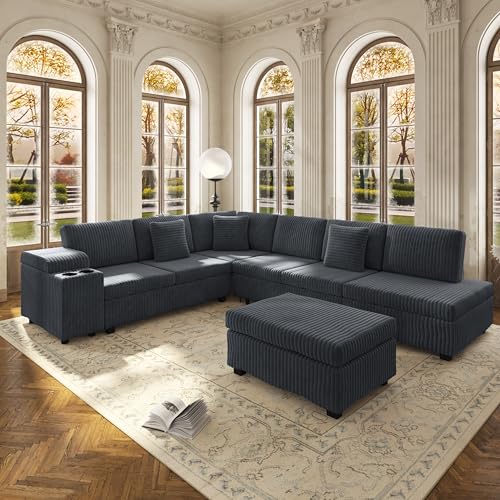
KEIKI 110" L-Shaped Oversized Plush Corduroy Modular Sectional Sofa with Pull-Out Bed, Convertible 6-Seater Sleeper Couch Bed with 1 Ottomans & USB & Cup Holders, Easy Assembly, for Living Room, Gray
Check price on Amazon
Sofa Bed Pull Out 2 in 1 Sectional Sleeper Sofa L Shaped Couch with Storage | Convertible Sofa Couches for Living Room, USB Charging Ports, Cup Holder (Dark Gray)
Check price on Amazon
Ihanherry 86" Modular Sectional Sofa with Pull Out Bed, 4-Seater L Shaped Sectional Sleeper Couch with Storage Ottoman, Chenille Convertible Couches for Living Room, Apartment (Green)
Check price on Amazon
Dreamzie 65'' Convertible Sleeper Sofa Bed with Swivel Side Table, Chenille Pull Out Couch for Living Room, Loveseat Sleeper Couch with Hidden Storage Space | Charging Port | Cup Holders, Grey
Check price on Amazon
Huatean Home Oversized Sleeper Sofa Couch, Sectional Sofa Bed, Dark Grey | 110 inch 2 in 1 Pull Out Couch with Double Storage Chaise, Sectional Sleeper Sofa Bed with Side Pocket for Living Room
Check price on Amazon
Portaforta Sleeper Sofa with Pull Out Couch Bed, 48" Convertible Pull-Out Sofa Bed Chair, 3-in-1 Futon Couch with Reclining Backrest and Side Pockets for Living Room Bedroom Apartment, Beige
Check price on Amazon
VINGLI Loveseat Sleeper Sofa Couch with Pull Out Chair Bed for Living Room | Green Convertible Futon Sofa Bed, Corduroy Couch Bed with USB Port, Cup Holder, Side Storage for Bedroom, Apartment, Playroom
Check price on Amazon