
Couch with Two Ottomans: The Complete Buyer's Guide
Everything you need to know about dual-ottoman couches — configurations, comfort, materials, and space planning — so you can choose with confidence.
Explore Recommended ModelsWhat You'll Learn in This Guide
What Is a Couch with Two Ottomans?
A couch with two ottomans is a seating set that pairs a main sofa — typically a standard sofa, loveseat, or sectional — with two matching or complementary ottomans. Unlike a single-ottoman arrangement, the dual-ottoman setup gives you two independent footrests that can be positioned together as a continuous chaise, separated as individual footrests, or moved around the room as extra seating or surface space.
This configuration has become increasingly popular because it blends the comfort of a chaise lounge with the flexibility of modular furniture. You are not locked into a fixed chaise; you can reconfigure the ottomans based on whether you are watching a movie, hosting guests, or simply need extra walking space.
Key insight: The two ottomans are usually sold as part of a coordinated set, but many buyers also pair a standalone sofa with two matching ottomans purchased separately. If you are comparing layouts, you may also want to explore a couch with pull-out ottoman for a more integrated storage-and-footrest solution.
Why Choose a Dual-Ottoman Couch?
The two-ottoman format solves several common living room problems at once. Here are the main benefits buyers report after switching to this configuration:
- Flexible seating: Each ottoman can serve as a footrest, a spare seat for a guest, or a temporary surface for a tray.
- Customizable lounge depth: Push both ottomans against the sofa to create a deep lounge setup, or separate them for a more traditional sofa-plus-footstool layout.
- Better for shared use: Two people can each claim an ottoman instead of negotiating over a single chaise.
- Easier cleaning: Independent ottomans are simpler to move and vacuum underneath than a fixed chaise extension.
- Design cohesion: Matching ottomans reinforce a coordinated look without requiring a full sectional.
For households that frequently rearrange furniture or entertain in different room configurations, the dual-ottoman approach offers a middle ground between a fixed sectional and a purely modular sofa. If you are weighing a more elaborate setup, you might compare this format against a couch with storage chaise and pull-out bed to see which flexibility matters more for your lifestyle.
Common Configurations Explained
Not every "couch with two ottomans" is built the same way. Understanding the main configurations will help you narrow down what fits your room and routine.
1. Sofa Plus Two Freestanding Ottomans
The most common and versatile setup. The sofa is a standard three-seater or loveseat, and the two ottomans are separate pieces with no physical connection. This is the easiest configuration to rearrange and the most forgiving in tight spaces.
2. Sectional with Two Matching Ottomans
A sectional sofa — often L-shaped — paired with two ottomans that match the upholstery. The ottomans can extend the sectional's seating area or float in the middle of the room. This works well in open-plan living areas where the ottomans double as a visual bridge between the sofa and a coffee table.
3. Modular Sofa with Dual Ottoman Units
Some modular systems include ottoman modules that clip or rest against the main seating units. These are the most integrated option but also the least flexible if you want to move pieces independently.
4. Reclining Sofa with Two Ottomans
A reclining couch paired with two ottomans is less common but useful in home theater setups. The ottomans provide additional footrest surface when the recliners are not deployed. If you are interested in powered seating, you may also want to review a couch with recliners on each end as a comparison point.
| Configuration | Best For | Flexibility | Space Requirement |
|---|---|---|---|
| Sofa + two freestanding ottomans | Renters, small-to-mid rooms, frequent reconfiguration | High | Moderate |
| Sectional + two matching ottomans | Open-plan living, family rooms, entertaining | Medium | High |
| Modular sofa + dual ottoman units | Design-focused homes, long-term layouts | Low to medium | High |
| Reclining sofa + two ottomans | Home theater, relaxation-focused rooms | Medium | High |
Materials and Upholstery Options
The upholstery you choose affects durability, maintenance, and how the ottomans hold up to daily use. Since ottomans are often used as footrests, seats, and even temporary tables, material choice matters more than on a purely decorative piece.
Fabric Upholstery
Woven fabrics — cotton blends, linen blends, and polyester blends — are the most common choice for dual-ottoman sets. They offer a wide range of colors and textures and are generally comfortable in all seasons. Performance fabrics have improved significantly and now resist stains and fading well enough for family use.
Leather and Faux Leather
Leather ottomans are easy to wipe clean and develop a patina over time. Faux leather offers a similar look with less maintenance but can crack in dry environments over many years. If you prefer a leather look across the whole set, a dark brown leather L-shaped couch paired with two matching ottomans creates a cohesive, upscale appearance.
Velvet and Textured Fabrics
Velvet and boucle ottomans add visual warmth and tactile appeal. They are best suited to low-traffic living rooms or households without pets that scratch. Velvet requires more careful cleaning than flat-weave fabrics.
Microfiber and Performance Weaves
Microfiber remains a practical choice for households with children or pets. It is soft, resistant to everyday spills, and generally holds up well in mid-range and premium tiers.
Practical tip: If the ottomans will double as seating, choose a firmer upholstery with a tight weave. Loosely woven fabrics can stretch over time when used as footrests or extra seats.
Comfort and Cushion Construction
Comfort in a dual-ottoman couch comes from three components: the sofa's seat cushions, the ottoman cushioning, and the frame and suspension system. Understanding these helps you judge whether a set will feel supportive years from now.
Seat Cushion Fill
- High-density foam: The most common fill. Good support and resilience in mid-range and premium tiers.
- Foam wrapped in fiber: Softer initial feel with decent support. Common in entry-level to mid-range sets.
- Pocket coil + foam: More responsive and durable, typically found in high-end and top-tier models.
- Down or down-blend: Plush and luxurious but requires regular fluffing and is less common on ottomans.
Ottoman Cushioning
Ottomans used as footrests benefit from medium-firm cushioning — soft enough to be comfortable, firm enough not to bottom out. If the ottomans are likely to be used as seats, look for the same cushion construction as the sofa itself.
Frame and Suspension
Solid wood or engineered hardwood frames with sinuous spring or webbing suspension are standard in quality furniture. A reinforced frame matters more on larger sectionals and on ottomans that will be moved frequently. For a broader look at frame construction across sofa types, the standard sofas guide covers the fundamentals in more detail.
Space Planning and Room Fit
A couch with two ottomans occupies more floor area than a comparable sofa alone, so measuring before you buy is essential. Here is a practical way to plan the layout.
Measure the Footprint
Add the sofa's depth to the depth of one ottoman placed in front of it. That combined depth is the minimum clearance you need between the back of the sofa and any coffee table or walkway. If the ottomans will sit side by side, add their widths together to confirm they fit within the sofa's width or extend beyond it as intended.
Walkway Clearance
Leave at least 18 inches of walking space between the ottomans and any other furniture. In smaller rooms, consider placing the ottomans at an angle or tucking one under a console when not in use.
Room Size Recommendations
- Small rooms (under 150 sq ft): A loveseat with two compact ottomans works better than a full sofa set. Consider a couch less than 80 inches long as the anchor piece.
- Mid-size rooms (150–300 sq ft): A standard sofa with two ottomans is the sweet spot. The ottomans can serve as a chaise extension or be separated for conversation seating.
- Large rooms (300+ sq ft): A sectional with two ottomans fills the space well and supports multiple seating zones. An open floor plan layout benefits from ottomans that define the seating area.
Doorway and Stair Clearance
Check that the sofa and each ottoman can fit through your doorways, hallways, and stairwell. Freestanding ottomans are usually easier to maneuver than a large sectional, which is one practical advantage of the dual-ottoman format.
Quality Tiers and What to Expect
Rather than focusing on numerical figures, it helps to understand how dual-ottoman couches are positioned across quality tiers. The descriptors below reflect relative market positioning and construction quality.
| Tier | Typical Construction | Best For | Longevity Outlook |
|---|---|---|---|
| Entry-level | Engineered wood frame, foam cushions, basic woven fabric | First apartments, guest rooms, temporary setups | Moderate; best for lighter use |
| Mid-range | Solid wood frame, high-density foam, performance fabric or microfiber | Primary living rooms, family use, everyday lounging | Good; a solid long-term choice |
| Premium | Hardwood frame, pocket coil or wrapped foam cushions, premium leather or performance weave | Design-focused homes, heavy daily use | Strong; worthwhile investment |
| Luxury | Kiln-dried hardwood, down-blend or high-resilience cushions, full-grain leather or designer fabric | High-end interiors, long-term ownership | Excellent; flagship-tier durability |
As a general rule, mid-range and premium tiers offer the most balanced combination of comfort, durability, and design flexibility for a dual-ottoman couch. Entry-level sets can work well in secondary spaces, while luxury tiers make sense when the couch is a centerpiece of the home and expected to last many years.
Recommended Couches with Two Ottomans
⚠️ AFFILIATE DISCLOSURE: This website contains affiliate links. As an affiliate Associate, we earn from qualifying purchases. If you make a purchase through these links, we may receive a small commission at no additional cost to you. Read our full affiliate policy.
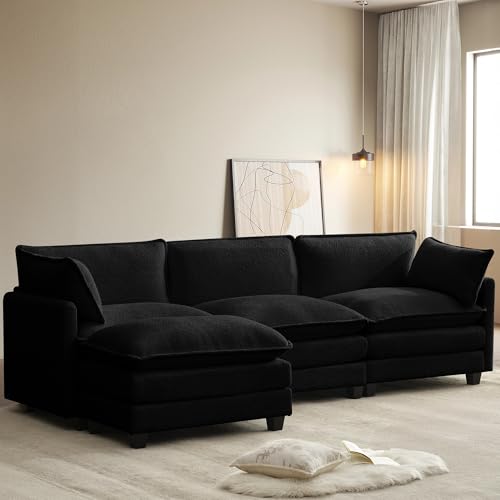
ROWHY 112'' Modular Sectional Cloud Couch with Movable Ottoman, 4 Seat Modern Chenille Sofa, Deep Seat L Shaped Couch for Living Room Bedroom Apartment,Jet Black
Check price on Amazon
Altrigus 108" Cloud Couch Sectional, 5-Seater U Shaped Couches | Chenille Deep Sofa with Removable Pillows and 2 Ottomans for Living Room, Camel
Check price on Amazon
OhaiAura Modular Sectional Sofa, 132" U Shaped Couch with Storage, Chenille | High Resilience Foam, 22" Seat Depth, Movable Ottoman, Comfy Chenille, Easy Assembly, Dark Gray
Check price on Amazon
ROWHY 112'' Modular Sectional Cloud Couch with Movable Ottoman, 4 Seat Modern Corduroy Sofa, Deep Seat L Shaped Couch for Living Room Bedroom Apartment, Beige
Check price on Amazon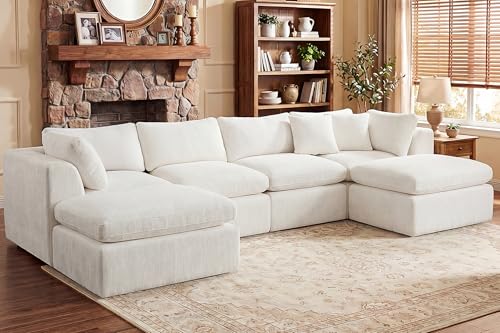
GRUSIGN 141'' Oversized Boneless Cloud Couch for Living Room, Modern Big Sectional Compressed U Shape Couch with 2 Ottoman, Comfy Chenille Deep Seat Memory Foam Spineless 6 Seater Sofa, Beige
Check price on Amazon
Ihanherry 111.4" U Shaped Cloud Couch Modern Modular Sectional Sofa with 2 Ottoman, 5-Seat Chenille Deep Seat Sofa with 5 Pillows for Living Room, Bedroom and Apartment, Beige
Check price on Amazon
VYUXWO 108" Oversized Cloud Sectional Couch, Comfort U Shaped Boneless Couch for Living Room, Extra Deep Seats No Assembly, Modular Sofa, Corduroy (Dark Grey, 2 Seater + Left Facing Chaise + Ottoman)
Check price on Amazon
Modular Sectional Couch with Storage, Couches for Living Room, Corduroy 5-Seat U Shaped Upgraded Boneless Couch with 2 Ottomans & Pillows, Cloud Memory Foam Sofa, Deep Seat,No Assembly (107"-Green)
Check price on AmazonBuying Checklist
Before you commit to a couch with two ottomans, run through this checklist to avoid the most common regrets.
- Measure the room and doorways. Confirm the combined footprint fits and that every piece can be delivered.
- Decide on the configuration. Freestanding ottomans offer the most flexibility; integrated modules offer a cleaner look.
- Match the upholstery to your household. Performance fabric or leather for pets and kids; velvet for low-traffic, design-led rooms.
- Check cushion construction. High-density foam or pocket coil for daily use; softer fills for occasional seating.
- Confirm the ottomans match the sofa's height. Ottoman seat height should be close to the sofa's seat height for comfortable use as a chaise extension.
- Review the return policy and delivery terms. Large furniture returns are costly; confirm the terms before ordering.
- Plan the layout. Sketch the room with the sofa and ottomans in two or three positions to see what works.
Related reading: If you are still comparing formats, our guides to couch with ottoman bed and couch with pull-out and storage cover multi-function options that may suit a guest room or studio better than a standard dual-ottoman set.
Frequently Asked Questions
Are the two ottomans usually included with the couch?
It depends on the product. Some sets are sold as a coordinated package with the sofa and both ottomans, while others sell the sofa and ottomans separately. Always confirm what is included before ordering, and check whether the ottomans match the sofa's upholstery exactly.
Can I use the ottomans as extra seating?
Yes, most ottomans in these sets are sturdy enough to sit on. Look for a firm cushion and a solid frame if the ottomans will regularly serve as seats. Ottomans with a weight capacity listed in the product details are the safest choice for seating use.
How do I keep the ottomans from sliding around?
Felt pads on the base reduce scratching and slow sliding on hard floors. Rubberized grips or furniture grippers under the ottomans work well on tile and laminate. If the ottomans have casters, check whether they lock.
What is the best layout for a small living room?
Place the sofa against the longest wall and position the two ottomans side by side in front of it as a chaise extension. If the room is very tight, keep one ottoman in front of the sofa and tuck the second one against a side wall as a spare seat. A small space layout guide can help you plan the exact placement.
Do dual-ottoman couches work in open-plan rooms?
Yes. In open-plan spaces, the two ottomans can help define the seating zone without building a wall. They also give you flexibility to move a footrest toward a TV area or reading corner when needed.
How do I clean ottomans used as footrests?
Vacuum them weekly and spot-clean spills promptly with a mild upholstery cleaner. Removable covers are a major advantage if you can find them. For leather, use a leather conditioner every few months. Our fabric cleaning guide covers the step-by-step process for woven upholstery.
Ready to Choose Your Couch with Two Ottomans?
Browse our recommended models above, compare configurations, and pick the setup that fits your room and lifestyle.
View Recommended Models