


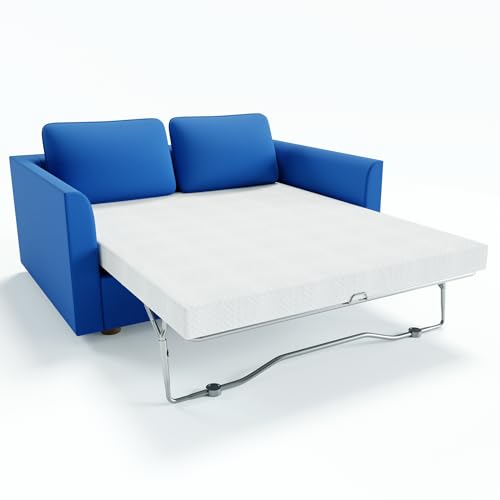


Why Replace the Foam Mattress in Your Pull Out Couch
The mattress inside a sleeper sofa takes more abuse than almost any other mattress in the home. It folds, unfolds, gets compressed under the seating cushions, and often sits on a thin wire or platform base that offers limited support. Over time, the foam loses its resilience, develops permanent body impressions, and stops providing the cushioning that makes overnight guests comfortable.
Replacing the foam mattress is usually far more practical than replacing the entire sofa. The frame, mechanism, and upholstery may still be in excellent condition, while the mattress is the only weak link. A fresh foam core restores the sleeper function and can make a guest bed feel genuinely comfortable rather than something to be endured.
Beyond comfort, a new foam mattress can improve hygiene. Old sleeper mattresses absorb moisture, dust, and odors over years of use and storage. A replacement with a washable cover and fresh foam gives the sofa a clean start and is a sensible move for households that host guests regularly. If you are also considering upgrading the surrounding seating, our guide to memory foam pull out couches covers how foam technology is applied across the whole sleeper sofa category.
Measuring Your Pull Out Couch Correctly
Measuring is the step most buyers rush, and it is the most common reason a replacement mattress does not fit. Sleeper sofa mattresses are not always the same as standard bed sizes, and the folding mechanism imposes a strict thickness limit. Follow this process carefully:
- Open the bed fully and let the mechanism lock into its flat position before measuring.
- Measure width across the mattress surface from left edge to right edge, inside the frame rails.
- Measure length from the head end to the foot end, again inside the frame.
- Measure the original mattress thickness with a tape measure or ruler, ideally near the center where it has compressed least.
- Check the mechanism clearance. Fold the bed halfway closed and observe how much room remains between the mattress and the frame. This confirms the maximum thickness the folding action allows.
- Note any platform or wire base beneath the mattress, since a supportive base affects how firm the final sleeping surface feels.
Write these numbers down before shopping. A variance of even one inch in width can cause the mattress to bind in the frame or leave uncomfortable gaps. If your frame is a nonstandard size, note that custom trimming is possible with high-density foam, which we discuss later in this guide.
Standard Sleeper Sofa Mattress Sizes
Most pull out couches follow a handful of common size conventions, though manufacturers are not required to match bed industry standards exactly. The table below summarizes typical dimensions so you can compare your measurements against common categories.
| Sleeper Size | Typical Width | Typical Length | Best For |
|---|---|---|---|
| Twin sleeper | About 36 to 38 inches | About 72 to 75 inches | Compact loveseats and single-guest sofas |
| Full sleeper | About 52 to 54 inches | About 72 to 75 inches | Standard two-seat sofa beds |
| Queen sleeper | About 58 to 60 inches | About 72 to 78 inches | Most three-seat sofa beds, the most common size |
| King sleeper | About 72 to 76 inches | About 78 to 80 inches | Large sectionals with sleeper mechanisms |
Note that sleeper mattress lengths sometimes run shorter than standard bed lengths because the mechanism has to fold inside the sofa frame. Always trust your own measurements over the label on the original mattress. If you are shopping for a complete sleeper replacement, our guide to the hide a bed couch with air mattress option explains an alternative comfort system worth considering alongside foam.
Choosing the Right Thickness
Thickness is where comfort and mechanical fit collide. A thicker mattress feels more luxurious but may prevent the bed from folding closed or cause the seating cushions to sit unevenly when the bed is stowed. A thinner mattress folds easily but can bottom out under heavier sleepers.
- 4 inches or less: Common in older or compact sleeper sofas. Folds easily but offers limited support; better suited to occasional use by lighter guests.
- 4.5 to 5.5 inches: The balanced range and the most common replacement choice. Fits most mechanisms and delivers adequate support with high-density foam.
- 6 inches: Suitable for frames with generous clearance. Offers more comfort but must be verified against the folding mechanism before purchase.
- Above 6 inches: Rarely compatible with standard sleeper mechanisms and generally only appropriate for custom or platform-style pull outs.
As a rule of thumb, high-density foam at 4.5 to 5 inches will outperform low-density foam at 6 inches. Density and support matter more than raw thickness. For an overview of how foam behaves across an entire sleeper sofa, see our discussion of the memory foam futon couch, which uses similar foam layering principles.
Foam Types Compared
Not all foam is interchangeable. The material inside the mattress determines how it feels, how long it lasts, and how well it tolerates repeated folding.
High-Density Polyurethane Foam
The workhorse of sleeper mattresses. Holds its shape, resists bottoming out, and tolerates frequent folding.
- Best for heavier users
- Long service life
- Firmer, more supportive feel
Memory Foam
Conforms to the body and relieves pressure points. Excellent for side sleepers and guests who want a softer surface.
- Best for side sleepers
- Slow-recovery contouring
- Often paired with a support core
Layered Foam Construction
Combines a dense support base with a softer comfort layer. Delivers the best balance of durability and cushioning.
- Best all-around choice
- Support plus contouring
- Common in premium sleeper mattresses
Lower-density foam feels soft initially but compresses permanently within a short time, especially under the folding stress of a sleeper sofa. If you are comparing complete furniture pieces as well, our guide to the L couch with pull out bed explains how foam quality differs between sofa formats.
Firmness and Comfort Levels
Firmness is personal, but in a sleeper sofa context it also interacts with the support base. A thin wire base makes a soft mattress feel like it is sagging, while a solid platform makes even a medium mattress feel supportive.
- Medium-firm: The safest default for guest beds. Supports a wide range of body weights and sleeping positions without excessive sink.
- Medium: A good choice when the sleeper base is solid and the primary users prefer a plusher surface.
- Soft: Best reserved for light use and lighter sleepers; prone to bottoming out on wire bases.
- Firm: Suitable for heavier sleepers and back or stomach sleepers who need a flat, stable surface.
If you frequently host couples or guests of different sizes, a medium-firm hybrid mattress is the most flexible compromise. Avoid choosing a mattress based on the name alone; if possible, read reviews that mention the base type and the sleeper's weight.
Quality Tiers at a Glance
Replacement foam mattresses fall into broad market positions that help you align expectations with intended use. The table below describes these tiers in general terms without reference to specific sellers.
| Tier | Typical Construction | Best For |
|---|---|---|
| Essential tier | Basic foam with a thin comfort layer | Occasional guest use and infrequent sleeper openings |
| Balanced tier | High-density core with a medium comfort layer | Regular guests and households that value durability |
| Top-tier | Layered memory and high-density foam with a removable cover | Frequent use, side sleepers, and long-term investment |
| Professional-grade | Dense multi-layer construction built for hospitality use | Rental properties and high-turnover guest accommodations |
For most homes, the balanced tier offers the best combination of support and longevity. Top-tier constructions make sense when the sofa is used nightly or when comfort is a priority for a frequent guest. If you plan to replace the entire sleeper rather than just the mattress, our guide to the nice couch with pull out bed selection covers furniture-level considerations.
Installation and Fit Tips
Installing a replacement foam mattress is straightforward, but a few details protect both the mattress and the mechanism.
- Open the sleeper mechanism fully and remove the old mattress. Clean the frame and inspect the wire or platform base for damage.
- Unroll or unfold the new foam mattress and allow it to expand at room temperature for the period recommended by the manufacturer.
- Slide the mattress into the frame, aligning the head and foot ends with the mechanism stop points.
- Test the fold by closing the bed slowly and observing whether the mattress binds, bunches, or prevents full closure.
- Add a protective mattress pad or cover to guard against moisture and keep the foam clean.
If the mattress is slightly oversized, high-density foam can be trimmed with an electric carving knife or a long serrated blade. Cut slowly and check the fit frequently; it is easy to remove material and difficult to add it back. A mattress that is too thick for the mechanism should not be forced closed, as this can bend the frame or tear the upholstery.
Care and Longevity
- Rotate periodically. If the mattress is not directional, flip or rotate it every few months to even out compression.
- Use a waterproof cover. Foam is difficult to clean once moisture penetrates, and a removable cover protects the core.
- Air it out. After guests leave, let the bed air briefly before folding it back inside the sofa to reduce trapped moisture.
- Avoid heavy storage on top. Do not stack items on the closed sofa bed, as sustained pressure compresses the foam.
- Inspect the mechanism. A bent or misaligned frame places uneven stress on the mattress and shortens its life.
With reasonable care, a high-density foam replacement should serve the sofa for years of occasional guest use. If the mattress is used nightly, plan on a shorter rotation cycle and consider a top-tier layered construction for better long-term resilience.
Frequently Asked Questions
What thickness of foam mattress is best for a pull out couch?
Most pull out couches accept a mattress between 4 and 6 inches thick. A 4.5 to 5.5 inch high-density foam mattress is the most common balanced choice because it fits the folding mechanism and still offers adequate support for overnight guests.
Can I cut a foam mattress to fit my sleeper sofa?
Yes, high-density foam can be trimmed with an electric knife or a long serrated blade. Measure the original mattress carefully and cut slightly outside your measurement line, then test the fit before final trimming.
How long does a foam mattress for a pull out couch last?
A quality high-density foam mattress used occasionally typically lasts several years. Daily use, heavy guests, and thin low-density foam shorten lifespan. Rotating the mattress and using a protective cover helps extend its service life.
Is memory foam or high-density foam better for a sofa bed?
Memory foam conforms closely and relieves pressure, which suits side sleepers, while high-density polyurethane foam holds its shape and resists bottoming out, which suits heavier users and frequent folding. Many top-tier sleeper mattresses combine both layers.
Do I need a special cover for a sleeper sofa mattress?
A waterproof, removable cover is strongly recommended. It protects the foam from spills and moisture, is easier to clean than the foam itself, and helps the mattress stay fresh between guest visits.
Final Takeaway
Replacing the foam mattress is the single most effective upgrade for an uncomfortable pull out couch. Measure the frame carefully, choose a high-density or layered foam in the 4.5 to 5.5 inch range, and match firmness to the base and the people who will sleep on it. A balanced-tier replacement with a protective cover will restore comfortable guest sleeping for years and represent a worthwhile long-term investment in your living room furniture.