
Leather Reclining Sectionals for Sale: The Complete Buyer's Guide
Everything you need to evaluate recliner mechanisms, leather grades, configurations, and comfort features before choosing a leather reclining sectional for your living room.
VIEW RECOMMENDED MODELSResearch-stage guidance: If you already know you want a leather reclining sectional but are unsure which configuration, mechanism, or leather grade fits your space, this guide walks through each decision in order. It covers the practical details that matter most — seat depth, wall clearance, recliner type, and upholstery durability — so you can compare listings with confidence.
Recommended Leather Reclining Sectionals for Sale
⚠️ AFFILIATE DISCLOSURE: This website contains affiliate links. As an affiliate Associate, we earn from qualifying purchases. If you make a purchase through these links, we may receive a small commission at no additional cost to you. Read our full affiliate policy.

Reclining Sectional sofa, Reclining Sofa, Leather Sectional, Beige Brown | Power Reclining Sofa with Storage & USB, Adjustable Headrest & Cup Holders, Leather Sectional Couches for Living Room
Check price on Amazon
Power Reclining Sectional, Sectional Recliner, Leather Reclining Sectional | Electric Reclining Couch with Storage & USB, Console, Adjustable Headrest & Cup Holders for Living Room, 5-Seater Brown
Check price on Amazon
virezzalux Manual Reclining Sectional Sofa for Living Room Sectional Couch | Anti-Scratch Leather Recliner Sofa with Console, 2 Cup Holders & Storage, L-Shaped Sectional Corner Reclining Couches, Grey
Check price on Amazon
Power Reclining Sectional Set with Bass Speakers, Leather Reclining Sectional Sofa for Living Room Furniture, Oversized Recliner Sofa Couch with Adjustable Headrest/Cup Holders/Storage for Home/Office
Check price on Amazon
Power Reclining Sectional, Sectional Recliner, Leather Reclining Sectional | Electric Reclining Couch with Storage & USB, Console, Adjustable Headrest & Cup Holders for Living Room, 5-Seater Gray
Check price on Amazon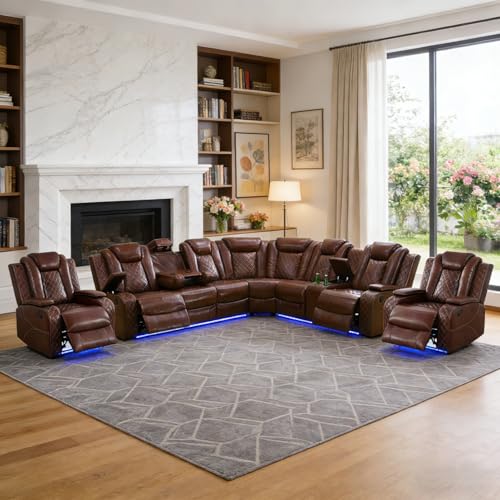
SITYRUBE Leather Power Recliner Sectional Sofa Set with LED Light,L-Shaped Reclining Couch with USB Port,Leather Sofa with Cup Holder/Storage for Living Room/Home Theater(Sectional+Chair*2)
Check price on Amazon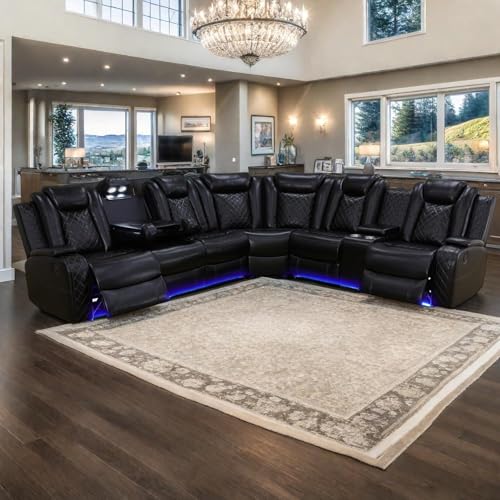
Power Recliner Sofa Sectional Sofa with LED Light for Living Room, Air Leather Reclining Corner Sectional Sofa Set, Cup Holder, Storage Console for Home Theater Seating (Black, Sectional)
Check price on Amazon
Nervlox Power Sectional Sofa, Power Recliner Sofa Set for Living Room, Leather Reclining Sectional, Black 3PCS Recliner Couch Loveseat Sets with LED, USB Charging, Cup Holders, Storage for Home/Office
Check price on AmazonWhat Makes a Leather Reclining Sectional Different
A leather reclining sectional combines three elements that are often sold separately: a multi-seat sectional frame, one or more integrated recliner mechanisms, and a leather or leather-match upholstery cover. That combination changes how the piece performs in daily use. The sectional shape provides continuous seating across a corner, the recliners add adjustable back and footrest positions, and the leather surface influences both durability and how the furniture ages.
Compared with a fabric reclining sectional, leather models tend to resist spills more readily, hold their shape with fewer visible creases in high-traffic seats, and develop a patina that many buyers prefer over time. The trade-off is that leather requires periodic conditioning and can feel cooler on first contact than woven fabric. Buyers researching leather sectionals for sale often compare these material differences before deciding on a configuration.
Reclining sectionals also differ from standard sectionals in one structural way: the recliner seats need additional frame reinforcement and a mechanism that can handle repeated cycling. That means the build quality of the recliner hardware matters as much as the leather itself. A premium leather cover on an entry-level mechanism will not deliver the same long-term experience as a mid-range mechanism paired with a top-grain leather.
Power vs. Manual Reclining Mechanisms
The recliner mechanism is the component you interact with most often, so it deserves careful attention. Leather reclining sectionals are generally sold with one of three mechanism types, and each suits a different set of priorities.
Manual Lever Recliners
Operated by a side lever or handle, manual recliners rely on body weight and spring tension. They have fewer electronic parts, which reduces potential failure points, and are common in entry-level and mid-range configurations. Motion is typically less gradual than power models.
Power Button Recliners
Electric motors move the backrest and footrest with a button or switch. Power models offer smoother, more controlled motion and are easier for users with limited mobility. Many mid-tier power sectionals include a USB charging port on the control panel.
Power Recliners with Power Headrests
High-end tier models add independently adjustable headrests, sometimes with lumbar support controls. These configurations allow finer posture adjustment for reading, watching television, or napping, and often pair with wall-hugger mechanisms.
When comparing listings, check whether the reclining seats are positioned at the ends, in the middle, or across multiple seats. A large leather sectional with recliners may include three or four reclining seats, while a more compact configuration might recline only at one end. The number and placement of recliners directly affect how many people can use the feature at once.
Common Leather Reclining Sectional Configurations
The shape of the sectional determines both seating capacity and how the piece fits into a room. Most leather reclining sectionals fall into a few recognizable layouts.
| Configuration | Best For | Recliner Placement | Space Consideration |
|---|---|---|---|
| L-shaped with chaise and recliner | Open-plan living rooms and family spaces | One or both ends | Needs corner clearance plus reclining depth |
| L-shaped with recliners on each end | Symmetrical seating with shared footrests | Both ends | Wall clearance required behind both recliners |
| U-shaped reclining sectional | Large rooms with dedicated entertainment zones | Multiple seats | Requires generous floor area and walkway planning |
| Reclining loveseat-style sectional | Smaller living rooms and apartments | One or two seats | Compact footprint with tighter reclining arcs |
| Modular reclining sectional | Flexible rooms that may be reconfigured | Varies by module | Check that recliner modules can be repositioned |
An L-shaped leather sectional with chaise is one of the most requested layouts because it pairs a reclining seat with a fixed chaise, giving the room both an adjustable seat and a lounge surface. Buyers who want reclining capability at both ends often look at a leather sectional couch with recliners on each end, which works well when the sectional is centered on a television wall.
Leather Grades and What They Mean for Durability
Not all leather upholstery performs the same way. The grade affects how the surface ages, how it responds to cleaning, and how it holds up in high-use seats. The descriptors below follow a consistent tier system used throughout this guide.
- Full-grain leather (top-tier): The strongest and most natural leather grade, retaining the full grain surface. It develops a patina and resists wear well, making it a long-term investment for primary seating.
- Top-grain leather (high-end tier): Lightly sanded to remove imperfections, still durable and breathable. A common choice for premium reclining sectionals that balance durability and a refined surface.
- Split-grain leather (mid-tier): The inner layer of the hide, often treated with a protective finish. Durable enough for everyday use but less breathable than top-grain.
- Bonded leather (entry-level): Reconstituted leather fibers with a polyurethane coating. It looks consistent at first but is more prone to peeling in high-friction areas over time.
- Leather match / faux leather (starter tier): A combination of genuine leather on seating surfaces and synthetic material elsewhere, or fully synthetic upholstery. Common in starter-tier sectionals and requires gentler cleaning.
For a reclining sectional, the seats and footrests experience the most friction, so leather grade matters most in those zones. A mid-range sectional with top-grain leather on the seating surfaces and a matching split-grain on the back and sides is often a well-specified choice for the category. Buyers comparing leather living room sets should confirm which panels use genuine leather and which use matched material.
Comfort and Build Features to Check
Two sectionals with similar leather covers can feel very different after ten minutes of sitting. The differences usually come down to cushion construction, seat depth, and frame reinforcement.
Seat Depth
Standard reclining sectional seats typically fall between 20 and 24 inches deep. Deeper seats suit taller users and lounging, while shallower seats keep shorter users supported without a footrest gap.
Cushion Fill
High-resilience foam, pocket coils, and fiber wraps change how a seat breaks in. Pocket-coil cores with foam wraps tend to hold shape longer in recliner seats that see daily cycling.
Frame Reinforcement
Recliner seats need reinforced hardwood or engineered hardwood frames. Kiln-dried hardwood with corner blocking is a stronger sign than stapled softwood construction.
Wall Clearance
Traditional recliners need several inches behind the backrest. Wall-hugger mechanisms reduce that gap substantially, which matters in narrow rooms.
Console and Cup Holders
Center consoles with cup holders and storage are common in family-oriented configurations and can replace a separate side table.
USB and Power Outlets
Integrated charging ports are increasingly standard on power models and reduce cable clutter around the seating area.
Comfort also depends on how the recliner footrest extends. A full-extension footrest supports the calves, while a partial-extension footrest may leave a gap for taller users. If the sectional will be used for long viewing sessions, test the reclined position rather than only the upright seat. Buyers considering additional seating flexibility sometimes pair a sectional with a leather reclining chaise lounge chair to extend the lounge zone.
Measuring Your Room for a Reclining Sectional
Measurement is where reclining sectionals most often go wrong. A sectional that fits the wall but blocks a walkway or cannot fully recline becomes a daily frustration. Work through these checks before finalizing a layout.
- Wall span: Measure the full length of the wall where the sectional will sit, then subtract at least a few inches on each side for breathing room.
- Reclining depth: Add the recliner extension distance to the seat depth. Traditional mechanisms may need six to twelve inches behind the backrest; wall-huggers need far less.
- Walkway clearance: Leave at least 30 to 36 inches for main walking paths, and more where the footrest extends into the path.
- Corner access: Confirm that the sectional can be carried through doorways and around hallway corners, or that modular pieces can be assembled in the room.
- Television distance: For a reclined viewing position, the screen distance should accommodate the reclined eye level, not just the upright seat.
- Floor protection: Heavy leather sectionals benefit from felt pads or a rug to protect flooring and make minor repositioning easier.
For rooms with limited floor area, a compact configuration such as a grey reclining sectional with console can provide reclining seats and storage without the footprint of a full U-shape. Where the room is longer than it is wide, an L-shaped layout usually preserves a clearer walkway than a straight reclining sofa.
Pre-Purchase Checklist for Leather Reclining Sectionals
Use this checklist to compare listings on equal terms. Each item corresponds to a decision that affects long-term satisfaction more than surface appearance.
| Checkpoint | What to Confirm | Why It Matters |
|---|---|---|
| Leather grade | Full-grain, top-grain, split-grain, bonded, or match | Determines durability and aging behavior |
| Recliner type | Manual, power, or power with headrest | Affects motion smoothness and adjustability |
| Wall clearance | Traditional or wall-hugger mechanism | Prevents blocked walkways and wall damage |
| Configuration | L-shape, U-shape, loveseat, modular | Matches seating needs and room shape |
| Frame build | Kiln-dried hardwood or engineered hardwood | Supports recliner cycling over time |
| Cushion core | Foam, pocket coil, or hybrid | Influences comfort retention |
| Delivery access | Doorway width and stair turns | Avoids failed delivery or assembly issues |
| Warranty coverage | Frame, mechanism, and leather terms | Clarifies support for moving parts |
Buyers who want a reclining sectional with a bed function should also compare sleeper mechanisms, since the two systems occupy similar frame space. A leather sectional couch with pull-out bed is a different product category from a reclining sectional and should be evaluated on its own mechanism quality.
Living With Leather: Styling and Care Basics
Leather reclining sectionals are visually substantial pieces, so styling should support rather than compete with them. A few practical habits keep the leather in good condition and the sectional looking intentional in the room.
For styling, choose throw pillows that contrast with the leather tone without clashing with the room's palette. Textured fabrics — linen, boucle, or chunky knit — soften the leather's sheen and add visual warmth. A throw blanket draped over the back or arm adds color and protects high-contact areas. For more ideas on arranging textiles, see the couch styling guide.
For care, dust weekly with a soft microfiber cloth, clean spills promptly with a mild leather cleaner, and condition every three to six months to prevent drying. Keep the sectional out of direct sunlight to slow fading, and avoid harsh household chemicals that can strip the leather's finish. Recliner mechanisms benefit from occasional vacuuming around the tracks to remove debris. A leather cleaning guide covers the step-by-step process for deeper cleaning.
Ready to Compare Leather Reclining Sectionals?
Review the recommended models above, then check availability and configuration details for the layout that fits your room.
EXPLORE AVAILABLE OPTIONSFrequently Asked Questions
What is the difference between power and manual reclining leather sectionals?
Manual recliners use a lever or handle and rely on body weight and spring tension, while power recliners use an electric motor controlled by a button or switch. Power models typically offer smoother motion and often include USB ports or power headrests on higher tiers.
How much space does a leather reclining sectional need behind it?
Traditional recliners need roughly six to twelve inches of clearance behind the backrest to fully recline. Wall-hugger or zero-wall mechanisms reduce this to as little as two to four inches, making them suitable for tighter rooms.
Is full-grain leather better than bonded leather for a reclining sectional?
Full-grain and top-grain leather are more durable and develop a natural patina over time, while bonded leather uses a polyurethane coating over reconstituted fibers and tends to peel in high-wear areas. For a long-term investment, full-grain or top-grain is the stronger choice.
Can a leather reclining sectional fit in a small living room?
Yes. Loveseat-sized reclining sectionals and L-shaped configurations with a chaise instead of a full recliner can work in smaller rooms. Measure the wall span, walkway clearance, and reclining depth before choosing a layout.
How do I maintain leather on a reclining sectional?
Dust weekly with a soft cloth, clean spills promptly with a mild leather cleaner, and condition every three to six months to prevent drying and cracking. Keep the sectional out of direct sunlight and avoid harsh household chemicals.
Final Considerations Before You Choose
A leather reclining sectional is a long-term piece, so the decision should be driven by how the room is used rather than by surface appearance alone. Prioritize the recliner mechanism and frame build first, confirm the leather grade on the seating surfaces, and measure the room for both wall span and reclining clearance. Once those fundamentals are settled, configuration and styling become easier to narrow down.
If you are still comparing broader options, the leather reclining living room furniture sets overview covers how sectionals fit into coordinated room arrangements. For a wider look at leather seating, browse leather couches and L-shaped leather couches for sale to compare reclining and non-reclining layouts side by side.