
Long Couch Table: The Complete Guide to Sofa Console Tables
A long couch table—also called a sofa table or behind-couch console—adds surface, structure, and storage to your living room. This guide explains sizing, materials, styles, placement, and styling so you can choose with confidence.
Explore Recommended OptionsIn This Guide
Recommended Long Couch Tables & Sofa Consoles
⚠️ AFFILIATE DISCLOSURE: This website contains affiliate links. As an affiliate Associate, we earn from qualifying purchases. If you make a purchase through these links, we may receive a small commission at no additional cost to you. Read our full affiliate policy.

SUPERJARE 78.8 inch Narrow Behind Couch Table with 2 Charging Stations | 2 AC Outlets with USB-C Ports, Extra Storage Behind Sofa, Sofa Table Console Table for Entryway Living room, Rustic Brown
Check price on Amazon
Huuger 118 Inch Sofa Table with Power Outlets, Skinny Behind Couch Table | 5.9 Inch Narrow Entryway Table, Extra-Long Console Table, Behind the Couch Table with Outlet for Living Room, Rusitc Brown
Check price on Amazon
GRLEAF 102 Inch Narrow Sofa Table with Power Outlets, Extra Long Console Table Behind Couch Table with Charging Station, Skinny Entryway Table Thin Table for Living Room, Narrow Spaces (Rustic Brown)
Check price on Amazon
GRLEAF 78" Sofa Table with Built-in Power Strip (2 AC Outlets & 2 USB Ports) – 4.9ft Power Cord, Metal Frame, Easy Assembly, Long Couch Table Behind Sofa, Living Room and Home Office | Rustic Brown
Check price on Amazon
Huuger 102.4 Inch Sofa Table with Power Outlets, Skinny Behind Couch Table | Console Table with USB-C Ports, 23.9’’-34.4’’ Height Adjustable Range, Sofa Tables Narrow Long for Small Spaces, Rustic Brown
Check price on Amazon
Huuger 78.7" Console Table with Outlets, 22.8"-33.3" Height Adjustable | Behind Couch Table with 2 Power Stations & USB-C Ports, Extra Long Sofa Table, Slim Entryway Table
Check price on Amazon
SUPERJARE 102 Inch Sofa Table with 2 Power Outlets and USB-C Ports | 5.9 Inch Narrow Console Table with Storage, Extra-Long, for Entryway Hallway Couch Behind Sofa, Small Spaces, Rustic Brown
Check price on Amazon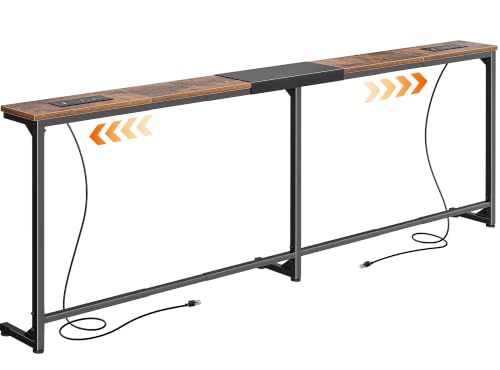
Huuger 63.4-78.3'' Extendable Behind Couch Table with Outlets, Rustic Brown | Stepless Length Adjustment, 2 Power Stations with USB-C Ports, Long Console Table, Slim Sofa Table 1ST082Z
Check price on AmazonWhat Is a Long Couch Table?
A long couch table is a narrow, elongated table built to sit behind or beside a sofa. It is defined less by a single style and more by its proportions: a long, slim profile that provides a usable surface without intruding into the seating area or walkway. Designers often call it a sofa table, a console table, or a behind-couch table—the terms overlap considerably, and many models serve all three roles.
Most long couch tables measure between 60 and 96 inches in length and 12 to 18 inches in depth. That shallow depth is intentional. It lets the table sit close to the sofa back while leaving enough clearance for lamps, books, and decor. Height typically ranges from 28 to 32 inches, which places the surface slightly below or level with the top of the sofa back.
Long couch tables come in several broad categories. Console tables with four legs are the classic form. Pedestal and trestle designs offer a more sculptural silhouette. Waterfall and C-shaped designs emphasize clean modern lines. Storage consoles add drawers, shelves, or baskets. Wall-mounted slim versions trade surface depth for floor clearance, which helps in tight rooms.
Key distinction: A long couch table is not a coffee table. It sits behind or beside the sofa to add a secondary surface and visual anchor, while the coffee table serves the seating area itself. Many living rooms benefit from both.
Why Add a Long Couch Table to Your Living Room
The practical case for a behind-couch table is straightforward. It creates a landing zone for items that otherwise clutter the sofa: a reading lamp, a mug, a remote, a small stack of books. It also gives the sofa a stronger architectural anchor, especially in open-plan rooms where furniture can otherwise feel adrift.
Functional benefits
- Secondary surface: Lamps, trays, drinks, and decor find a stable home outside the seating zone.
- Lighting placement: A pair of table lamps at either end of a long console is a classic, balanced lighting setup.
- Storage: Drawers, cubbies, and baskets keep remotes, chargers, and small items contained.
- Charging hub: Many models include cable management or a discreet back panel for power strips.
Design benefits
- Room definition: In open-plan spaces, a console behind a floating sofa separates the living zone from a dining or workspace.
- Visual balance: A long horizontal line behind the sofa counterweights tall windows or a high ceiling.
- Layered depth: The table creates a middle layer between the sofa and the wall, which makes the room feel more considered.
If your living room already feels crowded, a slim long couch table can still work—provided you maintain a walkway of roughly 30 inches behind it. If that clearance is not available, consider a wall-mounted design or skip the table and use a narrow floor lamp instead. Room layout decisions often interact with seating choices, so it helps to review broader living room layout principles before committing.
Sizing and Dimensions: Getting the Proportions Right
Sizing is where most long couch table purchases succeed or fail. A table that is too short looks orphaned behind a long sofa; one that is too deep blocks the walkway. The guidance below covers the three dimensions that matter most.
Length
A common rule is that the table should span roughly two-thirds to three-quarters of the sofa's length. For a standard 84-inch sofa, a 60 to 72-inch table reads as intentional. For a longer sofa or a sectional, an 80 to 96-inch table fills the run. If a single table cannot cover the length, two matching tables placed end to end can work—though the seam will be visible, so choose designs that look deliberate in pairs.
Depth
Twelve to 18 inches is the practical range. A 12-inch depth is enough for a slim lamp and a tray. A 16 to 18-inch depth accommodates books, a decorative bowl, and a wider lamp base. Deeper than 18 inches and the table begins to crowd the seating area or the walkway behind it.
Height
Aim for a table height that sits slightly below or level with the sofa back. Most sofas have a back height of 30 to 36 inches, so a table at 28 to 32 inches usually works. A table that rises above the sofa back can look top-heavy; one that sits far below it can feel disconnected. If you plan to use the table as a standing workspace, a slightly taller 34 to 36-inch height may be preferable, but check the visual balance first.
Compact sofas (60–72 in)
Pair with a 44–56-inch table. Depth of 12–14 inches keeps the footprint light. Ideal for apartments and small living rooms.
Standard sofas (78–88 in)
A 60–72-inch table is the sweet spot. Depth of 14–16 inches supports lamps and decor without crowding.
Large sofas (90–100 in)
Use a 72–84-inch table, or two 36–48-inch tables side by side. Depth of 16–18 inches adds presence.
Sectionals (100+ in)
An 80–96-inch table along the longest back run works well. For L-shapes, consider a corner-friendly design or a console plus a side table.
Measure twice: Before ordering, measure the sofa's back length, the distance from the sofa back to the wall or nearest obstruction, and the height of the sofa back. Note any baseboards or radiators that could reduce usable depth.
| Sofa Length | Suggested Table Length | Suggested Depth | Best For |
|---|---|---|---|
| 60–72 inches | 44–56 inches | 12–14 inches | Apartments, small living rooms |
| 78–88 inches | 60–72 inches | 14–16 inches | Standard living rooms |
| 90–100 inches | 72–84 inches | 16–18 inches | Large living rooms, family spaces |
| 100+ inches (sectional) | 80–96 inches | 16–18 inches | Open-plan rooms, sectionals |
Materials and Construction: Understanding Quality Tiers
Long couch tables are built from a range of materials, and the differences show up in stability, surface durability, and how the piece ages. Rather than sorting by any single number, it helps to think in tiers—entry-level, mid-range, premium, and luxury—each reflecting the relative position of a product in the market.
Wood and wood veneer
Solid wood is the traditional choice for sofa tables. Oak, ash, walnut, and mango are common. Solid wood resists wobble, can be refinished, and develops character over time. Wood veneer over engineered wood is common at the entry-level and mid-range: it offers a consistent look and stable panels, though the edges and joinery reveal the tier. Look for doweled or mortise-and-tenon joints on higher-tier pieces; cam-lock and screw assembly is typical of entry-level flat-pack designs.
Metal
Steel and aluminum frames suit industrial and modern interiors. Powder-coated finishes resist scratches; rust-proof finishes matter if the table sits near a window or in a humid room. Metal-and-wood combinations are common in mid-range and premium designs, pairing a slim metal base with a wood or stone top.
Glass and stone
A glass top keeps a long table visually light, which helps in compact rooms. Tempered glass is the standard for safety. Stone tops—marble, quartz, or sintered stone—sit in the premium and luxury tiers and add substantial visual weight. They require coasters and careful cleaning to avoid etching.
Engineered wood and laminate
Engineered wood with a laminate or melamine finish is a practical entry-level and mid-range option. It resists moisture better than raw wood and is easy to wipe down. The trade-off is that edges can chip and the surface cannot be refinished.
| Tier | Typical Construction | Durability Notes | Best For |
|---|---|---|---|
| Entry-level | Engineered wood, laminate, basic metal frames, cam-lock assembly | Light duty; suitable for decor and occasional use | First apartments, rental furnishing, low-traffic rooms |
| Mid-range | Wood veneer over engineered core, powder-coated steel, tempered glass | Solid build for daily use; joints are sturdier | Family living rooms, everyday use |
| Premium | Solid hardwood, doweled joinery, stone or thick glass tops | Heavy-duty; refinishable; stable over years | Long-term investment, high-traffic living rooms |
| Luxury | Hardwood with hand-finished details, natural stone, custom sizing | Professional-grade construction; heirloom potential | Design-forward interiors, custom layouts |
Within each tier, the best choice depends on use. A table that will hold a heavy lamp and a stack of hardcover books benefits from a solid top and reinforced legs. A table used mainly for decor can be lighter. For a deeper comparison of upholstery and surface materials across furniture categories, see the material selection guide.
Styles and Configurations
The right style depends on the room's architecture and the sofa it sits behind. A few broad categories cover most options.
Classic console
Four legs, a rectangular top, and often a lower shelf or drawer. This is the most versatile form and suits traditional, transitional, and modern rooms. A classic console with a slim profile works especially well behind a standard sofa.
Waterfall and C-shaped consoles
These designs use continuous planes—the top wraps down into the legs—for a clean, modern silhouette. They suit contemporary interiors and pair well with low-profile sofas. The trade-off is often less storage.
Trestle and pedestal designs
Trestle bases and single pedestals create a sculptural look and leave more open floor space beneath. They work well in rooms where visual lightness matters, and they pair nicely with mid-century and Scandinavian seating.
Slim and wall-mounted tables
At 8 to 12 inches deep, these designs prioritize circulation. Wall-mounted versions eliminate legs entirely, which helps in narrow rooms. They are a strong choice when the walkway behind the sofa is tight. Related slim options include the long narrow console table behind couch and the long skinny console table behind couch.
Storage consoles
Drawers, cubbies, and basket shelves turn the table into a functional hub. These suit family rooms and entry-adjacent living rooms where clutter accumulates. A storage-focused design is covered in more detail in the section below.
Outdoor and multi-use tables
If the table will sit on a covered porch or patio, look for weather-resistant coatings and rust-proof hardware. The principles are similar to choosing a long outdoor couch companion piece: prioritize materials that tolerate moisture and sun.
Style is ultimately a match to the sofa and the room. A long console behind a tailored sofa reads formal; the same table behind a relaxed slipcovered sofa reads casual. Neither is wrong—consistency is what matters.
Placement and Layout Planning
Placement decisions determine whether the table feels integrated or intrusive. The three most common positions are behind the sofa, beside it, and as a room divider.
Behind the sofa
This is the classic position. Leave a small gap—about 2 to 4 inches—between the sofa back and the table so the table does not rub against upholstery and so you can reach items comfortably. If the sofa sits against a wall, confirm that the table depth plus the sofa depth leaves a usable walkway. In tight rooms, a wall-mounted design or a shallow 10 to 12-inch console is often the better fit.
Beside the sofa
A long table can also run along the side of a sofa, especially in an L-shaped arrangement or when the sofa floats. This position works well when the table doubles as a room divider or when it anchors a reading area. Related arrangements include the living room with sectional and chairs layout, where a console can extend the visual line of the sectional.
As a room divider
Behind a floating sofa, a long console defines the boundary between living and dining zones. Choose a design with a finished back, since both sides will be visible. Consider whether the table will hold a lamp for ambient light on the living-room side and a tray for keys on the dining side.
Traffic and clearance
- Walkway: Maintain at least 30 inches of clearance behind the table for comfortable passage.
- Doorways: Keep the table clear of door swings and adjacent circulation paths.
- Radiators and vents: Avoid blocking heating elements or return vents.
- Baseboards: Account for baseboard depth when measuring against a wall.
For rooms with unusual proportions, the long narrow console table with storage offers a useful combination of shallow depth and practical organization. If the sofa sits near a window, the long skinny table for behind couch can preserve natural light while adding a surface.
Storage-Focused Long Couch Tables
Storage is often the deciding factor between a decorative console and a genuinely useful one. The options fall into four broad types.
Drawers
One or two shallow drawers hide remotes, chargers, pens, and small accessories. Look for drawer glides that operate smoothly and a frame that does not rack when a drawer is opened. Entry-level designs may use simple wood-on-wood runners; mid-range and above typically use metal glides.
Open shelves and cubbies
Open shelving works well for baskets, books, and display items. It keeps contents visible, which is helpful for families, but requires tidiness. A shelf height of 8 to 12 inches accommodates most baskets.
Basket and bin systems
Fabric or woven baskets soften the look and make it easy to sweep clutter out of sight. This approach suits casual and family-oriented rooms, and it pairs well with relaxed sofa styles.
Cable management
If the table will host a lamp or a charging station, look for a design with a back cutout, a cable channel, or a hollow leg. These details are small but make daily use noticeably easier. Storage consoles are discussed further in the long narrow console table with storage guide.
Pro tip: Measure the items you plan to store before choosing a drawer or cubby height. A deep drawer is only useful if it accommodates the objects you actually own.
How to Style a Long Couch Table
Styling a long surface is a balance exercise. The goal is to make the table look intentional without turning it into a shelf for clutter. A reliable approach is to think in zones: ends, center, and height.
Start with the ends
A lamp at one or both ends anchors the composition and provides practical light. If the table is long, a pair of matching lamps creates symmetry; a single lamp plus a plant or sculptural object creates asymmetry. Both work—symmetry reads formal, asymmetry reads relaxed.
Add a tray or two
Trays corral small items into a single visual unit. One tray in the center can hold a candle, a small bowl, and a decorative object. On longer tables, two trays—one at each end—help divide the surface into usable zones.
Layer heights and textures
Combine a tall element (lamp), a medium element (books or a vase), and a low element (tray or bowl). Mix materials: wood, ceramic, metal, glass. A stack of two or three books with a small object on top adds height without bulk.
Keep open space
Leave roughly one-third of the surface open. A table that is completely covered feels cluttered; one with breathing room feels curated. If the table doubles as a landing zone, reserve a small area for keys and mail.
Seasonal adjustments
Swap decor with the seasons: warmer textiles and amber tones in autumn, lighter ceramics and greenery in spring. The autumn decor and spring decor guides offer more ideas for rotating accents without overhauling the room.
Care and Maintenance
Long couch tables are low-maintenance compared with upholstered furniture, but material-specific care extends their life.
Wood and veneer
- Dust regularly with a soft, dry cloth.
- Wipe spills promptly with a slightly damp cloth, then dry immediately.
- Avoid silicone-based polishes, which can build up and dull the finish.
- Use coasters under drinks and felt pads under lamps and decor.
- Keep the table out of direct, prolonged sunlight to slow fading.
Metal
- Wipe with a damp cloth and mild soap; dry thoroughly.
- Touch up powder-coated finishes if chipped to prevent corrosion.
- In humid climates, check for rust at joints and feet.
Glass and stone
- Use a glass cleaner or a stone-safe cleaner as appropriate.
- Avoid acidic cleaners on natural stone; they can etch the surface.
- Use coasters and trivets to prevent heat marks.
For a broader maintenance framework, the couch care and maintenance section covers related routines for upholstery and frames.
Buying Checklist
Use this checklist to narrow your options before ordering.
- Measure the sofa back length. Aim for a table at two-thirds to three-quarters of that length.
- Measure the available depth. Confirm 12 to 18 inches of usable space plus a walkway if needed.
- Check the height. Target 28 to 32 inches, or slightly below the sofa back.
- Decide on storage. Drawers, shelves, or baskets—match to what you actually need to store.
- Choose the material tier. Entry-level, mid-range, premium, or luxury—match to use and room traffic.
- Confirm the finish on all sides. A floating sofa needs a finished back.
- Plan cable management. Check for cutouts or channels if you will use lamps or chargers.
- Review assembly and delivery. Flat-pack vs. assembled, and whether the box fits your entryway.
Frequently Asked Questions
What is a long couch table?
A long couch table is a narrow, elongated table designed to sit behind or beside a sofa. It typically measures 60 to 96 inches in length, 12 to 18 inches in depth, and 28 to 32 inches in height. It provides a secondary surface for lamps, decor, and storage.
How long should a table behind a couch be?
A general rule is two-thirds to three-quarters of the sofa's length. For an 84-inch sofa, a 60 to 72-inch table works well. For longer sofas or sectionals, an 80 to 96-inch table fills the run, or two shorter tables can be placed end to end.
What is the ideal height for a long table behind a couch?
Aim for 28 to 32 inches, which places the surface slightly below or level with most sofa backs. A table that rises above the sofa back can look top-heavy, while one that sits far below can feel disconnected.
What materials are best for a long couch table?
Solid wood and wood veneer suit traditional and mid-century rooms. Metal frames work well in industrial and modern spaces. Glass tops keep compact rooms visually light, and stone tops add weight in premium and luxury tiers. Engineered wood with laminate is a practical entry-level and mid-range option.
Can a long couch table be used behind a sectional?
Yes. Place a long console along the straight back section of the sectional. For L-shaped models, consider a corner-friendly design or use the console along the longest run and add a side table at the short end.
Do long couch tables work in small living rooms?
Yes, provided you maintain about 30 inches of walkway clearance. Slim models at 10 to 14 inches deep, wall-mounted designs, and open-frame tables help preserve visual space.
How do I style a long couch table?
Start with a lamp at one or both ends, add a tray to group small items, layer books and a decorative object for height, and finish with a plant or sculptural piece. Keep roughly one-third of the surface open to avoid clutter.
Can I use a long couch table as a room divider?
Yes. Behind a floating sofa, a long console separates living and dining zones. Choose a model with a finished back and consider storage or shelving so both sides look intentional.
Find the Right Long Couch Table for Your Space
Measure your sofa, check your clearance, and choose a tier that matches how you actually use the room. The recommended options above are a practical starting point.
View Recommended Tables