
Modular Sofa: The Complete Buying Guide
Learn how modular seating systems work, which configurations suit your room, and what to check before you commit to a flexible sofa that adapts to your life.
Why modular sofas matter: A modular sofa is more than furniture. It is a seating system you can rearrange, expand, and reconfigure as your room and lifestyle change. Whether you live in a compact apartment or a large open-plan home, understanding modules, connectors, and upholstery helps you choose a sofa that stays useful for years.
What Is a Modular Sofa?
A modular sofa is built from separate interchangeable sections that lock or rest together to form a complete seating arrangement. Common modules include corner pieces, armless middle chairs, end chairs with arms, chaise units, and ottomans. Because each piece is independent, you can build a sectional L couch, a straight sofa, a U-shaped arrangement, or a compact two-seat setup using the same system.
Unlike a fixed sofa, a modular system lets you replace a single worn module instead of the whole piece. That makes it a practical long-term investment for households that move, redecorate, or host guests regularly. If you are still exploring basic terminology, start with our guide on what a sectional couch is before comparing modular options.
How Modular Sofa Systems Work
Modular sofas rely on connectors, brackets, or interlocking bases to keep sections aligned. Quality varies widely, so inspect the connection method before buying.
- Entry-level tier: Basic metal brackets or hook-and-loop connectors. Adequate for stable, low-traffic setups but more prone to shifting over time.
- Mid-range tier: Reinforced metal-to-metal connectors and interlocking bases that hold alignment better under daily use.
- Premium and luxury tiers: Heavy-duty bracket systems, precision-machined connectors, and weighted bases that keep large configurations stable without visible hardware.
A well-designed system also offers a consistent module height and depth across the range, so you can add pieces later without visual mismatch. Confirm that individual modules and replacement covers remain available after purchase. This is especially important if you plan to expand a modular sectional over time.
Popular Modular Sofa Configurations
The right configuration depends on room shape, traffic flow, and how you use the space. Here are the most common layouts and who they suit.
L-Shaped Layout
Corner module plus armless chairs and an end chair. Fits most living rooms and defines a seating zone without blocking walkways. Pair with a modular section couch with ottoman for extra flexibility.
U-Shaped Layout
Two corner modules connected by armless chairs. Ideal for conversation seating and larger rooms. Works well in open floor plans where you want a strong anchor.
Straight Sofa Layout
Armless modules plus two end chairs. A clean look for narrow rooms or in front of a media wall. Easily converts to an L-shape later by adding a corner piece.
Chaise and Sleeper Combos
Add a chaise module for lounging or a sleeper module for guests. A modular sectional with pull-out bed covers both seating and overnight hosting.
Materials, Frames, and Cushion Durability
Modular sofas are only as good as their frame and cushion construction. Because each module carries weight independently, the frame quality directly affects how long the system stays aligned and comfortable.
- Frames: Entry-level models often use engineered wood or particleboard. Mid-range and premium tiers typically use kiln-dried hardwood or reinforced plywood for better screw retention and stability.
- Cushions: Standard foam is common at entry-level. Mid-range models add high-resilience foam or pocket springs. Premium tiers often combine high-density foam with feather or down wraps for a softer sit with better recovery.
- Upholstery: Performance fabrics resist spills and stains, while velvet and linen offer distinct textures. For households with pets or children, look at sectionals with removable washable covers so individual modules stay clean.
If leather is your preference, review our comparison of leather vs faux leather couch options before deciding. Also check whether cushion covers are removable and whether replacement foam inserts are sold separately.
Measure Before You Choose a Configuration
Modular sofas are flexible, but they still need to fit through doorways and into the room. Measure the room, the delivery path, and the intended footprint before ordering.
- Measure the room length and width, then mark the intended seating footprint with tape on the floor.
- Check doorway width, hallway turns, and elevator dimensions. Individual modules make delivery easier, but oversized corner pieces can still be tight.
- Leave at least 18 inches of walkway around the main seating area for comfortable traffic flow.
- Plan for a coffee table or ottoman. A modular section couch with ottoman can double as a footrest and a surface for trays.
If you are working with a tight footprint, our guide on comfy sectionals for small spaces covers compact module combinations and layout tricks that keep the room functional.
Who Should Buy a Modular Sofa?
Modular seating is a strong choice for renters, growing families, and anyone who rearranges furniture often. It also suits open-plan homes where a single fixed sofa cannot define multiple zones.
- Renters and movers: Modules fit through narrow doorways and can be reconfigured for each new space.
- Growing households: Add modules when children get older or when you start hosting more guests.
- Open-plan homes: Use modular pieces to create separate seating zones without permanent built-ins.
- Guests and overnight hosting: A modular sectional with pull-out bed or a couch with pull-out bed module adds sleeping capacity without a separate guest room.
Common Mistakes to Avoid
- Buying without measuring the delivery path: Even modular pieces have limits. Confirm every module fits through your doorways.
- Ignoring connector quality: Weak connectors let modules shift and create gaps. Test the connection method in a showroom or read verified buyer feedback.
- Choosing fabric for looks only: Consider cleaning method, fade resistance, and pet durability before choosing a light-colored fabric.
- Overbuilding the first configuration: Start with the modules you need now, then add pieces later if the system supports expansion.
Recommended Modular Sofa
⚠️ AFFILIATE DISCLOSURE: This website contains affiliate links. As an Amazon Associate, we earn from qualifying purchases. If you make a purchase through these links, we may receive a small commission at no additional cost to you. Read our full affiliate policy.

Cloud Sectional Boneless Couch, L-Shaped Modular Couch, Dark Grey | Deep Seat, Supportive Backrest, Plush Corduroy, Left-Facing Modular, Family-Friendly Comfort, Apartment Use, No Assembly
Check price on Amazon
108'' Modular Sectional Sleeper Sofa Couches for Living Room, Dark Grey | L/U Shaped Sleeper Sofa, Pull Out Couch Bed, Hidden Storage, Modular Design, Comfy Corduroy, Removable Cover, Movable Ottoman
Check price on Amazon
Korser 108" L-Shaped Modular Sectional Sofa with Chaise, Boneless Comfy Corduroy Fluffy Couch with Deep Seat and Side Pockets, Flexible Module Combination for Living Room, No Assembly, Side Pockets
Check price on Amazon
GRUSIGN Cloud Sectional Boneless Couches for Living Room, Modular L Shaped Couch with Deep Seat Oversized Right Facing Chaise, Memory Foam Compressed Spineless 3 Seater Sofa for Apartment, Black
Check price on Amazon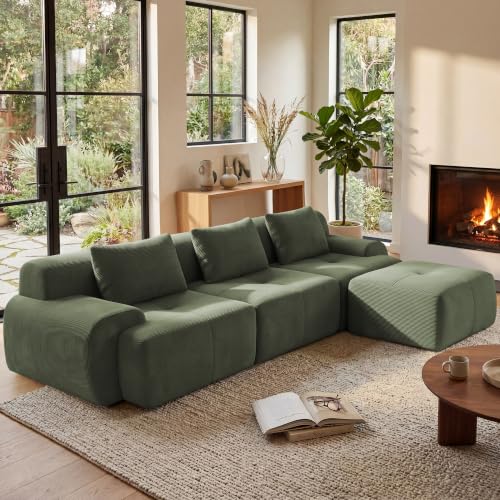
GRUSIGN 108'' Modular Boneless Sofa,Sectional Couch for Living Room | Tufted Oversized L Shape Deep Seat Sectional Sofa with Ottoman & 3 Throw Pillows,Corduroy Cloud Couch,Green
Check price on Amazon
78" 5-in-1 Convertible Futon Sofa Bed, Boneless Corduroy, Green | 5-in-1 Modular Sleeper Sofa for Living Room, Guest Room or Apartment, Fixed-Shape Frame, Corduroy Covers, No Assembly
Check price on Amazon
Marsail 110" Modular Sectional Sleeper Sofa, Pull Out Sofa Bed with Storage | 7 Seat Comfy Cloud Sofas for Living Room, Chenille Sectional Couches with USB Ports & Cup Holders, Dark Gray
Check price on Amazon
URRED Oversized Modular Sectional Sofa,Khaki:157" U Shaped | Modern Comfy Cloud Couch with Movable Ottoman and Pillow, Deep Seat Couches for Living Room, Bedroom or Apartment, Chenille
Check price on AmazonModular Sofa Tiers Compared
| Tier | Frame & Connectors | Cushion Support | Best For |
|---|---|---|---|
| Entry-level | Engineered wood frame, basic brackets | Standard foam | First modular purchase, low-traffic rooms |
| Mid-range | Reinforced frame, metal-to-metal connectors | High-resilience foam or pocket springs | Daily family use, expanding configurations |
| Premium | Kiln-dried hardwood, heavy-duty connectors | High-density foam with feather wrap | Large layouts, long-term daily seating |
| Luxury | Hardwood frame, precision-machined hardware | Layered foam and down, custom support | Design-focused homes, open-plan anchoring |
Frequently Asked Questions
What is a modular sofa?
A modular sofa is a seating system made of separate interchangeable sections such as corner pieces, armless chairs, chaise units, and ottomans. These components connect together to form a custom configuration that can be rearranged, expanded, or reduced as your space and needs change.
Are modular sofas good for small spaces?
Yes. Modular sofas work well in small spaces because you can start with a compact configuration and add sections later. You can also rearrange modules to fit narrow rooms, awkward corners, or open floor plans without replacing the entire sofa.
What should I check before buying a modular sofa?
Measure your room and doorways, confirm the connector system is sturdy, verify cushion density and fabric durability, and check whether individual replacement modules are available. Also consider whether the modular system includes sleepers, storage, or recliner units.
How do modular sofa tiers differ?
Entry-level modular sofas typically use basic connectors and standard foam, mid-range models add reinforced frames and better cushion support, and premium or luxury tiers offer kiln-dried hardwood frames, high-resilience foam, and premium upholstery with a wider module selection.
Final Considerations
A modular sofa is a practical choice when you want seating that adapts to your space instead of forcing your space to adapt to it. Focus on connector quality, frame construction, and cushion support rather than appearance alone. Start with the configuration your room needs today, then expand with matching modules if the system allows it. If you are comparing flexible seating types, our modular sectionals guide covers larger configurations and layout options in more detail.