Deep Seat Geometry
Theatre couches typically run 22 to 24 inches of seat depth versus 19 to 21 inches on a standard sofa. That extra depth supports the long-legged recline posture and prevents the "sliding forward" feeling that ruins a third act.

Reclining rows, modular cinema sectionals, and plush viewing seats that turn any living room into a private screening room. Everything you need to choose the right theatre couch for your space, your viewing habits, and your household.
Why movie theatre couches deserve their own category: A standard sofa is engineered for sitting upright and socializing. A movie theatre couch is engineered for the marathon viewing session — the two-hour premiere, the weekend trilogy, the game that goes into overtime. Seat depth, recline geometry, headrest angle, lumbar support, armrest consoles, and upholstery breathability all shift when the primary job is sustained viewing. This guide walks you through every one of those decisions so you can buy with confidence.
⚠️ AFFILIATE DISCLOSURE: This website contains affiliate links. As an affiliate Associate, we earn from qualifying purchases. If you make a purchase through these links, we may receive a small commission at no additional cost to you. Read our full affiliate policy.

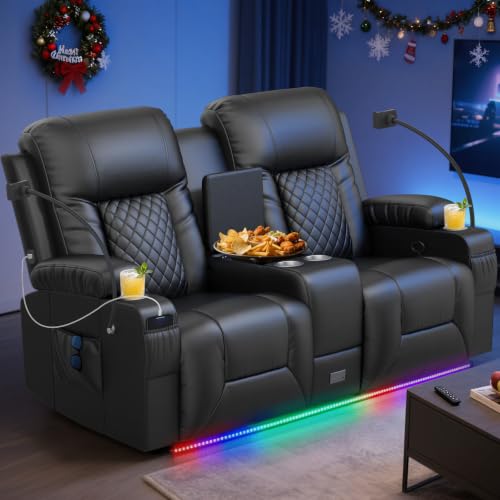

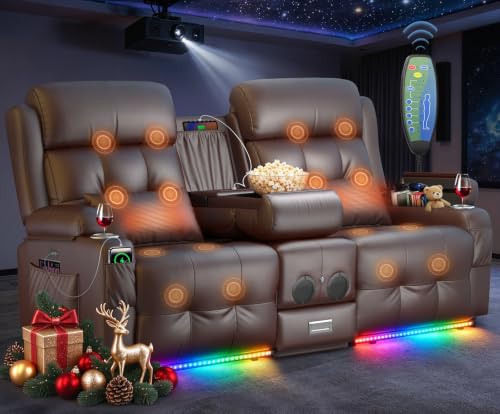


Retailers use the phrase loosely, so it helps to know the engineering behind the label. A genuine home theater couch differs from an ordinary recliner sofa in five measurable ways. Understanding these will help you separate marketing language from real viewing performance.
Theatre couches typically run 22 to 24 inches of seat depth versus 19 to 21 inches on a standard sofa. That extra depth supports the long-legged recline posture and prevents the "sliding forward" feeling that ruins a third act.
Entry-level theatre couches use manual push-back recline. Mid-range models add power recline with quiet motors. Premium and luxury tiers introduce power headrests and lumbar adjustability, letting you fine-tune the viewing angle independently of the backrest.
Built-in center consoles with cup holders and hidden storage are a hallmark of cinema seating. Modular designs let you add or remove consoles as your row configuration changes.
Sustained viewing puts pressure on the lower back and neck. Theatre couches use firmer lumbar padding and taller backrests than casual sofas, and premium tiers often add adjustable headrests to match individual viewing posture.
Zero-wall recline mechanisms slide the seat forward as the back tilts, so you can place the couch close to a wall or behind a raised platform. This is essential in dedicated media rooms with tiered seating.
Long viewing sessions demand breathable covers. Performance fabric and top-grain leather are the two dominant choices; both handle snack spills and body heat far better than standard upholstery.
Room shape and household size drive the configuration decision more than any other factor. Here is how the main options compare in real viewing rooms.
| Configuration | Best For | Typical Seats | Room Requirement |
|---|---|---|---|
| Reclining Loveseat | Couples, small media rooms, apartments | 2 | Compact footprint, tight spaces |
| Reclining Sofa Row | Family viewing, standard living rooms | 3 | 8–10 ft width, rear clearance for recline |
| Modular Cinema Sectional | Open-plan rooms, flexible hosting | 4–6+ | L-shaped or U-shaped floor area |
| Stadium / Tiered Rows | Dedicated home theaters | 4–8 across tiers | Raised platform, dedicated room |
| Convertible Theater Couch | Guest room crossover, dual-use spaces | 3–4 | Standard sofa footprint plus pull-out clearance |
If your room doubles as a guest space, a convertible option is worth a look — see our guide to the modern couch with pull-out bed for configurations that switch cleanly between cinema and sleeping duty. For open-plan rooms where seating must flex with the occasion, a modular couch system lets you reconfigure the row as your household changes.
Buyers who research before purchasing report far higher satisfaction with their theater seating. The following six steps cover the decisions that matter most, in the order you should make them.
Width is the easy measurement. The one buyers forget is recline clearance — most non-wall-hugger recliners need 12 to 18 inches of rear clearance to fully extend. If your couch backs onto a wall, a zero-wall mechanism is non-negotiable. Also map the walkway: a 30-inch path between the seating row and the screen wall keeps the room usable between screenings.
Theater seating splits into three broad market tiers. Entry-level couches deliver manual recline and basic consoles. Mid-range models add power recline, smoother motors, and better foam density. Premium and luxury tiers bring power headrests, memory presets, ambient lighting, and commercial-grade mechanisms. Decide your tier first — comparing features across tiers is where most buyers lose track of what they actually need.
Leather suits snack-heavy households and wipes clean in seconds; performance fabric runs cooler during long sessions and resists pet damage better. If children or dogs share the room, prioritize performance fabric or protected leather over velvet and delicate weaves. Our guide to the most durable couch fabric for families covers the comparison in detail.
When shopping in person, sit for at least five minutes with the footrest fully extended. Check that your feet clear the floor and that your line of sight to the screen wall stays level when reclined. Mid-range and premium mechanisms feel noticeably smoother than entry-level ones, and the difference becomes obvious across a long session.
Power-recline couches need a nearby outlet, and a row of three seats may require a single outlet with a splitter or a floor grommet for clean cable routing. If you are buying USB-equipped consoles, confirm whether they are powered or charge-only. Plan outlet placement before the delivery date, not after.
Viewing distance and screen size should inform seat height and backrest angle. A large screen viewed from too close rewards a slightly reclined backrest; a smaller screen rewards more upright seating. If your media room is still being planned, our modern TV stand and coffee table set guide can help you anchor the screen wall before the seating arrives.
The cover material determines how the couch feels in hour three of a marathon — not hour one. Here is how the main options behave under sustained viewing conditions.
Tier fit: Mid-range through luxury. Breathable when perforated, effortless to wipe clean, and develops a premium look over time. Runs warmer than fabric on long sessions unless the seats are perforated or ventilated.
Tier fit: Entry-level through premium. Stain-resistant weaves, cooler surface temperature, and strong resistance to pet claws. The most forgiving choice for multi-use living rooms.
Tier fit: Mid-range through luxury. Unmatched cinematic luxury feel, but requires more maintenance and shows crush marks. Best reserved for adult-only media rooms.
Tier fit: Entry-level to mid-range. Solid moisture resistance and easy cleaning. Faux leather runs warmer; microfiber is softer but traps pet hair more readily.
The couch is the anchor, but the surrounding layout decides whether the room feels like a cinema or a sofa with a TV in front of it. Four elements do most of the work.
If the room also serves as a family lounge, consider a seating layout that pairs the theater couch with a secondary conversation zone. Our multi-purpose layout guide shows how to divide a single room into viewing and social halves without visual clutter.
Cinema seating sees concentrated use — long sessions, snacks, and repeated recline cycles. A small maintenance routine keeps the mechanisms smooth and the covers presentable.
Vacuum the recline tracks monthly to clear crumbs and pet hair. Power mechanisms rarely need lubrication; manual push-back mechanisms benefit from a light silicone spray on the pivot points once a year.
Blot spills immediately, then follow the manufacturer's cleaning code. Performance fabrics tolerate water-based cleaners; velvet should be brushed dry first. Our fabric cleaning guide covers the code system in full.
Condition leather two to four times a year to prevent cracking along the recline folds, where flexing stress concentrates. See our leather conditioning guide for the routine.
Food odors settle into foam padding faster than fabric surfaces. Airing cushions and using a fabric-safe deodorizing treatment quarterly keeps the room fresh. Our odor elimination guide walks through the process.
Movie theatre couches are purpose-built for viewing experiences. They feature deeper seats, enhanced lumbar support, dedicated recline mechanisms, cup holder consoles, and often power-adjustable headrests. Regular sofas prioritize everyday lounging and social conversation over sustained viewing posture.
A typical three-seat reclining row needs roughly 8 to 10 feet of width and at least 3 to 4 feet of clearance behind for full recline — unless you choose a zero-wall model, which can sit close to the wall. Modular configurations let you scale seating to your exact room dimensions.
Leather offers a premium cinematic feel, wipes clean easily, and resists spills — ideal for snack-heavy viewing. Performance fabric provides better breathability and warmth for long sessions and is generally more forgiving for households with pets or children. There is no universal winner; the right choice depends on your household.
Yes. Mid-range and premium modular theater couches with fold-down consoles or removable armrests transition seamlessly between cinema mode and everyday living. The same seating can serve movie nights, casual hosting, and family downtime.
Manual push-back recline is dependable and mechanically simple. Power recline adds smoother motion, memory presets on higher tiers, and easier adjustment for people with limited mobility. For dedicated media rooms used frequently, power recline is generally the better long-term choice.
The right movie theatre couch turns viewing from an activity into an event. Review the recommended seating above, confirm your room measurements and recline clearance, and choose the tier that matches how often you watch. If your room is still taking shape, start with our home theater setup guide and build the seating around the screen wall.
View Recommended SeatingThe information provided on CouchFocus is for educational and informational purposes only. We are not professional interior designers or contractors, and our content should not replace professional advice. Always consult with a qualified expert regarding structural, safety, or design-related concerns. Some content may use AI assistance. Always check product warranties and safety standards before purchasing. If you do not agree, please do not use this website. Read the full disclaimer.