
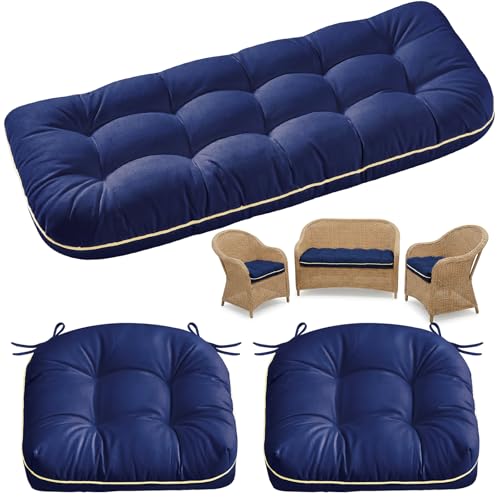


Why Replace Wicker Loveseat Cushions Instead of the Whole Seat?
Wicker frames, especially resin and all-weather wicker, are built to last many seasons. Fabric and foam are the parts that fade, flatten, and collect moisture. Replacing only the cushions keeps a familiar seat, reduces waste, and lets you update the look of your patio without changing the frame.
New cushions also improve comfort. A fresh high-resilience foam core or a layered foam-and-fiber fill can restore support that has compressed over time. If your wicker frame is structurally sound, cushion replacement is usually the most practical upgrade.
Measure Your Wicker Loveseat Correctly
Most cushion fit problems come from measuring the frame loosely. Wicker loveseat frames vary in seat depth, arm height, and back angle, so measure each surface separately rather than assuming a standard size.
Measurement Checklist
- Seat width: measure between the inside edges of the arms.
- Seat depth: measure from the front edge of the seat to the backrest.
- Seat height: measure from the floor to the top of the seat platform.
- Back height: measure from the seat platform to the top of the backrest.
- Arm height: measure from the seat platform to the top of the arm.
- Clearance: check how much space remains between the seat cushion and the back cushion.
If your loveseat came with removable cushions, measure those as a baseline. Then compare with the frame measurements to confirm there is no shrinking or stretching. For two-seat cushion sets, measure each seat separately because wicker frames can be slightly asymmetric.
Choose the Right Cushion Configuration
Wicker loveseats usually use one of three cushion setups. Matching your existing frame style matters more than following a trend.
| Configuration | Best For | Considerations |
|---|---|---|
| One long seat cushion plus two back cushions | Frames with a continuous seat platform | Clean look, but a single long cushion can shift on smooth wicker |
| Two seat cushions plus two back cushions | Frames with a center support or visible divider | Easier to flip and rotate for even wear |
| Two seat cushions with attached back | Low-maintenance patios | Fewer pieces to store, but less flexibility for cleaning |
Fabric Performance: What Actually Survives Outdoors
The cover material determines how your cushions handle sun, rain, and mildew. Focus on fiber type, weave, and finish rather than color alone.
Solution-Dyed Acrylic
Color is added during fiber production, so it resists fading better than surface-dyed fabrics. It is a strong choice for sun-exposed patios and usually carries water-repellent and mildew-resistant finishes.
Performance Polyester
Durable and widely used in outdoor furniture. Higher-density polyester weaves hold up well against abrasion. Look for UV-stabilized yarns and a water-repellent finish for better longevity.
Olefin
Naturally moisture-resistant and quick-drying. It is a practical option for humid climates, though some olefin fabrics can feel less soft than acrylic blends.
Whichever fabric you choose, confirm that the cover is removable with a zipper or hidden closure. Removable covers make spot cleaning and seasonal washing far easier. If your wicker loveseat sits under trees or near a pool, prioritize quick-drying fabrics and mildew resistance.
Filling and Foam: Comfort That Holds Its Shape
Filling determines how the cushion feels and how long it keeps its loft. Outdoor cushions face compression and moisture, so the foam core matters as much as the cover.
- High-resilience foam: good support and shape retention for everyday seating.
- Foam with a fiber wrap: softer surface feel with a supportive core.
- Polyester fiber fill: plush but compresses faster; best for back cushions.
- Quick-dry foam: open-cell structure that drains water and dries faster.
For seat cushions, a mid-range high-resilience foam with a wrapped fiber layer is usually a balanced choice. For back cushions, a fiber fill offers a softer feel. If the loveseat is used frequently, consider a firmer core to reduce flattening over time.
Weather Resistance and Care
Even weather-resistant cushions benefit from routine care. Small habits extend the life of the fabric and keep the patio looking tidy.
- Shake out cushions after rain and stand them on edge to dry fully.
- Brush off debris and pollen before it works into the weave.
- Clean with mild soap and water, then rinse thoroughly and air dry.
- Store cushions or use a breathable cover during heavy rain and off-season.
- Rotate seat cushions regularly for even wear.
If mildew appears, treat it promptly with a fabric-safe cleaner. Our guide to mold and mildew treatment covers safe methods for outdoor upholstery. For broader outdoor seating upgrades, see our outdoor couch cushions resource.
Style and Color for the Patio
Neutral tones like sand, charcoal, and sage blend with natural wicker and stay current across seasons. Patterns can hide small stains and add visual interest, while solid colors make the wicker frame stand out. If the loveseat sits in direct sun, lighter colors reflect heat and feel cooler to the touch.
Consider tie straps or non-slip backing if the seat platform is smooth. These small details keep cushions in place and reduce daily adjustments.
Buying Checklist Before You Order
Final Fit and Quality Check
- Re-measure seat width, depth, and back height before ordering.
- Confirm the cushion set includes the number of seat and back pieces you need.
- Check that covers are removable and machine-washable or spot-clean friendly.
- Verify UV resistance and water-repellent claims in the product details.
- Look for tie straps or a grippy underside to prevent sliding.
- Review the return policy in case the fit is not right.
Frequently Asked Questions
How do I measure a wicker loveseat for new cushions?
Measure the seat width between the arms, the seat depth from front to backrest, and the seat height. Add the back height for back cushions. Measure each seat separately because frames can vary slightly.
What fabric is best for outdoor loveseat cushions?
Solution-dyed acrylic and performance polyester are strong choices because they resist fading, mildew, and moisture. Look for UV-resistant and water-repellent finishes for long-term outdoor use.
Can wicker loveseat cushions stay outside in the rain?
Weather-resistant cushions can handle light rain, but prolonged soaking shortens their life. Store them or use a cover during heavy rain and allow them to dry fully before use.
How thick should outdoor loveseat cushions be?
Seat cushions around 3 to 5 inches thick are common for wicker loveseats. Thicker cushions add comfort, while thinner cushions suit frames with limited seat-to-back clearance.