


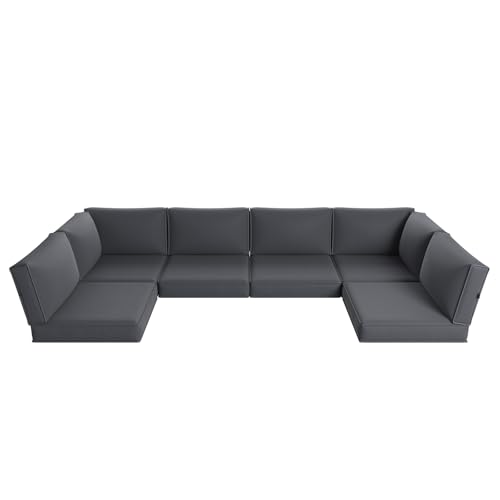


Why Outdoor Sectional Cushions Deserve Careful Selection
An outdoor sectional is one of the largest seating investments you can make for a patio, deck, or poolside lounge. The frame and layout get most of the attention, but the cushions are what actually make the sectional comfortable, inviting, and usable for long afternoons and evening gatherings. Cushions are also the component most exposed to the elements — they absorb UV radiation, humidity, rain, and the wear of repeated use.
Choosing the right cushions is not simply a matter of picking a color you like. The fabric, foam density, cover construction, and fastening system all determine how the cushions perform across seasons. A well-chosen set can last for years; a poorly chosen set can flatten, fade, or grow mildew within a single season. If you are still deciding on the sectional itself, our guide to outdoor sectionals covers frames and layouts, while this article focuses entirely on the cushion layer that sits on top.
Start With Accurate Measurements
Measure first, shop second. Outdoor sectional cushions are rarely one-size-fits-all because sectionals come in a huge range of seat depths, back heights, and corner configurations. Measuring incorrectly is the single most common reason cushions fit poorly and need to be returned.
How to Measure Each Section Type
- Standard seat cushions: Measure the width (left to right), depth (front to back), and thickness. Measure the actual seat platform, not the old cushion, because foam compresses over time.
- Corner cushions: Measure both arms of the L-shape and the interior corner. Corner pieces often need a slightly different depth than straight seats.
- Back cushions: Measure height and width. Note whether back cushions are loose or attached, and whether they rest against a sling or a solid back panel.
- Chaise sections: These are typically longer in depth. Confirm whether the cushion is one long piece or split into seat and ottoman-style sections.
Write down dimensions in a single list before you shop. If your sectional has multiple identical seats, confirm that each one really is identical — some manufacturers vary dimensions slightly between sections. For a deeper look at matching seating to your patio, see our overview of outdoor furniture couches.
Measure Twice, Order Once
Allow a small tolerance of roughly one to two centimeters on each side. Cushions that are even slightly too large will bunch, wrinkle, and strain zippers, while cushions that are too small slide around and leave gaps at the frame edges.
Fabrics: The Most Important Decision
Fabric determines how your cushions handle sunlight, moisture, and cleaning. Outdoor cushion fabrics are engineered differently from indoor upholstery, and within the outdoor category there are clear tiers of performance.
| Fabric Tier | Typical Materials | Best For | Weather Resistance |
|---|---|---|---|
| Top-tier / Premium | Solution-dyed acrylic, high-grade olefin | Full sun patios, year-round exposure, humid climates | Excellent — resists fading, mildew, and moisture |
| Mid-range | Performance polyester blends, acrylic blends | Covered patios and seasonal use in mixed climates | Good — water-repellent finishes, moderate UV protection |
| Entry-level | Standard polyester, basic canvas blends | Sheltered porches and short warm-season use | Fair — requires more frequent cleaning and storage |
Solution-dyed acrylic is considered the benchmark for outdoor cushion covers because the color is infused into the fiber itself rather than applied as a surface dye. That construction resists fading far better than surface-dyed fabrics. Olefin is another strong performer: it is inherently moisture-resistant and dries quickly, which makes it a sensible choice for poolside sectionals.
For a deeper comparison of cushion-friendly outdoor upholstery, see our article on outdoor furniture fabric replacement. If your sectional seats a lot of guests and gets heavy use, prioritizing a higher fabric tier is a long-term investment rather than an optional upgrade.
What to Look for on the Label
- UV-stabilized or UV-resistant treatment
- Water-repellent or quick-dry finish
- Mold and mildew resistance
- Tight weave construction to reduce water penetration
- Removable, machine-washable covers where possible
Foam and Fill: Comfort That Lasts
Fabric gets the spotlight, but foam determines whether cushions stay supportive after a summer of use. Outdoor cushions typically use one of three fill types:
- Standard outdoor foam: Open-cell foam that drains water and dries reasonably fast. Common in entry-level and mid-range cushions.
- Quick-dry reticulated foam: A premium option with an open, web-like structure that lets water pass straight through and air circulate. It is the top-tier choice for uncovered patios and pool areas.
- Fiber and foam blends: A foam core wrapped in polyester fiber for a softer, plusher feel. Comfortable, but fiber can clump if it gets soaked.
Higher-density foam holds its shape longer, particularly on seat cushions that bear the most weight. Back cushions can use softer fill because they are mostly for support and visual fullness. If you are choosing between an entry-level and a mid-range cushion set, the mid-range option usually delivers noticeably better foam resilience and cover construction — a meaningful difference for daily-use sectionals.
Construction Details That Matter
Beyond fabric and foam, several construction features separate durable cushions from short-lived ones:
- Zippered covers: Removable covers make washing and replacement far easier. Look for covered or reinforced zippers.
- Piping and seams: Reinforced double-stitched seams resist splitting. Piping adds shape but check that it is colorfast.
- Tie-down straps: Essential for windy patios and decks. Straps attach to the frame and prevent cushions from sliding or blowing away.
- Non-slip bottoms: Grip fabric on the underside of seat cushions keeps them in place without straps.
- Drainage channels: Some seat cushions include perforated bottoms or drainage grommets to release trapped water.
- Reversible design: Reversible cushions double the wear life and let you rotate them for even fading.
Matching Cushions to Your Sectional Layout
Sectionals are modular by nature, and cushions should respect that modularity. Straight seats, corner wedges, and chaise sections each need cushions shaped for their role. Mixing sizes within one sectional looks and feels wrong, so most manufacturers offer coordinated cushion sets by section type.
If your sectional includes storage compartments, confirm that the cushion thickness still allows the lid to close. For layouts that incorporate a chaise or extended lounger, our guide to outdoor sectional couches with storage explains how storage affects cushion choices and clearance.
Color and Style Coordination
Neutral cushion tones — sand, stone, charcoal, navy, and olive — work with almost any frame material and stay in style longer than trend colors. If you want visual contrast, add color through throw pillows rather than the primary cushions. For darker frames, a lighter cushion opens up the look; for lighter frames, a mid-tone cushion adds definition. If your sectional is part of a larger fire-pit seating arrangement, see how cushions fit into the overall scheme in our guide to outdoor furniture for fire pit areas.
Care and Maintenance for Long Cushion Life
Even top-tier outdoor cushions need routine care. A simple maintenance routine dramatically extends cushion lifespan:
- Brush off debris weekly to prevent dirt from working into the weave.
- Clean spills promptly with mild soap and water; avoid harsh chemicals that strip protective finishes.
- Dry thoroughly after rain — prop cushions upright so water drains and air circulates underneath.
- Store during off-season or storms in a dry, ventilated space. A deck box or garage shelf works well.
- Rotate cushions periodically to distribute wear and sun exposure evenly.
- Deep clean removable covers according to the manufacturer's instructions, usually a gentle machine wash or hand wash.
If your sectional sits under a pergola or covered patio, cushions still benefit from periodic airing. Humidity trapped under covers is the main cause of mildew, and good airflow prevents it. For broader weatherproofing advice, read our article on outdoor waterproof material for garden furniture.
When to Replace Rather Than Clean
Replace cushions when the foam no longer rebounds after compression, when covers develop tears that expose the foam, or when mildew odor persists after cleaning. At that point, a new cushion set restores both comfort and the appearance of the entire sectional.
Frequently Asked Questions
How do I measure my outdoor sectional for replacement cushions?
Measure each seat and back section individually. Record the width, depth, and thickness of the existing cushions, and note whether your sectional has corner, armless, or chaise pieces. Always measure the actual seat platform rather than the old cushion, since foam compresses over time and can give you inaccurate dimensions.
What is the best fabric for outdoor sectional cushions?
Solution-dyed acrylic and high-grade olefin are widely regarded as top-tier outdoor cushion fabrics because they resist fading, moisture, and mildew. Performance polyester blends occupy the mid-range, while standard polyester sits in the entry-level tier. Look for tight weaves and water-repellent finishes for the best weather resistance.
Can I use indoor cushions on an outdoor sectional?
It is not recommended. Indoor cushions lack UV stabilizers and moisture-resistant covers, so they fade, absorb water, and develop mildew quickly. Outdoor cushions use quick-drying foam and weather-resistant fabrics designed to handle sun, rain, and humidity.
How do I keep outdoor sectional cushions from blowing away?
Choose cushions with tie-down straps or non-slip grip bottoms. You can also use hook-and-loop fasteners, weighted clips, or store cushions in a deck box during high winds. Keeping cushions dry and lightweight reduces the chance of them catching the wind.
How often should outdoor sectional cushions be replaced?
With proper care, mid-range and premium outdoor cushions typically last several seasons. Replace them when the foam loses resilience, covers show persistent staining or tearing, or mildew odors cannot be eliminated. Cushions stored outdoors year-round without covers will need replacement sooner.
Putting It All Together
Choosing outdoor furniture cushions for a sectional comes down to four decisions: accurate sizing, the right fabric tier for your climate, appropriate foam for your comfort needs, and construction details like straps and removable covers. Get those four right and your sectional will look and feel like new for many seasons.
If you are also refreshing the wider seating area, explore related guides such as outdoor furniture cushions for couches, waterproof lounge chair cushions, and outdoor rugs to complete the space. When you are ready, the recommended cushion options below are a practical starting point for upgrading your outdoor sectional.
Ready to Upgrade Your Outdoor Sectional?
Browse our curated selection of outdoor sectional cushions above, compare features, and choose the set that fits your layout and climate.
Explore Cushion Options