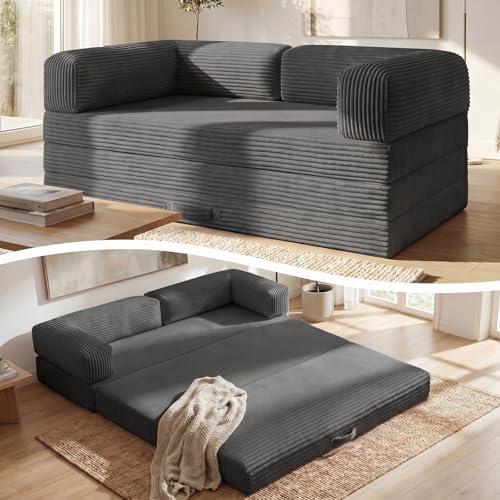
What Is a Queen Futon Couch?
A queen futon couch is a convertible seating and sleeping solution built around a folding frame and a thick futon mattress. In its upright position, it works as a full-size sofa; when the frame folds flat, it becomes a queen-size sleeping surface. This dual-purpose design makes it one of the most space-efficient choices for studios, guest rooms, home offices, and multi-functional living areas.
The term “queen futon couch” distinguishes this piece from smaller loveseat-style futons and from conventional sleeper sofas. The queen designation usually refers to the sleeping surface width, which accommodates two adults comfortably. If you are comparing this option against other convertible formats, our queen couch bed overview and the queen sofa bed couch guide provide useful context on how each design behaves in daily use.
A queen futon couch sits at the intersection of furniture and bedding. That hybrid nature is exactly why buyers need to evaluate it differently from a standard sofa: the frame mechanism, mattress thickness, and fabric durability all influence both the seating experience and the quality of sleep.
Quick orientation: If your priority is frequent guest sleeping, lean toward a reinforced frame and a thicker mattress. If the piece will mostly function as seating with occasional overnight use, a balanced mid-range configuration is usually the most practical.
Why Choose a Queen Futon Couch?
Buyers researching this category are usually solving a specific problem: they need seating that can become a bed without dedicating an entire room to sleeping furniture. A queen futon couch addresses that problem with several practical advantages.
- Space efficiency: One piece serves two functions, which is ideal for compact apartments and studio layouts.
- Flexible placement: Because the frame folds rather than slides, it fits through narrower doorways than many sleeper sofas.
- Straightforward mechanics: Fewer moving parts than a pull-out sleeper means fewer components that can fail over time.
- Mattress replacement flexibility: Futon mattresses are removable and replaceable, extending the usable life of the frame.
- Style range: Frames are available in wood, metal, and upholstered finishes, so the piece can match modern, rustic, and transitional rooms.
The main trade-off is comfort character. A futon feels firmer than a traditional sofa by design, and the sleeping surface reflects the mattress you pair with the frame. Understanding that relationship early prevents disappointment later.
Buying Criteria That Actually Matter
Most buyer regret in this category comes from evaluating the wrong factors first. Color and silhouette matter, but they are secondary to how the piece performs. The criteria below should guide your shortlist.
1. Sleeping Surface Dimensions
Confirm the flat dimensions, not just the sofa dimensions. A queen sleeping surface typically measures about 60 inches wide by 80 inches long, but frame overhang and mattress compression can reduce the usable area. Measure your room and your doorway before committing, especially in older buildings with narrow hallways.
2. Frame Weight Capacity and Reinforcement
Look for frames described as heavy-duty or reinforced, with cross-bracing and a stated weight capacity. A queen futon experiences more leverage than a smaller futon because of the longer span, so frame rigidity matters more here than in loveseat formats.
3. Mattress Thickness Compatibility
The frame and mattress must be matched. A frame designed for a six-inch mattress will not fold cleanly with a ten-inch mattress, and a deep frame paired with a thin mattress creates an uncomfortable gap. Always check the manufacturer’s recommended thickness range.
4. Fabric Durability
Performance fabric and tightly woven upholstery resist pilling and staining better than loose weaves. If the futon will serve households with pets or children, prioritize durable construction and removable, cleanable covers where available.
5. Conversion Effort
Some mechanisms fold with a single motion; others require lifting and repositioning. If the futon will be converted daily, test the mechanism in person or read detailed owner feedback about ease of operation.
For buyers who want a broader comparison across convertible formats, the queen futon couch bed article and the queen size futon couch bed guide expand on how sleeping-surface sizing works across different frame styles.
Frame Construction & Mechanism
The frame is the structural heart of a queen futon couch. Three construction families dominate the market, and each behaves differently.
Wood Frames
Solid hardwood frames, particularly those using hardwood rather than composite board in load-bearing joints, offer a warm visual character and stable folding geometry. Look for reinforced corner blocks and a finish that resists humidity. Wood frames suit bedrooms, guest rooms, and rustic or transitional living spaces.
Metal Frames
Steel frames with rust-resistant coating are common in high-use settings because they tolerate repeated conversion well. A solid build with welded joints and a powder-coated finish tends to outlast thinner tubular designs. Metal frames pair naturally with industrial and modern interiors and are often the choice for daily-use configurations.
Upholstered and Combination Frames
Some queen futon couches wrap the frame in upholstery, creating a more sofa-like appearance when closed. These designs often include storage beneath the seat or integrated armrests. They blur the line between futon and conventional sofa, which appeals to buyers who want convertible function without a visible folding mechanism.
Regardless of material, inspect the hinge assembly. A quality hinge should move smoothly without wobble and should lock firmly in both the seated and flat positions. Reinforced hinge plates and a center support bar are markers of durable construction.
Choosing the Right Futon Mattress
The mattress determines whether the piece feels like a firm sofa or a genuinely restful bed. Queen futon mattresses fall into three broad construction types.
Foam-Core Mattresses
Layered polyurethane foam with a fabric cover is the most common construction. Entry-level versions are lighter and easier to fold, while mid-range and premium versions use higher-density foam layers for better support and slower compression. Foam-core mattresses suit occasional sleeping and everyday seating.
Innerspring Mattresses
Coil-based futon mattresses provide a more traditional bed feel and better airflow. They are heavier and require a frame rated for the added weight, but they are a strong choice when the futon will be used as a primary bed. High-end tier innerspring futons often combine coils with foam comfort layers.
Cotton and Blended Fill Mattresses
Cotton-wrapped or cotton-blend futons are dense and firm, with a classic futon character. They tend to be durable and supportive but require regular rotation and may compress over time. These are well suited to buyers who prefer a firmer sleeping surface.
Thickness guidance is straightforward: six to seven inches suits occasional use and lighter seating; eight inches is the balanced choice for mixed daily seating and regular guest sleeping; nine to ten inches prioritizes sleeping comfort but demands a frame explicitly rated for that thickness. For a deeper look at how mattress replacement works over the life of the frame, see the queen size futon couch bed resource.
Quality Tiers Explained
Because this guide avoids numeric figures, the table below uses universal quality descriptors to help you position products relative to one another. Use it as an orientation tool, not a ranking of specific brands.
| Tier | Typical Construction | Best For |
|---|---|---|
| Entry-level | Lighter tubular frame, basic foam mattress, simpler hinge set | Occasional seating, light guest use, temporary setups |
| Mid-range | Reinforced frame with cross-bracing, layered foam mattress | Everyday seating with regular overnight guests |
| Premium | Hardwood or heavy-duty steel frame, high-density or coil mattress | Daily conversion, primary guest bed, long-term use |
| Luxury / professional-grade | Commercial-grade frame, innerspring or hybrid mattress, premium upholstery | High-traffic hospitality-style use, frequent hosting |
Mid-range models usually offer smoother hinge action and more consistent mattress support than entry-level configurations, while premium and luxury tiers focus on longevity and sleeping quality. The right tier depends on how often the piece will be converted and how much sleeping comfort matters in your household.
Matching Style to Your Room
A queen futon couch is visually dominant furniture, so style alignment matters. Three approaches work well.
Wood Frames for Warm and Natural Rooms
Light oak, walnut, and ash finishes suit Scandinavian, coastal, and rustic interiors. Pair a wood frame with textured throws and natural fiber rugs to reinforce the warm character. Wood frames also soften the visual weight of a large convertible piece in smaller rooms.
Metal Frames for Modern and Industrial Spaces
Matte black steel and brushed metal finishes read as clean and contemporary. These frames pair well with concrete textures, monochrome palettes, and minimalist decor. In open-plan apartments, a metal queen futon couch can double as a visual divider between living and sleeping zones.
Upholstered Frames for Sofa-Like Elegance
If the futon will sit in a formal living room or a guest suite, an upholstered frame hides the folding mechanism and presents as a conventional sofa. Performance fabric options add stain resistance without sacrificing appearance. To coordinate textiles, throws, and accent pieces around the frame, browse our couch decor and styling section for pillow and blanket pairing ideas.
Whatever the frame style, keep clearance in mind. The futon needs room to fold flat, and the surrounding furniture should allow a comfortable walkway. If the room is tight, review layout strategies in our living room layout hub before finalizing placement.
Care, Rotation & Longevity
A queen futon couch rewards consistent maintenance with years of reliable service. The care routine is simple but should be followed regularly.
- Rotate and flip the mattress every few months to distribute compression and extend its useful life.
- Vacuum the fabric weekly with an upholstery attachment to remove dust and grit that abrades fibers.
- Spot-clean promptly using a mild upholstery cleaner appropriate for the fabric type, and avoid over-wetting foam cores.
- Tighten frame bolts periodically, particularly on wood frames that experience seasonal expansion and contraction.
- Keep the hinge area clear of debris and fabric folds that could stress the mechanism during conversion.
- Protect from direct sun to slow fabric fading, and maintain indoor humidity within a moderate range to protect wood components.
If the futon will be used daily as a bed, a mattress protector is a practical addition. For broader maintenance guidance across upholstery types, our couch care and maintenance section covers cleaning methods and repair topics in more depth.
Frequently Asked Questions
What is a queen futon couch?
A queen futon couch is a convertible piece of furniture that functions as a sofa by day and unfolds into a queen-size sleeping surface by night. It combines a folding frame with a thick futon mattress, making it a practical choice for guest rooms, studios, and multi-purpose living areas.
How does a queen futon couch differ from a sleeper sofa?
A queen futon couch uses a folding frame and a single futon mattress that lies flat when opened. A sleeper sofa conceals a separate innerspring or foam mattress inside the sofa body. Futons tend to be more compact and simpler in mechanism, while sleeper sofas often feel more like a traditional bed.
What mattress thickness is best for a queen futon couch?
Most queen futon frames accommodate mattresses between six and ten inches thick. A mid-range thickness of eight inches is a balanced choice for everyday seating and occasional sleeping, while thicker premium mattresses add plushness for frequent guest use.
Can a queen futon couch be used daily as a bed?
Yes, provided you choose a high-quality futon mattress with supportive foam or innerspring layers and a frame rated for frequent conversion. Top-tier mattresses and reinforced frames are designed for daily use, while entry-level models are better suited to occasional sleeping.
How do you care for a queen futon couch?
Rotate and flip the futon mattress regularly to distribute wear, vacuum the fabric weekly, and spot-clean stains promptly with a mild upholstery cleaner. Tighten frame bolts periodically and keep the mechanism free of debris to ensure smooth folding.
Ready to Compare Queen Futon Couches?
Review our curated selection of queen futon couches and convertible options to find the configuration that fits your space, sleeping habits, and style preferences.
EXPLORE RECOMMENDED OPTIONS