
Reclining Sectional with Corner Table: The Complete Buyer's Guide
Everything you need to know about choosing, placing, and living with a reclining sectional that features a built-in corner table — the ultimate blend of comfort and convenience.
Why this configuration deserves your attention: A reclining sectional with a corner table combines two of the most requested living room features into a single piece of furniture. You get the deep relaxation of powered or manual recliners plus a practical surface that keeps drinks, remotes, and reading material within arm's reach — without adding a separate end table that eats floor space.
This guide walks you through the functional benefits, the tier differences you should expect, layout considerations, material choices, and the questions shoppers ask most often. By the end, you will have a clear framework for deciding whether this style fits your room and your daily routine.
What Exactly Is a Reclining Sectional with Corner Table?
A reclining sectional is a multi-seat sofa — typically L-shaped or U-shaped — where one or more seats recline. The "corner table" variant adds a flat, finished surface integrated into the corner wedge of the sectional. Instead of an empty corner seat or a gap, that corner becomes a usable tabletop, often with a cupholder or storage compartment built in.
This design solves a common pain point in sectional layouts: the corner is the hardest spot to use for seating anyway, because legroom is limited. Converting that dead zone into a functional table gives the whole arrangement a more purposeful, custom-built feel. If you are still comparing broad categories, our guide to recliner sectional couches covers the fundamentals before you narrow down to the corner-table variant.
Key Benefits of the Corner-Table Configuration
Surface Where You Need It
The corner table keeps drinks, snacks, phones, and remotes off the cushions and within easy reach of every seat in the L-shape.
Space Efficiency
You reclaim the floor area a separate end table or console would occupy — especially valuable in apartments and open-plan rooms.
Better Corner Utilization
Corner seats are the least comfortable spot on most sectionals. A built-in table turns that awkward zone into the most useful part of the layout.
Integrated Look
A factory-matched corner table looks intentional and cohesive, unlike a mismatched side table squeezed into the corner.
Entertaining Ready
For movie nights and gatherings, the corner surface acts as a natural hub for shared snacks and drinks.
Cleaner Cable Management
Many models route power-recliner cords and USB charging through the corner console area, keeping the floor tidy.
Understanding Quality Tiers
Reclining sectionals with corner tables span a wide range of build quality. Rather than focusing on numbers, it helps to think in terms of tiers. The table below describes what you can generally expect at each level so you can match the piece to how heavily your household will use it.
| Tier | Typical Construction | Recline Mechanism | Best For |
|---|---|---|---|
| Entry-Level | Engineered wood frame, basic foam, bonded or low-denier fabric | Manual push-back or pull-handle | Guest rooms, occasional use, first apartments |
| Mid-Range | Hardwood or mixed frame, pocket coils or high-resilience foam, performance fabrics | Manual lever or entry power recline | Primary family living rooms used daily |
| Premium | Kiln-dried hardwood, sinuous spring support, down-blend or memory foam, top-grain leather options | Smooth power recline with adjustable headrests | Heavy daily use, home theater setups, long-term ownership |
| Luxury / Commercial-Grade | Reinforced hardwood, eight-way hand-tied springs, full-grain leather, modular construction | Whisper-quiet power recline, USB-C, massage and heat options | Large households, premium media rooms, hospitality-level durability |
As a rule, a mid-range model usually offers a noticeably smoother recline motion and denser cushioning than an entry-level piece, while premium tiers add refined leathers, quieter motors, and longer service life. Choose the tier that matches your household's daily habits rather than the one with the longest feature list.
Features That Matter Most
Not every feature is equally important. Prioritize the following when comparing models:
- Corner table surface material: Tempered glass wipes clean easily; wood and faux-wood finishes hide scratches better and feel warmer.
- Cupholders and charging: Built-in cupholders and USB ports turn the corner table into a true command center — check whether ports are USB-A, USB-C, or both.
- Recline type: Power recline is smoother and easier for older users; manual recline has fewer electronic parts that can fail.
- Wall clearance: Look for "wall-hugger" or zero-wall recline so the sectional can sit closer to the wall without blocking the recline path.
- Storage: Some corner consoles hide a small compartment for remotes and chargers; a storage chaise or console is a worthwhile upgrade if clutter is a concern.
- Modularity: A modular sectional lets you reverse the chaise or swap the corner table position if you rearrange the room later.
- Fabric or leather choice: Performance fabric suits kids and pets; top-grain leather ages gracefully but needs conditioning.
Layout and Room Planning
A reclining sectional is a large footprint piece, and the corner table adds a few inches of depth at the wedge. Before committing, map out the room:
Measure the recline envelope. Fully reclined seats need clearance in front — typically more than the closed depth suggests. Tape the fully reclined footprint on the floor and check that walkways remain open. Wall-hugger mechanisms reduce the rear clearance but not the front projection.
Decide which corner faces the focal point. The corner table should sit between the two seating runs, ideally angled toward the TV or fireplace so it doubles as a shared surface. If your room is tight, consider a small space layout strategy that keeps the L-shape but trims seat count.
Plan traffic flow. Avoid placing the open end of the sectional across a doorway or main walking path. The corner table side should face inward, toward the conversation zone, so nobody has to reach across a walkway to use it.
Leave breathing room. A common guideline is to keep at least a comfortable step of clearance between the sectional and coffee table, and to keep the reclined seats from blocking side tables or lamps.
If your room is generous and you want a more expansive arrangement, an oversized sectional couch can pair well with a corner table in a large media room. For rooms with an existing chaise, a reclining sectional with storage chaise offers an alternative way to add utility without a corner console.
Materials, Comfort, and Durability
Frame: Kiln-dried hardwood frames resist warping and hold screws better over years of reclining. Entry-level engineered wood frames are acceptable for light use but are more prone to squeaks over time.
Cushions: High-resilience foam retains shape longer than standard foam. Pocket-coil cushion cores add support and reduce the "bottoming out" feeling that plagues cheaper seats. If you want a softer, sink-in feel, look for down-blend wraps over a foam core.
Upholstery: Performance fabrics are engineered to resist stains and moisture and are the safest choice for families and pet owners. Top-grain leather is durable and easy to wipe down but should be conditioned periodically. Bonded leather is the least durable option and tends to peel with heavy use.
Recline hardware: The mechanism is the most stressed component. Premium power mechanisms run quieter and last longer; check the warranty coverage on the motor and mechanism specifically, not just the frame.
A Practical Buying Checklist
- Measure the room, doorway, and elevator or stair path before ordering.
- Confirm the fully reclined depth and wall clearance needed.
- Check whether the corner table is fixed or reversible.
- Verify cupholder and charging port types and locations.
- Ask about the recline mechanism warranty separately from the frame warranty.
- Confirm the fabric or leather is rated for your household (kids, pets, sun exposure).
- Check delivery options and whether assembly is included.
- Read the return policy for large furniture before purchasing.
Common Mistakes to Avoid
Ignoring the recline envelope. Shoppers often measure only the closed footprint and are surprised when reclined seats block a walkway. Always measure the open position.
Choosing the wrong corner orientation. Sectionals are handed — left-arm or right-arm facing — and the corner table position is fixed on many models. Confirm the orientation matches your room before ordering.
Overlooking cord routing. Power recliners need an outlet near the corner. Plan the outlet location or choose a model with a battery backup option.
Underestimating fabric care. Light-colored fabrics in a sunny room or a pet-heavy home need performance treatments. Read the cleaning code before committing.
Forgetting the delivery path. A large sectional may need to be partially disassembled to fit through a narrow hallway or stairwell. Confirm the modular pieces will fit.
Alternatives Worth Considering
If the corner-table configuration does not fit your room, several related styles may work better:
For rooms where the corner is better used for seating, a sectional couch with two recliners and a chaise keeps the recline comfort while offering a lounging surface. If you want the reclining experience but with added relaxation features, a reclining sectional with heat and massage adds therapeutic functions. For smaller rooms, a round sectional couch offers a softer, more conversational shape.
If storage is your priority, a reclining sectional with storage chaise provides hidden compartments without the corner console. And if you simply want a broad comparison of reclining layouts, our recliner sectional couch overview is the best starting point.
Frequently Asked Questions
Does a corner table reduce seating capacity?
Yes, typically by one seat. The corner wedge that would normally hold a seat is replaced by the table surface. Most corner-table sectionals seat three to five people depending on the number of reclining seats and whether a chaise is included.
Can the corner table be moved to the other side?
Only on modular models. On fixed sectionals, the corner table position is determined at the factory and tied to the left- or right-arm orientation. Check the product specifications carefully, or choose a modular design if you might rearrange the room.
How much wall clearance does a reclining sectional need?
Standard recliners need several inches behind the backrest to fully recline. Wall-hugger or zero-wall mechanisms reduce that requirement to nearly zero, which is a major advantage in tighter rooms. Always confirm the exact clearance figure for the specific model.
Is a power recline or manual recline better?
Power recline is smoother and easier to operate, especially for people with limited mobility, but it requires an outlet and has electronic components that can fail. Manual recline is simpler and has fewer failure points. For daily family use, power is often the more comfortable choice; for occasional use, manual is perfectly serviceable.
What is the best fabric for a family with pets?
Performance fabrics — often labeled as stain-resistant or moisture-repellent — are the most practical choice. Tightly woven fabrics resist snags better than loose weaves, and leather wipes clean easily but can scratch. Avoid bonded leather, which tends to peel with heavy use.
How do I clean a glass corner table?
Use a microfiber cloth and a mild glass cleaner. Avoid abrasive pads that can scratch tempered glass. For wood or faux-wood surfaces, use a slightly damp cloth and dry immediately to prevent moisture damage.
Final Thoughts
A reclining sectional with a corner table is a smart choice for households that want maximum comfort and practical surface space without adding extra furniture. The key is to match the tier to your daily use, verify the recline clearance and orientation before ordering, and choose upholstery that suits your family's habits. With those boxes checked, this configuration delivers years of relaxed, organized living.
Recommended Reclining Sectional with Corner Table
⚠️ AFFILIATE DISCLOSURE: This website contains affiliate links. As an affiliate Associate, we earn from qualifying purchases. If you make a purchase through these links, we may receive a small commission at no additional cost to you. Read our full affiliate policy.

Manual Recliner Sectional Sofa Set, Bonded Leather L-Shaped Living Room Furniture Sets, Reclining Corner Couch with Drop-Down Table/Storage Console/Cup Holders for Home Office (Black, Sectional)
Check price on Amazon
FORTEVA 4-Seat Power Reclining Sofa L-Shaped Sectional Couch, Console,Brown | Electric Recliner Couch,Dual Infinite-Position Recline, Console Table, Linen, Hidden Storage, USB, Modular, Corner Seating
Check price on Amazon
Pomohome Power Reclining Sectional Sofa, Black Air Leather Corner Couch Set with LED Lights, Cup Holders & Storage Console, Home Theater Seating for Living Room
Check price on Amazon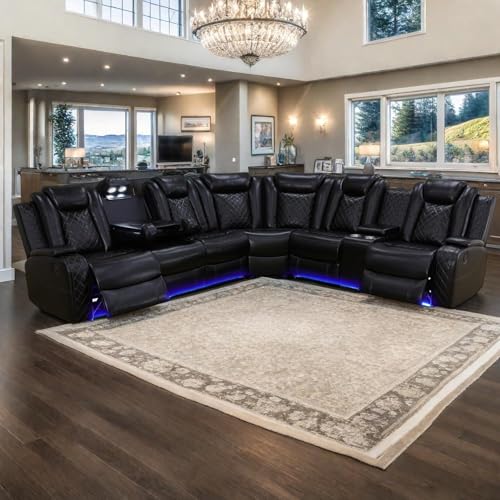
Power Recliner Sofa Sectional Sofa with LED Light for Living Room, Air Leather Reclining Corner Sectional Sofa Set, Cup Holder, Storage Console for Home Theater Seating (Black, Sectional)
Check price on Amazon
EBELLO Manual Reclining Sectional Sofa Set for Living Room, Soft Fabric Recliner Corner Sectional Couch with Center Console, Cup Holder and Storage, Brown
Check price on Amazon
Manual Recliner Sectional Sofa Set, Corduroy L-Shaped Living Room Furniture Sets, Reclining Corner Couch with Drop-Down Table/Storage Console/Cup Holders for Home Office (Dark Grey, Sectional)
Check price on Amazon
UR livingroom Modular L Shaped Reclining Sectional Sofa 5 Seat Microfiber Corner Couch with Cup Holders and Drop Down Tables for Apartments Living Room Black
Check price on Amazon