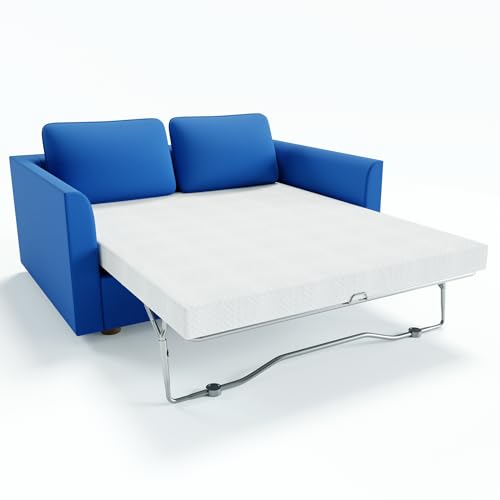
Why Replace the Mattress Instead of the Whole Couch?
The folding mattress inside a sleeper sofa absorbs the most wear of any component. It is compressed, folded, and unfolded repeatedly, and it takes the full body weight of every guest. Over time, the foam compresses permanently, the hinge points weaken, and the surface loses its supportive shape. The frame, mechanism, and upholstery, however, often remain in excellent condition for many more years.
Replacing just the mattress is therefore the most efficient path to restoring comfort. It preserves the couch you already chose for your living room, avoids the logistics of moving a large piece of furniture, and keeps the matching fabric and style intact. Many owners find that a quality replacement mattress outlasts the original factory mattress and delivers noticeably better sleep support.
Quick reality check
If the folding mechanism itself is bent, the frame bars are cracked, or the couch upholstery is failing, a new mattress alone will not solve the problem. Inspect the mechanism first. If the metal frame folds smoothly and locks correctly, a replacement mattress is the right investment.
How to Measure for a Replacement Queen Mattress
Queen sleeper sofas are not all built to identical dimensions. The word "queen" describes the sleeping surface category, but the actual mattress must match your specific folding frame. Measure before you shop — this single step prevents most returns and misfit issues.
Follow this measurement process with the couch fully unfolded:
- Length: Measure from the inside edge of the head-end frame bar to the inside edge of the foot-end bar. Queen sleeper mattresses commonly run about 72 to 74 inches, but verify your own frame.
- Width: Measure between the two side frame rails. A standard queen sleeper width is usually close to 60 inches, but confirm on your couch.
- Thickness clearance: With the mattress removed, observe how much vertical space the folded mechanism allows when the couch closes. This tells you the maximum mattress thickness that will fold without binding.
- Hinge positions: Note where the frame folds. The replacement mattress must have hinge points that align with the frame hinges, otherwise it will crease in the wrong place and wear out prematurely.
- Bar spacing: Check the gap between support bars. Wider gaps require a firmer, thicker mattress to prevent the surface from dipping between bars.
Write these numbers down and compare them against the product specifications of any mattress you consider. A difference of even an inch in width or length can cause the mattress to bunch, shift, or fail to fold flat. If your sleeper sofa is a compact or apartment-size model, also review layout guidance for small space living room layouts to confirm the unfolded footprint works in your room.
Choosing the Right Thickness
Thickness is the single most consequential specification after size. A mattress that is too thin feels like sleeping on bars; a mattress that is too thick will not fold into the couch and may damage the mechanism when closed.
- 4-inch mattresses (essential tier): Best for occasional guest use and couches with tight folding clearance. They fold easily and keep the couch closing smoothly, but offer limited cushioning over the frame bars.
- 4.5 to 5-inch mattresses (balanced tier): The most common choice for standard queen sleeper sofas. They provide a meaningful comfort upgrade over the original factory mattress while still folding reliably in most mechanisms.
- 5.5 to 6-inch mattresses (premium tier): Suited to sleeper sofas with generous folding clearance and to households that host guests frequently. They deliver the most supportive sleeping surface but require careful verification that the couch still closes without pressure.
When in doubt, measure the folded clearance and stay at or slightly below the original mattress thickness. The original manufacturer designed the mechanism around that dimension, so matching it is the safest baseline.
Foam Types and Support Construction
Replacement sleeper mattresses are built from a small number of material systems. Understanding how each behaves helps you match the mattress to how often it will be used.
- Standard polyurethane foam (entry-level): Lightweight, folds easily, and suits occasional overnight guests. It compresses over time, especially under regular use.
- High-density polyurethane foam (mid-range): Retains shape noticeably better than standard foam and is the most balanced option for a guest room or a frequently used living room sleeper.
- Memory foam (premium): Conforms to the body and relieves pressure points, which guests appreciate on multi-night stays. It is denser and heavier, so confirm the folding clearance and check that the mechanism handles the added weight comfortably.
- Innerspring sleeper mattresses (traditional): Coil support with a foam or fiber comfort layer. They feel familiar to many sleepers, but the coils can be felt through thin upholstery if the padding degrades.
- Hybrid constructions (high-end tier): Combine a compact coil unit with foam layers for a balance of bounce and contouring. These are typically the most supportive replacement options and are well suited to sleeper sofas used as a primary guest bed.
Regardless of type, look for a mattress with a reinforced hinge zone, a washable or removable cover, and a fire-retardant barrier that meets current safety standards. A moisture-resistant cover is a practical addition for households with children or pets.
Comparing Replacement Mattress Tiers
The table below organizes the main options by market position and intended use. It uses universal tier descriptors rather than any monetary figures, so the comparison stays relevant over time.
| Tier | Typical Construction | Best For | Folding Behavior |
|---|---|---|---|
| Essential tier | Standard foam, about 4 inches | Occasional guests, tight clearance frames | Folds very easily, minimal clearance needed |
| Balanced tier | High-density foam, 4.5 to 5 inches | Regular guest use, most standard queen sleeper sofas | Folds smoothly in typical mechanisms |
| Premium tier | Memory foam or dense hybrid, 5.5 to 6 inches | Frequent hosting, multi-night guest stays | Requires verified clearance; heavier to handle |
| High-end tier | Hybrid coil and foam, reinforced hinge zone | Primary guest bed, long-term comfort priority | Needs a well-maintained, sturdy mechanism |
Signs Your Sleeper Sofa Mattress Needs Replacing
Not every sagging mattress is beyond saving, but the following signals reliably indicate that replacement is the better decision:
- Visible body impressions that do not recover after the mattress is left unfolded for several hours.
- Protruding springs or hard spots that guests can feel through the surface.
- Uneven folding, where the mattress creases away from the frame hinges or refuses to lie flat.
- Persistent odors or staining that cannot be removed with appropriate upholstery cleaning methods.
- Compressed edges that cause the mattress to shift sideways within the frame.
- Age: most sleeper mattresses are designed for roughly five to ten years of regular guest use.
If the mattress has reached this stage, extended use risks damaging the mechanism as well, because a compressed mattress no longer distributes weight evenly across the frame bars.
Installation and First-Use Tips
Installing a replacement mattress is straightforward, but a few details protect both the mattress and the couch:
- Unfold the couch completely and remove the old mattress. Vacuum the frame and wipe the bars clean.
- Inspect the mechanism for bent bars, loose bolts, or worn pivot points. Tighten hardware and lubricate moving joints according to the couch manufacturer's instructions.
- Lay the new mattress onto the frame and align its hinge zone with the frame hinges before closing the couch for the first time.
- Test the fold slowly. If there is resistance, stop — the mattress may be too thick or misaligned.
- Allow the mattress to fully decompress for 24 to 48 hours after unpacking before the first guest uses it, especially for compressed-shipping foam models.
For ongoing care, air the mattress out after each guest stay, rotate it if the design permits, and keep the couch and mattress dry. If you are refreshing the entire seating area, our guidance on pull out sleeper couch care complements this mattress-focused guide, and our queen sleeper couch overview covers the wider category.
Common Mistakes to Avoid
- Buying a standard queen bed mattress. Regular queen mattresses are too thick and too long to fold into a sleeper mechanism. They must be purpose-built for pull out couches.
- Skipping the measurement step. Sleeper frame dimensions vary. Always measure length, width, thickness clearance, and hinge placement.
- Choosing maximum thickness. A thicker mattress is not automatically better if the couch cannot close properly. Match the clearance.
- Ignoring the mechanism. A worn or bent frame will shorten the life of any new mattress. Service the mechanism first.
- Overlooking the cover. A removable, washable cover significantly extends the practical lifespan of the mattress.