What This Guide Covers
What Is a Sectional Reclining Couch?
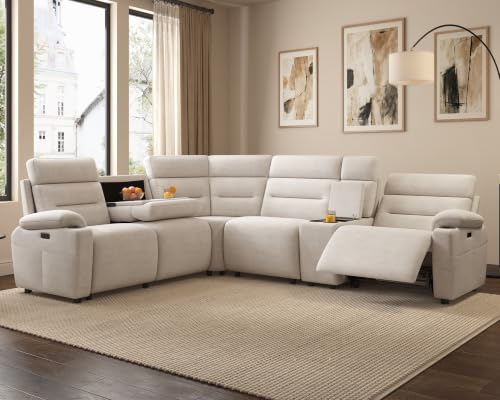
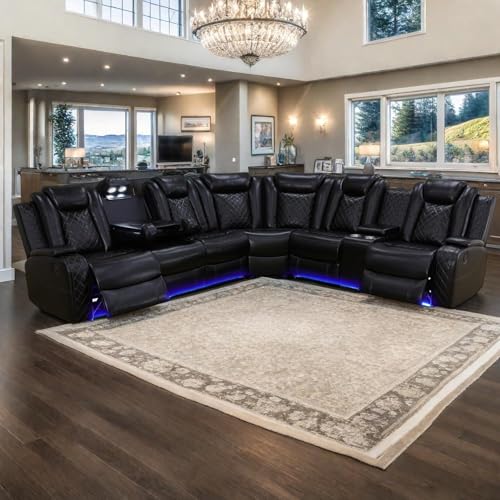
A sectional reclining couch is a large, multi-piece seating unit that combines the spacious footprint of a sectional with the individual comfort of built-in recliners. Unlike a standard sofa where reclining is limited to one or two end seats, many reclining sectionals allow every seat to recline independently. This makes them a natural centerpiece for family rooms, home theater spaces, and open-plan living areas.
The category spans a wide spectrum of designs. Some models are built around a traditional three-seat-plus-chaise footprint, while others use modular pieces that can be reordered or expanded. Buyers who want a broader overview of the category before narrowing down to reclining models can start with the general sectional couches for sale guide, which explains how sectionals differ from conventional sofas and loveseats.
For shoppers specifically comparing recliner-equipped units, the dedicated sectional couches with recliners for sale collection groups the most relevant configurations in one place.
Key takeaway: A reclining sectional is not simply a bigger couch. Its value comes from independent seat control, structural reinforcement for moving parts, and a layout that keeps walkways clear. Buyers should evaluate all three before selecting a model.
Why Choose a Reclining Sectional?
Reclining sectionals solve several problems at once. They provide generous seating for families and guests, they support multiple viewing angles for media rooms, and they let each person adjust their own posture without disturbing anyone else. For households that spend long evenings in the living room, the difference between a fixed sofa and a reclining sectional is noticeable within the first week.
There are also practical advantages for smaller homes. A well-chosen reclining sectional can replace both a sofa and a separate recliner chair, freeing floor space and reducing visual clutter. Models that pair reclining seats with a chaise or an ottoman offer the best of both worlds: a place to stretch out and a place to sit upright.
- Seating efficiency: One unit seats four to six people, reducing the need for additional chairs.
- Individual comfort: Each reclining seat operates independently on most mid-range and premium models.
- Media-friendly: Reclined posture supports comfortable TV and movie viewing over long sessions.
- Flexible layouts: Left-arm, right-arm, and modular configurations adapt to different room shapes.
If you want to see how reclining seats combine with a lounge extension, the sectional couch with ottoman and recliner guide is a useful reference for understanding how the two features work together.
Layout and Configuration Options
The layout of a reclining sectional determines how the couch fits into your room and how many people can use it comfortably. Most models fall into one of four broad shapes.
L-Shaped Reclining Sectionals
The most common configuration, an L-shaped sectional places reclining seats along one long run and a chaise or corner seat at the end. This shape works well in rectangular living rooms and in open-plan spaces where the couch helps define the seating zone.
U-Shaped Reclining Sectionals
U-shaped models wrap around a central coffee table and are ideal for conversation-focused rooms and home theaters. They require more floor space but deliver the most immersive seating experience. Buyers with large rooms often prefer this layout for its ability to anchor a room.
Recliners on Each End
Some shoppers prefer reclining seats only at the outer ends, keeping the middle seats fixed. This is a practical compromise when the middle seat is used mostly for conversation or when the couch sits against a wall with limited clearance. The sectional couch with recliners on each end guide explains the trade-offs in more detail.
Modular Reclining Pieces
Modular sectionals are assembled from individual pieces that can be reconfigured later. This is useful for renters and for households that expect their room layout to change. Modular units also make it easier to replace a single worn piece rather than the whole couch.
Reclining Mechanism Types
The reclining mechanism is the single most important mechanical component of the couch. It determines how much wall clearance you need, how smooth the motion feels, and how durable the couch will be over years of use.
Manual Lever or Handle Recliners
Manual mechanisms use a lever or handle to release the footrest and recline the back. They are simple, dependable, and typically found on entry-level models. The trade-off is that the motion can feel less refined than powered options, and there is no fine control over the recline angle.
Push-Back Recliners
Push-back recliners recline when the user leans back against the backrest. They require no levers and no power, making them a good fit for casual lounging. They tend to be most common on mid-range units and offer a smooth, intuitive experience.
Power Recliners
Power recliners use an electric motor controlled by a button or switch. They offer precise angle control, smooth motion, and often include USB charging ports. Power models are typically found in premium and luxury tiers. They require access to an outlet and add a small amount of mechanical complexity, but the comfort benefit is substantial for daily use.
Wall-Hugger and Zero-Wall Mechanisms
Wall-hugger mechanisms slide the seat forward as the back reclines, so the couch can sit closer to the wall. Zero-wall mechanisms go further and require almost no clearance. These are the best choice for small rooms and for couches placed against a wall.
Practical tip: Measure the distance from the back of the couch to the wall before ordering. Traditional recliners need several inches of clearance, while wall-hugger and zero-wall models need very little. Confirming the mechanism type prevents a frustrating delivery day.
Upholstery and Material Choices
Reclining couches experience more friction and flexing than fixed sofas, so upholstery choice matters more than it does on a standard couch. The material needs to resist wear at the hinge points and clean up easily after daily use.
Performance Fabric
Performance fabrics are engineered to resist stains, moisture, and abrasion. They are the most practical choice for families with children and pets, and they hold up well at the stress points around reclining mechanisms. Many performance fabrics are also machine-washable or spot-clean friendly.
Top-Grain Leather
Top-grain leather is durable, develops a pleasant patina over time, and is easy to wipe clean. It is a strong choice for households that want a premium look with low maintenance. Leather does require occasional conditioning to prevent cracking, especially in dry climates.
Velvet and Woven Fabrics
Velvet and woven fabrics offer rich texture and a wide range of colors, but they demand more care. Velvet can show pressure marks at reclining hinge points, and woven fabrics may snag. These materials are best suited to lower-traffic rooms or households without pets.
| Material | Durability | Maintenance | Best For |
|---|---|---|---|
| Performance fabric | High | Easy spot cleaning | Families, pets, daily use |
| Top-grain leather | High | Wipe clean, periodic conditioning | Low-maintenance premium look |
| Velvet | Moderate | Gentle vacuum, professional cleaning | Lower-traffic formal rooms |
| Woven fabric | Moderate | Regular vacuum, spot cleaning | Balanced comfort and texture |
For a deeper comparison of leather options, the top-grain leather couch guide covers grain grades, finish types, and long-term care.
Comfort and Support Features
Comfort in a reclining sectional comes from three layers: the seat cushion, the back support, and the frame. Buyers should evaluate each layer rather than relying on a single showroom sit.
Seat Cushions
High-density foam wrapped in fiber offers a balanced feel that resists sagging. Pocket-coil cushion cores add responsiveness and are common on premium models. Very soft cushions feel plush initially but tend to compress faster, especially in seats that recline frequently.
Back Support
Look for a backrest with a slight lumbar curve and adequate padding. Reclined posture puts more load on the lower back, so a supportive backrest matters more than it does on an upright sofa. Some models include adjustable headrests, which are especially useful for taller users.
Frame Construction
Hardwood or engineered hardwood frames are the most durable choice. Reclining mechanisms place additional stress on the frame, so reinforced joints and metal-to-metal connections are worth confirming. Softwood frames are common on entry-level models and are acceptable for lighter use.
- High-density foam: Good baseline for daily use.
- Pocket-coil cores: Better responsiveness and longevity.
- Adjustable headrests: Helpful for taller users and media viewing.
- Reinforced frame joints: Important for power and multi-recliner models.
Measuring Your Room Correctly
Measurement errors are the most common reason buyers regret a sectional purchase. Before ordering, measure the room and the delivery path, not just the couch footprint.
- Measure the wall run: Confirm the couch fits along the intended wall without blocking doorways or windows.
- Check wall clearance: Add the required clearance for the reclining mechanism to the depth measurement.
- Measure walkways: Leave at least three feet for main traffic paths and two feet for secondary paths.
- Measure doorways and stairwells: Confirm the largest piece can pass through the delivery route.
- Account for the chaise: A chaise extends the footprint, so measure the full length including the lounge section.
Room layout help: If your living room is narrow or oddly shaped, review the small space layout guide before choosing a configuration. It explains how to position a large sectional without overwhelming the room.
Comparison: Tier Descriptors
Because product positioning varies widely, the table below uses neutral tier descriptors instead of numeric figures. This makes it easier to compare models across retailers and over time.
| Tier | Typical Mechanism | Frame and Cushion Quality | Best For |
|---|---|---|---|
| Entry-level | Manual lever or push-back | Softwood frame, standard foam | Occasional use, guest rooms |
| Mid-range | Push-back or smooth manual | Hardwood frame, high-density foam | Daily family use |
| Premium | Power recliner, wall-hugger option | Reinforced hardwood, pocket-coil cushions | Media rooms, long sessions |
| Luxury | Power recliner with adjustable headrest | Hardwood frame, premium upholstery | High-traffic living rooms, home theaters |
Models in the premium and luxury tiers typically offer smoother mechanism motion and more consistent cushion support over time. Entry-level and mid-range models are well-specified for their class and remain a solid choice for lighter use.
Shopping Checklist
Use this checklist to narrow down the options before committing to a model.
- Confirm the layout: L-shaped, U-shaped, or modular, based on room dimensions.
- Check mechanism type: Manual, push-back, or power, and confirm wall clearance.
- Verify upholstery: Match the material to household traffic and cleaning habits.
- Test the frame: Look for reinforced joints and hardwood construction.
- Review delivery details: Confirm doorway widths and stairwell turns.
- Check warranty terms: Mechanism warranties are often separate from frame warranties.
For buyers who also need sleeping capacity, the sectional couch with recliners and hide-a-bed guide explains how dual-purpose models balance comfort and mechanism complexity. For homes with pets, the sectional with machine washable covers option is worth reviewing before finalizing a material choice.
Frequently Asked Questions
What is the main advantage of a sectional reclining couch?
A sectional reclining couch combines the generous seating capacity of a sectional with the individual comfort of built-in recliners. Multiple people can recline independently, making it ideal for family living rooms and home theater setups.
How much wall clearance does a reclining sectional need?
Traditional recliners need roughly six to twelve inches of wall clearance, while wall-hugger or zero-wall mechanisms require only a few inches. Always confirm the mechanism type before arranging your room layout.
Which upholstery works best for a reclining sectional?
Performance fabric and top-grain leather are the most practical choices. Both resist daily wear, are easier to clean, and hold up well against the friction caused by repeated reclining motion.
Can a reclining sectional work in a smaller living room?
Yes, provided the layout is chosen carefully. L-shaped models and wall-hugger mechanisms fit smaller rooms well. Measure walkways and wall clearance before ordering, and consider a modular design if the room may be reconfigured later.
Should I choose manual or power recliners?
Manual recliners are simple and dependable, making them a good fit for occasional use. Power recliners offer smoother motion and precise angle control, which is a meaningful benefit for daily use in media rooms and family living rooms.
Ready to Compare Reclining Sectionals?
Review the recommended models below, then confirm wall clearance and upholstery choices against the checklist above before ordering.
View Recommended Models