
Sectional with Hide-A-Bed and Recliner: The Complete Guide
One piece of furniture, two game-changing functions. Learn how dual-function sectionals work, what to check before buying, and how to match one to your living room and guest needs.
START EXPLORINGCouchFocus Insight: A sectional that combines a hide-a-bed and a recliner solves two of the most common living room challenges at once — everyday lounging comfort and overnight guest capacity. This guide walks you through how these models are built, what separates quality tiers, and the practical details that matter before you commit.
What Is a Sectional with Hide-A-Bed and Recliner?
A sectional with hide-a-bed and recliner is a multi-configuration sofa that integrates two distinct mechanisms into a single footprint: a pull-out sleeper (hide-a-bed) built into one section, and a reclining seat — often a recliner on one or both ends — in another. The result is a couch that supports relaxed daily seating and converts into a guest bed when needed, without requiring a separate guest room.
These designs are especially practical for open-plan living rooms, apartments, and homes that host visitors regularly. The sleeper section typically holds a fold-out mattress concealed beneath the seat cushions, while the reclining section uses a lever or power control to extend a footrest and tilt the backrest. Because the two systems occupy separate sections, each mechanism can operate independently.
If you are still deciding between configurations, it helps to compare this format with a sectional couch with recliners and hide-a-bed to see how seat counts, chaise placement, and recliner positioning differ across models.
How the Two Mechanisms Work Together
Understanding the internal layout helps you evaluate build quality and avoid common frustrations after delivery.
The Hide-A-Bed Mechanism
Most sleeper sectionals use a fold-out metal frame with a mattress folded inside the seat base. When opened, the frame extends forward and the mattress unfolds flat. Premium models use a heavier-gauge steel frame, a locking mechanism, and a thicker mattress — often memory foam or a coil-based design — for better overnight support.
The Recliner Mechanism
Reclining sections use either a manual lever (pull-handle or push-back) or a power motor with a wired or wireless control. Power recliners are increasingly common in mid-range and high-end tiers because they offer smoother motion and easier positioning. Manual levers remain popular in entry-level and essential-tier models for their simplicity and fewer electronic components to maintain.
Structural Separation
Quality manufacturers separate the reclining hardware from the sleeper housing so that the two mechanisms do not interfere. This is one of the clearest differences between balanced-tier and top-tier products: better engineering means less creaking, smoother reclining, and a sleeper frame that does not wobble under weight.
Key Features to Evaluate
Not every dual-function sectional is built to the same standard. These are the features that most affect long-term satisfaction.
| Feature | Entry-Level | Mid-Range | Premium |
|---|---|---|---|
| Recliner mechanism | Basic manual lever, limited recline positions | Smooth manual or entry power recliner | Power recliner with memory or multi-position control |
| Sleeper frame | Lightweight steel frame, thin mattress | Reinforced steel frame, denser foam mattress | Heavy-duty frame, memory foam or air-over-coil mattress |
| Upholstery | Standard fabric, limited options | Performance fabric or bonded leather | Top-grain leather, premium performance fabric |
| Cushion support | Foam over sinuous springs | High-density foam with pocket-coil support | Multi-layer foam with coil or gel-infused core |
| USB / power ports | Rarely included | Often included on reclining sections | Standard, sometimes with wireless charging |
Recliner Positioning
Some models place a recliner on each end, while others offer a single recliner paired with a chaise. If you frequently host two loungers, a configuration like a sectional couch with recliners on each end may suit your household better than a single-recliner layout.
Sleeper Mattress Quality
The mattress is often the most overlooked component. Entry-level sleeper sectionals use thin innerspring mattresses that may be adequate for occasional use but not ideal for multi-night stays. Mid-range and premium models offer memory foam and air-over-coil options that are noticeably more comfortable for guests.
Storage Integration
Many dual-function models add a storage console or ottoman compartment. If you want bedding stored right where guests sleep, explore a sectional couch with storage and sleeper to compare compartment sizes and placement.
Room Layout and Clearance Planning
A reclining sleeper sectional is larger in use than its footprint suggests. Plan for two distinct clearance zones:
- Recliner clearance: Reclining sections need space behind the backrest — typically several inches to a foot — to fully recline without hitting a wall or window ledge.
- Sleeper clearance: The hide-a-bed extends forward when opened, so keep the area in front of the sleeper section free of coffee tables and rugs that could obstruct the mechanism.
- Walkway width: Leave comfortable walking space on both sides so people can move around the sofa when it is fully extended.
For living rooms where the couch sits against a wall, a sectional couch with pull-out footrest can be a better fit because it provides lounging comfort without requiring rear clearance for recline. If the room is narrow, review a small sectional with storage and pull-out for compact options that preserve floor space.
Measure doorways, hallways, and stairwells before ordering. A sectional is delivered in sections, but each section still needs to pass through the entry path. Confirm the dimensions of the largest section against your narrowest doorway.
Comfort: Everyday Seating vs. Overnight Sleeping
Dual-function furniture involves trade-offs, and the best choice depends on how you will use it most.
Everyday Seating
Reclining sections are designed for extended lounging, so seat depth, cushion density, and backrest angle matter more than in a standard sofa. High-density foam with pocket-coil support tends to hold its shape longer than basic foam. If you prefer a firmer seat, test the cushion in person or read owner reviews that describe firmness.
Guest Sleeping
A sleeper mattress is only used occasionally, so a mid-range model with a denser mattress is usually a solid balance between everyday comfort and guest support. If guests stay multiple nights, a premium sleeper with a memory foam or air-over-coil mattress is a worthwhile investment. For a broader comparison of sleeper formats, see our guide to a sleeper couch with memory foam mattress.
Upholstery Choice
Performance fabric resists stains and is easier to clean, making it a practical choice for households with pets or children. Leather offers durability and a refined look but requires conditioning. Whichever you choose, confirm the upholstery care code before committing.
Pre-Purchase Checklist
Use this checklist to evaluate a candidate model before you buy.
Before You Decide
- Measure the room, doorways, and delivery path, then compare against the sectional's sectional dimensions when assembled and when the sleeper is open.
- Confirm the recliner clearance needed behind the backrest and the sleeper extension distance in front.
- Verify the sleeper mattress type, thickness, and whether it is replaceable.
- Check the recliner mechanism type — manual lever, push-back, or power — and the warranty coverage for the mechanism.
- Confirm the weight capacity of both the reclining seat and the sleeper frame.
- Review the upholstery care code and whether the covers are removable or machine washable.
- Ask about assembly requirements and whether the sections connect with brackets or interlocking hardware.
- Check the return policy and delivery terms, especially for large furniture.
If you want to explore other convertible formats before finalizing your choice, our overview of a sectional with pull-out bed covers the range of sleeper options available. Households that prioritize seating flexibility may also compare a sectional with recliner and hide-a-bed layout with a chaise-focused design.
Materials and Build Quality
The frame and mechanism are the backbone of a dual-function sectional. Look for kiln-dried hardwood or engineered wood frames with reinforced corner blocks. Metal recliner mechanisms should feel smooth with no grinding or catching. Sleeper frames should lock firmly in both the closed and open positions.
Upholstery options vary by tier. Entry-level models often use standard woven fabric, while mid-range and premium models offer performance fabric, top-grain leather, and velvet. Each has different care requirements; confirm the cleaning code and whether the material is suitable for your household's daily use.
For a deeper look at leather construction across price tiers, our top grain leather couch guide explains what to look for in grain, finish, and durability.
Maintenance and Longevity
Dual-function furniture has more moving parts than a standard sofa, so routine care extends its useful life.
- Vacuum upholstery and crevices regularly to prevent debris from working into the mechanisms.
- Lubricate reclining mechanisms according to the manufacturer's schedule — typically annually for manual mechanisms.
- Air out the sleeper mattress periodically and rotate it if the design allows.
- Keep liquids away from the sleeper housing and recliner motor housing.
- Use a fabric or leather protector suited to your upholstery type, and reapply as directed.
- Check bolts and brackets every few months and tighten as needed.
If you plan to place the sectional near a window, review our guidance on sun damage prevention to protect the upholstery from fading over time.
Ready to Compare Models?
Browse curated options with dual-function seating and find the configuration that fits your room.
EXPLORE OPTIONSRecommended Sectional with Hide-A-Bed and Recliner
⚠️ AFFILIATE DISCLOSURE: This website contains affiliate links. As an affiliate Associate, we earn from qualifying purchases. If you make a purchase through these links, we may receive a small commission at no additional cost to you. Read our full affiliate policy.

Marsail 110" Modular Sectional Sleeper Sofa, Pull Out Sofa Bed with Storage | 7 Seat Comfy Cloud Sofas for Living Room, Chenille Sectional Couches with USB Ports & Cup Holders, Dark Gray
Check price on Amazon
LITVZ Oversized Modular Sectional Sofa with Reclining Chair, Queen Sleeper Sofa with Pull Out Couch Bed, Hide A Bed Couches Feature Cup Holder, Laptop Table and USB Port for Living Room, Apartment
Check price on Amazon
WUNSTANTE Sectional Sleeper Sofa with Pull Out Bed, Plush Corduroy 5 Seat Modular Sectional Sofa with Storage Chaise and Adjustable Backrest, Cloud Couches for Living Room, Apartment, Dark Grey
Check price on Amazon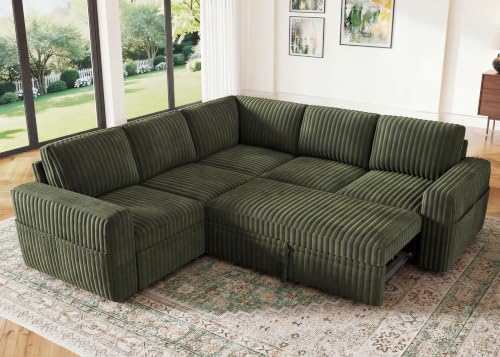
HONBAY Corduroy L Shaped Sectional Sleeper Sofa with Pull Out Bed,Green | modular design,built-In storage, couches for living room and apartment guest sleeping space,removable cushions
Check price on Amazon
Ihanherry 83-inch 5-Seater Large Sectional Sofa Bed with Storage, Corduroy Reversible Modular Sleeper Sofa with USB Port & 4 Pillows, Convertible L-Shaped Couch for Living Room(Green)
Check price on Amazon
Flyida 110" Sectional Sleeper Sofa with Pull Out Bed, USB Charging & Storage Chaise, U Shaped Plush Corduroy Sectional Couches for Living Room, Comfy Convertible 7 Seat Cloud Sofa Bed, Light Grey
Check price on Amazon
Oversized Power Recliner Sectional Sofa with Wireless Charger,Large Reclining Sectionals Couch Set with 2 Electric Chenille Recliner,USB Type-C,Storage Consloe for Living Room,32.6" Seat Width,Gray
Check price on AmazonFrequently Asked Questions
Can a sectional have both a hide-a-bed and a recliner?
Yes. Dual-function sectionals combine a pull-out sleeper mechanism in one section with reclining seats in another. These models are engineered so the reclining hardware and sleeper frame occupy separate sections, keeping both functions reliable.
How much floor space does a reclining sleeper sectional need?
Reclining sections typically need extra clearance behind the backrest to fully recline, while the sleeper section needs open floor space in front when extended. Plan for roughly a walkway's width of clearance on both sides for comfortable use.
Is a reclining sleeper sectional comfortable for everyday use?
Mid-range and premium models use high-density foam, sinuous spring or pocket-coil support, and smooth reclining mechanisms. Entry-level models may feel firmer and use basic sleeper mattresses, so test the seat cushion and mattress quality before deciding.
What mattress types are used in hide-a-bed sectionals?
Standard sleeper sectionals use a fold-out innerspring or foam mattress. Higher-tier models offer memory foam, gel-infused foam, or air-over-coil mattresses for better overnight comfort. Always confirm the mattress thickness and type before purchase.
How do I maintain a sectional with a recliner and hide-a-bed?
Vacuum upholstery regularly, lubricate reclining mechanisms per the manufacturer's schedule, and air out the sleeper mattress periodically. Keep liquids away from the mechanism housing and use a fabric or leather protector suited to the upholstery.
Continue Exploring
Compare related configurations to find the best fit for your living room and guest needs:
- Sectional couch with ottoman and recliner
- Sectional couch with storage and sleeper
- Sectional couch with pull-out queen bed
- Sectional couch with sofa bed
- Sectional with chaise and pull-out bed
- Sectional with cup holders and USB
- Small sectional with storage and pull-out
- Theater sectional couch
- Sleeper sectional couch with storage
- Sleeper sectional with storage chaise
Have a question that is not covered here? Contact us and we will help point you in the right direction.