
Settee Couch: The Compact Seat That Fits Almost Any Room
A settee couch bridges the gap between a full sofa and an accent chair. Learn how sizing, seat depth, upholstery, and placement decide whether a settee becomes the hardest-working seat in your home.
Explore Settee OptionsQuick definition: A settee couch is a compact upholstered seat built for two, usually with a back and arms, and often with a slimmer footprint than a standard loveseat. It suits entryways, bay windows, bedroom corners, and living rooms where a full-size sofa would crowd the walkway. This guide covers the styles, dimensions, upholstery choices, and layout rules that matter before you commit.
What Makes a Settee Couch Different?
The word "settee" originally described a long bench with a back and arms, and that heritage still shapes modern designs. Compared with a conventional standard sofa, a settee typically runs shorter in overall length, sits more upright, and carries a more decorative silhouette — think turned legs, a camelback profile, or a tight button-tufted back.
The practical difference is posture. Settees are built for sitting and conversation rather than full-body lounging, so seat depth usually runs shallower and the back sits higher. That makes them a strong fit for hallways, dining-adjacent nooks, and formal living rooms where guests perch rather than sprawl. If your priority is deep, sink-in comfort, a loveseat or a deeper settee collection model with a cushioned seat may serve you better.
Modern settee couches blur the category. You will find deep-seated upholstered versions that behave like small sofas, and slim bench-style pieces that behave like accent seating. Judge each piece on three numbers — overall length, seat depth, and seat height — rather than on the label alone.
Settee Styles and What Each One Is Best For
| Style | Typical Traits | Best For | Market Tier |
|---|---|---|---|
| Traditional camelback settee | Curved back, rolled arms, turned legs, tight upholstery | Formal living rooms, entryways, period homes | Mid-range to premium |
| Mid-century settee | Clean lines, tapered legs, low back, splayed arms | Open-plan living, modern apartments, reading corners | Entry-level to mid-range |
| Bench settee | Backless or low-back, long seat, often with a cushion | Bedroom footboards, mudrooms, hallway walls | Starter tier to mid-tier |
| Upholstered accent settee | Soft fabric or velvet, generous cushioning, decorative frame | Bedrooms, dressing areas, secondary living zones | Mid-range |
| Leather settee | Full-grain or top-grain hide, structured frame, easy-clean surface | Studies, libraries, formal reception areas | Premium to luxury |
| Convertible or storage settee | Lift-up seat, pull-out bed, or hidden compartment | Small apartments, guest rooms, multi-use rooms | Essential tier to balanced tier |
If you need flexible sleeping space, look at convertible settee designs and compare them with a purpose-built sleeper couch before deciding. A settee with a pull-out mechanism often trades seat depth for the bed function, so test both modes mentally before ordering.
Sizing a Settee Couch for Your Space
Length is only half the equation. Three measurements decide whether a settee works in a room:
- Wall length: Leave breathing room on both sides unless the settee is intentionally built into a nook or alcove.
- Seat depth: Shallow seats suit upright sitting; deeper seats suit reading and reclining. Match depth to how you actually use the seat.
- Walkway clearance: Keep a clear path around the front of the piece so the room does not feel blocked.
Two-seat settees generally run shorter than standard loveseats, which makes them useful in narrow rooms and hallways. If your room is genuinely tight, a small couch with ottoman or a small loveseat with pull-out bed may deliver more function in a similar footprint. In larger rooms, a settee works best as a secondary seat paired with a full sofa or sectional couch.
Upholstery: Matching Fabric to Placement
Where the settee lives should drive the upholstery choice. Entryways and family rooms see more traffic than a bedroom corner, and the fabric needs to match that reality.
- Performance fabric: Tightly woven synthetics and treated blends resist spills and everyday wear. A solid choice for entryways and homes with pets or children.
- Velvet: Rich color and a soft hand, best reserved for low-traffic decorative spaces and bedrooms.
- Linen and cotton blends: Breathable and relaxed, but check the cleaning code and consider a removable cover if the settee sits in a busy area.
- Leather: Durable and easy to wipe down. A leather settee suits studies and formal rooms and develops character over time.
If stain management is a priority, review our guide to a steamer for cleaning couch upholstery before you commit to a delicate fabric. Removable, machine-washable covers are worth prioritizing in households with pets or young children.
Placement Ideas That Actually Work
A settee is at its best when it solves a specific spatial problem. These placements deliver the most value:
- Entryway or foyer: A slim settee gives guests a place to sit while pulling on shoes and anchors the entry wall.
- Foot of the bed: A bench-style settee adds a seating layer to the bedroom without blocking the mattress.
- Bay window or alcove: A settee sized to the opening turns dead space into a reading spot.
- Living room secondary seat: Pair a settee with a larger sofa at a right angle to form a conversation zone.
- Open-plan divider: A settee with a low back can separate a living area from a dining zone without building a wall.
In an open-plan layout, a settee works alongside larger seating rather than replacing it. If you are planning a full room, our living room layout resources cover walkway planning and focal-point arrangement in more detail.
Comfort Checklist Before You Order
A settee's upright posture is intentional, but that does not mean it should feel rigid. Run through this checklist:
- Seat cushion construction: High-resilience foam with a wrapped fiber layer balances support and softness. Entry-level models often use plain foam that compresses faster.
- Frame material: Hardwood or engineered hardwood frames outlast softwood frames in daily use.
- Back support: A slight recline and a contoured back make upright sitting comfortable for longer periods.
- Arm height: Arms should support your forearms when seated, not force your shoulders up.
- Leg style: Turned legs, tapered legs, and skirted bases each change the visual weight of the piece in a small room.
If you want a settee that doubles as a lounging seat, compare it against a two-cushion couch or a single couch sofa with a deeper seat. The right answer depends on whether the seat is primarily for conversation or for relaxing.
Settee vs. Loveseat vs. Accent Chair
| Category | Seats | Typical Posture | Best For |
|---|---|---|---|
| Settee couch | Two | Upright, decorative | Entryways, bedrooms, formal living rooms, nooks |
| Loveseat | Two | Relaxed, deeper seat | Living rooms, family rooms, apartments |
| Accent chair | One | Varied | Reading corners, conversation groupings, bedrooms |
If you are furnishing a small living room and need maximum seating, a loveseat usually wins on comfort. If you are solving a spatial problem — a narrow entry, a bedroom wall, a bay window — a settee usually wins on fit and style.
Recommended Settee Couch Options
⚠️ AFFILIATE DISCLOSURE: This website contains affiliate links. As an affiliate Associate, we earn from qualifying purchases. If you make a purchase through these links, we may receive a small commission at no additional cost to you. Read our full affiliate policy.

61'' Brown Faux Leather Loveseat, Small Tufted Couch for Living Room | Mini Sofa, Love Seat, Comfy 2-Seat Settee with Mid-Century Modern Tufted Design, Office Bedroom Small Spaces, Brown
Check price on Amazon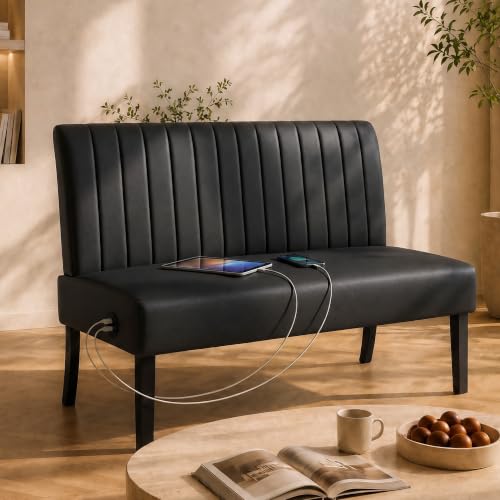
Leather Armless Loveseat with USB, Compact Couch for Living Room | Mini Sofa and Love Seat, Compact Armless Design with USB Charging Port, Bedroom Apartment Office Dorm Small Spaces, Black
Check price on Amazon
Madison Park Willshire Natural Rattan Settee, Upholstered Seat - Charming Country Design, Rustic Reclaimed Wood Finish, Ratan Insert Backrest & Padded Arm Rest, 47.25" Wide Beige/Reclaimed Natural
Check price on Amazon
48 "Loveseat Couches,Small Love Seat Sofa with Pillows for Small Spaces,Comfy Corduroy Sofas w/ Wood Frame,Tool-Free Setup Compact Futon Couch for Apartment,Dorm,Office,Settee (Blue, 2-Seater)
Check price on Amazon
Madison Park Accent Bench, Upholstered with Nailhead Trim, & Padded Seat Entryway Bench Small, End of Bed Bench with Back, 49.5" W x 19.25" D x 23" H, Grey
Check price on Amazon
Yaheetech 56.5" Small Sofa 2 Seater Couch with Gold-Tone Legs, Pink | Small Sofa Loveseat Velvet 2 Seater Couch with Tufted Back Gold Metal Frame 2 Pillows for Office, Studio,Living Room
Check price on Amazon
Anwick 59" Small Modern Chenille Loveseat Sofa, 2-Seater Sofa with Gold Metal Legs, Small Couch with Flower Shaped Back for Living Room Bedroom Office (Ivory)
Check price on AmazonFrequently Asked Questions
What is a settee couch?
A settee couch is a compact upholstered seat designed for two people, typically with a back and armrests. It sits between a loveseat and an accent chair in scale and is often used in living rooms, entryways, bedrooms, and open-plan spaces where full-size sofas would overwhelm the room.
Is a settee the same as a loveseat?
They overlap in size and function, but settees tend to have a more upright back, a slimmer profile, and a decorative or antique-inspired design. Loveseats are usually deeper, softer, and built for lounging. Many modern settee couches blur the line, so judge each piece by seat depth, back height, and frame style rather than the label alone.
Where should I place a settee couch?
Common placements include entryways and foyers, at the foot of a bed, in a bay window, along a living room wall opposite a fireplace, and as a secondary seat in open-plan layouts. A settee also works well paired with a larger sectional to create a conversation zone.
How do I choose the right size settee?
Measure the available wall length, doorway clearance, and walking path first. Two-seat settees typically run narrower than standard loveseats, but depth and back height vary widely. Allow at least 18 inches of walkway around the piece and confirm the seat depth suits upright sitting rather than full lounging.
What upholstery works best for a settee couch?
Performance fabric and tightly woven textiles suit high-traffic entryways and family rooms, while velvet and linen blends suit decorative living rooms and bedrooms. Leather settees offer a durable, easy-clean option for formal spaces. Always check the manufacturer's cleaning code before treating any stain.
Final Buying Notes
A settee couch earns its place when it solves a specific spatial problem rather than duplicating a sofa you already own. Decide first whether you need upright conversation seating, a bedroom accent, or a flexible guest solution, then match the style and upholstery to that role. Confirm the three key measurements — length, seat depth, and walkway clearance — and check the frame and cushion construction before ordering.
For broader planning, pair this guide with our resources on buying guides and couch care and maintenance so the seat you choose stays comfortable and presentable for years.