
Small Sofa Bed Couch: The Complete Buying Guide
A small sofa bed couch lets you seat guests by day and host overnight visitors by night, without sacrificing floor space. This guide explains the mechanisms, mattress types, frame construction, and layout considerations that separate a truly comfortable dual-purpose couch from a frustrating compromise.
Explore Recommended ModelsIf you live in a studio apartment, a compact guest room, or a multi-purpose home office, a small sofa bed couch solves a very specific problem: you need two pieces of furniture in the footprint of one. The challenge is that compact sleeper couches vary enormously in build quality, and the wrong choice turns into a couch you avoid sitting on and a bed your guests quietly dread. This guide walks you through every decision point so you can match the couch to how often it will actually be used for sleeping.
Who this guide is for: renters and homeowners in the research stage who already know they want a compact dual-purpose couch and now need to compare mechanism types, mattress construction, frame materials, and room-fit considerations before committing.
What you will learn: the practical differences between pull-out and click-clack designs, which mattress and frame specifications matter for nightly versus occasional use, how to measure your space correctly, and how to style a small sleeper so it reads as a living room piece rather than a folded-away bed.
What Counts as a Small Sofa Bed Couch?
A small sofa bed couch is a compact seating unit with an integrated conversion mechanism that produces a sleeping surface. In practical terms, most models in this category seat two people and measure roughly 55 to 75 inches wide, with extended sleeping surfaces that range from a twin up to a compact full size. They differ from full-size sleepers in three meaningful ways: a shallower seat depth, a lighter frame, and a conversion mechanism engineered to fold into a tighter footprint.
The category overlaps with several related designs. A small loveseat with pull-out bed prioritizes seating proportions and accepts a narrower sleeping surface, while a small pull-out couch focuses on the folding frame mechanism itself. If your priority is a genuinely comfortable mattress for regular overnight use, a dedicated sleeper couch with a full-size mattress may serve you better even if it takes slightly more room. For genuinely tight layouts, a single bed pull-out couch or a twin-size pull-out bed chair can be the most sensible fit.
Pull-Out vs. Click-Clack: Choosing the Right Mechanism
The conversion mechanism determines how comfortable the couch is to sit on, how flat the bed sleeps, and how much floor space you need to open it. There are two dominant designs in the small sofa bed couch category, plus a few hybrids worth knowing about.
Pull-Out Mechanism
A folding metal frame slides out from beneath the seat, unfolding to create a flat platform for the mattress. The seat cushions typically stay in place or lift to accommodate the mattress.
- Sleeps flatter and firmer than click-clack designs
- Better suited to regular overnight use
- Requires clear floor space in front of the couch
- Heavier frame, so consider assembly and moving
Click-Clack Mechanism
The backrest folds down flat to meet the seat, forming a sleeping surface directly on the couch's own cushioning. No frame extends outward beyond the unit's footprint.
- Simplest to operate and lightest to move
- Works well in very tight rooms with limited clearance
- Sleeping surface is firmer and less even
- Best reserved for occasional guests
Hybrid & Trundle Designs
Some compact couches use a trundle that pulls out at seat height, or a bi-fold platform that lifts and unfolds. These split the difference between footprint and sleeping comfort.
- Trundle models often store bedding inside the unit
- Frequently offer two separate sleeping surfaces
- Mechanism quality varies widely by tier
- Check the raised-height clearance before buying
| Mechanism | Best For | Sleep Quality | Space Demand | Typical Tier |
|---|---|---|---|---|
| Click-clack | Occasional guests, very small rooms | Firm, less even | Low — no extension | Entry-level to mid-range |
| Pull-out frame | Regular overnight use, guest rooms | Flat, supportive | Moderate — needs clearance | Mid-range to premium |
| Trundle | Two guests, bedding storage | Depends on mattress | Moderate — lateral pull | Mid-range |
| Bi-fold platform | Studio apartments, flexible layouts | Balanced | Moderate | Mid-range to high-end tier |
Mattress and Cushion Construction: Where Comfort Is Won or Lost
Two couches with identical dimensions can feel completely different after a week of use. The difference almost always comes down to mattress construction, cushion foam density, and how the mechanism distributes weight.
- Memory foam mattresses conform closely and suit sleepers who prefer a contouring feel. In compact sleepers, look for a density rating that resists bottoming out; thinner memory foam layers in entry-level models compress quickly.
- Innerspring mattresses offer more bounce and better edge support, which matters in a narrow sleeping surface where you cannot afford to roll toward the frame. Mid-range and premium pull-out models frequently use pocketed coil designs.
- Air-over-coil and hybrid systems combine a coil base with a foam comfort layer. These are the most common choice in high-end tier sleepers and tend to hold their shape longest.
- Seat cushion foam density matters just as much. High-resilience foam in the 1.8 to 2.5 lb/ft³ range resists sagging; lower-density foam in starter tier models flattens within a year of daily seating.
- Bar-in-back designs place a support bar beneath the mattress rather than relying on the frame alone, which reduces the "bar in the back" complaint common to older sleeper couches.
Frame Materials and Upholstery Built to Last
A small sofa bed couch carries more mechanical stress than a standard sofa because the frame both supports seating weight and moves during conversion. The frame material is the single best predictor of how the couch will feel after several years.
Hardwood Frames
Kiln-dried hardwood, typically oak, ash, or beech, resists warping and holds screws and brackets securely. This is the standard in premium and high-end tier sleepers.
Engineered Wood
Plywood and laminated panels are common in mid-range models. They perform well when joined with reinforced corner blocks and metal brackets, but degrade if exposed to moisture.
Metal Mechanisms
Steel folding frames with a powder-coated or rust-proof finish are the norm. Heavier-gauge steel and welded joints indicate professional-grade construction; thin tubular frames flex over time.
Upholstery Choices
Performance fabric and top-grain leather resist wear best in high-traffic rooms. Velvet looks rich but shows compression marks on folding surfaces. Removable covers are a major advantage for families and pet owners.
If pets or children share the room, consider a model with machine-washable covers. Our guide to a sectional with machine washable covers explains the fabric standards worth looking for, and the same principles apply to compact sleepers. For a material upgrade that ages gracefully, a top-grain leather couch in a compact frame is a long-term investment that develops character rather than showing wear.
Measuring Your Room Before You Choose
The most common mistake buyers make is measuring only the couch's closed footprint. A small sofa bed couch needs clearance to open, and the extended bed depth is often 60 to 75 percent greater than the seat depth.
- Measure the closed footprint and confirm it clears doorways, hallways, and stairwells on delivery day.
- Measure the fully extended depth and check it against the distance to the nearest wall, coffee table, or doorway. Leave at least 24 inches of walkway in front of the extended bed.
- Check the diagonal clearance if the room has a narrow entry. A couch that fits the wall may not fit through the door upright.
- Account for the raised height of trundle and bi-fold designs — they need vertical clearance when opening.
- Confirm outlet and vent positions. A radiator or floor vent directly behind the couch can warp a wood frame over time; a guide to heating and vent layout helps you plan around it.
Matching the Couch to How You Will Use It
The right small sofa bed couch for a home office that hosts a guest twice a year is not the right couch for a studio apartment where someone sleeps five nights a week. Use this framework to narrow the field.
| Scenario | Recommended Tier | Priority Features | Best For |
|---|---|---|---|
| Occasional guest (a few nights per year) | Entry-level to mid-range | Click-clack mechanism, removable covers | Home offices, dens |
| Regular guests (weekly to monthly) | Mid-range | Pull-out frame, high-resilience foam | Guest rooms, rental units |
| Nightly sleeping in a studio | Premium to high-end tier | Thick memory foam or innerspring mattress, hardwood frame | Studio apartments, small homes |
| Two-guest hosting | Mid-range to premium | Trundle or bi-fold platform, two sleeping surfaces | Family homes, vacation rentals |
| High-traffic family room | Premium | Performance fabric, reinforced frame, washable covers | Homes with children and pets |
If you expect to host couples regularly, a compact small sectional with storage and pull-out adds seating area without abandoning the sleeper function. For a single overnight guest, a twin sleeper chair and a half often fits where a two-seat sleeper will not.
Styling a Small Sleeper So It Reads as a Living Room
Dual-purpose furniture has a reputation for looking utilitarian. A few deliberate choices keep a small sofa bed couch looking like a designed living space rather than a folded-away bed.
- Choose a shallow, low-profile frame. Legs that raise the couch off the floor make a compact room feel larger and expose more floor area.
- Layer throw pillows and a textured blanket to soften the hard lines of a folding mechanism. Rotate accent colors seasonally rather than buying new covers.
- Use a rug to define the seating zone and visually anchor the couch within an open-plan room. A rug that extends beyond the extended bed depth also protects flooring during conversion.
- Keep the conversion path clear. A TV tray that slides under the couch or a nesting side table preserves walkway space and can be moved in seconds when the bed opens.
- Store bedding inside the unit when possible. Storage ottomans and trundle compartments keep the room from looking like a permanent guest suite.
Care and Maintenance for Dual-Purpose Couches
A sleeper couch has more moving parts than a standard sofa, and those parts need attention to stay reliable. A short maintenance routine extends the life of the mechanism and keeps the mattress hygienic.
- Vacuum the mechanism cavity monthly to prevent dust and debris from jamming the folding frame.
- Lubricate the folding joints annually with a silicone-based lubricant, not oil, which attracts dust.
- Rotate and flip the mattress every few months if the design allows it, to distribute compression evenly.
- Clean upholstery according to the care code — W for water-based cleaners, S for solvents, WS for either, X for vacuum only. Our fabric cleaning guide explains each code in detail.
- Address stains quickly. A dedicated stain removal guide covers the treatment sequence for common spills on sleeper upholstery.
Five Mistakes to Avoid When Buying
- Buying for the closed footprint only. Always measure the extended depth and confirm the room can accommodate it.
- Assuming all click-clack couches are equal. Mechanism gauge and cushion density vary enormously between entry-level and mid-range models.
- Choosing velvet for a folding surface. Compression marks and creasing show quickly on velvet in dual-purpose use.
- Ignoring the assembly requirement. Pull-out frames often ship partially assembled and require two people to position the mechanism.
- Overlooking the mattress warranty. A sleeper is only as good as its mattress; confirm the warranty covers the mattress separately from the frame.
Recommended Small Sofa Bed Couches
⚠️ AFFILIATE DISCLOSURE: This website contains affiliate links. As an affiliate Associate, we earn from qualifying purchases. If you make a purchase through these links, we may receive a small commission at no additional cost to you. Read our full affiliate policy.

COMAX Boneless Futon Sofa Bed, 59" Small Low-Profile Floor Couch, Black | 11.8 In Seat Height, Convertible Loveseat, Folding Couch Bed, Sleepover Bed, Dorm or Bedroom Sofa, Folding Floor Bed
Check price on Amazon
Flamaker Futon Sofa Bed, Black Faux Leather Convertible Loveseat Couch | Modern Adjustable Folding Futon Set with 2 Cup Holders & Removable Armrests, Recliner Lounge for Living Room & Apartment
Check price on Amazon
Gizoon Convertible Sofa Bed Small Couch Bed & Modern Loveseat Sleeper, Grey | 3 in 1 Sofa Cama, Space-Saving Design, 5-Position Adjustable Futon Sofa Bed for Living Room, Apartment, Guest Room
Check price on Amazon
76" Convertible Sofa Bed, Corduroy Boneless Couch with Cup Holders & Pocket | 2-in-1 Sleeper Sofa, Pull-out Couch Bed with 5 Pillows, Living Room, Small Spaces, Bedroom, No Assembly
Check price on Amazon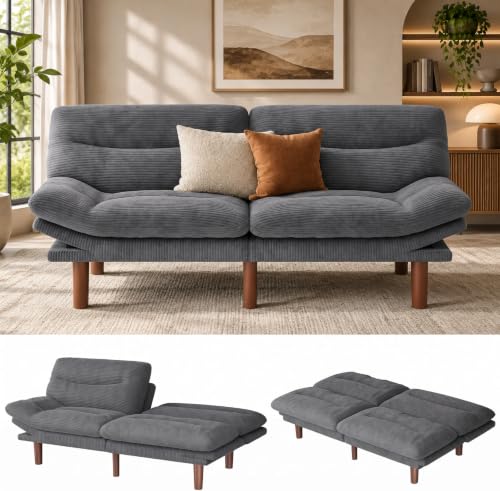
Marsail Futon Sofa Bed, Small Convertible Loveseat Couch, Grey | 66" Versatile 2-in-1 Sleeper Couch with Adjustable Backrest & Armrest, Corduroy Futon Couch for Small Apartment & Living Room
Check price on Amazon
55" Small Boneless Couch, 3-in-1 Boneless Loveseat Sleeper Sofa Bed Convertible Sofa Bed with 4 Pillows, Black Corduroy Boneless Couch for Living Room, Guest Room, Small Space, No Assembly Required
Check price on Amazon
Erament Loveseat Boneless Convertible Sofa Bed, Folding Floor Futon Sleeper Sofa Couch Bed- Boneless Foldable Couch, Corduroy Pull Out Sofa Bed with 2 Pillows for Living Room & Bedroom
Check price on Amazon
MALOL Pull Out Couch, Futon Sofa Bed, Single Sleeper Sofa, Dark Grey | Small Sofa Bed Couch with USB Port, Foldable Table, Pillow, Adjustable Backrest for Bedroom/College/Living room
Check price on AmazonFrequently Asked Questions
What is a small sofa bed couch?
A small sofa bed couch is a compact dual-purpose seating piece that converts into a sleeping surface. It is designed for apartments, guest rooms, studios, and other spaces where a full-size sleeper is impractical.
What is the difference between a pull-out and a click-clack mechanism?
A pull-out mechanism uses a folding metal frame that slides out from beneath the seat to create a flat sleeping surface. A click-clack mechanism folds the backrest down flat and often uses a simpler, lighter frame, making it better suited to occasional use.
How much floor space should I leave around a small sofa bed couch?
Leave roughly the depth of the extended bed plus a walkway in front of the unit so the mechanism can open fully. A general guideline is to keep at least 24 to 36 inches of clear space in front of the couch.
Is a small sofa bed couch comfortable for nightly sleeping?
It can be, if you choose a model with a thicker mattress, a reinforced frame, and a mechanism rated for frequent use. Entry-level click-clack models are better for occasional guests, while mid-range and premium pull-out models with memory foam or innerspring mattresses are more suitable for regular sleeping.
Can I use a small sofa bed couch in an open-plan room?
Yes. Place it against a wall that is not the primary traffic path, orient the coffee table so it can slide aside, and use a rug to define the seating zone. A low-profile frame and shallow seat depth help the couch read as a living room piece rather than a guest bed.
Final takeaway: the right small sofa bed couch balances three variables — how often it will be slept on, how much clearance your room offers when extended, and how much weight the frame and mechanism are built to handle. Match the mechanism to your usage pattern, verify the mattress construction, and measure the extended depth before you commit. Do that, and a compact sleeper becomes one of the most useful pieces of furniture in your home rather than a compromise you learn to live with.