
Two Chair Set for Living Room: The Complete Buying Guide
Everything you need to choose a matching or complementary pair of living room chairs — covering styles, sizes, upholstery, layout, and comfort so you can decide with confidence.
Explore Recommended SetsWhy a two chair set works: A pair of chairs is one of the most flexible seating investments you can make for a living room. It creates an instant conversation zone, balances a sofa wall, fills an empty corner, or frames a fireplace or window. This guide walks you through the practical decisions — from measuring your space to matching upholstery to your lifestyle — so the pair you choose works today and for years ahead.
What Counts as a Two Chair Set?
Understanding the categories helps you narrow your search before you compare specific models.
Identical Armchair Pair
Two identical chairs from the same collection. The most formal and balanced option — ideal beside a fireplace, flanking a console, or facing a sofa for a symmetrical conversation layout.
Coordinated Style Set
Two chairs in the same design family but with different finishes or fabrics. A curated look that suits transitional and eclectic interiors without feeling rigid.
Compact Accent Chairs
Slimmer chairs with a smaller footprint, often used as supplemental seating. Great for apartments, reading corners, and open-plan rooms that need flexible seating.
Recliner or Lounge Chairs
Fuller chairs with deeper seats and reclining or swivel mechanisms. Best for rooms focused on relaxation, media viewing, or long evenings of reading.
Why Choose Two Chairs Instead of One?
A pair solves several layout problems that a single chair cannot.
Advantages of a Chair Pair
- Creates a balanced, intentional seating arrangement
- Encourages face-to-face conversation
- Easier to rearrange than a large sofa
- Works well in rooms with awkward walls or corners
- Can be split between two zones in an open floor plan
- Simplifies styling with a cohesive look
Trade-Offs to Consider
- Uses more floor space than a single chair
- Matching pairs can feel formal in casual rooms
- Requires careful measurement to avoid crowding
- Less lounging space than a loveseat of similar width
Sizing and Space Planning
Measure first — this single step prevents most chair pair mistakes.
- Measure the wall or zone where the pair will sit. Two chairs side by side need roughly 48 to 60 inches of wall width for a comfortable gap between them. Chairs placed facing a sofa need enough room for a coffee table and walkway between.
- Leave walkway clearance. Aim for at least 30 inches of walking space around the seating group. In tight rooms, 24 inches is workable for secondary paths but feels cramped if it is a main route.
- Check seat dimensions against your household. A seat width of 20 to 24 inches suits most adults comfortably. Deeper seats (over 22 inches) suit taller users or lounging, while shallower seats (under 20 inches) suit smaller rooms and shorter users.
- Confirm the total footprint with armrests. Armrests add 4 to 8 inches on each side. A chair with a 26-inch interior seat and wide arms can occupy 34 inches or more overall.
- Test the path into the room. Doorways, stair turns, and hallway widths determine whether chairs with removable legs are needed. Check whether the chair back fits through your tightest opening.
Chair Styles and How They Fit a Room
Match the silhouette to the architecture of your home and the mood you want.
| Style | Best For | Room Character |
|---|---|---|
| Wingback | Traditional and cottage rooms, reading corners | Cozy, classic, enveloping |
| Mid-Century Modern | Open-plan and contemporary living rooms | Clean lines, tapered legs, airy feel |
| Club Chair | Transitional spaces, libraries, studies | Substantial, masculine, comfortable |
| Slipper Chair | Small rooms, bedrooms, accent corners | Armless, compact, versatile |
| Swivel Chair | Open layouts, media rooms, conversation zones | Flexible, dynamic, social |
| Recliner | Relaxation-focused living rooms | Practical, supportive, lounging |
Upholstery: Matching Material to Lifestyle
Fabric choice determines durability, maintenance, and how the chairs age.
Performance Fabric
Stain-resistant, tightly woven synthetics and blends. The most practical choice for households with children or pets. Wipes clean easily and holds color well over time.
Leather and Faux Leather
Wears gracefully and resists everyday spills. Genuine leather develops a patina; bonded or faux leather suits a more streamlined budget tier while remaining easy to maintain.
Velvet
Rich texture and depth of color make velvet a statement choice for formal or glamorous rooms. Best in lower-traffic spaces or on chairs used mainly for display and occasional seating.
Linen and Cotton Blends
Breathable and soft, with a relaxed, natural look. Linen wrinkles by design, which suits casual coastal and farmhouse interiors. Consider a treated version for stain resistance.
Comfort and Construction Checklist
These build details separate a long-term investment from a short-lived purchase.
- Frame material. Kiln-dried hardwood frames resist warping and last far longer than softwood or particle board. Ask specifically about frame construction.
- Joint construction. Corner blocks, dowels, and screws indicate reinforced joinery. Staples alone are a warning sign in higher-tier chairs.
- Seat cushion fill. High-density foam wrapped in fiber or down offers a balance of support and softness. Entry-level chairs often use lower-density foam that compresses sooner.
- Suspension system. Sinuous springs and eight-way hand-tied springs both provide support; hand-tied systems are more durable and typically found in premium and luxury tiers.
- Seat height. A seat height of 18 to 20 inches suits most adults. Lower seats feel more relaxed; higher seats are easier for older users to stand from.
- Try before you commit. Sit in the chair for at least five minutes. Check the back support, arm height, and whether the seat depth encourages proper posture.
Layout Ideas for a Two Chair Set
Where you place the pair changes how the whole room feels.
Facing the Sofa
Two chairs opposite a sofa create a classic conversation square with a coffee table in the middle. Best for medium and large living rooms with a defined seating zone.
Flanking the Fireplace
A symmetrical pair on either side of a fireplace creates a focal, balanced composition. Keep chair arms at a similar height for visual harmony.
Under a Window
A pair placed side by side beneath a large window makes a bright reading or morning-coffee spot. Leave enough space for curtains to hang freely.
Split Between Zones
In open-plan rooms, separate the chairs to define two seating areas. This works especially well when the chairs share a style but sit at different angles.
Common Mistakes to Avoid
These are the issues buyers most often regret after the chairs arrive.
Buying Without Measuring
Chairs that look compact online can crowd a room once armrests and walkways are accounted for. Always measure the total footprint, not just the seat.
Ignoring the Delivery Path
Oversized chairs with fixed backs often cannot navigate tight stairwells or hallway corners. Confirm whether legs are removable before ordering.
Mismatching Scale
A pair of heavy club chairs beside a delicate sofa looks unbalanced. Match the visual weight of the chairs to the surrounding furniture.
Overlooking Fabric Care
Velvet and linen need more attention than performance fabric. Choose upholstery that matches the time you realistically have for maintenance.
Recommended Two Chair Sets for Living Rooms
⚠️ AFFILIATE DISCLOSURE: This website contains affiliate links. As an affiliate Associate, we earn from qualifying purchases. If you make a purchase through these links, we may receive a small commission at no additional cost to you. Read our full affiliate policy.

Homixis Accent Chairs Set of 2 for Living Room, Mid-Century Upholstered Armchair with Foldable Table & 2 Side Pockets, Modern Linen Wooden Sofa Chair for Bedroom & Reading Room, Beige
Check price on Amazon
OLIXIS Comfy Accent Chairs Set of 2 for Living Room Bedroom, Sand | Upholstered Mid-Century Reading Chair with Pillow and Solid Wood Legs, Wide Singe Modern Lounge Sofa
Check price on Amazon
Bonnlo Fine Beige Accent Chairs Set of 2, Upholstered Mid Century Modern Lounge Fabric Chairs Reading Chairs Side Sitting Chair Solid Wood Farmhouse Armchairs for Living Room, Bedroom, Guest Room
Check price on Amazon
Homkdom Accent Chair with Side Pockets & Ergonomic Backrest, Set of 2,Green | Corduroy fabric, 6.3" thick cushion with pocket coil springs. Solid wood frame, 300 lbs capacity. Fits any small space.
Check price on Amazon
Yaheetech Compact Sherpa Accent Chairs Set of 2 for Small Spaces, Ivory | Compact Cozy Barrel Chairs with a Curved Silhouette, Upholstered Furry Armchair for Small Spaces, Living Room Bedroom Corner
Check price on Amazon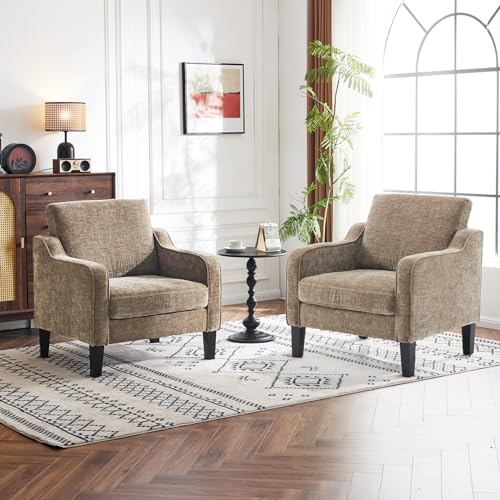
VINGLI Accent Chairs Set of 2, Chenille Upholstered Armchair Living Room | Light Brown Mid-Century Reading Chair, Comfy Bedroom Chair for Small Spaces, Apartment with Washable Cover, Easy Assembly
Check price on AmazonContinue Exploring Living Room Seating
- Two-Seater Couch Guide
- Arranging Two Couches
- Two Loveseats in a Small Living Room
- Two Couches in a Small Living Room
- What Is a Small Couch Called?
- Types of Couch Fabric
- Wall Art Decor Ideas
- Small Space Layout Guide
- Conversation Seating Layouts
- Focal Point Arrangement
- Unique Couch Styles
- Tuxedo Couch Guide
Frequently Asked Questions
What is a two chair set for a living room?
A two chair set is a matching or coordinated pair of armchairs or accent chairs intended to be placed together. It creates a balanced seating group, often opposite a sofa or beside a fireplace, and is a flexible alternative to a loveseat.
How much floor space does a two chair set need?
Plan for roughly 48 to 60 inches of wall width for the pair plus a small gap between them, and at least 30 inches of walkway clearance around the seating group. In compact rooms, slimmer accent chairs with a smaller overall footprint work best.
Should both chairs match exactly?
Matching chairs create a formal, symmetrical look that suits traditional and transitional rooms. A coordinated pair in the same style family but with a different finish or fabric feels more relaxed and works well in eclectic or modern spaces.
What upholstery is best for a living room chair pair?
Performance fabric and leather are the most practical choices for high-traffic rooms because they resist stains and wear. Velvet and linen offer a softer, more decorative look but need more careful maintenance.
Are two chairs better than a loveseat?
Two chairs offer more layout flexibility — they can be separated, angled, or moved between zones — and encourage face-to-face conversation. A loveseat provides more continuous lounging space. The better choice depends on whether your room prioritizes conversation or relaxation.
How can I tell if a chair is well constructed?
Look for a kiln-dried hardwood frame, reinforced corner joints, high-density foam cushions, and a proper suspension system such as sinuous springs or eight-way hand-tied springs. These details are more reliable indicators of durability than surface appearance alone.
Ready to Choose Your Chair Pair?
Review the recommended sets above, confirm your measurements and walkway clearance, and pick the style and upholstery that match how your living room is actually used.