
Under the Couch Blockers: Complete Buying Guide
Lost remote controls, scattered pet toys, and dusty clutter hidden beneath the sofa are problems every living room owner recognizes. Under the couch blockers solve this quietly and effectively. This guide explains how they work, what materials hold up over time, and how to choose the right fit for your sofa and floor type.
Explore Recommended OptionsWhy this matters: The gap under a sofa is a magnet for small objects. For pet owners, it is a daily battle against tennis balls, chew toys, and treat crumbs. For families, it is the resting place of remote controls, pens, and building blocks. A well-fitted under couch blocker turns that gap into a sealed zone, keeping the floor beneath the sofa clean and the items you care about within reach.
This page is written for shoppers who already know they want a blocker and need clear, trustworthy guidance before choosing a model. You will find material comparisons, sizing steps, installation notes, and a short FAQ covering the most common concerns.
What Are Under the Couch Blockers?
Under the couch blockers are rigid or semi-rigid barriers that sit in the gap between the sofa frame and the floor. They are typically made from clear or frosted plastic, foam, or a fabric-wrapped panel, and they are shaped to follow the straight front and side edges of a sofa. The goal is simple: stop small items from rolling or being pushed into the space beneath the furniture.
Unlike a decorative skirt or a throw blanket draped over the edge, a dedicated blocker is designed to stay in place. It usually features a base that rests on the floor and a top edge that tucks against the underside of the sofa frame. Many models are adjustable in height, which makes them compatible with a range of sofa leg styles and floor clearances.
For households with pets, the blocker doubles as a toy barrier. For homes with young children, it prevents small toys from disappearing. For anyone who has ever knelt on the floor with a flashlight, it is a practical upgrade to daily living room life.
Types and Materials: Which One Holds Up?
The market for under sofa barriers is broad, but most products fall into a few recognizable categories. The tier labels below describe relative quality and construction, not any specific figure.
Basic Plastic Panels
Lightweight and simple to trim, these panels are a solid choice for renters or for sofas with a low gap. They work best on hard floors and handle light duty well. Expect a straightforward fit and easy removal for cleaning.
Adjustable Plastic Blockers
A step up in fit and stability. These models offer height adjustment and a wider base, making them suitable for both hard floors and low-pile carpet. The reinforced edges resist bending when a pet leans against the barrier.
Foam and Fabric-Wrapped Barriers
Softer to the touch and less visible in a styled living room. These blockers use dense foam or a fabric sleeve over a rigid core. They are a good match for upholstered sofas with a fabric skirt or for homes where the blocker will be seen from the side.
Custom-Fit Rigid Systems
Built with heavier-duty materials and precise sizing options. These systems are designed for long-term use and for sofas with irregular leg placement. They are the most stable option for large pets and heavy daily traffic.
Material choice matters as much as tier. Clear plastic blends into the background and is easy to wipe clean. Frosted plastic hides scratches better over time. Foam is gentle on floors and quiet when bumped, but it can compress if a heavy pet leans on it repeatedly. Fabric-wrapped options look the most intentional in a decorated room, though they need a quick vacuum now and then to stay fresh.
Quick Comparison by Category
| Tier | Best For | Floor Type | Durability Notes |
|---|---|---|---|
| Entry-level | Renters, low-gap sofas, light use | Hard floors | Solid for occasional contact; may flex under heavy pressure |
| Mid-range | Pet owners, family living rooms | Hard floors and low-pile carpet | Reinforced edges and adjustable height improve stability |
| Premium | Styled living rooms, fabric sofas | Hard floors and carpet | Dense foam core resists compression; fabric sleeve adds visual softness |
| High-end | Large pets, high-traffic rooms | All floor types | Heavy-duty construction with precise fit for long-term use |
How to Measure for a Proper Fit
A blocker only works if it fills the gap completely. A loose fit leaves corners open, and that is exactly where small items tend to escape. Follow these steps before ordering:
- Measure the length of the gap. Run a tape measure along the front edge of the sofa, from one side to the other. Repeat along any exposed side edges if the sofa sits away from the wall.
- Measure the height. Measure from the floor to the bottom edge of the sofa frame. Do this at several points, because floors and frames are rarely perfectly level.
- Check the leg placement. Note where the sofa legs sit. Some blockers need to work around legs, while others are designed to sit between them.
- Add a small overlap. Choose a blocker that is slightly longer than the measured gap so the ends tuck securely against the sides.
- Confirm the floor type. Carpet, hardwood, tile, and vinyl each call for slightly different base designs. Check the product notes before committing.
Installation and Everyday Use
Most under the couch blockers install in minutes without tools. The typical process is to trim the panel to length if needed, slide it into the gap, and press the top edge against the sofa frame so it stays upright. Some models use a simple tension fit, while others rely on a weighted base or a small bracket that clips to the frame.
Once installed, the blocker should sit flush with the floor and the sofa edge. A quick check: roll a small ball toward the gap and confirm it stops at the barrier rather than slipping underneath. If the ball still escapes, the fit needs adjusting or a different height is required.
Maintenance is minimal. Wipe plastic panels with a damp cloth. Vacuum fabric-wrapped blockers on a low setting. Foam models can be rinsed and left to air dry. Over time, check that the blocker has not shifted, especially in homes with pets that like to push against it.
Who Should Consider an Under Couch Blocker?
These barriers are not only for pet owners, though pets are the most common reason people search for them. Consider a blocker if any of the following describes your living room:
- You have a dog or cat that bats toys under the sofa. A blocker keeps playtime contained and reduces the need to retrieve toys several times a day.
- You have young children. Small toys, crayons, and snack pieces are less likely to disappear into the gap.
- You work from the couch. Pens, earbuds, and charging cables are less likely to slide out of reach.
- You struggle to clean under the sofa. A blocker reduces the amount of dust and debris that collects in the hard-to-reach zone.
- You want a tidier look. A fitted barrier hides the visual clutter that often gathers beneath a sofa.
If your sofa sits on a rug and you are also considering a refresh of the floor covering, it is worth reading about living room ideas for small spaces to coordinate the layout. For sofas with removable covers, a blocker also pairs well with a care routine that keeps the upholstery looking fresh.
Recommended Under the Couch Blockers
⚠️ AFFILIATE DISCLOSURE: This website contains affiliate links. As an affiliate Associate, we earn from qualifying purchases. If you make a purchase through these links, we may receive a small commission at no additional cost to you. Read our full affiliate policy.

12 Pcs Under Couch Blocker for Bed Adjustable Furniture Plastic | Under Bed Blocker with 30 Ties Black Couch Barriers for Dogs Pets Cats (Style 1)
Check price on Amazon
3''×132'' Adjustable Under Couch Blocker, 2 Pack Elastic Gap Guard Stopper | Furniture Barrier Block Prevent Kids Pet from Sliding Under Sofa Bed Cabinet
Check price on Amazon
RowinsyDD Under Couch Blocker, Couch Blockers for Pets, 16 Pack | Clear Under Furniture Blocker,Stop Things Going Under Sofa,Toy Blockers for Under Furniture with Strong Tape,16" L x 1.6" H
Check price on Amazon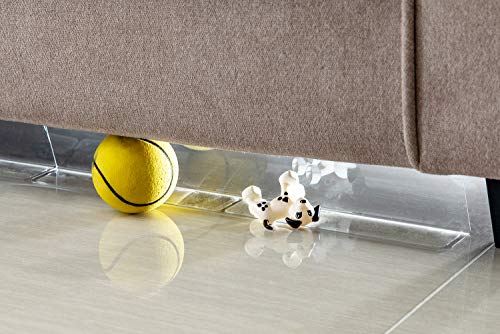
BOWERBIRD Clear Under Couch Blockers - Stop Toys from Going Under Couch Sofa Bed and Other Furniture - Suit for Hard Surface Floors Only
Check price on Amazon
RowinsyDD Under Couch Blocker, Couch Blockers for Pets, 8 Pack | Clear Under Furniture Blocker,Stop Things Going Under Sofa,Toy Blockers for Under Furniture with Strong Tape,16" L x 1.6" H
Check price on Amazon
Treela 12 Pcs Under Couch Blocker for Pets Adjustable Furniture, 3.2 Inch | Black Couch Blocker for Under Couch, Bumper for Furniture Baffle Board to Stop Going Below Sofa Easy Install
Check price on AmazonFrequently Asked Questions
What are under the couch blockers?
Under the couch blockers are rigid or semi-rigid barriers placed in the gap between the sofa frame and the floor. They prevent pet toys, remote controls, and other small items from rolling out of reach. Most models are adjustable in height and can be trimmed to fit the length of the sofa.
Do under couch blockers work on carpet?
Yes, most models are designed for both hard floors and carpet. Look for blockers with adjustable height or a base that grips low-pile carpet. High-pile carpet may require a wider base or a tension-fit design to stay upright. Check the product notes to confirm compatibility before ordering.
Will a couch blocker damage my sofa or floor?
Quality blockers use soft-touch edges and non-marking feet to protect both upholstery and flooring. Avoid models with sharp metal edges or adhesive that leaves residue. A properly fitted blocker should sit in the gap without pressing hard against the sofa frame.
How do I measure for an under couch blocker?
Measure the total length of the gap along the front and sides of your sofa, and the height from floor to the bottom edge of the frame. Add a small overlap on each end for a secure fit. For sectionals, measure each segment separately so the blocker follows the full footprint.
Can I use a blocker with a reclining sofa?
In most cases, yes, but check that the blocker does not interfere with the reclining mechanism or the footrest path. A blocker placed along the front edge usually works well as long as it sits clear of moving parts. If you have a reclining model, verify clearance before installing a full-length barrier.
Final thought: Under the couch blockers are a small upgrade with an outsized effect on daily life. They keep the living room calmer, protect your belongings, and make cleaning easier. Once you know the gap dimensions and the floor type, choosing a model is straightforward. Use the comparison table and sizing steps above to narrow your options, then explore the recommended products to find the fit that suits your sofa.
For broader living room planning, you may also find value in our guide to small couch with chaise and pull out bed if you are considering a multi-functional seating upgrade alongside a blocker.