
Wall Hugger Loveseat Recliners for RVs: The Complete Guide
Maximize every inch of your motorhome, travel trailer, or fifth wheel with a two-seat recliner engineered to sit close to the wall. Learn how wall hugger mechanisms work, what to check before buying, and which features matter most in a mobile living space.
Why this guide matters: RV owners face a unique furniture challenge — every piece must deliver full comfort without stealing walkway space. A wall hugger loveseat recliner solves that problem by sliding forward as it reclines, so the backrest can sit just inches from the wall behind it.
This guide breaks down the mechanism, the measurements that matter, upholstery choices for life on the road, and the quality tiers you will encounter, so you can shop with confidence and pick a model that fits your rig the first time.
What Is a Wall Hugger Loveseat Recliner?
A wall hugger loveseat recliner is a two-seat reclining sofa built around a forward-sliding recline mechanism. Traditional recliners pivot backward, which means the backrest needs a large gap behind it before it can reach a comfortable angle. A wall hugger design reverses that motion: as you lean back, the seat base glides forward on its track, and the backrest drops into position with only a small clearance behind it.
For RV interiors, this is transformative. Slide-outs, windows, and cabinetry often sit directly behind the seating area, and a standard recliner simply cannot operate in that footprint. A wall hugger loveseat gives you two full recline positions in a package that behaves almost like a fixed sofa when it comes to placement. If you are still weighing seating formats for a compact living area, our guide to two loveseats in a small living room offers useful layout comparisons.
The mechanism itself is usually a metal linkage system with a glide track. Better-built units use heavy-duty steel frames and reinforced pivot points, which matters in an RV because the furniture experiences vibration and shifting during travel.
How the Wall Hugger Mechanism Works
Understanding the mechanics helps you evaluate quality when comparing models. Here is what happens when you recline:
- Forward glide: The seat base moves forward along a track rather than the backrest moving backward.
- Pivot recline: A linkage system tilts the backrest to your chosen angle while the footrest extends.
- Minimal rear clearance: Because the backrest does not sweep backward, the sofa can sit close to a wall, window, or slide-out panel.
- Return position: Releasing the handle or lever brings the seat back to an upright position, and the base slides back to its starting point.
Manual lever and handle mechanisms are the most common in RV furniture because they have fewer electronic components to fail. Power recline options exist and add convenience, but they require a reliable 12V or 120V connection and add wiring complexity. For most RV owners, a well-built manual mechanism with smooth glides is the dependable choice.
Why Wall Hugger Recliners Suit RV Interiors
RV living spaces are defined by constraints: narrow walkways, limited slide-out depth, and walls that double as storage or window space. A wall hugger loveseat recliner addresses each of these directly.
Space Efficiency
With minimal rear clearance, the sofa can be pushed close to the wall, freeing up floor space for walkways and slide-out movement.
Two Recline Positions
A loveseat gives two people independent or shared recline comfort, ideal for couples and traveling companions.
Flexible Placement
Can be positioned under windows or against slide-out walls where standard recliners would be blocked.
Compact Footprint
Two-seat width fits many slide-outs and living areas that cannot accommodate a full three-seat reclining sofa.
Familiar Comfort
Delivers the same recline experience as home furniture, which matters for full-time RVers and long trips.
Anchor-Friendly
Many models include tie-down points or can be secured to the floor for safe travel between destinations.
Measurements That Matter Before You Buy
Furniture that does not fit through the door or into the slide-out is the most common RV buying mistake. Work through this checklist before ordering:
- Overall width: Confirm the loveseat fits the intended wall or slide-out span with room for side tables or clearance.
- Overall depth, upright: Measure the depth when fully closed to ensure it does not block walkways.
- Depth when fully reclined: The forward glide adds depth in front of the sofa — verify it does not collide with a dinette, island, or door.
- Wall clearance requirement: Check the manufacturer's stated minimum gap behind the backrest.
- Doorway and hallway width: Confirm the unit can pass through your RV entry door and any interior corridors, or that it ships in removable sections.
- Weight capacity: Check the per-seat rating and the total unit weight against your RV's payload considerations.
- Seat height and depth: Verify comfort for your body type, especially for taller users.
If your layout is especially tight, our article on U-shaped sectionals for small spaces explores alternative seating configurations that also prioritize footprint efficiency.
Choosing Upholstery for Life on the Road
RV upholstery faces sun exposure, temperature swings, road dust, and occasional spills. The material you choose affects longevity and maintenance more than almost any other factor.
Leather and Faux Leather
Leather and quality faux leather are easy to wipe clean and resist stains well. They handle temperature fluctuations reasonably but can feel cold in winter and warm in direct sun. Look for UV-resistant finishes if the sofa sits near a windshield or large window. Our guide to leather sofas covers care and durability in more depth.
Performance Fabric
Performance fabrics are engineered for stain resistance and durability. They breathe better than leather and feel softer in temperature extremes, which many RVers prefer. Tight-weave constructions resist snagging and clean up well with mild soap and water. See our overview of performance fabric sofas for details on construction and care.
Microfiber and Velvet
Microfiber is soft, durable, and generally easy to clean, making it a popular choice for family RVs. Velvet adds a premium feel but requires more careful maintenance and can show crushing in high-traffic areas. If velvet appeals to you, our velvet sofa guide explains how to keep it looking its best.
Quality Tiers: What to Expect at Each Level
Wall hugger loveseat recliners span several market tiers. Understanding what each tier typically delivers helps you match the product to your usage pattern — occasional weekend trips versus full-time RV living.
| Tier | Typical Construction | Best For |
|---|---|---|
| Entry-level | Basic metal frame, standard foam cushions, lighter upholstery, manual lever recline | Occasional weekend trips and seasonal RV use |
| Mid-range | Reinforced steel frame, higher-density foam, smoother glide track, better fabric or faux leather | Regular travelers and part-time RVers who want dependable comfort |
| Premium | Heavy-duty linkage, pocket-coil or layered foam seating, premium upholstery, refined recline motion | Frequent travelers and couples who prioritize long-term comfort |
| Luxury / flagship | Commercial-grade frame, power recline options, top-tier materials, precision mechanisms | Full-time RVers and owners who want residential-grade seating on the road |
Across all tiers, prioritize the frame and mechanism quality first. Upholstery can be protected and maintained, but a weak linkage or thin frame will degrade quickly under the vibration of travel. Mid-range and premium models typically offer the best balance of durability and refined motion for RV use.
Advantages and Trade-Offs
Advantages
- Reclines with minimal rear clearance, enabling wall-adjacent placement
- Two comfortable seats in a compact footprint
- Keeps walkways and slide-out paths clear
- Manual mechanisms are simple and reliable
- Available in durable, easy-clean upholstery options
Trade-Offs to Consider
- Forward glide adds depth in front when fully reclined
- Quality varies widely across tiers — mechanism inspection is essential
- Power recline models require wiring and power access
- Some units are heavy and may need two people to position
- Limited recline angles compared to some residential recliners
Securing Your Recliner for Travel
A recliner that shifts during a drive is both a safety hazard and a source of damage. Before hitting the road:
- Return both seats to the fully upright and locked position.
- Use the manufacturer's tie-down points or anchor straps to secure the frame to floor mounts.
- Check that the footrests are fully retracted and latched.
- Inspect bolts and linkage connections periodically for loosening caused by vibration.
- Keep the area behind the sofa clear so nothing interferes with the glide track.
Keeping Your RV Recliner in Good Condition
Routine maintenance extends the life of any recliner, and RV furniture benefits from a slightly more attentive schedule due to travel stress.
- Vacuum weekly to remove road dust and grit from seams and the glide track.
- Wipe upholstery with a mild cleaner appropriate to the material; avoid harsh solvents on faux leather.
- Lubricate the mechanism according to the manufacturer's guidance, using a dry or silicone-based lubricant where specified.
- Inspect the frame after long trips for loose fasteners or bent linkage.
- Protect from sun with window shades when parked, especially for leather and faux leather surfaces.
For a deeper dive into cleaning techniques across materials, our couch care and maintenance section covers fabric, leather, and stain treatment in detail.
Ready to Compare Wall Hugger Loveseat Recliners?
Explore hand-picked models selected for RV-friendly dimensions, durable construction, and smooth recline mechanisms. Compare features and find the right fit for your motorhome or travel trailer.
View Recommended ModelsRecommended Wall Hugger Loveseat Recliners for RVs
⚠️ AFFILIATE DISCLOSURE: This website contains affiliate links. As an affiliate Associate, we earn from qualifying purchases. If you make a purchase through these links, we may receive a small commission at no additional cost to you. Read our full affiliate policy.

MisUMis RV Loveseat Recliner Sofa, Wall Hugger Reclining Loveseat RV Couch with USB Ports, Large Pockets, Cup Holders, 150° Adjustable RV Recliners Furniture for Travel Trailers & Home Theater Seating
Check price on Amazon
MisUMis RV Loveseat Recliner Sofa, Wall Hugger Reclining Loveseat RV Couch with USB Ports, Cup Holders, Pockets, 150° Adjustable RV Furniture Velvet Fabric Recliners for Travel & Home Theater Seating
Check price on Amazon
MOSGAT RV Loveseat Recliner Sofa, Reclining Loveseat Wall Hugger Recliners with USB Ports, Cup Holders, Insert Pockets, RV Recliners for Travel Trailers & Living Room, RV Furniture | RV Couch
Check price on Amazon
RV Loveseat Recliner Sofa, Home Theater Seating with Console & Massage | Reclining Loveseat with USB, Wall Hugger RV Couch Movie Theater Chairs, RV Furniture with Cup Holders, Drawer for Gaming Room
Check price on Amazon
Reclining Loveseat Sofa, RV Loveseat Recliner Wall Hugger Couch, Home Theater Seating, Massage Loveseat with Console, USB & Type-C Ports, Storage Armrests for Living Room, Camper, Game Room, Man Cave
Check price on Amazon
MOSGAT RV Loveseat Recliner Sofa, Reclining Loveseat Wall Hugger Recliners with USB Ports, Cup Holders, Insert Pockets, RV Recliners for Travel Trailers & Living Room, RV Furniture | RV Couch
Check price on Amazon
Loveseat Recliner Sofa, Wall Hugger Reclining Loveseat with Cup Holders & Storage Pockets, 150° Adjustable RV Couch, Traditional 2-Seat Reclining Couch for Living Room, RV, Home Theater, Black
Check price on Amazon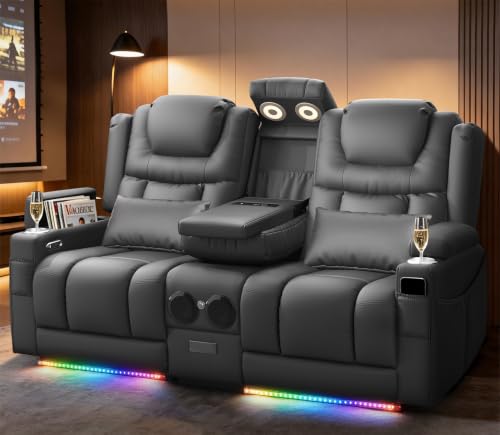
DG PEAFOWL Power Loveseat Recliner Sofa with Console, Wall Hugger Reclining Loveseat with Reading Light, Home Theater Seating with LED Lights, Zero Gravity Recliner Couch for RV Couch and Living Room
Check price on AmazonFrequently Asked Questions
What is a wall hugger loveseat recliner?
A wall hugger loveseat recliner is a two-seat reclining sofa engineered to recline with minimal clearance behind it. Unlike traditional recliners that need significant space to lean back, wall hugger models slide forward as they recline, allowing placement close to a wall or window.
How much wall clearance does a wall hugger recliner need?
Most wall hugger loveseat recliners require only a few inches of clearance behind the backrest, compared to the much larger gap demanded by standard recliners. Always confirm the manufacturer's recommended clearance for your specific model.
Are wall hugger recliners suitable for RVs and motorhomes?
Yes. Their compact recline mechanism and reduced rear clearance make them a practical fit for RVs, motorhomes, and travel trailers where floor space and wall proximity are limited. Check dimensions and weight capacity against your RV layout before buying.
What should I check before buying a loveseat recliner for an RV?
Verify the overall dimensions against your slide-out and doorway widths, confirm the wall clearance requirement, check the weight capacity, review the upholstery material for durability and ease of cleaning, and ensure the frame and mechanism are rated for mobile use.
Can a wall hugger loveseat recliner be secured during travel?
Most RV-oriented models include tie-down points or can be anchored to the floor with straps or brackets. Always return the seats to the upright position and secure the frame before driving.