
Area Rug to Go With Brown Couch
Your brown couch is a warm, grounding anchor for the living room. The right area rug can make it feel intentional, layered, and complete. Here is how to choose one with confidence.
Start the GuideWhy the rug matters: A brown couch can read as heavy or unfinished without a rug beneath it. The rug defines the seating zone, adds texture, and either softens or sharpens the room's palette. The goal is not to match the couch exactly but to build a balanced composition around it.
Recommended Area Rugs for Brown Couches
⚠️ AFFILIATE DISCLOSURE: This website contains affiliate links. As an affiliate Associate, we earn from qualifying purchases. If you make a purchase through these links, we may receive a small commission at no additional cost to you. Read our full affiliate policy.

Lofus 5x7 Area Rugs for Living Room, Washable Area Rug, Rugs for Bedroom, Kitchen, Vintage Boho Carpet, Soft Non-Slip, Low Pile Large Area Rug for Office Dining Room, Vintage Beige Brown
Check price on Amazon
GarveeHome 5x7 Scalloped Area Rug Brown Washable Christmas Living Room Rug | Soft Low Pile Non Slip Accent Floor Mat Solid Print Throw Rug Indoor Carpet for Bedroom Dining Room Dorm Playroom
Check price on Amazon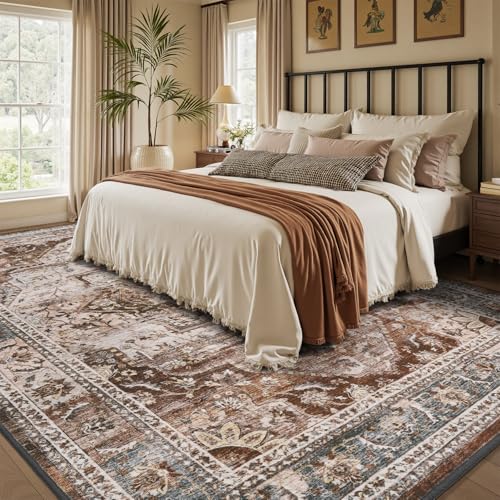
Brown 5x7 Area Rugs for Living Room Rug Bedroom Rug Carpet Washable Neutral Vintage Dining Room Rugs for Under Table Soft Comfortable Non Slip
Check price on Amazon
Luxturiy 8x10 Area Rugs Living Room: Bedroom Neutral Washable Carpet Beige | Large Vintage Boho Indoor Decor Carpets Soft Nursery Farmhouse Dining Room Office Floor Non-Slip Low Pile Under Table Rug
Check price on Amazon
Amearea Modern Area Rugs for Bedroom Living Room, 4x6 Brown Memory Foam Rug | Thickened Fluffy Indoor Washable Rugs Non Slip Minimalist Carpet for Kids Boys Girls Dorm Nursery Room Decor
Check price on AmazonWhy a Brown Couch Needs the Right Rug
Brown is one of the most versatile upholstery colors, but it is also one of the easiest to get wrong when the surrounding pieces are not considered. A brown couch can feel warm and grounded, or it can feel flat and disconnected, depending entirely on what sits beneath it. An area rug is the single largest visual element under the seating zone, so it carries a lot of responsibility.
The rug performs three jobs at once. It defines the boundary of the living area, especially in open-plan rooms. It introduces texture and color that either complement or contrast the couch. And it protects the floor while improving acoustics. When those three roles are aligned, the couch looks deliberate rather than accidental.
If your brown couch is part of a larger seating arrangement, such as a three-piece sectional with chaise or a four-seater couch with chaise, the rug becomes even more important because it has to unify a larger footprint. For smaller layouts, a loveseat or apartment sofa may only need a modest rug, but the color logic stays the same.
Start With the Undertone of Your Brown Couch
Not all browns are the same. Before choosing a rug color, identify the undertone of your couch upholstery. This single step prevents most mismatches.
Warm Browns
Warm browns lean toward red, orange, or yellow. Cognac leather, caramel fabric, and chestnut tones fall into this group. These couches pair naturally with cream, ivory, warm beige, terracotta, and muted gold. A rug with a warm neutral base keeps the room cohesive without competing with the couch.
Cool Browns
Cool browns lean toward gray, taupe, or olive. Mocha, espresso, and greige upholstery belong here. These couches respond well to slate blue, sage green, soft gray, and off-white rugs. A cool-toned rug balances the brown without making it look muddy.
Neutral Browns
Some browns sit close to the middle, such as tan, sand, and mushroom. These are the easiest to work with because they accept both warm and cool rug tones. A tonal rug in a slightly lighter or darker shade creates a calm, layered look.
Quick test: Hold a plain white sheet of paper next to your couch in daylight. If the brown looks redder or more golden, it is warm. If it looks grayer or greener, it is cool. If it looks flat and balanced, it is neutral.
Rug Colors That Work With a Brown Couch
The table below summarizes the most reliable color directions. Treat these as starting points, not rigid rules.
| Rug Color Direction | Best For | Effect |
|---|---|---|
| Cream and ivory | Warm and neutral browns | Brightens the room and softens the weight of the couch |
| Warm beige and sand | All brown tones | Creates a calm, tonal layered look |
| Slate blue and muted navy | Cool and neutral browns | Adds cool contrast without clashing |
| Sage and olive green | Warm and neutral browns | Brings an earthy, natural balance |
| Terracotta and rust | Warm browns | Reinforces warmth and adds energy |
| Charcoal and deep gray | Cool browns and leather | Grounds the room with modern contrast |
| Tonal brown on brown | Neutral browns | Creates a sophisticated, monochromatic base |
If you are also choosing accent chairs to complete the arrangement, the rug color should support both the couch and the chairs. Our guide on accent chairs that go with a brown leather couch covers how to coordinate the full seating group.
Choosing the Right Size
Size mistakes are more common than color mistakes. A rug that is too small makes even a well-chosen brown couch look disconnected from the room. The rug should feel like it belongs to the seating zone, not like a small mat placed in front of it.
General Size Guidance
- Small loveseats and apartment sofas: A rug around 5 by 8 feet is often enough, with the front legs of the couch resting on the rug.
- Standard three-seat brown couches: An 8 by 10 feet rug is a reliable baseline for most living rooms.
- Large sectionals: A 9 by 12 feet rug or larger is usually needed so that the entire seating footprint sits comfortably.
- Open-plan rooms: Size up so the rug clearly defines the conversation zone without floating awkwardly.
The most common rule is to place at least the front legs of the couch on the rug. In larger rooms, all legs on the rug creates a more anchored look. In smaller rooms, front legs only is often the practical choice.
Material and Pile Height
Material affects durability, texture, and how the rug interacts with the couch. Pile height affects maintenance and visual weight.
Wool
Wool is a balanced, durable option for most living rooms. It holds color well, resists crushing, and works with both modern and traditional brown couches. It is a solid mid-tier choice for households that want longevity without excessive maintenance.
Synthetic Blends
Polypropylene and polyester blends are practical for high-traffic family rooms and homes with pets. They are easier to clean and resist fading. These entry-level and mid-range options are a sensible choice under a brown couch that sees daily use.
Natural Fibers
Jute, sisal, and seagrass add texture and an earthy feel that pairs naturally with brown upholstery. They are not the softest underfoot, so they work best as a base layer or in low-traffic areas.
Pile Height
Low-pile rugs are the easiest to maintain under a couch and work well with leather. Medium-pile rugs add softness and are a good match for fabric brown couches. High-pile and shag rugs feel luxurious but require more care and can visually overwhelm a heavy brown couch in smaller rooms.
If your brown couch is leather, our guide on leather sofas covers care and pairing considerations that also apply to rug selection.
Pattern: When to Use It and When to Skip It
A solid brown couch is an excellent canvas for a patterned rug. A subtle geometric, a tonal stripe, or a distressed traditional design adds visual interest without competing with the furniture. The key is to keep the pattern readable from a distance and to avoid very busy designs that fight with other elements in the room.
If the couch is already the focal point, or if the room contains other strong patterns, a solid or heathered rug is often the calmer choice. A tonal rug in a slightly different shade from the couch creates depth without adding another layer of visual noise.
For rooms styled with decorative accents, such as throw pillows and throw blankets, the rug pattern should not repeat the same motif. Instead, let the rug provide a quiet base and let the textiles carry the color story.
How the Rug Fits Into the Whole Room
The rug is one part of a larger composition. It should relate to the coffee table, the lighting, and the wall color as much as it relates to the couch.
A coffee table placed on the rug should leave enough border on all sides to feel balanced. A general guideline is to leave at least 12 to 18 inches of rug visible around the table. For storage ottomans used in place of a coffee table, the same border logic applies.
Lighting also interacts with rug color. A floor lamp placed near a warm-toned rug will amplify the warmth, while a cool-toned rug under the same lamp will read more neutral. If the room receives strong natural light, darker rugs can help ground the space; in low-light rooms, lighter rugs keep the brown couch from feeling heavy.
For rooms laid out around a focal point, such as a television or fireplace, the rug should reinforce that orientation. Our guide on focal point arrangement explains how to position seating and rugs together.
Practical Checks Before You Commit
- Measure twice: Tape out the rug dimensions on the floor before ordering to confirm the fit with the couch and surrounding furniture.
- Check the door swing: Make sure the rug does not interfere with doors or walkways. Our guide on doorway clearance covers the minimum clearances.
- Consider the pile under furniture: Very high-pile rugs can make chairs and tables unstable. Low to medium pile is safer under seating.
- Think about maintenance: High-traffic homes and pet owners should lean toward low-pile, easy-clean materials.
- Test the undertone in daylight: Rug colors shift under different lighting. View swatches in the room at different times of day if possible.
Layering option: If you want the texture of jute or sisal but need softness underfoot, layer a smaller low-pile rug on top. This works especially well in larger rooms with a brown couch as the anchor.
Common Mistakes to Avoid
Matching the couch too closely. A rug that is nearly identical to the couch can make the room feel flat. A slight shift in shade or a different texture creates depth.
Choosing a rug that is too small. This is the most frequent error. A small rug under a large brown couch makes the seating area look unplanned.
Ignoring the room's light. A rug that looks balanced in a store may read very differently in a dim or sun-filled room. Always evaluate in context.
Overlooking maintenance. A beautiful high-pile rug that is difficult to clean will become a frustration in a busy household. Match the material to the reality of daily use.
Forgetting the rest of the palette. The rug should connect the couch to the walls, the tables, and the textiles. If it only works with the couch, the room will feel disjointed.
Frequently Asked Questions
What color area rug goes best with a brown couch?
Cream, ivory, and warm beige rugs create a soft contrast against brown upholstery, while slate blue, sage green, and muted terracotta add depth without clashing. For a grounded look, choose a rug with a brown undertone that echoes the couch.
What size area rug should I use with a brown couch?
A common approach is to choose a rug large enough that the front legs of the couch rest on it. For most three-seat brown couches, a rug around 8 by 10 feet works well, while larger sectionals benefit from 9 by 12 feet or bigger.
Should the area rug match the brown couch exactly?
Exact matching is rarely necessary. A rug that shares an undertone with the couch but differs in shade creates visual layering. Contrasting the brown with a lighter neutral or a muted cool tone often looks more balanced.
What rug material works best with a brown couch?
Wool is a durable, balanced choice for most living rooms. Synthetic blends are practical for high-traffic family spaces, while jute and sisal add natural texture. Low-pile rugs are easiest to maintain under a brown couch.
Can I place a patterned rug under a brown couch?
Yes. A subtle pattern, such as a tonal geometric or a distressed traditional design, adds interest without overwhelming the room. If the couch is a solid brown, a patterned rug can serve as the room's focal detail.
Final Thoughts
The right area rug turns a brown couch from a standalone piece into the center of a considered living room. Identify the undertone of the couch, choose a color direction that either harmonizes or gently contrasts, size the rug so the seating zone feels anchored, and select a material that matches how the room is actually used. With those four decisions handled, the rest of the room, from the coffee table to the throw pillows, will fall into place more easily.
If you are still mapping out the larger layout, our living room layout guide and small space layout guide can help you confirm proportions before you finalize the rug. And if you are comparing upholstery options alongside the rug decision, the fabric sofas and leather sofas overviews cover the care and pairing basics.