
3 Piece Sectional Couch with Chaise: The Complete Buyer's Guide
A three-piece sectional with a chaise blends the lounging comfort of a chaise longue with the flexible seating capacity of a modular sofa. This guide explains configurations, sizing, upholstery choices, and layout planning so you can choose with confidence.
What Is a 3 Piece Sectional Couch with Chaise?
A 3 piece sectional couch with chaise is a modular seating system assembled from three distinct components. While the exact combination varies by manufacturer, the most common arrangement consists of a chaise section, a corner wedge, and a standard sofa section. Some sets swap the corner wedge for an armless middle seat, depending on the total seating capacity offered.
The defining feature is the chaise — an extended seat that projects forward and functions as a built-in lounger. Unlike a traditional sofa, the chaise section supports the legs and back at an angle that is comfortable for reading, watching television, or napping. Because the sofa arrives in separate pieces, delivery through narrow hallways and doorways is generally easier than moving a single large frame.
Typical Components
- Chaise section: The extended lounging piece, usually on the left or right end of the arrangement.
- Corner wedge or armless seat: Connects the chaise to the main seating run and fills the interior angle of the L-shape.
- Standard sofa section: Provides two or three conventional seats with a back and armrest.
Why Choose a Three-Piece Chaise Sectional
Buyers researching this configuration are usually weighing comfort, room fit, and long-term practicality. A 3 piece sectional with chaise addresses all three concerns when selected correctly.
Comfort and Lounging
The chaise provides a dedicated lounging zone that a standard sofa cannot match. Its extended depth supports the whole body, making it a natural spot for reading, streaming, or an afternoon rest. If you frequently host guests who appreciate a reclining posture, a chaise is often more comfortable than a straight three-seater.
Space Efficiency
Sectionals are efficient because they combine seating and corner space in one footprint. A three-piece version takes this further: the modular sections can be separated to adapt to odd room shapes, and the chaise can serve as a visual anchor for an open-plan living area. For smaller rooms, compact three-piece sets exist that fit tighter floor plans while still offering a lounging seat.
Flexibility and Future-Proofing
Because the couch is modular, individual pieces can be reordered or replaced. If the chaise cushion wears out faster than the rest of the sofa — common in households that favor one spot — a replacement section is often available. This modularity also supports rearranging when you move to a new home with a different floor plan.
Family and Entertaining
Three-piece sectionals typically seat four to six people, depending on width and cushion count. That capacity suits family living rooms and homes that host guests regularly. For households that also need occasional sleeping space, consider a configuration paired with a pull-out mechanism; the queen couch bed guide explains how sleeper functions integrate with sectional frames.
Configuration and Orientation Options
Before choosing a specific set, decide which orientation and layout best matches your room. The two primary variables are the side the chaise sits on and the overall shape of the arrangement.
Left-Facing vs. Right-Facing Chaise
Orientation is described from the perspective of someone standing in the room facing the couch. A left-facing chaise extends on the left side; a right-facing chaise extends on the right. The correct choice depends on where your focal point sits and which side of the room has open walkway space. If the TV or fireplace is centered on one wall, the chaise should sit on the side that leaves the clearest path to the rest of the room.
L-Shape vs. U-Shape Arrangements
| Configuration | Best For | Considerations |
|---|---|---|
| L-shaped with chaise | Most living rooms, open-plan spaces | Efficient corner use; leaves one long side open for walkways |
| U-shaped with chaise | Large rooms, dedicated conversation areas | Requires more floor space; strong social seating |
| Straight run with end chaise | Narrow rooms, rental apartments | Keeps one wall clear; chaise acts as a visual end piece |
Modular and Reversible Options
Some manufacturers design three-piece sectionals with reversible chaise sections, meaning the extended seat can be installed on either end. This is valuable for renters or for buyers who expect to rearrange furniture later. If flexibility matters, confirm whether the chaise and corner pieces are interchangeable before committing. For a broader comparison of corner-based layouts, see the sectional with chaise lounge and ottoman guide.
Measuring Your Room and Doorways
Measurement errors are the most common reason a sectional purchase goes wrong. A three-piece couch still requires careful planning because the assembled footprint is large, even if each piece is individually manageable.
Step-by-Step Measurement Process
- Measure the room's usable floor area. Record length and width, then subtract fixed obstructions such as built-in shelving, radiators, and floor vents.
- Map walkways. Plan for at least 30 inches of clearance on primary paths and 36 inches where two people may pass.
- Account for the chaise extension. The chaise typically projects 24 to 36 inches beyond the main sofa depth. Mark this on the floor with painter's tape.
- Check the coffee table gap. Leave 14 to 18 inches between the sectional and a coffee table so people can move comfortably. A round coffee table set of 2 can work well in tight configurations.
- Verify doorway and hallway clearance. Measure the narrowest door, stairwell, and hallway turn. Each modular piece must pass through individually. If your entry is tight, review couches that fit through narrow doors for practical tips.
- Confirm ceiling height and ceiling fixtures. A tall chaise back is rarely an issue, but check pendant lights and ceiling fans over the proposed seating zone.
Delivery Considerations
Even modular pieces need a clear path. Measure the width of the narrowest doorway, the depth of any hallway, and whether there are turns or staircases. Some three-piece sectionals include removable legs and detachable backs that reduce the delivered footprint. Ask the retailer for the dimensions of each individual piece, not just the assembled size.
Upholstery and Frame Materials
Material choice determines how the couch looks, feels, and holds up over time. For a three-piece sectional with chaise, durability matters because the chaise receives concentrated use.
Fabric Options
- Performance fabric: Solution-dyed acrylic and tight-weave polyester blends resist stains and fading. This is a strong choice for families with children or pets.
- Microfiber: Soft, durable, and generally easy to clean. Mid-range microfiber sets often perform well in busy living rooms.
- Velvet: Rich appearance and soft hand-feel, but requires more careful maintenance. Best suited to lower-traffic spaces or households without pets.
- Linen and cotton blends: Breathable and relaxed in style, but more prone to wrinkling and staining unless treated.
If washability is a priority, look for sectionals with removable washable covers. For pet-owning households, the polyester couch guide for dogs covers fabric durability in detail.
Leather and Faux Leather
Leather wipes clean easily and develops a patina over time. Top-grain leather is more durable than bonded leather, which tends to peel. Faux leather is an entry-level option that suits occasional use but may not hold up in high-traffic homes. For buyers comparing leather options, the comfortable leather sectional couches guide explains grades and comfort differences.
Frame Construction
Look for kiln-dried hardwood frames, corner-blocked joints, and sinuous spring or pocket-coil support. These construction details separate durable pieces from entry-level builds. A solid hardwood frame with reinforced joints is a long-term investment that resists sagging and squeaking.
Comfort, Cushions, and Seating Depth
The chaise is the comfort centerpiece of this configuration, so cushion construction deserves close attention.
Cushion Fill Types
- High-density foam: Firm and supportive, with good shape retention. Common in mid-range and premium sectionals.
- Foam wrapped in fiber: A softer feel with decent resilience; often found in balanced-tier models.
- Down and down-blend: Very soft and luxurious, but requires regular fluffing and may not suit allergy-sensitive households.
- Pocket coil with foam: Excellent support and durability, typically found in top-tier and commercial-grade builds.
Seat Depth and Height
Standard sofa seat depth is around 22 to 24 inches. Chaise sections often extend to 26 to 36 inches of usable depth. If multiple household members will use the chaise, consider a depth that accommodates the tallest user comfortably. Seat height matters too: 18 to 20 inches suits most adults, while taller users may prefer 20 to 22 inches. Shoppers who prefer an elevated seat should review couches that sit high off the floor.
Back Cushions and Support
Loose back cushions allow customization and easier cleaning, while attached back cushions maintain a tidier appearance. If you prefer a structured look, couch with attached back cushions is worth considering. The chaise back angle also affects lounging comfort — a slightly reclined back is better for reading and resting.
Layout and Placement Strategies
Placement determines whether the sectional feels integrated or crowded. These strategies apply to most living rooms.
Anchor the Focal Point
Position the sectional so the main seating run faces the room's focal point — typically a television, fireplace, or large window. The chaise should sit on the side that leaves the walkway open. For rooms with an off-center focal point, an L-shaped sectional L couch arrangement often fits better than a symmetric U-shape.
Define the Zone in Open-Plan Spaces
In open-plan living areas, use the sectional's back as a natural divider between the living zone and dining or kitchen areas. A behind couch console table can reinforce this boundary and add storage. If the floor plan is very open, consider a rug to visually contain the seating area.
Coordinate with Accent Seating
Sectionals work well with complementary accent chairs. Placing two accent chairs opposite the chaise creates a conversation circle. If your room already includes a leather couch or you plan to mix materials, the accent chairs that go with leather couch guide offers pairing advice.
Small and Narrow Rooms
Compact three-piece sets can work in smaller living rooms, but the chaise placement must preserve walkways. A straight-run configuration with an end chaise keeps one long wall free. For tighter footprints, compare mini sectional couches and small space layout strategies.
Care, Maintenance, and Longevity
A sectional with a chaise receives uneven wear — the chaise gets more use than the end seats. Regular maintenance protects the whole set.
Routine Care
- Rotate cushions: Flip and rotate seat cushions every few months to distribute wear evenly.
- Vacuum weekly: Use an upholstery attachment to remove dust and debris from seams and the chaise extension.
- Fluff loose back cushions: Restore shape and prevent flat spots, especially on fiber-filled cushions.
- Address spills promptly: Blot, do not rub, and use a fabric-appropriate cleaner. Check the manufacturer's cleaning code before applying any product.
Long-Term Protection
Apply a fabric protector to performance fabrics if recommended by the manufacturer. For leather, condition every six to twelve months to prevent cracking. Keep the sectional out of direct sunlight to reduce fading. For households with pets, the pet damage prevention guide covers scratch guards and fabric protection in more detail.
When to Repair or Replace
Because the sectional is modular, individual sections can be replaced without replacing the entire couch. Cushion covers, foam inserts, and even whole chaise sections are often available from the manufacturer or aftermarket. This modularity extends the practical lifespan of the purchase and makes a three-piece design a sensible long-term choice.
Frequently Asked Questions
What is a 3 piece sectional couch with chaise?
A modular seating arrangement made of three separate pieces — typically a chaise, a corner wedge, and a standard sofa section. The chaise extends forward to create a lounging area, while the modular design allows flexible arrangement and easier delivery through narrow doorways.
How do I measure my room for a 3 piece sectional with chaise?
Measure the room's length and width, then map out walkways of at least 30 inches. Account for the chaise extension, which typically adds 24 to 36 inches of depth. Leave 14 to 18 inches between the sectional and a coffee table, and ensure each piece can pass through your narrowest doorway and hallway.
Which orientation is better, left-facing or right-facing chaise?
The chaise should face toward the focal point of your room and sit on the side with more open floor space. A left-facing chaise suits rooms where the open walkway is on the right; a right-facing chaise works when the open walkway is on the left.
What upholstery works best for a family with pets and kids?
Performance fabrics such as solution-dyed acrylic and tight-weave polyester blends resist stains and pet damage well. Leather and top-grain leather also wipe clean easily. Removable, washable covers add long-term convenience for high-traffic households.
Can a three-piece sectional fit in a small living room?
Yes, if you choose a compact configuration. A straight-run arrangement with an end chaise keeps one wall free, and modular pieces can be separated to fit irregular floor plans. Measure carefully and confirm the chaise extension does not block walkways.
Do three-piece sectionals require assembly?
Most modular sectionals require minimal assembly — typically attaching legs, connecting brackets between sections, and placing back cushions. Some models ship fully assembled per piece. Check the product specifications for assembly requirements before ordering.
Recommended 3 Piece Sectional Couches with Chaise
⚠️ AFFILIATE DISCLOSURE: This website contains affiliate links. As an affiliate Associate, we earn from qualifying purchases. If you make a purchase through these links, we may receive a small commission at no additional cost to you. Read our full affiliate policy.

Signature Design by Ashley Edenfield 3-Piece Sectional Sofa with Chaise | Beige 100% Polyester Chenille, Ashley Furniture Sectional Couch, Fiber Wrapped Foam Cushions, Living Room Use
Check price on Amazon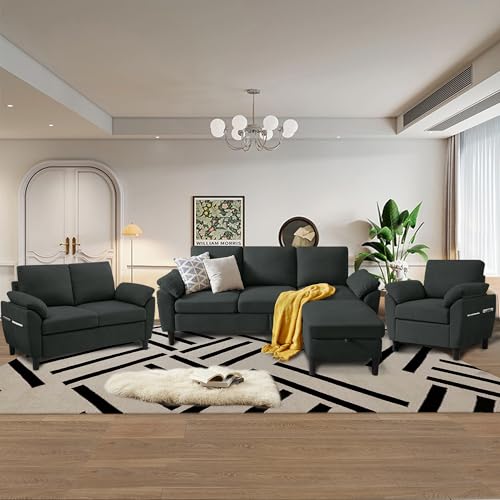
Chireca 4 Piece Convertible Sectional Sofa Set, Modern Linen Small L Shaped Couch with Reversible Chaise, 3-Seater Sofa & Loveseat & Armchair for Living Room, Office, Apartment, Black
Check price on Amazon
Trygoal 3-Piece L-Shaped Modular Leather Sofa – Convertible Sectional Couch with Movable Chaise & Storage Ottoman, Multi-Scene Use for Living Room, Apartment & Office, Oatmeal
Check price on Amazon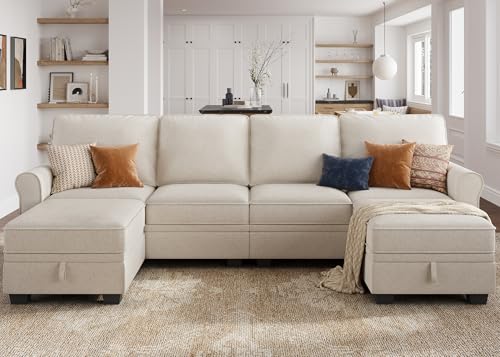
HONBAY U Shaped Sectional Sofa with Storage,Beige | movable ottoman,storage space, removable cushions,couches for living room and small apartment
Check price on Amazon
Soscana 2 Piece Convertible Sectional Sofa Set, 3-Seater L Shaped Couch with Reversible Chaise and Comfy Armchair for Living Room, Apartment, Office, Light Grey
Check price on Amazon
Signature Design by Ashley 3-Piece Double Chaise Sectional, Greystone | U-Shaped Couch, Polyester Chenille Fabric, Engineered Wood Frame, Anti-Sag Platform Base, Revenna Series
Check price on Amazon
TROMIRY U-Shaped Sectional Couches for Living Room | 112 Inch Modern Sectional Couch | Dark Grey Chenille Sofa with Double Chaise for Apartment
Check price on Amazon