
Behind Couch Console Table: A Practical Guide for a More Functional Living Room
Discover how the narrow space behind your sofa can become a smart storage zone, a styling surface, and a hidden cable-management hub — without sacrificing an inch of seating room.
Why this guide matters: Homeowners researching a behind couch console table usually fall into one of two camps — they either want extra storage in a small living room, or they need a narrow surface to hold lamps, decor, and charging cables without blocking walkways. This guide walks you through placement rules, sizing formulas, feature trade-offs, and material choices so you can choose with confidence.
What Is a Behind Couch Console Table?
A behind couch console table is a long, narrow table placed directly against the back of a sofa. Unlike a standard console or sofa table, it is deliberately sized to hug the backrest, filling the awkward gap between seating and a wall or open floor area. The format is a close cousin of the table between couch and wall, and both solve the same core problem: reclaiming dead space behind seating.
Most models measure between 12 and 18 inches in depth and 60 to 80 inches in length, with heights that sit slightly above or level with the sofa back. That geometry lets the table double as a landing zone for a floor lamp alternative, a display shelf for books and plants, and a discreet channel for power cords and charging stations.
If you are still deciding whether a console is worth the footprint, think of it this way: in open-concept rooms, the table becomes a subtle divider between the living zone and the dining or kitchen zone. In narrow rooms, it is often the only way to add surface area without pushing the sofa forward.
Five Practical Benefits of Adding a Console Behind Your Sofa
1. Reclaims Wasted Floor Space
The gap behind a sofa is typically 6 to 12 inches of unused floor. A narrow console converts that void into a functional surface without changing your seating layout.
2. Adds Concealed Storage
Shelves, drawers, and cubbies keep remotes, chargers, magazines, and kids' toys out of sight while remaining within arm's reach from the sofa.
3. Improves Cable Management
A table behind the couch is the ideal place to route charging cables, hide power strips, and mount a lamp — especially models with built-in outlets.
4. Creates a Visual Divider
In an open concept floor plan, a console acts as a low, see-through boundary that defines the living area without blocking sightlines.
5. Elevates Styling Opportunities
A long, narrow surface is a natural stage for a curated vignette — a tray, a sculptural lamp, stacked books, and a small plant create depth behind the sofa.
How to Size a Console Table Behind a Couch
Getting the dimensions right is the single most important step. A console that is too deep crowds the walkway; one that is too short looks underscaled against a long sofa. Use these rules of thumb as a starting point, then confirm with a tape measure and our measurement tips before ordering.
- Length: Aim for 50–75% of the sofa width. A table that matches the full sofa length can look heavy; a shorter table with breathing room on both ends feels intentional.
- Depth: 12–18 inches is the sweet spot. Anything deeper than 18 inches starts to intrude on traffic flow in most living rooms.
- Height: The tabletop should sit level with or 1–3 inches above the sofa back. If you plan to use the surface as a lamp perch, a slightly higher top keeps the shade visible from seated eye level.
- Clearance: Leave at least 24 inches of walkway behind the table if it faces an open floor area, or 30 inches if it doubles as a passage between rooms.
For rooms where the sofa sits against a wall, measure the gap first. If the gap is under 6 inches, a very slim console or a wall-mounted shelf may be a better fit. In small rooms, pair the console with a small side table for living room use to keep the overall footprint balanced.
Key Features to Look For
Function-First Feature Checklist
- Built-in outlets and USB ports: A table behind couch with outlet eliminates the need for a separate charging station. If you are handy, a DIY outlet console project is a realistic weekend build.
- Open shelving vs. drawers: Open shelves suit display and quick-grab storage; drawers hide clutter but add depth and weight.
- Adjustable feet: Essential on uneven floors and for protecting hardwood from scratches.
- Cable cutouts and grommets: Look for pre-drilled holes at the back edge so lamp cords and chargers can drop cleanly behind the table.
- Narrow-profile design: If your walkway is tight, prioritize a 12-inch depth model over a deeper 18-inch option.
Styles and Materials That Work Behind a Sofa
The console should visually support your sofa, not compete with it. A few pairing principles help:
- Wood and wood veneer: Warm and versatile. A mid-tone oak or walnut console pairs well with fabric sofas and grounds a neutral palette.
- Metal and glass: A slim metal frame with a glass top keeps the visual weight low — a smart choice in small rooms and open-concept layouts.
- Upholstered or fabric-wrapped: Softer and more casual, but check that the height clears the sofa back without rubbing.
- Mixed materials: Wood top with black metal legs is a reliable mid-range choice that suits both modern and transitional interiors.
If your sofa is a deep, plush model, a lighter console prevents the arrangement from feeling top-heavy. For a cleaner, more architectural look, a console with a thin top and minimal legs reads as a deliberate design line behind the seating.
Placement Tips and Pairing Ideas
Placement is about more than pushing a table against the sofa. Consider these arrangements:
- Sofa facing a wall: The console sits between the sofa back and the wall. This is the classic use case and the easiest to execute.
- Sofa floating in an open room: The console becomes a low divider. Keep the styling light — a tray, a lamp, and one or two books — so it does not block the view across the room.
- Pair with a storage ottoman: A storage ottoman on the seating side plus a console behind the sofa creates a full storage loop around the seating area.
- Add a throw: Drape a throw blanket over one end of the sofa to soften the hard line of the console and connect the two pieces visually.
- Coordinate with side tables: A console behind the sofa pairs naturally with a small side table for living room at one arm, creating a continuous surface rhythm.
For homes with pets, keep the lower shelf clear of dangling cords and use a cable raceway along the back. If you are planning a larger living room refresh, this console is a natural companion to living room ideas for small spaces and works alongside a couch with cushions setup for a layered, comfortable look.
Console Table Tier Comparison
The table below compares common console tiers by construction quality and intended use. Use the "Best For" column to match a tier to your room and lifestyle.
| Tier | Typical Construction | Best For |
|---|---|---|
| Starter tier | Engineered wood with a veneer finish, basic hardware, open lower shelf | Rentals, first apartments, and low-traffic rooms where the console is primarily decorative |
| Mid-range | Solid wood frame with veneer panels, soft-close drawers, integrated cable cutouts | Family living rooms and daily-use setups that need reliable storage and outlet access |
| Premium | Solid hardwood, dovetail joinery, metal accents, built-in power modules | Open-concept homes and long-term layouts where the console is a permanent architectural element |
| Luxury | Hardwood with hand-finished surfaces, custom sizing, concealed wiring channels | Design-led interiors where the console is a statement piece and cable management is fully hidden |
Common Mistakes to Avoid
- Buying before measuring: Confirm sofa back height, wall gap, and walkway clearance before ordering. A console that is 2 inches too tall looks awkward from every angle.
- Choosing depth over function: A deeper table is not automatically more useful. In most rooms, a 12–14 inch depth with smart shelving outperforms an 18-inch slab.
- Ignoring cable routing: If you plan to charge devices, prioritize a model with cutouts or a built-in outlet. Retrofitting later is messy.
- Over-styling: The console is a supporting surface. Keep the vignette to three to five objects so the sofa remains the focal point.
- Forgetting floor protection: Felt pads under the legs prevent scratches and make the table easier to slide when cleaning.
Recommended Behind Couch Console Tables
⚠️ AFFILIATE DISCLOSURE: This website contains affiliate links. As an affiliate Associate, we earn from qualifying purchases. If you make a purchase through these links, we may receive a small commission at no additional cost to you. Read our full affiliate policy.

SUPERJARE 78.8 inch Narrow Behind Couch Table with 2 Charging Stations | 2 AC Outlets with USB-C Ports, Extra Storage Behind Sofa, Sofa Table Console Table for Entryway Living room, Rustic Brown
Check price on Amazon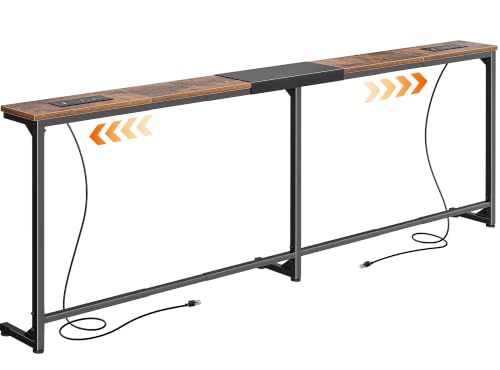
Huuger 63.4-78.3'' Extendable Behind Couch Table with Outlets, Rustic Brown | Stepless Length Adjustment, 2 Power Stations with USB-C Ports, Long Console Table, Slim Sofa Table 1ST082Z
Check price on Amazon
GRLEAF 102 Inch Narrow Sofa Table with Power Outlets, Extra Long Console Table Behind Couch Table with Charging Station, Skinny Entryway Table Thin Table for Living Room, Narrow Spaces (Rustic Brown)
Check price on Amazon
Huuger 102.4 Inch Sofa Table with Power Outlets, Skinny Behind Couch Table | Console Table with USB-C Ports, 23.9’’-34.4’’ Height Adjustable Range, Sofa Tables Narrow Long for Small Spaces, Rustic Brown
Check price on Amazon
Huuger 78.7" Console Table with Outlets, 22.8"-33.3" Height Adjustable | Behind Couch Table with 2 Power Stations & USB-C Ports, Extra Long Sofa Table, Slim Entryway Table
Check price on Amazon
VASAGLE Narrow Behind Couch Table with Outlets, 5.9 x 78.7 x 31.5 inchs | Entryway Table, Sofa Table, Console Table for Living Room, Space Saving, Honey Brown, Kean Collection, ULNT204K101
Check price on Amazon
Kitstorack 76.9" Narrow Console Table with Power Outlet for Living Room | Height Adjustment: 24.3"-32.5", 2 AC + USB + USB-C ports, 5.9" wide fits tight spaces, anti-tip screws included
Check price on Amazon
Huuger Narrow Console Table with Power Outlets & USB-C, Rustic Brown | 23.6"-35.4" Adjustable Height Sofa Table Behind Couch, Extendable 94.5"-110.2" Long Console Table, Wall-Protected Pads
Check price on AmazonFrequently Asked Questions
How wide should a console table be behind a couch?
A good rule is 50–75% of the sofa width. This leaves breathing room at both ends and prevents the console from visually overpowering the seating. For a standard three-seat sofa, that usually means a console between 60 and 72 inches long.
Can I use a console table if my sofa is against a wall?
Yes, provided the gap is at least 6 inches. If the gap is smaller, consider a wall-mounted shelf or a very slim console. Measure the gap first — this is the most common reason a console does not fit.
What is the ideal height for a behind couch table?
Level with or 1–3 inches above the sofa back is the most versatile range. If the table will hold a lamp, a slightly higher top keeps the shade visible from seated eye level.
Do I need a console with built-in outlets?
Not strictly, but an outlet-equipped console is a practical upgrade if you charge phones, tablets, or laptops near the sofa. A table behind couch with outlet keeps cords off the floor and reduces clutter.
How do I keep the area behind the sofa clean?
Choose a console with a raised lower shelf so the floor stays accessible for a vacuum or robot cleaner. Keep cords bundled with clips, and wipe the surface weekly with a microfiber cloth.
Ready to Choose Your Console?
Browse the recommended behind-couch console tables above, compare features by tier, and confirm dimensions against your sofa. A well-chosen console turns dead space into one of the most useful surfaces in your living room.
View Console Options