
Table Behind Couch with Outlet: The Smart Living Room Upgrade
Turn the wasted space behind your sofa into a functional charging station, display surface, and storage hub. Here is everything you need to know before choosing a behind-couch console table with built-in power.
Explore the Buying GuideWhat Is a Table Behind Couch with Outlet?
A table behind couch with outlet is a narrow console-style table designed to sit directly against the back of your sofa. Unlike a standard end table or coffee table, this piece is purpose-built for the often-overlooked strip of floor between your couch and the wall. The defining feature is integrated power: built-in electrical outlets, and often USB or USB-C ports, that let you charge phones, tablets, laptops, and lamps without stretching a cable across the room.
These tables go by several names in the furniture world, including sofa-back tables, couch-back consoles, and narrow charging consoles. Whatever the label, the concept is the same: a slim footprint combined with practical power delivery. Many models also include lower shelves, drawers, or cable management channels, transforming a dead zone into one of the most useful surfaces in the living room.
For households that treat the sofa as a command center for streaming, working, and gaming, this piece solves a real daily problem. Instead of hunting for a free wall outlet or balancing a phone on the armrest, every seat has access to power within arm's reach. If you are also thinking about the adjacent wall space, a behind couch console table guide can help you compare slim designs that fit tight gaps.
Placement matters as much as the product itself. A console tucked behind the sofa can visually anchor the seating area, especially in open-plan rooms where the back of a couch is exposed. It also creates a subtle room divider without the visual weight of a full bookshelf. Combined with a charging hub, the table becomes a quiet piece of infrastructure that makes the whole living room work better.
Why a Behind-Couch Table with Power Belongs in Your Living Room
The appeal of this furniture category is simple: it adds function without adding clutter. Before committing, it helps to understand the specific benefits that make it a worthwhile addition for most living rooms.
Convenient charging where you actually sit
Wall outlets are rarely positioned where people relax. A console with integrated power brings the outlet to the sofa, so devices charge while you use them. That means no more phones left on the kitchen counter or cables draped across the floor. This is especially valuable in rooms where the sofa floats in the middle of an open concept layout with no nearby wall.
Useful display and storage surface
The top surface is ideal for a slim lamp, a small plant, framed photos, or a decorative tray. Lower shelves hold books, baskets, or remote controls. In smaller homes, the table can replace a bulky side table and free up floor space, which pairs well with a small side table for living room strategy when you need flexible surfaces.
Better cable and clutter control
Many units include cable management cutouts or channels. Charging cables stay organized and out of sight, which keeps the living room looking tidy. For rooms with pets or young children, keeping cords elevated and contained is a practical safety improvement as well.
Visual anchor for floating sofas
When a couch sits away from the wall, its back can look unfinished. A slim console behind it creates a deliberate boundary and gives the seating arrangement a more composed look. In open-plan spaces, this subtle line helps define the living zone without building a wall.
A long-term functional investment
Because this furniture addresses everyday charging and storage needs, it tends to stay useful across years and layout changes. A well-built mid-range or premium model with solid joinery and quality outlets is a long-term investment in how your living room functions, rather than a purely decorative purchase.
✔ Advantages
- Charging access directly at the sofa
- Adds display and storage in a slim footprint
- Helps organize cables and small devices
- Defines the seating area in open-plan rooms
- Available in entry-level to premium tiers
✖ Considerations
- Requires a nearby wall outlet for plug-in models
- Depth must be measured carefully in narrow rooms
- Hardwired versions need an electrician
- Cheaper builds may have weak outlet housings
Types and Configurations of Sofa-Back Tables with Outlets
Not every behind-couch table is built the same way. Understanding the main configurations helps you match the product to your room, your wiring, and your charging habits.
Plug-in console tables
These are the most common and the easiest to install. The table includes an integrated power strip or outlet module connected to a standard cord that plugs into a wall outlet. No electrical work is required, and the table can move with you if you rearrange the room. The main limitation is cord routing: you need a wall outlet within reach, and the cord should be managed so it does not become a trip hazard.
Hardwired console tables
Hardwired models connect directly to your home's electrical circuit, typically with wiring concealed inside the wall. They offer the cleanest look because no cord is visible, but installation requires a qualified electrician. This option suits permanent layouts and homeowners who want a built-in feel. If you are planning a permanent setup, pair the decision with a measurement tips review so the electrical placement and furniture footprint align.
Slim and shallow designs
For tight rooms, shallow consoles as narrow as 6 to 8 inches deep can fit behind a couch without blocking walkways. These designs often trade lower storage for a simple top shelf and a compact outlet module. They are a strong fit for apartments and living room ideas for small spaces where every inch counts.
Multi-function consoles with storage
Some models combine outlets with drawers, open shelves, or cubbies. These are useful for storing remotes, chargers, notebooks, and small accessories. If storage is a priority, consider how the table complements other pieces such as a storage ottoman so the room does not become over-furnished.
Tables with USB and USB-C ports
Many modern units include USB-A and USB-C ports alongside standard AC outlets. This is convenient for phones and tablets that charge via USB. Check the power rating of USB ports, since higher-wattage fast-charging ports are more useful for tablets and newer phones than basic low-power ports.
Measuring Before You Buy: Depth, Length, and Clearance
Measurements are the single most common reason a behind-couch table disappoints. A table that is too deep blocks walkways; one that is too short looks accidental. Take these measurements before you shop.
Measure the gap behind the sofa
Use a tape measure to find the distance from the back of the sofa to the wall. If the gap is under 10 inches, look for shallow consoles in the 6 to 8 inch range. If the gap is 12 to 16 inches, standard slim consoles will fit comfortably. Leave a small buffer so the table does not press against the wall or the sofa fabric.
Measure the sofa width
A console that matches the sofa width looks intentional. A table that is noticeably shorter can look unbalanced, while one that is much longer may crowd the room. Measure the full width of the sofa, including the arms, and compare it to the console length.
Check walkway clearance
If the table sits in a traffic path, maintain at least 30 inches of clearance for comfortable passage. In tight rooms, a shallow table is preferable to a deeper one, even if it offers less storage. This is the same principle that guides table between couch and wall layouts, where the goal is a slim, functional strip rather than a full-depth piece.
Account for outlet position
Locate the nearest wall outlet and measure the distance to where the table will sit. Confirm the included power cord reaches. If the cord is short, plan for a cord cover or a different outlet location. For plug-in models, also check whether the outlet is blocked by the sofa itself.
| Room Scenario | Recommended Depth | What to Prioritize |
|---|---|---|
| Small apartment living room | 6–8 inches | Shallow footprint, USB charging, minimal storage |
| Standard living room with 12–16 inch gap | 10–14 inches | Balanced storage and outlet access, cable management |
| Open-plan floating sofa | 12–16 inches | Visual anchor, finished back panel, dual-sided style |
| Home office or gaming sofa | 14–16 inches | Multiple AC outlets, USB-C fast charging, lower shelf |
| Permanent wall-hugging layout | 10–14 inches | Hardwired option, concealed wiring, solid build |
Outlet and Power Safety: What to Check
Because this furniture combines electricity with upholstered seating, power safety deserves careful attention. A few checks protect both your devices and your home.
Look for reputable outlet components
Quality tables use outlet modules from established electrical brands, with clear ratings printed on the housing. Avoid units with loose or unmarked outlets, and check that the module is firmly mounted so plugs do not wobble. A solid, well-specified module is a hallmark of mid-range and premium builds.
Confirm grounding and surge protection
Three-prong grounded outlets are standard for safety. Some higher-tier models include surge protection, which is useful if you charge laptops and other sensitive electronics at the sofa. Surge protection is not a substitute for whole-home protection, but it adds a layer of defense.
Manage cords deliberately
Route the power cord along the baseboard or through a cable channel. Avoid running cords under rugs or across walkways. If the cord must cross a gap, use a cord cover rated for floor use. For homes with pets, a under the couch blocker for cats can help prevent animals from chewing accessible wiring behind the sofa.
Respect outlet capacity
Do not overload a single circuit with high-draw devices. Charging phones, tablets, and a lamp is well within normal capacity; plugging in space heaters or multiple high-power devices is not. Spread high-draw appliances across different circuits, and check the outlet module's stated rating before adding devices.
Hardwired installation requires a professional
If you choose a hardwired table, hire a licensed electrician. Concealed wiring must follow local electrical codes, and improper installation creates real hazards. The clean look is worth it only when the work is done correctly.
Styling and Placement Ideas for the Space Behind Your Couch
Once the table is in place, styling determines whether it reads as a purposeful feature or an afterthought. The goal is a surface that is useful but not crowded.
Keep the top surface purposeful
Choose two or three functional objects: a slim lamp, a small tray for keys and chargers, and one decorative item such as a plant or framed print. Resist the urge to fill every inch. A clean surface makes the outlets easy to reach and keeps the charging station usable.
Use lighting to define the zone
A slim table lamp on the console adds ambient light behind the sofa, which is especially useful in rooms without ceiling fixtures. This layered lighting approach pairs naturally with a floor lamp placed at one end of the sofa for balanced illumination.
Add texture with textiles
Drape a throw blanket over the sofa arm nearest the console to soften the transition between furniture and table. If the back of the sofa is visible, a neat throw adds color and hides the seam between couch and console.
Coordinate with the sofa cushions
If the console sits behind a sofa with decorative pillows, echo one accent color from the cushions in a small object on the table. This creates visual continuity without matching everything exactly. A couch with cushions setup benefits from this kind of subtle coordination.
Handle the visible back panel
In open-plan rooms, the back of the console is visible from other areas. Choose a model with a finished back, or place a low basket or books on the lower shelf to make the rear view intentional. Some homeowners add a second small lamp on the back side for a finished look from both directions.
Integrate with trays and table pads
A decorative tray corrals small items and makes them easy to move when you need the surface clear. If the table doubles as a spot for drinks or snacks, a protective table pad helps preserve the finish and makes cleanup easier.
Recommended Tables Behind Couch with Outlet
⚠️ AFFILIATE DISCLOSURE: This website contains affiliate links. As an affiliate Associate, we earn from qualifying purchases. If you make a purchase through these links, we may receive a small commission at no additional cost to you. Read our full affiliate policy.

SUPERJARE 78.8 inch Narrow Behind Couch Table with 2 Charging Stations | 2 AC Outlets with USB-C Ports, Extra Storage Behind Sofa, Sofa Table Console Table for Entryway Living room, Rustic Brown
Check price on Amazon
Huuger 78.7" Console Table with Outlets, 22.8"-33.3" Height Adjustable | Behind Couch Table with 2 Power Stations & USB-C Ports, Extra Long Sofa Table, Slim Entryway Table
Check price on Amazon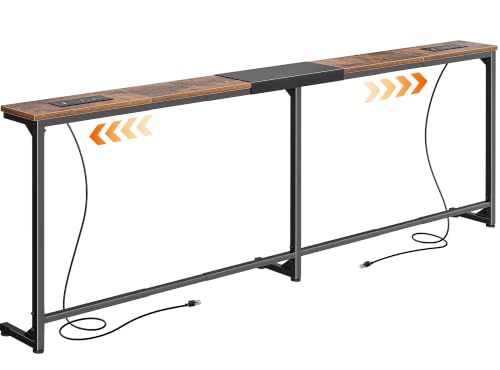
Huuger 63.4-78.3'' Extendable Behind Couch Table with Outlets, Rustic Brown | Stepless Length Adjustment, 2 Power Stations with USB-C Ports, Long Console Table, Slim Sofa Table 1ST082Z
Check price on Amazon
Kitstorack 76.9" Narrow Console Table with Power Outlet for Living Room | Height Adjustment: 24.3"-32.5", 2 AC + USB + USB-C ports, 5.9" wide fits tight spaces, anti-tip screws included
Check price on Amazon
Huuger 102.4 Inch Sofa Table with Power Outlets, Skinny Behind Couch Table | Console Table with USB-C Ports, 23.9’’-34.4’’ Height Adjustable Range, Sofa Tables Narrow Long for Small Spaces, Rustic Brown
Check price on Amazon
GRLEAF 102 Inch Narrow Sofa Table with Power Outlets, Extra Long Console Table Behind Couch Table with Charging Station, Skinny Entryway Table Thin Table for Living Room, Narrow Spaces (Rustic Brown)
Check price on Amazon
GRLEAF 78" Sofa Table with Built-in Power Strip (2 AC Outlets & 2 USB Ports) – 4.9ft Power Cord, Metal Frame, Easy Assembly, Long Couch Table Behind Sofa, Living Room and Home Office | Rustic Brown
Check price on AmazonBuying Guide: Matching the Table to Your Needs
With measurements and safety checks in hand, the final step is choosing the right tier and feature set. The comparison below uses universal quality descriptors rather than figures, so it stays relevant as products change.
| Tier | Best For | What to Expect |
|---|---|---|
| Entry-level tier | Renters, guest rooms, light charging needs | Basic outlet module, lightweight frame, simple assembly, limited storage |
| Mid-range tier | Primary living rooms, daily charging, mixed use | Solid build, USB and AC ports, cable management, one or two shelves |
| Premium tier | Open-plan homes, home offices, heavy device use | Reinforced frame, surge protection, USB-C fast charging, finished back panel |
| Luxury tier | Permanent custom layouts, design-led interiors | Hardwood or metal construction, hardwired option, concealed wiring, refined finish |
Feature checklist before you decide
- Outlet count and type: Count how many devices charge at once. Look for at least two AC outlets and USB-C where possible.
- Depth and height: Confirm the table fits the gap behind the sofa and does not sit higher than the sofa back, unless that is the intended look.
- Build material: Solid wood and powder-coated steel hold up better than thin engineered panels. Check joint quality and weight capacity for the top shelf.
- Cable management: Cutouts, channels, or a rear compartment keep charging cables tidy.
- Assembly: Flat-pack models are common; check whether tools are included and whether two people are recommended.
- Warranty: Review the warranty and returns policy, especially for electrical components.
If the table will sit in a high-traffic area, prioritize stability and a low center of gravity. If the room doubles as a workspace, prioritize outlet count and USB-C fast charging. And if the back of the sofa is visible from the entryway, choose a finished back panel or plan a styling treatment for the rear side.
Frequently Asked Questions
What is a table behind couch with outlet?
A table behind couch with outlet is a narrow console or sofa-back table placed against the rear of your sofa, featuring built-in power outlets and often USB ports. It creates a convenient charging station while adding display and storage space in the living room.
How wide should a table behind a couch be?
A console table behind a couch should be no deeper than 12 to 16 inches to keep walkways clear. For length, choose a table that matches or slightly exceeds the sofa width so it looks intentional. Measure your space and leave at least 30 inches of clearance in walkways.
Do I need an electrician to install a table with outlets?
Most plug-in console tables with outlets simply connect to a standard wall outlet with an included cord, so no electrician is needed. Hardwired versions that conceal wiring inside the wall do require a qualified electrician for safe installation.
Can a table behind the couch work in a small living room?
Yes. Slim console tables as narrow as 6 to 8 inches deep can fit behind a couch even in compact rooms. Choose a shallow, wall-hugging design and avoid blocking walkways. In tight spaces, a behind-couch table can actually replace a bulky side table and free up floor area.
What should I put on a table behind my couch?
Good choices include a slim lamp for ambient light, a charging station for phones and tablets, small plants, framed photos, books, and decorative trays. Keep the surface uncluttered and reserve the outlets for everyday devices so the table stays functional.
Ready to Upgrade the Space Behind Your Sofa?
Start with a measurement, choose the right depth and outlet configuration, and pick a tier that matches how your living room is actually used. The right table turns wasted floor space into the most useful surface in the room.
Explore Recommended Options