
Small Side Table for Living Room: The Complete Guide
Everything you need to know about choosing, placing, and styling a compact side table that fits your space, serves your needs, and elevates your living room.
Why a small side table matters: A side table is one of the hardest-working pieces in any living room. It holds your coffee, anchors a lamp, catches your remote, and gives your sofa a finished look. But when floor space is limited, the wrong side table can crowd your layout and block walkways. This guide walks you through sizing, materials, placement, and style so you can choose a compact side table that works as hard as you do.
Why Choose a Small Side Table for Your Living Room?
A small side table is more than a surface for a drink. In a well-planned living room, it acts as a functional anchor beside your sofa or accent chair, providing reachable storage and display space without dominating the floor plan. For anyone working with a compact footprint, a small side table for the living room is often the smartest seating-adjacent investment you can make.
Small side tables shine in several scenarios:
- Apartments and condos where every square foot counts and furniture must multitask.
- Sectional layouts where a full-size coffee table would block the chaise or create a pinch point.
- Reading corners that need a lamp perch and a spot for a book or mug.
- Open-concept rooms where furniture must define zones without visual clutter.
- Paired seating arrangements where two small tables flank a sofa or loveseat for symmetry.
If your living room doubles as a home office, playroom, or guest space, a compact side table also keeps essentials within arm's reach while staying easy to move when the room's function changes. For more ideas on making a compact room feel intentional, see our guide to living room ideas for small spaces.
Key Measurements: How Big Should a Small Side Table Be?
The most common mistake buyers make is choosing a side table that is too tall, too wide, or too deep for the seat beside it. Use these guidelines as your starting point before you shop.
Height Relative to Your Sofa or Chair
The top of the side table should sit level with, or within one to two inches of, the arm of the sofa or chair it serves. A table that is too low forces you to reach down; one that is too high feels awkward when you set down a cup. If your sofa arm is unusually high or low, measure it before browsing. Our measurement tips guide covers how to record furniture dimensions accurately so you avoid return headaches.
Width and Depth for Walkways
A small side table typically measures 12 to 20 inches in width and 12 to 18 inches in depth. In tight rooms, prioritize depth over width: a narrow profile keeps walkways clear. Leave at least 18 inches of clearance between the table edge and any doorway or main traffic path. If your sofa sits close to a wall, a table between couch and wall can reclaim that dead zone without eating into the room.
Top Surface Area
Think about what the table needs to hold. A lamp and a mug require roughly a 12-inch square surface. A lamp, a book, a remote, and a small plant need closer to 16 to 18 inches. If you plan to use the table as a mini charging station, look for models with built-in outlets or a grommet for cable routing.
Quick rule of thumb: Measure the height of your sofa arm from the floor. Shop for side tables whose top falls within one to two inches of that number. Then measure the gap between the sofa and the nearest wall or doorway — your table's depth should leave at least 18 inches of walking room.
Types of Small Side Tables for Living Rooms
Side tables come in many shapes and configurations. The right type depends on your layout, your storage needs, and how much flexibility you want.
Round Accent Tables
Round tops soften boxy sofa lines and have no sharp corners to catch shins in tight walkways. A 16- to 18-inch diameter round table is a classic choice beside an armchair or at the end of a sectional.
Narrow Rectangular Tables
Ideal for slipping between a sofa and a wall or beside a recliner. Slim rectangular tables maximize surface area while keeping a low profile in narrow rooms.
C-shaped and Slide-Under Tables
These tables have a base that tucks under the sofa seat, bringing the tabletop directly over your lap. They are excellent for laptop work, snacks, and small spaces where a freestanding table would block traffic.
Nesting Tables
A set of two or three tables that tuck together offers flexible surface area on demand. Pull one out for guests, then nest them back to reclaim floor space.
Storage Side Tables
Models with drawers, shelves, or a lift-top compartment hide remotes, chargers, and coasters. A storage side table is a smart pick for family rooms where clutter accumulates.
Tray Tables
A tray table with raised edges keeps drinks and small items from sliding off. Removable trays also make it easy to carry everything to the kitchen in one trip.
If your seating is a sectional, you may also want to explore a behind-couch console table for additional surface area along the back of the sofa, or a behind-the-couch table with outlet if charging access matters. For rooms where flexibility is the priority, a twin tray table that slides under the couch pairs well with a compact side table.
Materials: What to Look For in a Compact Side Table
Material choice affects durability, maintenance, and how the table fits your room's style. Here is how the most common options compare.
| Material | Best For | Durability Notes | Tier |
|---|---|---|---|
| Solid wood | Traditional and farmhouse rooms, long-term use | Heavy-duty construction that can be refinished; resists wobble | Premium |
| Engineered wood with veneer | Modern and budget-conscious layouts | Solid build for everyday use; keep away from standing water | Mid-range |
| Metal (steel or aluminum) | Industrial, contemporary, and high-traffic rooms | Rust-proof finish options available; powder-coated frames resist scratches | Mid-range |
| Glass top with metal frame | Small rooms that need visual lightness | Tempered glass is durable; frame quality determines stability | Mid-range |
| Marble or stone top | Luxury and formal living rooms | Heavy and stable; requires coasters and periodic sealing | Luxury |
| Rattan or wicker | Coastal, boho, and sunroom styles | Lightweight and easy to move; best in dry, covered areas | Entry-level |
For high-traffic family rooms, prioritize a solid build and a finish that wipes clean easily. In formal spaces, a stone or glass top adds polish without overwhelming a small footprint. If you are matching your side table to existing upholstery, our upholstery care guide explains how to keep fabrics and finishes looking consistent over time.
Placement Strategies for Small Side Tables
Where you place a side table matters as much as which one you choose. These layouts work well in compact living rooms.
Flanking the Sofa
A matching pair of small side tables on either end of the sofa creates symmetry and gives every seat access to a surface. In narrow rooms, use slim tables on both sides rather than one large table on one side. If one end of the sofa sits against a wall, a narrow table with a lamp is still useful as a lighting anchor.
Beside Accent Chairs
An accent chair with a side table and a floor lamp forms a self-contained reading nook. This arrangement works even in a corner and does not require a coffee table at all. If you are building a seating group from scratch, a small accent chairs set of 2 with table can simplify the pairing decision.
At the End of a Sectional
Sectionals often leave an open end that benefits from a side table. Place a round or rectangular table at the chaise end to catch drinks and a reading lamp. Keep the table's depth shallow enough that it does not intrude on the chaise's foot space.
Between Two Seats
A small table shared between a sofa and a loveseat or two chairs makes efficient use of a single surface. Choose a table with a lower shelf or drawer so both seats have a place for personal items.
In open-plan rooms, side tables can also help define seating zones. A table placed at the boundary between the living area and dining area acts as a subtle divider. Our open-concept guide covers more zone-defining strategies.
Matching Your Side Table to Your Living Room Style
A side table is a small piece, but it carries visual weight because it sits at eye level near your seating. Use it to reinforce your room's style rather than fight it.
- Modern and minimalist: Choose a metal frame with a thin top in a neutral finish. Avoid ornate detailing and keep the surface uncluttered.
- Traditional: Look for solid wood with turned legs or a lower shelf. A warm wood tone ties the table to bookcases and trim.
- Mid-century modern: Tapered legs, walnut finishes, and geometric tops fit this style. Pair with a round coffee table set of 2 for a cohesive look.
- Farmhouse: Distressed wood, X-frame bases, and painted finishes work well. A small drawer adds practical charm.
- Coastal: Rattan, light wood, and whitewashed finishes keep the room airy. A wicker loveseat and chairs set pairs naturally with woven side tables.
- Industrial: Combine a metal frame with a wood or concrete top. Exposed hardware and matte finishes suit the look.
If you are layering a room around a specific sofa color, our grey couch guide shows how accent tables and textiles can warm up a neutral palette. For leather seating, a leather living room guide covers complementary finishes and textures.
Storage and Functionality: Making a Small Table Work Harder
A compact side table does not have to be a single-purpose surface. These features add function without adding bulk:
- A lower shelf holds books, a basket, or a throw blanket within easy reach.
- A single drawer hides remotes, chargers, and coasters.
- A lift-top or flip-top surface reveals storage underneath while keeping the top clear.
- Built-in outlets or USB ports turn the table into a charging station.
- A tray-style top with raised edges keeps drinks secure and makes carrying items easy.
If storage is a priority, consider pairing a small side table with a storage ottoman as a secondary surface and blanket catch-all. A throw blanket folded over the sofa arm or stored in a lower shelf also adds warmth without clutter.
Recommended Small Side Tables for Living Rooms
⚠️ AFFILIATE DISCLOSURE: This website contains affiliate links. As an affiliate Associate, we earn from qualifying purchases. If you make a purchase through these links, we may receive a small commission at no additional cost to you. Read our full affiliate policy.

Yoobure End Table with Charging Station, Flip Top Side Table with USB Ports and Outlets, Sofa Couch Table Bedside Table for Living Room Bedroom, Narrow Nightstand with Storage Shelves for Small Space
Check price on Amazon
Simple Trending Side Table, End Table Night Stand, 3 Tiers Shelf for Living Room, Rustic Brown
Check price on Amazon
HOOBRO Small Round Side Table, Drink Table, Coffee Martini Table with Pedestal Accent for Small Spaces in Living Room, Bedroom, Sofa Couch, Rustic Brown BF168BZ01
Check price on Amazon
XBurmo Small Round Coffee Table - 3 Tier Design Accent Table, Narrow Side or Bedside Stand, Industrial Vintage Nightstand for Bedroom, Living Room, or Small Spaces, Rustic Brown
Check price on Amazon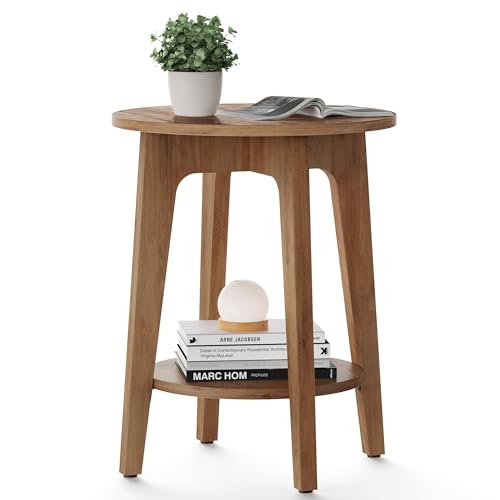
VASAGLE Round Side Table with Lower Shelf, End Table for Small Spaces | Nightstand with Tapered Legs, Curved Transitions, for Living Room, Bedroom, Honey Brown, MAEZO Collection ULET283T41
Check price on Amazon
Furinno JUST Toolless 3-Tier Side Table, Open Shelf, Columbia Walnut | Soft-Corner, End Table, Night Stand, Bedside Table, for Living Room, Bedroom, Bathroom
Check price on Amazon
HOOBRO Side Table with Charging Station, Set of 2 End Tables with USB Port and Outlets, Nightstand with 2-Layer Storage Shelves for Small Spaces, Living Room, Bedroom, Rustic Brown BF09UBZP201
Check price on Amazon
VASAGLE Side Table, Small End Table, Tall Nightstand, Steel Frame | For Living Room, Bedroom, Office, Bathroom, Rustic Brown and Ink Black ULET273B01
Check price on AmazonSafety and Durability Tips for Compact Side Tables
Small tables can be deceptively easy to tip, especially in homes with children or pets. Look for these features:
- A weighted or wide base that resists tipping when bumped.
- Anti-slip pads on the feet to protect floors and reduce sliding.
- Rounded corners in high-traffic walkways.
- Tempered glass rather than standard glass if you choose a glass top.
- Wall-anchoring hardware for tall or narrow models.
For households with cats or dogs, a table with a closed base and no low shelf is easier to keep clean. If your pets like to hide under furniture, an under-the-couch blocker for cats can keep them out of tight gaps around seating and tables. Our metal care guide covers how to maintain metal frames and prevent rust over time.
Common Mistakes to Avoid
Buying Without Measuring
A table that looks compact online can still crowd a narrow walkway. Measure the arm height and the available floor gap before you buy.
Ignoring the Lamp Height
If the table will hold a lamp, check that the lamp's shade sits below eye level when you are seated. A too-tall lamp on a low table glares.
Choosing Style Over Stability
A delicate pedestal table may look elegant but wobble on carpet. Test stability on a similar surface if you can.
Overcrowding the Surface
A small table works best with two or three items: a lamp, a coaster, and one decorative object. Rotate decor rather than stacking it.
Mismatching Table Height to Seat
A side table that is several inches lower than the sofa arm forces an awkward reach. Stay within one to two inches of arm height.
Forgetting Cable Management
If the table holds a lamp or charger, plan where the cord will run. A grommet or a table placed near an outlet prevents tangled cables.
Care and Maintenance for Long-Term Use
A well-chosen side table can serve your living room for years with minimal upkeep. Wipe wood and metal surfaces with a soft, damp cloth and dry immediately. Use coasters under drinks to prevent rings, especially on wood and stone. For glass tops, a microfiber cloth and a mild glass cleaner keep surfaces clear. If you are refreshing the upholstery on nearby seating at the same time, our natural cleaners guide covers gentle options that are safe around furniture finishes.
Before you buy, review the warranty and returns policy. A table that arrives damaged or does not fit your space is easier to resolve when you know the seller's policy in advance.
Frequently Asked Questions
What is the ideal height for a small side table next to a sofa?
The top of the side table should be level with, or within one to two inches of, the sofa arm. This keeps drinks and lamps within comfortable reach without forcing you to stretch or stoop.
How wide should a side table be in a small living room?
Look for a table 12 to 20 inches wide and 12 to 18 inches deep. Prioritize a narrow depth so walkways stay clear, and leave at least 18 inches between the table and any doorway or main traffic path.
Can I use a side table instead of a coffee table?
Yes. In small living rooms, two side tables flanking the sofa can replace a coffee table entirely, especially if the room also serves as a walkway. A slide-under tray table adds a lap surface when needed without permanent floor footprint.
What material is best for a side table in a high-traffic living room?
Solid wood with a durable finish or a metal frame with a powder-coated finish are the most forgiving in high-traffic rooms. Both stand up to daily use and are easy to wipe clean.
Should side tables match the coffee table?
They do not have to match exactly. Complementary finishes and proportional scale matter more than identical materials. A wood side table can pair with a glass coffee table as long as the tones and visual weight feel balanced.
How do I keep a small side table from tipping over?
Choose a model with a wide or weighted base, add anti-slip pads to the feet, and avoid placing heavy lamps on tall, narrow pedestal tables. Wall-anchoring hardware is available for lightweight or tall models.
Ready to Find Your Perfect Small Side Table?
Explore our recommended compact side tables above, chosen for solid construction, smart sizing, and everyday function in real living rooms. Compare features, check availability, and pick the one that fits your space.
View Recommended Tables