
Behind the Couch Table with Outlet DIY
Turn that awkward gap behind your sofa into a hardworking power console. This complete guide walks you through planning, measuring, building, and safely wiring a slim behind-the-couch table with a built-in outlet — no guesswork, no tangled extension cords.
START THE BUILDWhat This Guide Covers
Why a Behind-the-Couch Table with an Outlet Works
Most living rooms have a narrow strip of dead space between the sofa back and the wall. A purpose-built behind-the-couch table fills that gap, adds a stable surface for lamps and decor, and — when you integrate a power outlet — turns the space into a practical charging station for phones, laptops, and tablets. It solves two problems at once: visual clutter from floating cords and the endless hunt for a free wall socket.
The concept is simple: a slim console (typically 8 to 14 inches deep and slightly narrower than your sofa) sits directly behind the seating. A shallow channel or cutout on the top or underside houses an outlet module, and the power feed is routed safely to an existing receptacle. Because the table sits behind the couch, the outlet is reachable from the seating side while staying out of daily sight.
If your sofa is a large sectional, the same approach scales up nicely. A long, low shelf behind a sectional L couch can run the full length of the back and host multiple charging points. For smaller rooms, a narrow unit behind a loveseat with pull out bed keeps the footprint compact while still delivering the power upgrade.
Planning and Measuring the Space
Before you buy a single board, measure the gap behind your sofa at three points: left end, center, and right end. Walls are rarely perfectly straight, and baseboards vary in thickness. Use the smallest measurement as your maximum table depth so the unit never presses against the sofa or the wall.
Key measurements to record
- Sofa back height: The table top should sit at or slightly below this line.
- Gap depth: Measure from the wall to the back of the sofa; subtract 1 inch for breathing room.
- Sofa width: The table can be the same width or slightly narrower for a cleaner look.
- Outlet location: Identify the nearest wall receptacle and confirm the distance from the planned table position.
- Baseboard height: Plan a notch or standoff so the table sits flush without rocking.
If the gap is especially tight, consider a wall-mounted shelf instead of a freestanding table. For rooms where the sofa is the visual anchor, a low-profile design pairs well with a high back couch because the table stays hidden behind the taller silhouette. In open-plan spaces, a slightly deeper console behind a deep couch sectional can double as a room divider while still carrying power.
Materials and Tools Checklist
The build is intentionally simple: a rectangular frame with a solid top, finished with a trim piece to hide the outlet module. Choose materials that match the room's palette and hold up to daily use.
| Category | Item | Notes |
|---|---|---|
| Structure | 1x4 or 1x6 hardwood boards | Entry-level pine works; mid-range oak or maple adds durability. |
| Top surface | 3/4-inch plywood or edge-glued panel | Cut to the exact width and depth of the gap. |
| Power | Surface-mount outlet module or pop-up grommet | Choose a UL-listed unit with a grounded plug. |
| Fasteners | Wood screws, brackets, wood glue | Reinforced corner brackets improve rigidity. |
| Finish | Stain or paint, clear topcoat | Match the sofa legs or nearby trim. |
| Tools | Drill, circular saw, sander, stud finder, level | A stud finder is essential if wall-mounting. |
For a more polished look, a TV stand and coffee table set in a matching finish can tie the room together visually. If the console will sit near a media wall, a TV cabinet with sliding doors to hide TV helps keep the overall layout cohesive.
Safe Outlet and Wiring Options
There are three practical ways to add power to a behind-the-couch table. Each has a different level of effort and safety profile. Choose based on your comfort with electrical work and the layout of your room.
Option A: Surface-mount outlet module (recommended for most DIYers)
A UL-listed surface-mount outlet strip or module attaches to the underside or back of the table and plugs into a nearby wall receptacle with a heavy-duty cord. No wall cutting, no new circuits. This is the safest and most renter-friendly approach.
Option B: Pop-up grommet outlet
A pop-up outlet installs through a round hole drilled in the table top. It hides flush when not in use and rises when you need to charge. These units typically come with a plug-in cord, so the same safety advantages apply. This option is popular behind modular sofa arrangements because the table can be repositioned without rewiring.
Option C: Hardwired receptacle (licensed electrician)
If you want a permanent, code-compliant solution, have a licensed electrician add a receptacle on the wall behind the table or install a new circuit. This is the most robust option for a long-term investment in your home, but it is not a beginner DIY task.
For a whole-room power upgrade, consider pairing the console with a floor lamp that has its own integrated outlet, reducing the number of devices that need the table module.
Step-by-Step Build Instructions
These steps assume a basic rectangular console. Adapt the dimensions to your measurements from the planning section.
- Cut the boards. Cut two side panels, one long back panel, and one long front panel. Sand all edges to remove splinters and ensure a clean finish.
- Assemble the frame. Join the side panels to the back and front panels using wood glue and countersunk screws. Check for square by measuring both diagonals — they should match.
- Attach the top. Secure the plywood top to the frame with screws from underneath. Pre-drill to avoid splitting.
- Cut the outlet opening. If using a pop-up grommet, drill a pilot hole and use a hole saw sized to the unit. If using a surface-mount module, skip this step and plan to mount it underneath.
- Add a cable channel. Route a shallow groove or attach a plastic raceway along the back of the table to guide the power cord toward the wall receptacle.
- Install the outlet module. Follow the manufacturer's instructions. For surface-mount units, screw the bracket to the underside and clip the module in place.
- Finish the wood. Apply stain or paint, then seal with a clear topcoat. Let it cure fully before placing anything on the surface.
- Position and test. Slide the table into place, plug in the module, and test every outlet with a small device before using it for daily charging.
Cable Management and Finishing
The difference between a DIY-looking build and a professional result is almost always cable management. Plan the cord path before you finalize the table position.
- Use adhesive-backed cable clips along the back of the table to keep the power cord taut and out of sight.
- Route cords through a under the couch blockers channel if the sofa sits close to the wall, preventing pets and vacuum cleaners from snagging them.
- Bundle excess cord with hook-and-loop ties rather than zip ties, so you can adjust later.
- Keep the outlet module at least a few inches away from any heat source, including lamp bulbs and electronics vents.
If the table sits near a reading area, a small table to eat on couch can supplement the console as a secondary surface, keeping the outlet area clear for charging only.
Styling the Table Behind Your Sofa
A behind-the-couch table is a styling opportunity, not just a utility surface. The goal is to keep the outlet accessible while making the table feel intentional.
What to place on top
- A pair of slim table lamps for layered lighting.
- A small tray for remotes and charging cables.
- One or two low-profile decorative objects — a ceramic vase or a stack of books.
- A compact plant if the table receives indirect light.
What to avoid
- Tall items that block the outlet or create visual clutter.
- Loose cords draped across the surface.
- Heavy items that could tip if someone leans on the table.
In a room with a grey couch, a warm wood console adds contrast without competing with the sofa. If your seating is a leather living room setup, a dark-stained console with a matte finish keeps the look cohesive.
Frequently Asked Questions
Do I need an electrician to add an outlet to the table?
Not if you use a UL-listed surface-mount or pop-up outlet module that plugs into an existing wall receptacle. Hardwiring a new receptacle into the wall should always be done by a licensed electrician.
How deep should a behind-the-couch table be?
Most builds work well between 8 and 14 inches deep. Measure the actual gap behind your sofa and subtract at least 1 inch for clearance and cord routing.
Can I use this idea behind a sectional?
Yes. For a L-shaped sectionals for sale or a modular sectionals layout, build the console in segments or use a continuous shelf that follows the back of the seating.
What if the wall behind my sofa is uneven?
Add adjustable furniture glides or a small standoff strip along the back edge. This keeps the table stable and prevents wobble against baseboards or textured walls.
How do I hide the power cord completely?
Use a plastic raceway or adhesive cable channel along the back of the table and down to the wall outlet. Pair it with an under the couch blockers strip to keep the cord out of sight and out of reach.
Recommended Gear for Your Behind-the-Couch Table Build
⚠️ AFFILIATE DISCLOSURE: This website contains affiliate links. As an affiliate Associate, we earn from qualifying purchases. If you make a purchase through these links, we may receive a small commission at no additional cost to you. Read our full affiliate policy.

Huuger 78.7" Console Table with Outlets, 22.8"-33.3" Height Adjustable | Behind Couch Table with 2 Power Stations & USB-C Ports, Extra Long Sofa Table, Slim Entryway Table
Check price on Amazon
GRLEAF 102 Inch Narrow Sofa Table with Power Outlets, Extra Long Console Table Behind Couch Table with Charging Station, Skinny Entryway Table Thin Table for Living Room, Narrow Spaces (Rustic Brown)
Check price on Amazon
Huuger 102.4 Inch Sofa Table with Power Outlets, Skinny Behind Couch Table | Console Table with USB-C Ports, 23.9’’-34.4’’ Height Adjustable Range, Sofa Tables Narrow Long for Small Spaces, Rustic Brown
Check price on Amazon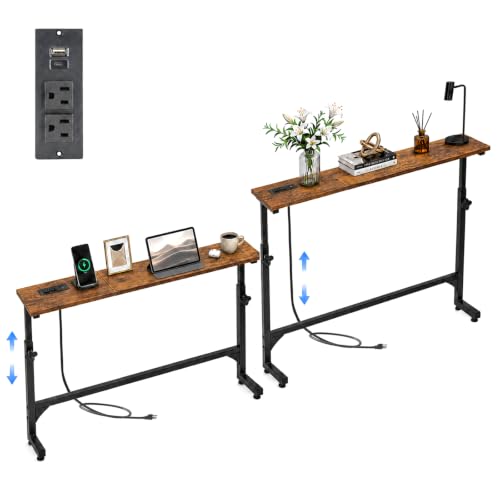
Nsitehalo 2 Pack Behind Couch Table with Outlet, Rustic Brown | Adjustable Height(23.6"-31.9"), 5.9"Wx78.8"L, Slim Long Sofa Table, 2 Power Outlets, for Living Room, Entryway
Check price on Amazon
SUPERJARE 78.8 inch Narrow Behind Couch Table with 2 Charging Stations | 2 AC Outlets with USB-C Ports, Extra Storage Behind Sofa, Sofa Table Console Table for Entryway Living room, Rustic Brown
Check price on Amazon
YATINEY 78.7" Console Table with Adjustable Height (27.6"-35.4") and Power Outlet, Skinny Behind Couch Table, Narrow Long Sofa Table for Living Room, Hallway, Entryway, Black CT09UBB
Check price on Amazon
HOOBRO 110.2-141.7'' Extendable Console Table, 23.6-34.3" Height Adjustable | Narrow Behind Couch Table with Power Outlet, Slim Sofa Table, for Living Room, Entryway and Hallway, Rustic Brown
Check price on Amazon