
Deep Couch Sectionals: Comfort, Depth & Design
Sink into generous seating. Learn how deep seat sectionals work, which materials hold up best, and how to choose the right configuration for your living room.
Explore Top PicksWhy deep couch sectionals deserve your attention: If you have ever sat on a standard-depth sofa and felt like you were perched rather than settled, a deep seat sectional may be the upgrade you have been looking for. These designs trade a little floor space for a noticeably more relaxed, lounge-friendly posture.
This guide walks through seat depth measurements, frame construction, upholstery choices, and layout planning so you can buy with confidence rather than guesswork.
Recommended Deep Couch Sectionals
⚠️ AFFILIATE DISCLOSURE: This website contains affiliate links. As an affiliate Associate, we earn from qualifying purchases. If you make a purchase through these links, we may receive a small commission at no additional cost to you. Read our full affiliate policy.
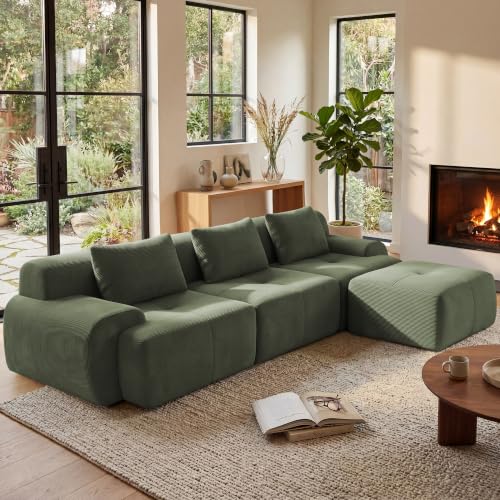
GRUSIGN 108'' Modular Boneless Sofa,Sectional Couch for Living Room | Tufted Oversized L Shape Deep Seat Sectional Sofa with Ottoman & 3 Throw Pillows,Corduroy Cloud Couch,Green
Check price on Amazon
134" Boneless Couches for Living Room - Modular Sectional Sofa U Shaped Oversized Deep Seat High Back Corduroy No Assembly Modern Cloud Big Comfy Floor Couches (Black)
Check price on Amazon
Korser 108" L-Shaped Modular Sectional Sofa with Chaise, Boneless Comfy Corduroy Fluffy Couch with Deep Seat and Side Pockets, Flexible Module Combination for Living Room, No Assembly, Side Pockets
Check price on Amazon
EASE MOOSE Oversized L Shape Sectional Cloud Modular deep seat Sofa | extra large comfort Wide Deep Seat Couch,Modern Oversized Cloud Modular Sectional couch for Living Room ,Removable cover
Check price on Amazon
107" L shaped Sectional Couches for Living Room with Cup Holder | Corner Sectional Couch,Deep Seat Cloud Couch with Storage Ottoman & USB,V Shaped Sectional Couch (Green)
Check price on Amazon
107" L shaped Sectional Couches for Living Room with Cup Holder | Corner Sectional Couch,Deep Seat Cloud Couch with Storage Ottoman & USB,V Shaped Sectional Couch (Grey)
Check price on Amazon
97" Cloud Couches for Living Room, 29.1" Deep Seat Modular Sectional Sofa, L Shaped Cloud Sofa with One Movable Ottoman
Check price on AmazonWhat Makes a Sectional a "Deep Couch Sectional"?
Seat depth is the distance from the front edge of the cushion to the backrest. Standard sectionals typically sit in the 20 to 22 inch range, which suits upright sitting and formal living rooms. A deep couch sectional pushes that measurement to roughly 24 inches or more, and extra-deep models reach 28 to 30 inches.
That extra depth changes how you use the furniture. Instead of sitting bolt upright, you can tuck one leg up, lean back into the corner, or stretch out entirely. The trade-off is straightforward: deeper seats occupy more floor area and may not suit every body type. Shorter users sometimes find very deep models uncomfortable without a lumbar pillow behind them.
Standard Depth
Around 20–22 inches. Upright posture, efficient floor use, ideal for compact rooms and formal settings.
Deep Depth
Roughly 24–26 inches. Balanced lounging with support. The most popular choice for family living rooms.
Extra Deep
Around 28–30 inches. Full lounge style. Requires a larger room and works best with supportive back cushions.
If you are still mapping out the basic terminology, our explainer on what a sectional couch is covers configurations, chaise types, and how sectionals differ from standard sofas.
Why Choose a Deep Seat Sectional?
Deep seating is less about trend and more about daily comfort. Here is what buyers consistently value about this category:
- Relaxed posture. The extra room lets you recline, curl up, or sit cross-legged without fighting the backrest.
- Better movie nights. A deep chaise or corner seat functions almost like a lounger, which pairs naturally with a living room layout built around a screen.
- Family-friendly seating. Kids and pets settle into deep cushions comfortably, and the larger surface area spreads wear more evenly.
- Design flexibility. Many deep sectionals are modular, letting you reconfigure the shape as your space or household changes. Our guide to modular sectionals explains how those systems work.
The main caution is scale. A deep sectional in a narrow room can swallow walkway clearance. Measure the room, mark the footprint with tape, and confirm that at least 30 inches of clearance remains around primary traffic paths.
Seat Depth and Body Type: Finding Your Fit
Deep seating is not universally comfortable, and that is worth saying plainly. Taller users often feel best in models of 25 inches or more, because the seat supports the full thigh length. Shorter users frequently prefer the 23 to 25 inch range, or they add a firm lumbar pillow to close the gap behind their back.
A practical test: sit in the intended position, then check whether the front edge of the cushion presses behind your knee. If it does, the seat is too deep for upright sitting. If you plan to lounge rather than sit upright, a deeper seat becomes an asset instead of a drawback.
Seat height matters too. Deep sectionals with a low seat height feel more lounge-like, while higher seats are easier to stand up from. Households with older members should weigh that factor carefully.
Frame, Cushion, and Suspension: What to Inspect
Frame construction
Look for kiln-dried hardwood or high-grade engineered wood with reinforced corner blocks. Heavy-duty frames matter more in sectionals than in small sofas because the unit carries more weight across a longer span. A solid build is a long-term investment compared with a flimsier alternative.
Cushion cores
High-density foam holds shape well; pocket-coil cores add springiness and airflow. Feather-and-down wraps deliver a plush feel but require regular fluffing. For households that use the sectional daily, high-resilience foam wrapped in fiber is a balanced tier choice.
Suspension systems
Sinuous springs and pocket coils are the most common decks. Eight-way hand-tied springs represent a top-tier construction method and generally appear in premium and luxury tiers. Whatever the system, ask whether the deck is reinforced and whether cushions are reversible.
Essential Tier
Engineered wood frame, standard foam cushions, sinuous spring deck. Solid choice for occasional use.
Balanced Tier
Hardwood frame, high-resilience foam, pocket-coil suspension. Feature-rich for its class and built for daily life.
Top-Tier
Kiln-dried hardwood, eight-way hand-tied springs, premium materials. Designed as a long-term investment.
Upholstery Options for Deep Sectionals
Because deep sectionals get heavy daily use, upholstery choice deserves as much attention as seat depth.
- Performance fabric. Stain-resistant and tightly woven, well-suited to families and pet owners. Removable, washable covers add practical value.
- Leather and top-grain leather. Durable and easy to wipe clean, developing a patina over time. Our comparison of leather versus faux leather covers the trade-offs in detail.
- Microfiber and velvet. Soft and cozy, though velvet needs more careful maintenance. See our notes on sectionals with removable washable covers if easy cleaning is a priority.
- Faux leather. A practical option at the entry-level and mid-range tiers, with models like the faux leather reclining sectional couch offering straightforward upkeep.
Whichever material you choose, confirm the cleaning code and whether cushion covers are removable. That single detail often determines how well the sectional ages.
Comparing Deep Sectional Configurations
The shape of your deep sectional should follow the room, not the other way around. Here is a comparison of common configurations and where each fits best.
| Configuration | Tier | Best For | Considerations |
|---|---|---|---|
| L-shaped deep sectional | Balanced tier | Open-plan living rooms with a clear focal wall | Confirm chaise side matches the room orientation |
| U-shaped deep sectional | Premium to luxury tier | Large rooms and dedicated conversation zones | Requires generous floor area and careful walkway planning |
| Small deep sectional with reversible chaise | Essential to mid-tier | Apartments and compact living rooms | Reversible chaise adds flexibility in tight layouts |
| Modular deep sectional | Mid-range to premium | Households that rearrange furniture or move often | Check that individual modules lock together securely |
| Reclining deep sectional | Mid-tier to high-end tier | Home theater and media rooms | Leave rear clearance for reclining mechanisms |
Small-space buyers should review our guide to comfy sectionals for small spaces before committing, since a deep seat plus a large footprint can crowd a compact room quickly.
Layout Tips for Deep Couch Sectionals
A deep sectional anchors the room, so the surrounding furniture should support it rather than compete with it.
- Keep the coffee table proportionate. Leave roughly 14 to 18 inches between the cushion edge and the table so people can still get in and out comfortably. A round coffee table set can soften the angular footprint of a large sectional.
- Define the zone with a rug. An area rug that extends slightly beyond the sectional footprint visually ties the seating group together.
- Add lighting layers. A floor lamp beside the corner seat turns it into a natural reading spot.
- Use back support thoughtfully. Lumbar throw pillows make extra-deep seats comfortable for shorter users without sacrificing the lounge feel.
- Plan walkways first. Deep sectionals need clearance on the open side, especially in rooms with doorways or heating vents nearby.
If you are working with limited square footage, our collection of living room ideas for small spaces pairs well with this section.
Maintenance and Longevity
Deep cushions carry more body weight per seat, so maintenance routines matter. Rotate and flip removable cushions monthly, vacuum seams and crevices on a regular schedule, and address spills promptly according to the upholstery cleaning code.
For leather models, condition the surface periodically to prevent drying and cracking. Fabric models benefit from a fabric protector applied at purchase, and performance fabrics generally tolerate spot cleaning well. If a cushion core softens over time, replacing just the insert is often more practical than replacing the entire sectional.
More detailed routines live in our couch care and maintenance section, including stain treatment and upholstery repair guidance.
Frequently Asked Questions
What seat depth qualifies a sectional as a deep couch sectional?
A sectional is generally considered deep when its seat depth measures roughly 24 inches or more. Standard sectionals sit around 20 to 22 inches, while extra-deep models can reach 28 to 30 inches for a lounge-style feel.
Are deep couch sectionals suitable for small living rooms?
They can work in compact rooms when you choose a streamlined configuration such as a reversible chaise or a small L-shape. Measure walkway clearance carefully, because deep seats consume more floor area than standard-depth models.
How do I keep deep seat cushions from sagging over time?
Rotate and flip removable cushions on a regular schedule, choose high-density foam or pocket-coil cores, and add a supportive insert when the original begins to soften. Reinforced frames and sinuous spring decks also help maintain shape.
What upholstery works best for a deep sectional in a family home?
Performance fabric, tightly woven microfiber, and top-grain leather are strong choices for busy households. Look for removable, washable covers when children or pets share the seating area.
Ready to compare options? Browse the recommended deep couch sectionals above, or explore related guides on modular sectionals and L-shaped sectionals to round out your research.
View Top Picks