


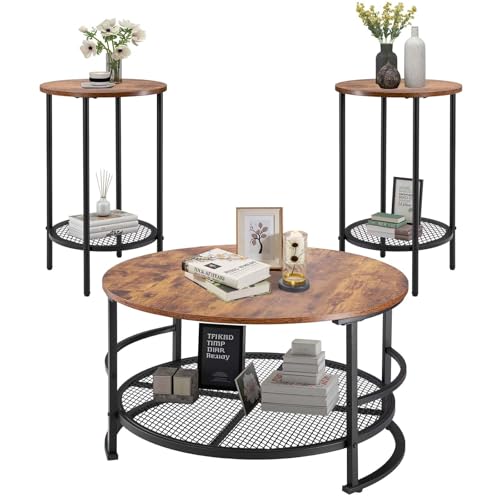

What Is a Round Coffee Table Set of 2?
A round coffee table set of 2 is a matched pair of circular tables designed to work as a single centerpiece. The two pieces are usually differentiated by diameter and height: a larger, taller table serves as the primary surface, while a smaller, shorter companion nests underneath or sits beside it. Unlike a single large table, a pair gives you the freedom to reconfigure your seating area in seconds — expand for entertaining, contract for everyday calm.
These sets are especially popular in living rooms where the sofa is the anchor. Because round tables have no sharp corners, they soften the rectangular lines of a sofa and reduce the risk of bumps in tight walkways. If you are still shaping the overall layout of your room, our living room layout guide explains how to position seating around a focal point, which is the natural starting point before you choose a table.
Why Choose Two Round Tables Instead of One?
- Flexibility: Separate the pair when guests arrive, then nest them again when the room returns to its everyday rhythm.
- Space efficiency: The smaller table tucks under the larger one, so the footprint stays compact in a small living room.
- Visual layering: Two different heights and diameters create depth, which makes a room feel more designed than a single flat surface.
- Better traffic flow: Rounded edges and a modular footprint make it easier to move around the seating area.
- Multi-purpose use: One table can hold drinks and snacks while the other stays clear for a laptop, book, or board game.
If your living room doubles as a media room, a pair of round tables pairs naturally with a coordinated TV stand and coffee table set so the finishes and proportions stay consistent across the room.
How to Choose the Right Size
Size is the single most important decision. A table that is too large crowds the sofa; one that is too small leaves drinks stranded out of reach. Use these guidelines as a starting point:
| Sofa Size | Larger Table Diameter | Smaller Table Diameter | Clearance to Sofa |
|---|---|---|---|
| Loveseat / two-seater | 24–30 inches | 16–22 inches | 14–18 inches |
| Standard three-seater | 30–36 inches | 20–28 inches | 14–18 inches |
| Large sofa or sectional | 36–42 inches | 24–30 inches | 16–20 inches |
Height matters too. The primary table should sit level with — or within one or two inches of — the sofa seat height. A nesting companion is usually two to four inches lower so it can slide underneath cleanly. If you are furnishing a compact apartment, the sizing principles in our living room ideas for small spaces guide will help you avoid overshooting the available floor area.
Materials Compared by Tier
Material affects durability, maintenance, and the visual weight of the pair. Instead of thinking in terms of numbers, compare sets by their market tier — this framing stays useful regardless of when you shop.
| Tier | Typical Materials | Best For | Maintenance |
|---|---|---|---|
| Entry-Level | Engineered wood, laminate, powder-coated steel | Rentals, starter apartments, casual family rooms | Wipe clean; avoid prolonged moisture |
| Mid-Range | Solid wood veneers, tempered glass, aluminum frames | Everyday living rooms with balanced use | Dust regularly; use coasters on glass |
| Premium | Solid hardwood, marble tops, brushed metal | High-traffic rooms, design-forward interiors | Seal stone periodically; condition wood |
| Luxury | Full-grain stone, hand-finished hardwood, artisan metalwork | Statement living rooms, long-term investment | Specialist care for stone and fine finishes |
A mid-range set is often the sweet spot: it offers solid construction and refined finishes without demanding specialist upkeep. If you are planning a broader living room refresh, it helps to coordinate your table material with the rest of the room — our leather living room guide shows how wood, stone, and metal pair with leather upholstery.
Nesting vs. Side-by-Side Pairs
Not every set of two is designed to nest. Understanding the difference will help you pick the right configuration for your room.
Nesting Pairs
The smaller table slides completely or partially under the larger one. This is the most space-efficient option and works well in narrow rooms, apartments, and multi-purpose spaces. Nesting sets usually share a base style — tripod legs, drum bases, or open metal frames — so they read as a family even when separated.
Side-by-Side Companion Pairs
These are two tables of similar or deliberately contrasting heights meant to sit adjacent to one another, creating an elongated or cluster arrangement. They suit larger living rooms and open floor plans where you want a more generous surface. If your room is wide rather than deep, a side-by-side pair can fill the space more gracefully than one oversized round table.
How to Arrange a Round Coffee Table Set of 2
Arrangement determines whether the pair feels intentional or accidental. These layouts work across most living rooms:
- Classic anchor: Place the larger table centered in front of the sofa, then offset the smaller table to one side at a slight angle. This creates an inviting asymmetry.
- Nested minimal: Keep the smaller table tucked underneath the larger one for a clean, low-profile centerpiece. Pull it out only when needed.
- Conversation cluster: In a room with two sofas facing each other, set the tables between them at different heights so both sides have a reachable surface.
- Chaise companion: If your seating includes a chaise or extended footrest, position the smaller table at the chaise end as a dedicated drink or book perch.
- Open-plan divider: Use the larger table near the sofa and the smaller one slightly beyond it to visually bridge the living area and an adjacent zone.
Keep a minimum of 18 inches between the table group and any other furniture so people can pass through without sidestepping. For rooms with a sectional, our sectional couch guide explains how the shape of the seating changes the ideal table placement.
Styling Your Round Coffee Table Pair
Two surfaces give you more styling opportunities than one — but also more chance of clutter. Follow these principles to keep the pair looking polished:
- Assign roles: Let the larger table carry the decorative focal point (a tray, a vase, a stack of books) and keep the smaller table mostly clear for practical use.
- Vary heights: Combine a tall vase with a low bowl and a flat tray so the eye travels across the arrangement.
- Work in odd numbers: Three or five objects grouped together feel more natural than symmetrical pairs.
- Use a tray as an anchor: A tray corrals small items and makes it easy to lift everything off when you need a clean surface.
- Leave negative space: Resist covering every inch. Empty surface area is what makes a round table feel airy.
- Repeat a material: Echo the table's metal or wood finish in a small accessory — a brass candle holder, a wooden bowl — to tie the vignette together.
Textiles soften hard table surfaces and connect the tables to your sofa. Explore throw pillows and throw blankets to build a cohesive color story across the seating area.
Safety and Durability Considerations
Round tables are inherently safer than square or rectangular ones because they eliminate sharp corners — a meaningful advantage in homes with young children or pets. Beyond shape, check these details:
- Base stability: A wide, weighted base resists tipping better than a slender pedestal, especially on carpet.
- Edge finish: Rounded or beveled edges on glass tops reduce chipping risk.
- Floor protection: Felt pads under metal or wood legs prevent scratches on hardwood and tile.
- Weight capacity: If you plan to use the larger table as a casual dining or work surface, confirm it is rated for the load.
- Finish durability: A sealed or lacquered finish resists rings from glasses and everyday spills better than an untreated surface.
If you are furnishing a high-traffic family room, pair the tables with a heavy-duty couch so both the seating and the surfaces can handle daily use.
Common Mistakes to Avoid
- Buying too large: An oversized pair overwhelms a small sofa and blocks walkways. Measure the sofa and the clearance first.
- Ignoring seat height: A table that sits far below or above the sofa seat forces awkward reaching.
- Mismatched finishes: Unless you are deliberately mixing metals, keep the two tables in the same finish family so they read as a set.
- Over-styling: Two surfaces can quickly become two clutter zones. Rotate decor seasonally instead of displaying everything at once.
- Skipping the rug: A round table pair looks grounded on an area rug. An area rug also defines the seating zone in an open-plan room.
Frequently Asked Questions
What is a round coffee table set of 2?
It is a coordinated pair of circular tables — typically one larger and one smaller — designed to be used together. Many sets nest, allowing the smaller table to slide under the larger one when not in use.
How do I choose the right diameter?
The larger table should measure roughly two-thirds of your sofa's length. For a standard three-seater, aim for a larger table around 30 to 36 inches in diameter, with a companion of 20 to 28 inches. Keep 14 to 18 inches of clearance between the table and the sofa.
Are nesting round coffee tables good for small living rooms?
Yes. The smaller table tucks away under the larger one, preserving floor space day to day. When guests arrive, you can separate the pair to gain extra surface area without adding a permanent second footprint.
What materials are best?
Solid wood offers warmth and durability, glass keeps a compact room feeling open, marble and stone deliver a premium look, and metal frames provide an industrial edge. Match the material to your existing furniture and your tolerance for maintenance.
How should I style the pair?
Anchor the larger table with a tray, a stack of books, and a small vase. Keep the smaller table mostly clear or use it for a single decorative object. Group items in odd numbers, vary heights, and leave open space so the surface stays usable.
Can a round coffee table set of 2 replace a dining table?
For occasional casual meals, the larger table can serve as a lightweight dining surface. For regular family meals, a dedicated small table to eat on near the couch is more practical.
Final Checklist Before You Choose
- Measure your sofa length and the available floor space.
- Confirm the larger table's diameter is about two-thirds of the sofa length.
- Check that the table height aligns with the sofa seat height.
- Decide between nesting and side-by-side based on how you use the room.
- Choose a material tier that matches your maintenance preferences.
- Plan a styling scheme with a tray, books, and one or two decorative accents.
- Add an area rug to ground the seating zone.
With the right pair, your living room gains a flexible centerpiece that adapts to quiet evenings and full-house gatherings alike. Explore the recommended sets above, then refine the rest of the room with our guides to coffee tables and couch decor and styling.