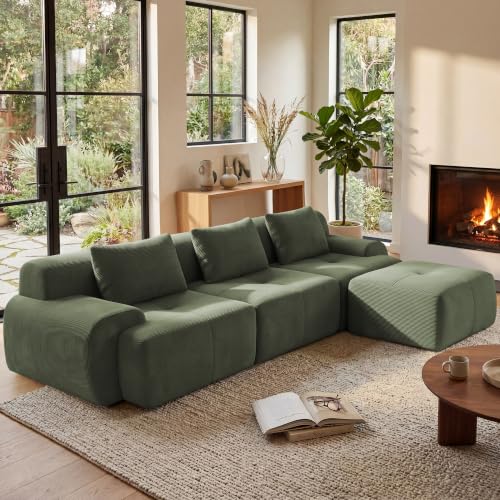
What Makes a Couch Heavy Duty?
A heavy duty couch is not simply a large sofa. It is furniture engineered to withstand consistent, demanding use without sagging, creaking, or structural failure. The distinction comes down to how the frame is built, how joints are reinforced, how cushions are rated, and how the upholstery performs under friction and spill exposure.
For households with multiple adults, children, pets, or frequent overnight guests, a standard entry-level sofa can show wear quickly. Weight concentrated on a single seat cushion, repeated folding of sleeper mechanisms, and everyday climbing can stress components that were never designed for that load. A heavy duty model addresses these pressures directly.
If you are still deciding on the overall sofa configuration before narrowing down to durability, our sectional couch explainer clarifies how seating shapes differ. For rooms that must accommodate guests, a sleeper sectional with a pull-out bed pairs heavy duty framing with dual-purpose function.
Heavy duty is a construction standard, not a size category. A compact loveseat can be heavy duty if its frame, joints, foam density, and upholstery are rated for high-traffic use — and a large sofa can be structurally weak if any of those elements are compromised.
Frame Construction & Materials
The frame is the single most important determinant of a couch's lifespan. Every load placed on the seat transfers through the cushions into the deck, through the rails, and into the legs. If that chain is weak at any point, the sofa will loosen over time.
Kiln-Dried Hardwood
Kiln-dried hardwood — particularly oak, ash, maple, and beech — is the gold standard for heavy duty sofa frames. The kiln-drying process reduces moisture content to a stable level, which minimizes warping, cracking, and joint separation across seasonal humidity changes. Hardwood also holds screws and dowels far more securely than softwood.
When evaluating a frame, look for language such as "kiln-dried hardwood," "solid hardwood," or "hardwood solids and engineered wood." Vague terms like "wood frame" or "solid wood" without qualification can indicate softwood or mixed materials that are less suitable for heavy load-bearing use.
Engineered and Plywood Frames
High-grade plywood and engineered hardwood can perform well in mid-range construction, especially when used in panels rather than structural rails. The critical distinction is where the material is placed. Plywood used for the deck or side panels is acceptable; plywood used for the main load-bearing rails and corner joints is a warning sign in furniture intended for heavy daily use.
Metal Frames
Reinforced steel frames appear in commercial-grade and some premium residential sofas. Metal offers excellent strength-to-weight characteristics and does not suffer from moisture-related warping. The trade-off is that metal frames can transmit vibration and may require more careful joint design. High-grade steel with welded or bolted reinforcement is the strongest option for truly demanding environments.
Frames to Avoid
- Particleboard and MDF — prone to crumbling at screw points and failing under sustained load.
- Unspecified softwood — dents easily and loses joint tightness over time.
- Stapled-only construction — staples back out under flex; heavy duty frames use screws, dowels, and corner blocks.
Fabric choice also affects how a frame performs in practice. A heavy-duty build paired with a performance textile is the most resilient combination, and our fabric and UV protector guide explains how protective treatments extend upholstery life.
Weight Capacity & Load Ratings
Weight capacity is the clearest objective measure of whether a couch qualifies as heavy duty. Reputable manufacturers publish a per-seat weight rating, and some publish a total rating for the entire sofa. Use these figures rather than inferring sturdiness from appearance.
- Standard residential sofas commonly rate around 250–300 pounds per seat.
- Heavy duty residential couches typically rate 500–800 pounds per seat.
- Commercial-grade and premium builds can exceed those figures, with reinforced decks and multi-point load distribution.
Per-seat ratings matter most in real use because weight is rarely distributed evenly. A person sitting down heavily on one end of a sofa loads that corner far more than a distributed static test would suggest. Reinforced corner blocks, cross-bracing, and a solid deck are what allow a high per-seat rating to hold up over years rather than months.
Load capacity also interacts with the seating mechanism. Reclining and pull-out models introduce moving parts that must be rated independently. If you are comparing powered versus manual options, our guide to a leather power reclining sectional covers how motorized mechanisms are specified, while a sectional with a pull-out footrest illustrates how support hardware integrates with the frame.
For a household with two adults averaging 200 pounds each, a per-seat rating of 500 pounds provides meaningful headroom for dynamic loading, guests, and children climbing on the furniture. Ratings below 400 pounds per seat are difficult to justify as heavy duty.
Joinery & Reinforcement
Two couches can use identical hardwood and still differ dramatically in durability based on how the pieces are joined. Heavy duty construction relies on mechanical reinforcement at every stress point.
- Corner blocks — triangular wood or metal blocks glued and screwed into inside corners to resist racking forces.
- Dowels and mortise-and-tenon joints — interlocking joinery that distributes load across a larger surface than screws alone.
- Double doweling — two dowels per joint instead of one, common in premium and commercial-grade frames.
- Cross-bracing and center supports — additional rails that prevent the frame from twisting under uneven loads.
- Reinforced sinuous spring clips — metal clips that anchor spring systems to the frame and resist pull-out.
Ask specifically whether corner blocks are glued and screwed. Glue alone can fail under humidity cycling; screws alone can loosen under repeated flex. The combination is what holds up.
Reinforcement extends to the base and legs. Center legs on long sofas and sectionals reduce the unsupported span, which is why a U-shaped sectional typically requires more internal bracing than a compact two-seater. If you plan to add mobility or protection, under-couch blockers can also help stabilize furniture and protect flooring.
Cushioning & Support Systems
A strong frame with weak cushioning still feels worn out quickly. Heavy duty couches use higher-density foam and more robust spring systems so that seats retain their shape under frequent loading.
Foam Density
Foam density is measured in pounds per cubic foot. As a general guideline:
- 1.4–1.8 lb/ft³ — entry-level seating that softens noticeably with regular use.
- 1.8–2.2 lb/ft³ — mid-range density suitable for moderate daily use.
- 2.2 lb/ft³ and above — high-density foam appropriate for heavy duty and high-traffic seating.
High-resilience (HR) foam in the 2.5 lb/ft³ range and above is common in premium and commercial-grade builds. Some heavy duty couches combine a high-density foam core with a softer comfort layer, which balances support with initial softness.
Spring Systems
Eight-way hand-tied springs remain the benchmark for durability and even support, though they are labor-intensive and appear mainly in premium tiers. Sinuous (zigzag) springs are the most common system in mid-range furniture and perform well when the gauge is heavy and the clips are reinforced. Pocketed coil systems offer targeted support and are increasingly used in high-end residential sofas.
For sleep-capable furniture, cushion and mechanism durability must be evaluated together. A sectional with a sofa bed introduces folding hardware that should be rated for repeated use, while a small sectional with a pull-out bed shows how space constraints affect mechanism design.
Upholstery for Heavy Use
Fabric and leather choices determine how a heavy duty couch looks and feels after years of daily contact. The frame may last decades, but upholstery is the visible wear surface and the most common reason sofas are replaced early.
Performance Fabrics
Performance textiles are engineered for abrasion resistance, stain release, and colorfastness. Look for fabrics with high double-rub counts — 30,000 or more is a reasonable threshold for heavy residential use, and commercial-grade fabrics often exceed 50,000. Tight weaves resist snagging better than loose weaves, which matters in households with pets or young children.
Leather and Faux Leather
Full-grain and top-grain leather are exceptionally durable and develop character over time. Bonded leather and low-grade splits are far less resilient and can peel under heavy use. If you are weighing options, our comparison of leather versus faux leather couches breaks down durability, maintenance, and appearance differences. A faux leather reclining sectional is a practical option for households that want easy-clean surfaces combined with reclining function.
Removable and Washable Covers
For high-traffic homes, removable covers with hidden zippers make deep cleaning feasible. This is especially valuable in pet households. If washability is a priority, a small sectional with washable covers illustrates how removable upholstery is integrated into compact seating designs.
Upholstery maintenance is part of the durability equation. Regular vacuuming, prompt stain treatment, and appropriate cleaners preserve both fabric and leather. Our guides on upholstery care and natural cleaners cover safe routine maintenance, and metal care is useful for frames and hardware with metal components.
Quality Tiers Compared
The table below uses a universal quality-tier system rather than numerical figures. It is intended to help you position a given couch in the market and understand which construction features to expect at each level.
| Tier | Typical Frame | Joinery | Foam Density | Best For |
|---|---|---|---|---|
| Entry-Level | Softwood or mixed engineered wood | Screws and staples, limited blocking | Standard density | Light daily use, single occupants, low-traffic rooms |
| Mid-Range | Hardwood solids with engineered panels | Glued and screwed joints, some corner blocks | Medium-high density | Average households, moderate daily use |
| Premium | Kiln-dried hardwood throughout | Corner blocks, dowels, mortise-and-tenon | High-density and HR foam | Heavy daily use, larger households, pets |
| Commercial-Grade | Reinforced hardwood or high-grade steel | Multi-point reinforcement, cross-bracing | High-density HR foam | Rental properties, lounges, sustained heavy loading |
As a rule, mid-range models typically offer noticeably better joint reinforcement than entry-level builds, while the premium tier is where kiln-dried hardwood, high-density foam, and comprehensive corner blocking become standard rather than optional. Commercial-grade construction is the appropriate choice when furniture will be used continuously by rotating occupants rather than a single household.
Durability also affects the total lifespan of the furniture, which makes heavy duty couches efficient over the long run. Our overview of the long-term investment case for quality furniture explains how construction quality compounds over ownership.
Heavy Duty Couch Buyer's Checklist
Use this checklist when evaluating a specific model, whether online or in a showroom. Each item corresponds to a construction detail that directly affects durability.
Before You Commit
- Confirm the frame is described as kiln-dried hardwood or reinforced metal — not particleboard or unspecified softwood.
- Check the published per-seat weight rating; heavy duty models should be clearly above standard residential ratings.
- Ask whether corner blocks are both glued and screwed at all inside corners.
- Verify foam density, or ask for the foam specification in pounds per cubic foot.
- Confirm the spring system type and whether spring clips are reinforced to the frame.
- Look for center support legs on sofas longer than roughly seven feet and on all sectionals.
- Check the upholstery abrasion rating (double rubs) for fabric, or the leather grade for hide options.
- For sleeper or reclining models, confirm the mechanism is rated for repeated use independent of the frame rating.
- Review the warranty terms, especially coverage for frame and spring failure versus upholstery wear.
- Measure your space and doorways before ordering; our measurement tips cover the common pitfalls.
- Plan delivery logistics in advance using a moving checklist so the sofa arrives without damage.
Two additional practical checks are worth adding for specific households. Pet owners should review under-couch blockers for cats to protect the frame and upholstery from clawing and to prevent items from rolling beneath the sofa. Households planning to rearrange furniture frequently should consider weight distribution and floor protection alongside frame durability.
Frequently Asked Questions
What makes a couch heavy duty?
What weight capacity should a heavy duty couch support?
Which frame material is best for a heavy duty couch?
Is a heavy duty couch a good long-term investment?
Can a reclining or sleeper couch also be heavy duty?
Ready to Compare Heavy Duty Options
The products below are selected for their heavy duty construction characteristics — reinforced frames, high-density cushioning, and durable upholstery suited to high-traffic homes. Use the checklist above to evaluate each model against your household's specific needs.
If you are still mapping out your room, our guide to living room ideas for small spaces can help you place a durable sofa without compromising flow.