
Behind Couch Table With Outlet DIY: Build a Hidden Charging Console
A slim console behind your sofa can add surface space, hide clutter, and keep every device charged. This beginner-friendly guide walks through planning, materials, wiring safety, and assembly for a behind couch table with a built-in outlet.
Jump to the Build StepsWhy this project is worth it: A behind couch table with an outlet solves three common living room problems at once. It gives lamps and drinks a stable surface, it creates a dedicated charging spot without trailing cords across the floor, and it reclaims the dead space between the sofa and the wall. If your couch floats in an open layout, the same console also acts as a visual divider that anchors the seating area.
What Is a Behind Couch Table With an Outlet?
A behind couch table, sometimes called a sofa console or a couch-back table, is a narrow piece of furniture placed directly against the rear of the sofa. The outlet version adds one or more power modules built into the tabletop or the front apron. In most DIY builds the outlet is a plug-in module connected to a standard wall receptacle with an extension cord or a surge protector, which means the project stays within the scope of a confident beginner.
The result is a slim, functional surface that stays out of walkways while keeping phones, tablets, lamps, and small speakers powered and organized. Because the table sits low and close to the couch, it reads as a built-in feature rather than a freestanding piece of furniture.
Before You Build: Planning Checklist
Measurements decide whether the final table feels intentional or awkward. Spend ten minutes with a tape measure before you choose a single board.
- Measure couch width. Match the table width to the sofa, or add 2 to 6 inches on each end for a layered look. A table noticeably narrower than the couch tends to look accidental.
- Measure the couch back height. The tabletop should sit roughly 2 to 6 inches above the top of the sofa back so items stay reachable and cords can drop behind the seat.
- Measure available depth. Most designs use a 6 to 10 inch deep tabletop. Leave at least 24 inches of clear walking space behind the table if the room layout depends on that path.
- Locate the wall outlet. Confirm where the nearest receptacle sits and plan the cord route. A plug-in outlet module or a slim surge protector keeps the electrical work simple and reversible.
- Check for baseboards and vents. A notch cut into the back rail clears a baseboard. Never place the table in front of a heating vent or a return air grille.
- Decide on storage. An open shelf under the tabletop holds baskets, books, and cable boxes. A closed back panel looks cleaner but blocks access to cords.
| Design Option | Best For | Build Complexity |
|---|---|---|
| Open console with plug-in outlet module | Renters, first-time builders, quick weekend projects | Entry-level |
| Console with lower shelf and cable channel | Homes with multiple devices and visible cords | Mid-range |
| Built-in bench with storage and outlet | Large rooms and open floor plans that need a divider | High-end tier |
Tools and Materials You Will Need
You can complete this project with a small set of hand tools, though a power drill and a circular saw speed things up considerably. Rent or borrow specialized tools rather than buying them for a single build.
- Tape measure, pencil, and a speed square
- Circular saw or a miter saw for straight cuts
- Power drill with drill bits and a 1-inch or 2-inch hole saw for grommets
- Wood glue, wood filler, and 1-1/4 inch and 2 inch wood screws
- Sandpaper in 120 and 220 grit
- Paint or stain plus a clear protective finish
- Plug-in outlet module or a surge protector with a flat plug
- Cable channel or raceway, grommet, and velcro ties
- Felt pads or adhesive bumper feet to protect floors
Step-by-Step Build Guide
The sequence below keeps the electrical work simple and safe. Build and finish the table first, then mount the outlet module and route the cables.
Cut the Components
Cut the tabletop to the width you measured, plus a front apron, two side rails, and two or three legs. Label each piece with a pencil mark so assembly stays organized.
Drill Cable and Grommet Holes
Drill a grommet hole near one end of the tabletop for device cables and a second hole in the back rail for the main cord. Sand the openings smooth before finishing.
Assemble the Frame
Glue and screw the legs to the side rails, then attach the front apron. Check for square by measuring diagonally across the frame in both directions before the glue sets.
Attach the Tabletop
Fasten the top to the frame from underneath so no screw heads show. Pre-drill pilot holes to avoid splitting solid wood, especially near the ends.
Sand and Finish
Fill screw holes, sand progressively from 120 to 220 grit, and apply paint or stain. Add a clear topcoat for durability because the surface will hold lamps and drinks.
Mount the Outlet Module
Install a plug-in outlet module into the drilled opening or mount a slim surge protector underneath the top with screws. Route the main cord through the back grommet.
Add Cable Management
Run a cable channel along the back edge, secure cords with velcro ties, and clip charging cables where they are easy to reach but out of sight.
Place and Test
Slide the table behind the couch, plug the module into the wall receptacle, and test every outlet before loading the surface with lamps or devices.
Electrical Safety Rules You Should Not Skip
This project uses plug-in power, not hardwired electrical work. That distinction keeps the DIY scope reasonable, but it does not remove the need for care.
- Use a plug-in outlet module or a surge protector with a recognized safety certification.
- Never run a cord under a rug, through a doorway, or in a spot where it can be pinched by the couch frame.
- Keep the main cord away from heating vents and any source of water.
- Do not overload a single receptacle with high-draw devices such as space heaters.
- If you want a new wall outlet or in-wall wiring, hire a licensed electrician. Do not attempt that part yourself.
- Unplug the module before you drill, sand, or apply finish near it.
Cable Management That Actually Works
A console with an outlet is only as good as its cord routing. Plan for two paths: one for the main power cord that runs to the wall, and one for device cables that live on the tabletop.
- Use an adhesive cable raceway along the back rail so the main cord never dangles.
- Install a grommet at each device zone so charging cables disappear cleanly into the table.
- Mount a slim surge protector under the tabletop with the sockets facing the couch for easy access.
- Bundle loose cables with velcro ties, not zip ties, so you can adjust them later.
- Label each charging cable with a small tag to avoid guesswork when several devices share the module.
Ideas to Customize Your Console
- Add a lower shelf. A second board set a few inches above the floor holds baskets and keeps clutter off the main surface.
- Build in a lamp zone. Reserve one end for a table lamp and run its cord through a dedicated grommet.
- Integrate a slim drawer. A shallow drawer under the top stores remotes and cables out of sight.
- Use a basket cubby. An open cubby at each end fits woven baskets for blankets and magazines.
- Match the couch finish. Stain or paint the console to echo the legs of your sofa for a cohesive look.
Related Guides on CouchFocus
Ready to Build Your Behind Couch Charging Station?
Compare outlet modules, slim surge protectors, and cable management kits that fit this project, then check availability before your next hardware store run.
Explore Outlet and Cable OptionsFrequently Asked Questions
Do I need an electrician to add an outlet to a behind couch table?
If your table will plug into an existing wall outlet using a power strip or a plug-in outlet module, no electrician is required. Only hardwired electrical work, such as adding a new wall circuit or running wire inside a wall, should be handled by a licensed electrician.
How wide should a behind couch table be?
A good rule of thumb is to match or slightly exceed the width of your couch so the table looks intentional and balanced. A depth between 6 and 10 inches usually leaves enough surface for lamps, drinks, and devices while keeping walkways clear.
What is the best height for a behind couch console table?
The tabletop should sit slightly above the back of the couch, typically 2 to 6 inches higher, so items are reachable and cords can drop down behind the seat. Measure your couch back height first, then add that clearance.
Can I build this DIY table if I am a beginner woodworker?
Yes. A simple rectangular console with straight cuts, butt joints, and a plug-in outlet module is one of the most beginner-friendly builds. Pre-cut lumber or a precut project panel can reduce the number of tools you need.
How do I hide cords behind a couch console?
Use a cable channel or raceway along the back edge, drill a grommet hole where devices sit, and mount a surge protector underneath the tabletop. Velcro ties and adhesive clips keep charging cables organized and out of sight.
Recommended Outlet Modules and Cable Management for Your DIY Console
⚠️ AFFILIATE DISCLOSURE: This website contains affiliate links. As an affiliate Associate, we earn from qualifying purchases. If you make a purchase through these links, we may receive a small commission at no additional cost to you. Read our full affiliate policy.

Huuger 78.7" Console Table with Outlets, 22.8"-33.3" Height Adjustable | Behind Couch Table with 2 Power Stations & USB-C Ports, Extra Long Sofa Table, Slim Entryway Table
Check price on Amazon
GRLEAF 102 Inch Narrow Sofa Table with Power Outlets, Extra Long Console Table Behind Couch Table with Charging Station, Skinny Entryway Table Thin Table for Living Room, Narrow Spaces (Rustic Brown)
Check price on Amazon
Huuger 102.4 Inch Sofa Table with Power Outlets, Skinny Behind Couch Table | Console Table with USB-C Ports, 23.9’’-34.4’’ Height Adjustable Range, Sofa Tables Narrow Long for Small Spaces, Rustic Brown
Check price on Amazon
YATINEY 78.7" Console Table with Adjustable Height (27.6"-35.4") and Power Outlet, Skinny Behind Couch Table, Narrow Long Sofa Table for Living Room, Hallway, Entryway, Black CT09UBB
Check price on Amazon
SUPERJARE 78.8 inch Narrow Behind Couch Table with 2 Charging Stations | 2 AC Outlets with USB-C Ports, Extra Storage Behind Sofa, Sofa Table Console Table for Entryway Living room, Rustic Brown
Check price on Amazon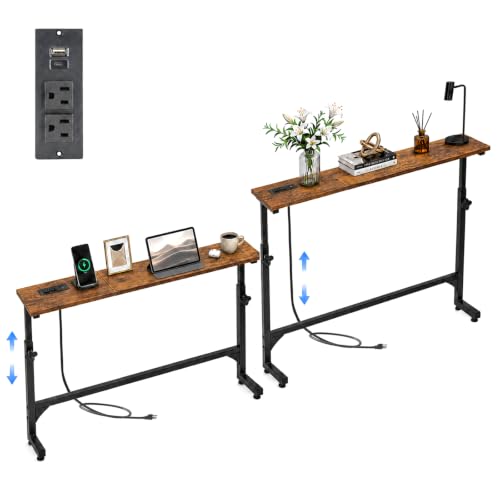
Nsitehalo 2 Pack Behind Couch Table with Outlet, Rustic Brown | Adjustable Height(23.6"-31.9"), 5.9"Wx78.8"L, Slim Long Sofa Table, 2 Power Outlets, for Living Room, Entryway
Check price on Amazon
Huuger 63 Inch Console Table, Skinny Sofa Table with Charging Station | Narrow Behind Couch Table with Outlet, for Living Room, Sofa Back,Black
Check price on Amazon