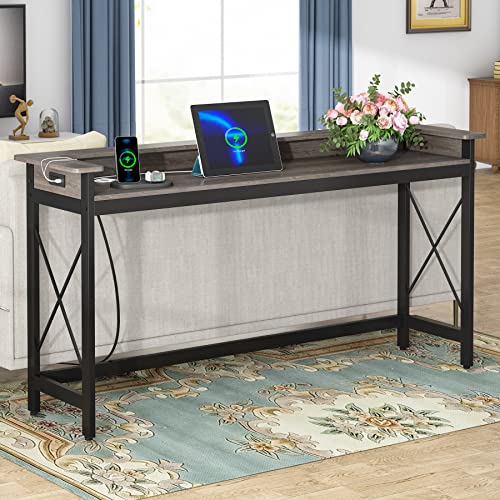
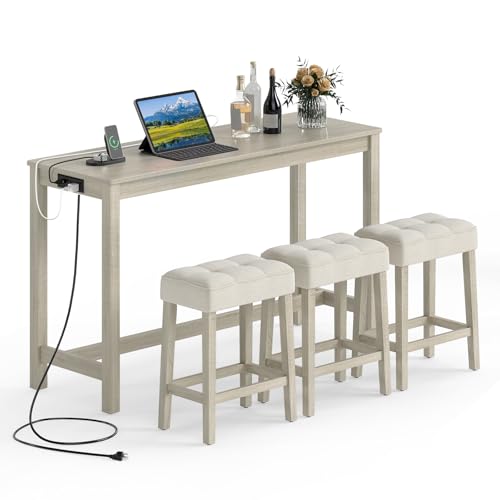
What Is a Behind Couch Console Table with Stools?
A behind couch console table with stools is a narrow table placed against the back of a sofa, paired with two or three compact stools that slide underneath or tuck alongside. The table acts as a slim ledge — usually 12 to 16 inches deep — while the stools pull out to form instant extra seating. Together they solve a common living room problem: the sofa floats in the middle of the room, and the space behind it is wasted.
This arrangement is especially useful in open floor plans where the sofa back faces a walkway, dining area, or entry zone. Rather than letting the back of the couch read as a blank wall, the console table creates a deliberate boundary and a visual finish. The stools make that boundary usable, not just decorative.
Core benefits at a glance
- Extra seating without a second sofa: two stools effectively add a pair of occasional seats that disappear when not in use.
- Surface area for daily life: lamps, books, trays, plants, and charging stations all find a home.
- Better room flow: the console anchors the sofa and defines the living zone in open layouts.
- Hidden storage potential: baskets, bins, and slim drawers keep clutter off the floor.
- Improved sightlines: a low console with backless stools keeps views open compared to a tall cabinet or shelving unit.
Placement & Clearance: The Measurements That Matter
Before choosing a table, measure the gap behind your sofa. The console needs to sit flush or nearly flush against the sofa back, and the stools need room to pull out. If you skip this step, you risk buying a table that blocks a walkway or stools that can never actually be used.
Minimum clearance guidelines
- Table depth: 12 to 16 inches (30 to 40 cm) is the sweet spot. Deeper than 18 inches and the console starts to feel like a desk.
- Stool pull-out space: allow 18 to 24 inches (45 to 60 cm) behind the console for stools to slide out comfortably.
- Walkway clearance: keep at least 36 inches (90 cm) of walking space beyond the pulled-out stool zone if the area doubles as a corridor.
- Total footprint: plan for roughly 30 to 40 inches (75 to 100 cm) of depth from the sofa back to the nearest wall or furniture piece.
Height matching with the sofa back
The table height should feel visually connected to the sofa. Most sofa backs sit between 30 and 34 inches from the floor. A console at 28 to 32 inches usually aligns nicely — level or slightly below the sofa back. A table that towers above the sofa back creates a visual barrier and makes the room feel smaller. If you want a lamp on the console, make sure the lamp shade doesn't block the line of sight from the seating area.
Choosing the Right Console Table
The table is the backbone of this setup. It needs to be narrow, stable, and proportionate to the sofa. A console that is too short looks like an afterthought; one that is too long overhangs and crowds the room.
Length relative to the sofa
- Two-seat loveseat: console length of 48 to 60 inches works well.
- Standard three-seat sofa: console length of 60 to 72 inches looks balanced.
- Large sectional: consider a console that covers 60 to 70 percent of the back span, or use two shorter consoles for flexibility.
Material and build considerations
Solid wood and metal-frame consoles are the most stable options when stools will be pulled in and out daily. Look for reinforced legs, cross-bracing, or a lower stretcher shelf that adds rigidity. If the console will hold a lamp and a few books, a mid-tier build is generally sufficient. For heavy daily use with laptops and serving trays, a top-tier or professional-grade frame with a solid top is the safer long-term investment.
Open-frame designs with a lower shelf are ideal because they let you store baskets or folded throws without adding visual weight. Closed cabinets behind a sofa can feel heavy and block airflow; open or slatted designs keep the zone airy.
Pairing Stools with the Console Table
The stools are what turn a decorative ledge into functional furniture. The right pairing depends on how you plan to use them — as permanent seats, occasional pull-outs, or purely as tuck-away accents.
Stool types compared
| Stool Type | Best For | Height Match | Notes |
|---|---|---|---|
| Backless wooden stool | Everyday tuck-away seating | Standard (17–19 in seat height) | Slides fully under most consoles; lightweight and easy to move. |
| Upholstered low-back stool | Comfortable guest seating | Standard to counter | Adds softness; check that the back fits under the table apron. |
| Counter-height stool | Taller consoles (34–36 in) | Counter (24–26 in seat height) | Works as a mini bar or laptop perch; needs more pull-out room. |
| Folding stool | Occasional use, small spaces | Standard | Stores flat when not needed; best as a backup seat. |
| Storage stool / ottoman | Dual-purpose seating and storage | Standard or low | Holds throws or games; slightly bulkier to tuck away. |
How many stools fit?
A practical guideline is one stool per 18 to 22 inches of usable console length. A 60-inch console comfortably fits two stools with breathing room; a 72-inch console can handle three slim stools. Always leave a few inches between stools so they don't scrape when pulled out.
Layout Scenarios That Work
The same furniture set can behave very differently depending on the room. Here are four common scenarios and how to adapt the console-and-stool setup for each.
1. Sofa floating in an open floor plan
This is the ideal case. The console table becomes a soft divider between the living zone and the dining or kitchen zone. Keep the console backless or low-profile so light and conversation pass over it. Place two backless stools underneath and pull them out only when guests arrive. For more ideas on anchoring a floating sofa, see our guide to behind couch table setups and the behind couch shelf option if you prefer vertical storage.
2. Sofa against a wall with a narrow gap
When the sofa sits close to a wall, the console becomes a slim ledge rather than a seating zone. Choose a 12-inch-deep console and treat the stools as accent pieces or plant stands. This works well in apartments where every inch counts. If the gap is extremely tight, a wall-mounted ledge or a behind couch table with outlet may be a better fit for charging devices without floor clutter.
3. Sofa back facing an entryway
A console here doubles as a drop zone: a tray for keys, a small lamp, and a basket for mail. Stools give guests a place to sit while putting on shoes. Keep the display low and organized so the entry doesn't feel cluttered. Pair with a bench behind couch if you need more continuous seating rather than individual stools.
4. Sectional with a long back span
Long sectionals can overwhelm a single console. Consider two shorter consoles with a gap in the middle, or one console plus a behind the couch table with stools arrangement that leaves room for a walkway. This keeps the setup flexible and prevents the room from feeling walled off.
Styling the Console Surface
The top of the console is prime real estate, but restraint matters. A crowded surface behind the sofa can make the whole room feel busy. Aim for three to five objects with varied heights and textures.
Styling formula that always works
- One anchor piece: a table lamp, a large vase, or a sculptural object.
- One stack: two or three books or magazines laid flat.
- One organic element: a plant, a bowl of fruit, or a small branch arrangement.
- One tray: corrals small items like candles, remote controls, or a small clock.
- Negative space: leave at least a third of the surface empty so the console reads as calm.
For seasonal refreshes, swap the organic element and the tray contents rather than adding more objects. If the console sits behind a sofa that faces a TV, keep the height of decor below the sofa back so it doesn't interfere with viewing.
Storage and Function Upgrades
A console table with stools is already functional, but a few upgrades make it indispensable in daily life.
Under-console storage
- Woven baskets: slide under the lower shelf for throws, toys, or pet supplies.
- Slim bins: perfect for charging cables, craft supplies, or paperwork.
- Folded stool stack: if you use folding stools, store them flat against the console's back legs.
Cable and outlet management
If the console will host a lamp or a laptop, plan cable routes before placement. A behind couch table with outlet DIY project can add a discreet power strip, or you can choose a console with a built-in outlet. Keep cables clipped to the back of the table so they don't dangle into the walkway.
Protecting the sofa back
Constant rubbing from a console can wear the sofa's upholstery. Felt pads on the console's back edge, or a thin fabric strip between the table and the sofa, prevent scuffs. If the sofa back is leather, avoid sharp-edged trays and rough baskets that could scratch the surface.
Mistakes to Avoid
- Buying the table before measuring the stool pull-out zone. The most common regret is a console that looks great but leaves no room for stools to be used.
- Choosing a console that is taller than the sofa back. It creates a visual wall and shrinks the room.
- Overcrowding the surface. A cluttered console behind the sofa draws the eye away from the seating area.
- Ignoring stool weight capacity. Check the rated capacity if the stools will be used by adults daily.
- Skipping floor protection. Stools pulled in and out repeatedly can scratch hard floors; add felt glides to stool legs.
Frequently Asked Questions
How much space do I need behind a couch for a console table with stools?
Plan for at least 14 to 18 inches (35 to 45 cm) of clearance behind the sofa back for the table depth, plus roughly 18 to 24 inches (45 to 60 cm) of pull-out space for the stools if you want them to be usable as seats rather than pure display.
What height should a behind couch console table be?
Aim for a table height that sits level with or slightly below the sofa back. Many sofas have backs around 30 to 34 inches, so a console in the 28 to 32 inch range usually reads as balanced and keeps sightlines open.
Can I use a console table with stools as a room divider?
Yes. In open floor plans, a behind couch console table with stools creates a soft boundary between the living zone and a dining or hallway zone without blocking light. Choose a narrow profile and keep the display low.
What kind of stools work best with a sofa back console table?
Backless or low-back stools tuck away cleanly. Counter-height stools suit taller consoles, while standard-height stools pair with console tables around 30 inches. Match seat width to the console length so two or three stools fit without crowding.
Will a console table damage the back of my sofa?
It can cause wear over time if the table rubs against the upholstery. Add felt pads or a soft fabric strip between the console and the sofa back, and avoid placing sharp or heavy objects where they could press into the sofa.
Is a behind couch console table worth it for small living rooms?
Yes, if the depth is right. A slim 12-inch console with backless stools adds surface and seating without eating much floor space. In very tight rooms, treat the stools as occasional pull-outs and keep them tucked away most of the time.