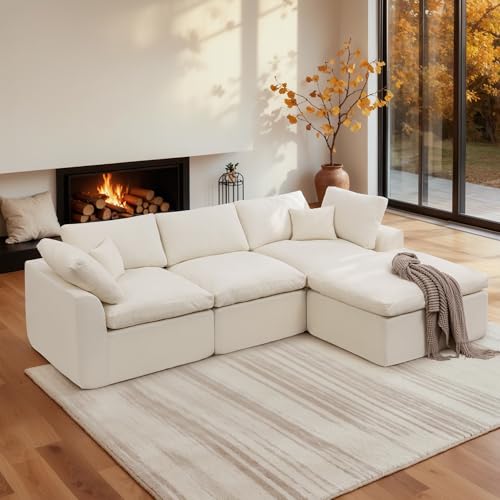
What Makes a Couch Truly Comfy
Comfort is not a single measurement. A couch that feels wonderful in a showroom for two minutes can become uncomfortable after two hours, and a couch that feels firm at first can become the most supportive seat in the house. When people search for a comfy couch, they are usually describing four separate qualities at once: cushion support, seat depth, backrest angle, and surface texture. Understanding each one separately makes the buying decision far clearer.
The first quality is cushion support. A comfy seat distributes body weight without collapsing into the frame. High-density foam, wrapped foam, or a foam-and-pocket-coil hybrid usually delivers that balance better than low-density foam alone. The second quality is seat depth. Deeper seats invite lounging, but a seat that is too deep leaves shorter sitters with their feet off the floor or their back unsupported. The third is backrest angle and height. A slight recline supports the lumbar spine, while a taller back gives more shoulder and neck support for reading or watching television. The fourth is upholstery feel. Smooth leather, brushed cotton, and textured performance fabric all feel different against the skin, and that difference matters in a room where you sit every day.
It also helps to separate comfort from novelty. Reclining mechanisms, power footrests, and deep bucket seats add features, but the underlying comfort still comes from the cushion core, the frame, and the fit between the couch and the person sitting on it. A well-built mid-tier couch with honest cushion construction will usually feel more comfortable after a year than a feature-heavy entry-level model with thin foam.
Quick comfort check: Sit on the couch for at least five minutes before deciding. Shift your weight from side to side, lean back, and try to stand up. A comfy couch should feel stable when you move, supportive when you lean, and easy to leave without pushing hard against the armrests.
Comfort Tiers and What They Mean
Because comfort depends on materials and construction rather than a single feature, it helps to think in tiers. The table below groups couches by construction quality and intended use. Use it as a relative guide, not as an absolute ranking — a well-made entry-level couch can still be very comfortable for light use.
| Tier | Typical Construction | Best For |
|---|---|---|
| Entry-level | Lower-density foam, basic sinuous springs, lighter frame | Guest rooms, occasional seating, first apartments |
| Mid-range | High-resilience foam, wrapped cushions, reinforced hardwood frame | Daily family living rooms and main seating areas |
| Premium | Foam-and-pocket-coil hybrids, kiln-dried hardwood, corner-blocked joints | Heavy daily use, long lounging sessions, multi-person households |
| Luxury | High-grade hybrid cores, eight-way hand-tied springs, premium upholstery | Design-led living rooms and long-term investment seating |
Most households find their best balance in the mid-range tier. The jump from entry-level to mid-range usually brings noticeably better cushion retention and a sturdier frame, while the jump from premium to luxury is more about refinement than basic comfort. If you want a broader overview of materials and construction, the couch buying guide covers the full decision process from measurement to delivery.
Cushion Anatomy: Foam, Springs, and Fill
The cushion is where comfort is won or lost. Seat cushions typically use one of three core structures. High-density foam is the most common choice because it resists compression and holds its shape. Foam wrapped in fiber or down adds a softer initial feel but needs regular fluffing. Pocket-coil cores sit inside a foam shell and mimic the feel of a mattress, distributing weight more evenly across the seat.
Back cushions are usually softer than seat cushions because they carry less body weight. Fiber-filled back cushions feel plush but flatten over time, while foam-backed back cushions keep their shape with less maintenance. A hybrid approach — fiber over foam — is common in mid-range and premium couches and offers a good balance of softness and structure.
Suspension matters as much as the cushion itself. Sinuous springs are the standard in most couches and provide even support when they are properly tensioned. Pocket coils and eight-way hand-tied springs appear in higher tiers and generally last longer under heavy use. If you tend to sit in the same spot every day, a couch with stronger suspension under the main seat will feel more comfortable for longer.
- High-resilience foam: best all-round comfort for daily seating.
- Foam-and-fiber wrap: softer initial feel, needs periodic fluffing.
- Pocket-coil hybrid: even weight distribution, good for lounging.
- Down-wrapped cushions: very plush, highest maintenance.
Frame and Support Systems
A comfortable seat depends on a frame that does not flex or creak under weight. Kiln-dried hardwood frames with corner-blocked and glued joints are the most reliable option. Furniture-grade plywood is a common and acceptable alternative in mid-range couches. Particle board and stapled joints are the weakest construction and tend to loosen over time, which shows up first as a sagging seat and later as a noisy frame.
Legs and feet also affect comfort indirectly. Short, sturdy legs keep the couch stable and low to the ground, which suits lounging. Taller legs lift the seat and make standing up easier, which matters for older users or anyone with knee sensitivity. A center support leg on longer couches and sectionals prevents the middle of the frame from bowing under sustained use.
Fabric, Feel, and Long-Term Comfort
Upholstery changes how a couch feels against the skin and how it behaves over time. Cotton and linen blends breathe well and feel cool, which makes them a strong choice for warm rooms. Velvet feels soft and warm but can show pressure marks. Leather is easy to wipe clean and stays cool in warm weather, though it can feel cold at first in cool rooms. Performance fabric is engineered for stain and spill resistance and has become the default choice for family rooms and pet households.
Fabric weight and weave matter too. Tightly woven fabrics resist pilling and snagging better than loose weaves. Textured weaves hide wear and everyday marks, while smooth flat weaves show them more readily. If comfort includes not worrying about spills, a performance fabric or a washable slipcover is a practical comfort upgrade. For leather options, the comfortable leather sectional couches guide explains how leather grades and finishes affect feel and upkeep.
Size, Depth, and Room Fit
The most comfortable couch in the world stops feeling comfortable if it does not fit the room. Measure three things before shopping: the available wall space, the walkway width between the couch and other furniture, and the doorway path the couch must travel to reach the room. A couch that blocks a walkway forces people to sidestep, which quickly turns a comfortable seat into a daily annoyance.
Seat depth deserves special attention. A depth between roughly 20 and 22 inches suits most upright sitting, while depths beyond 24 inches encourage lounging and reclining. Seat height matters for standing up comfortably, especially for older users. Armrest height and shape affect how easy it is to rest a book, a laptop, or a cup — small details that add up to daily comfort.
Measure twice: Use painter's tape to outline the couch footprint on the floor. Walk around the outline for a day. If the tape feels cramped or blocks a natural path, a smaller couch or a different layout will feel more comfortable in practice.
Comfy Couch Types Compared
Different couch types deliver comfort in different ways. A standard sofa offers balanced seating for three and fits most living rooms. A sectional adds corner seating and works well for open-plan spaces. A loveseat is compact and cozy, ideal for two people or a reading corner. A sleeper couch adds overnight comfort for guests, while a recliner prioritizes individual lounging. The right choice depends on how you actually use the room.
- Standard sofa: the most flexible all-round option for daily seating.
- Sectional: best for family rooms and open layouts with corner space.
- Loveseat: a comfortable fit for small rooms and secondary seating.
- Sleeper couch: dual-purpose comfort for guests and everyday sitting.
- Recliner sofa: individual lounging with adjustable back and footrest.
If you are weighing a sectional against a standard sofa, the comfortable sectional couch guide compares seating capacity, layout flexibility, and cushion wear patterns. For a broader look at seating comfort across categories, the comfy couch overview covers cushion feel and everyday use.
Comfort in Small Spaces
Small living rooms demand couches that feel comfortable without dominating the floor plan. Low backrests keep sightlines open, shallow seat depth preserves walkway space, and lighter upholstery colors make the room feel larger. A loveseat or apartment sofa often feels more comfortable in a small room than a full-size sofa because it leaves room for a side table, a lamp, and a clear path to the door.
Compact sectionals can work well in small spaces when the chaise is placed against a wall rather than jutting into the room. Measurement remains the deciding factor: a couch that fits the wall but blocks the doorway will never feel comfortable in daily use. For room-specific guidance, see comfortable couches for small spaces and comfy couch for small living room.
Comfort for Sleeping and Multi-Use
If the couch doubles as a guest bed, comfort has to work in two modes. A sleeper couch with a supportive mattress and a sturdy folding mechanism feels comfortable both as seating and as a bed. Pull-out couches with memory-foam mattresses tend to sleep better than thin innerspring versions, though they add weight and require more floor space when open. A futon is lighter and easier to move but usually offers less support for overnight sleeping.
Multi-use couches also need to be comfortable to convert. Check that the mechanism glides smoothly, that the mattress folds without pinching, and that the couch returns to a flat seat position easily. For detailed comparisons, see comfortable couches to sleep on, comfortable pull-out couch, and comfy sleeper couch.
Keeping Comfort Alive Over Time
A comfy couch stays comfy when it is maintained. Rotate and flip seat cushions every few weeks to even out compression. Fluff fiber-filled back cushions weekly to restore loft. Vacuum upholstery monthly with a soft brush attachment to remove dust and grit that wears fibers. Keep the couch out of direct sunlight to slow fading and fabric degradation, and use a washable cover or throw on the seat most often used by pets or children.
Cushion covers and protective treatments extend comfort by protecting the materials underneath. Washable covers are especially useful in households with pets or young children because they let you refresh the surface without replacing the couch. For material-specific care, see the guides on fabric cleaning and leather conditioning.
Frequently Asked Questions
What makes a couch genuinely comfy?
A comfy couch combines supportive seat cushions with a solid frame, a comfortable seat depth, and breathable upholstery. Cushion density, suspension support, and backrest height matter more than a single softness rating.
Which couch type is best for a small living room?
A loveseat, apartment sofa, or compact sectional with a low back and shallow seat depth works best in a small living room. Measure walkways and doorways before choosing to keep the room functional.
How can I keep a couch comfortable long-term?
Rotate and fluff cushions weekly, vacuum upholstery monthly, use a washable cover on high-traffic seats, and keep the couch out of direct sunlight. These habits preserve cushion loft and fabric integrity.
Is a firmer couch better for back support?
Not always. A medium-firm seat with a supportive backrest generally balances comfort and support best. Very soft couches can leave the lower back unsupported, while very firm couches can feel uncomfortable during long lounging sessions.
Do deep seats make a couch more comfortable?
Deeper seats suit lounging and taller sitters, but they can leave shorter sitters with their feet off the floor. Seat depth should match the people who use the couch most often, not just the desired lounging posture.
Choose Comfort You Can Feel Every Day
A comfy couch is not defined by a single feature. It is the combination of honest cushion construction, a stable frame, a fabric that suits your household, and a size that fits your room. Use the tiers above as a guide, sit before you commit, and let daily use — not showroom lighting — be your final test.