
Couch Buying Guide: Choose the Right Seat for Your Home
A couch is one of the most used pieces of furniture in any home, yet choosing one can feel overwhelming. This guide walks you through couch types, materials, sizing, comfort, and layout so you can make a confident, well-informed decision before you buy.
If you are reading this, you are likely in the research stage: you know you need a new couch, but you want to understand the differences between options before committing. That is exactly the right approach. A couch is a long-term investment that shapes how a living room feels, functions, and flows. Making the wrong choice can mean years of discomfort or a piece that simply does not fit your space.
This guide is structured to answer the questions buyers ask most often. You will learn the major couch categories, how to match materials to your lifestyle, how to measure your room and doorways correctly, what seat depth and cushion firmness mean in practice, and how layout decisions affect daily use. By the end, you should be able to shortlist couches with confidence rather than guesswork.
Couch Types Explained
The term "couch" covers a wide range of furniture. Understanding the main categories helps you narrow down options quickly. Each type serves a different room size, seating need, and lifestyle.
Standard Sofas
The classic three-seat couch. It fits most living rooms and works well as a focal seating piece. Standard sofas are available across entry-level to luxury tiers and suit both formal and casual spaces. See the full couch guide for a broader overview of categories.
Sectional Sofas
L-shaped or U-shaped configurations that maximize seating. Great for open floor plans and family rooms. They work best when a corner is available and traffic flow is planned carefully.
Loveseats
Compact two-seat couches ideal for small spaces, bedrooms, or as a secondary seating option. They are a practical choice for apartments and reading corners.
Sleeper Sofas
Dual-purpose couches with a pull-out bed. Useful for guest rooms or multi-use living areas. Mechanisms range from entry-level to premium, so check the conversion system carefully.
Reclining Sofas
Built-in recliner mechanisms for lounging and TV viewing. These add comfort but require more clearance behind the couch. Consider whether a couch with reclining seats suits your room depth.
Modular Sofas
Configurable pieces that can be rearranged or expanded. Ideal for renters and changing spaces. A couch you can buy in pieces offers flexibility over time.
Couch Materials: Matching Fabric to Lifestyle
Material choice affects durability, maintenance, and how the couch feels. There is no universally best material; the right choice depends on who uses the couch and how often.
- Fabric: Breathable and available in many colors and textures. Performance fabrics resist stains and are a solid choice for families and pet owners.
- Leather: Durable and easy to wipe clean. It develops character over time. Brown leather remains a popular classic; see brown leather couches for style ideas.
- Velvet: Soft and visually rich, but requires more careful maintenance. Best for lower-traffic or formal spaces.
- Performance fabric: Engineered for stain and wear resistance. A practical choice for busy households and a strong option for daily use.
If easy cleaning matters, look for removable washable covers or washable covers. Cushion construction also matters: reversible cushions extend even wear, while removable cushions simplify cleaning.
Couch Quality Tiers at a Glance
Instead of focusing on numbers, use quality tiers to understand where a couch sits in the market. Tiers describe construction, materials, and expected longevity, not specific figures.
| Tier | Typical Construction | Best For |
|---|---|---|
| Entry-level tier | Basic frame, standard foam, lighter upholstery | Guest rooms, low-traffic spaces, starter setups |
| Mid-range tier | Reinforced frame, denser cushions, better fabric options | Primary living rooms used daily |
| Premium tier | Hardwood frame, high-resilience foam, quality upholstery | Long-term daily use, family homes |
| Luxury tier | Kiln-dried hardwood, premium fill, artisan upholstery | Formal rooms, long-term investment pieces |
As a rule, mid-range and premium tiers offer smoother mechanisms and better cushion recovery than entry-level models. If you plan to keep a couch for many years, a higher tier is generally the more efficient choice in the long run.
How to Measure Your Space and Doorways
Measurement is where many buyers make avoidable mistakes. A couch that fits the room but not the doorway is a common problem. Measure the following before you shop:
- Room dimensions: Length, width, and ceiling height. Leave at least 30 inches of walkway where people pass.
- Doorway width and height: Include the diagonal clearance. Some couches can be partially disassembled; check before ordering.
- Hallway and stair clearance: Narrow turns and stairwells can block delivery. If in doubt, look at couches that fit through narrow doors or couches that can fit through small doors.
- Basement access: For lower-level rooms, consider couches that fit down basement stairs.
Also think about seat height. Standard couches sit around 18 inches from floor to seat, while couches that sit high off the floor are easier for some users to stand up from.
Comfort: Seat Depth, Cushions, and Support
Comfort is personal, but there are measurable factors that guide better decisions. Seat depth is the most important: around 20 to 22 inches supports upright sitting, while 23 to 25 inches encourages lounging. Match the depth to how you use the room most often.
Cushion firmness and fill also matter. High-resilience foam offers good support and recovery, while down-wrapped cushions feel softer but require more fluffing. Back support is equally important: a couch with lumbar support reduces strain during long sitting sessions. If lower-back comfort is a priority, explore couches with lumbar support.
For households with heavier users, look for reinforced frames and denser foam; couches for heavy people are built with stronger materials. If you plan to nap or sleep on the couch regularly, consider couches you can sleep on or a couch designed for sleeping.
Living Room Layout and Placement
Placement affects both comfort and traffic flow. Start with the focal point, usually a TV, fireplace, or window, then arrange seating around it. Leave clear walkways and avoid blocking heating vents or doorways.
In small rooms, a loveseat or compact sofa paired with a chair often works better than a large sectional. In open floor plans, a sectional can define zones without walls. Corner chaises add lounging space without much extra footprint; a couch with chaise is a popular compromise. If you want a symmetrical look, a couch with chaise on both ends balances the visual weight of a room.
Also consider storage and multi-function features. A couch with storage underneath helps small spaces stay organized, and a couch with pull-out bed and storage adds guest capacity without a separate guest room.
Recommended Couch Picks for Every Living Room
⚠️ AFFILIATE DISCLOSURE: This website contains affiliate links. As an affiliate Associate, we earn from qualifying purchases. If you make a purchase through these links, we may receive a small commission at no additional cost to you. Read our full affiliate policy.

GRUSIGN Cloud Sectional Boneless Couches for Living Room, Modular L Shaped Couch with Deep Seat Oversized Right Facing Chaise, Memory Foam Compressed Spineless 3 Seater Sofa for Apartment, Black
Check price on Amazon
Boneless Couch, Cloud Couch Sofa, Sectional Couches for Living Room | Comfy L-Shaped Modern Sectional Sofa, Upholstered Corduroy Couch with Storage Pocket for Apartment, No Assembly Required
Check price on Amazon
Korser 108" L-Shaped Modular Sectional Sofa with Chaise, Boneless Comfy Corduroy Fluffy Couch with Deep Seat and Side Pockets, Flexible Module Combination for Living Room, No Assembly, Side Pockets
Check price on Amazon
Marsail 110" Modular Sectional Sleeper Sofa, Pull Out Sofa Bed with Storage | 7 Seat Comfy Cloud Sofas for Living Room, Chenille Sectional Couches with USB Ports & Cup Holders, Dark Gray
Check price on Amazon
108" Modular Sectional Sofa, L-Shaped Boneless Cloud Couch, No Assembly | Corduroy Convertible Sofa Bed with Deep Seat, Cup Holder, for Living Room Bedroom, Black
Check price on Amazon
110" Cloud Sectional Couches for Living Room, Convertible L Shape Boneless Couch with Ottoman, Oversized Modular Cloud Sofa Set, 3 Seat Deep Comfy Sofa for Bedroom Apartment, Chenille (Light Brown)
Check price on Amazon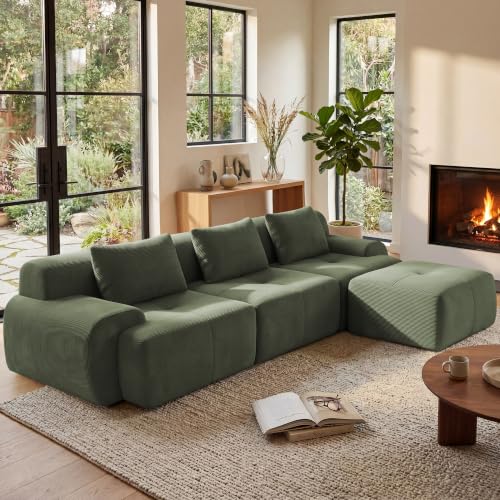
GRUSIGN 108'' Modular Boneless Sofa,Sectional Couch for Living Room | Tufted Oversized L Shape Deep Seat Sectional Sofa with Ottoman & 3 Throw Pillows,Corduroy Cloud Couch,Green
Check price on Amazon
Furmax Sectional Couches for Living Room, Chenille, Grey | U-Shaped Sofa Couch with Linen Fabric, 4 Seat Sofa Set with Double Chaise for Apartment
Check price on AmazonFinal Couch Buying Checklist
Before you commit, run through this short checklist. It captures the decisions that most affect long-term satisfaction.
- Measured room, doorways, hallways, and stairs.
- Chosen a couch type that matches seating needs and floor plan.
- Selected a material that suits household use and cleaning habits.
- Tested seat depth, cushion firmness, and back support.
- Confirmed the quality tier aligns with expected years of use.
- Checked delivery requirements and assembly needs.
If you are still comparing options, browse related guides such as couches and chairs for living room and couches and chairs for small spaces to see how a couch pairs with other seating.
Frequently Asked Questions
What is the most important thing to consider when buying a couch?
Measure your space and doorways first, then prioritize comfort and seat depth for how you actually use the room. Material choice and frame construction matter for longevity.
How do I choose between a sofa and a sectional?
A standard sofa suits smaller or formal rooms, while a sectional maximizes seating in open or family spaces. Consider traffic flow and whether the corner placement works in your layout.
What seat depth should I look for?
About 20 to 22 inches suits upright sitting, while 23 to 25 inches suits lounging. Match depth to the primary users and the room's purpose.
How do I test couch comfort in a store?
Sit for at least 10 to 15 minutes, test the back support, check seat cushion recovery, and try the armrest height. Lie down if lounging matters to you.
Explore More Couch Guides
Ready to go deeper? These related guides cover specific couch features and configurations: