
Cushions for Outdoor Sectional Couch: The Complete Guide
Everything you need to know about choosing, sizing, and caring for outdoor sectional cushions — from fabric technology and foam density to replacement measurements and seasonal storage.
An outdoor sectional couch is only as comfortable as the cushions resting on it. The frame provides structure, but the cushions deliver the seating experience — and they are the component most exposed to sun, rain, humidity, and daily use. If you are researching cushions for outdoor sectional couch setups, you are likely at a decision point: replace worn cushions, upgrade a newly purchased frame, or plan a full patio refresh.
This guide walks through the decisions that matter most. You will learn which fabrics genuinely resist weather and fading, how foam density changes comfort and longevity, how to measure modular sections correctly, and how to protect your investment across seasons. By the end, you should be able to evaluate any cushion set with confidence — whether you are comparing ready-made options or ordering custom covers.
Why Outdoor Sectional Cushions Deserve Careful Selection
Outdoor cushions face conditions indoor upholstery never sees: UV radiation, moisture cycles, temperature swings, and mildew pressure. A cushion that feels wonderful in a showroom can flatten within a single season if the foam core and cover are not engineered for exterior use. Conversely, a well-specified cushion set can last several years with basic maintenance.
The cushion system on a sectional also determines how the entire piece functions. Seat depth, back height, and cushion thickness interact with the frame geometry. If you are still evaluating frame styles, our guide to deep seating sectional outdoor furniture explains how deeper seats change cushion proportions. For curved layouts, the principles in our curved outdoor couch article help you plan wedge and corner cushion shapes.
Fabric and Material Options for Outdoor Sectional Cushions
Fabric choice is the single most consequential decision. The table below compares the main categories you will encounter when shopping for outdoor sectional cushions.
| Fabric Type | Tier | Weather Resistance | Feel & Appearance | Best For |
|---|---|---|---|---|
| Solution-dyed acrylic | Top-tier | Excellent — color is locked into the fiber, resists fading, mildew, and moisture | Soft, canvas-like, wide color range | Full-sun patios and long-term outdoor setups |
| Performance olefin (polypropylene) | High-end tier | Very good — inherently water-resistant and quick-drying | Slightly textured, durable hand | Humid climates and poolside areas |
| Polyester with water-repellent finish | Mid-range | Good — relies on the applied finish, which can diminish over time | Smooth, broad color selection | Covered porches and seasonal use |
| Cotton or cotton-blend canvas | Entry-level | Limited — absorbs water and fades faster without treatment | Natural, breathable, casual look | Sheltered spaces only; best with regular covers |
Beyond the cover, consider the construction details. Piping and welt cords add shape retention but create seams where water can pool. Zippered covers are essential for washing and for replacing foam cores independently. If you plan to refresh the look of existing cushions rather than replace them, our cushion covers guide covers sizing and closure options, while cushion material for outdoor furniture digs deeper into fiber-level comparisons.
Color strategy matters too. Light and heat-reflective tones stay cooler in direct sun, while dark tones absorb heat and can feel uncomfortable on bare skin. Neutral bases with removable accent covers give you seasonal flexibility without buying a full new set.
Foam and Fill Types: What Goes Inside the Cushion
The cover protects; the core performs. Outdoor cushions typically use one of four fill approaches:
- High-density polyurethane foam — the standard for seat cushions. Closed-cell or hydrophobic-treated foam resists water absorption and holds shape under repeated loading.
- Open-cell quick-dry foam — allows water to pass through and drain rapidly. Ideal for uncovered patios where occasional rain is unavoidable.
- Fiber fill (polyester) — soft and lofty, common in back cushions. Compresses over time and needs occasional fluffing; not suitable as a standalone seat core.
- Foam-fiber hybrid wraps — a dense foam core wrapped in fiber. Delivers the support of foam with a plusher surface feel.
As a rule of thumb, seat cushions in the 4–6 inch range with a density suited to the use case perform best. Back cushions can be softer and thicker. If you prefer a sink-in feel, a hybrid wrap is the closest outdoor equivalent to down-filled couch cushions — without the moisture problems natural down creates outdoors.
How to Measure and Size Cushions for a Sectional
Sectionals are modular, and modular frames are rarely perfectly identical from piece to piece. Measure each section separately rather than assuming uniform dimensions.
- Measure the seat frame. Record width and depth from inside edge to inside edge. Add 0.5–1 inch of overhang on each side if you want a fuller look.
- Measure the back frame. Note the height from seat surface to top rail. Back cushions typically extend slightly above the frame for a tailored appearance.
- Account for corner and wedge sections. These require dedicated shapes. Confirm the angle — 90-degree corners are standard, but curved sectionals need trapezoidal or arc cuts.
- Check thickness clearance. Thicker seat cushions reduce effective seat height and can interfere with reclining mechanisms or armrest proportions.
- Record seam-to-seam dimensions and compare them against the cushion specification sheet before ordering.
If your sectional is part of a larger patio arrangement, coordinating cushion dimensions across pieces keeps the space visually coherent. Our deep seating sectional patio furniture guide discusses how seat depth and cushion proportion work together. For layout planning around the finished piece, see designing a living room with a sectional for spatial principles that translate well to outdoor rooms.
Quality Tiers Compared: What You Get at Each Level
Outdoor cushion sets fall into recognizable tiers. Using relative comparisons rather than absolute figures, here is how the tiers differ in practice.
| Tier | Typical Construction | Expected Longevity | Best For |
|---|---|---|---|
| Essential tier | Polyester covers, standard foam cores, sewn (non-zippered) closures on some models | One to two seasons with covers and care | Covered porches, occasional use, seasonal renters |
| Balanced tier | Performance polyester or olefin covers, zippered, quick-dry foam seats, fiber back cushions | Two to four seasons with routine maintenance | Most residential patios and decks |
| Top-tier | Solution-dyed acrylic covers, high-density hydrophobic foam, reinforced seams, replaceable cores | Four-plus seasons with proper storage | Full-sun exposures, premium sectionals, long-term investment |
The step from essential to balanced tier usually delivers the largest improvement in real-world durability — primarily because zippered, performance-fabric covers change how you maintain the cushions. The step from balanced to top-tier buys UV permanence and core longevity. Within any tier, a well-specified set with replaceable components is the more efficient long-term choice.
Replacement Cushion Checklist
If you are replacing cushions on an existing frame, work through this checklist before placing an order:
- Measure every seat and back section individually, including corner pieces.
- Confirm the seat pan depth — cushions that are too deep slide forward; too shallow leaves a gap at the back.
- Decide on closure type: zippered covers are easier to clean and let you swap cores later.
- Verify the fabric is rated for outdoor use and confirm the color fastness rating.
- Check whether the frame has tie-down loops or grip strips, and whether the replacement cushions include matching attachments.
- Confirm the foam type suits your exposure — quick-dry for uncovered areas, standard hydrophobic foam for covered spaces.
- Plan storage: cushions that cannot be stored dry during the off-season will degrade faster regardless of tier.
If your sectional frame is being refreshed alongside the cushions, pair this guide with our notes on cushions for wicker loveseat and chairs for coordinating smaller seating pieces, and consider replacement cushion covers if the existing foam cores are still sound.
Care, Cleaning, and Seasonal Storage
Outdoor cushions reward consistent, low-effort maintenance. Brush off loose debris weekly, and clean stains promptly with mild soap and water rather than harsh solvents. Rinse thoroughly and allow cushions to dry fully on edge so moisture does not settle in the core.
For deeper cleaning, refer to the manufacturer's care code on the fabric tag. Most solution-dyed acrylic covers tolerate a diluted bleach solution for mildew spots, while polyester blends should be cleaned more gently. Our fabric cleaning article covers method-by-method guidance, and professional couch cleaning explains when to call in an expert.
During off-season months or extended rain, store cushions in a dry, ventilated space. Avoid sealing damp cushions in plastic — trapped moisture encourages mildew. A breathable storage bag or a dedicated deck box with ventilation is the safer choice.
Ready to Upgrade Your Outdoor Sectional?
Use the checklist above to narrow your options, then explore the recommended cushion sets below. Every selection is matched to outdoor sectional use — weather-resistant covers, quick-dry cores, and replaceable designs.
View Recommended CushionsFrequently Asked Questions
What material is best for outdoor sectional couch cushions?
How thick should outdoor sectional couch cushions be?
Can I leave outdoor sectional cushions outside in the rain?
How do I measure for replacement outdoor sectional cushions?
Should I choose zippered or sewn cushion covers?
Recommended Cushions for Outdoor Sectional Couch
⚠️ AFFILIATE DISCLOSURE: This website contains affiliate links. As an affiliate Associate, we earn from qualifying purchases. If you make a purchase through these links, we may receive a small commission at no additional cost to you. Read our full affiliate policy.
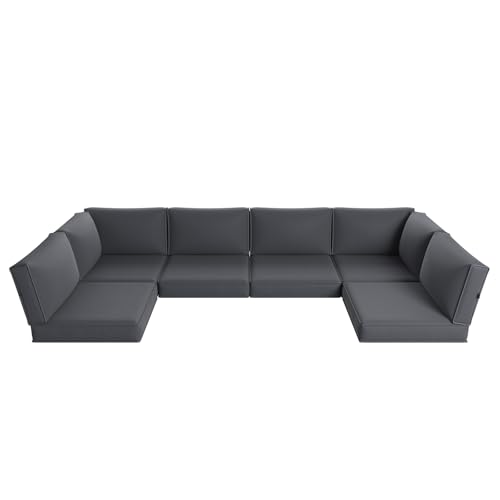
Aoxun Replacement Cushions for Outdoor Furniture, 14-Piece Outdoor Cushions for Patio Furniture, Deep Seat, Splash-Proof & Fade Resistant Couch Cushion for 6-Seat Patio Conversation Sets, Grey
Check price on Amazon
MuaMelop 14-Piece Patio Furniture Cushions Set, Replacement Outdoor Cushions for 6-Seat Patio Sectional, Waterproof & Fade Resistant Deep Seat Cushion for Outdoor Sofa, Navy Blue
Check price on Amazon
Aoxun Outdoor Replacement Cushions for Patio Furniture, Deep Seat Outdoor Cushions for 6-Seat Wicker Sectional, 14-Piece Water-Repellent Cushion for L-Shape Couch (Dark Grey)
Check price on Amazon
WiNVO Outdoor Replacement Cushions for Patio Furniture, Deep Seat Outdoor Cushions for 6-seat Sectional Rattan Conversation Set, 14-Piece Water-Resistant Couch Cushion, Grey
Check price on Amazon
MuaMelop 7-Piece Patio Furniture Cushions Set, Replacement Outdoor Cushions for 4-Seat Patio Sectional, Waterproof & Fade Resistant Deep Seat Cushion for Outdoor Sofa, Navy Blue
Check price on Amazon
ACTREST Luxury 24x24x6 Outdoor Cushions for 5-Seat Sectional Sofa Set of 5 - Water-Repellent 11-Piece Patio Cushion Set for Outside Rattan Wicker Loveseat Chair L-Shape Couch - Beige/Classic
Check price on Amazon
MuaMelop 7-Piece Patio Furniture Cushions Set, Replacement Outdoor Cushions for 4-Seat Patio Sectional, Waterproof & Fade Resistant Deep Seat Cushion for Outdoor Sofa, Beige
Check price on Amazon