
Deep Seat Modular Couch: The Complete Guide
Everything you need to know about deep seat modular couches — from configuration and comfort to materials and long-term care. Make a confident, informed decision for your living room.
Why this guide matters: You already know you want a deep seat modular couch. What you need now is clarity — how deep seating changes comfort, how modular pieces fit your room, which materials suit your household, and how to plan a layout that works. This guide walks you through each decision so you can choose with confidence.
What Is a Deep Seat Modular Couch?
A deep seat modular couch combines two design ideas: generous seat depth (typically 24–30 inches or more) and a modular construction that lets you rearrange, expand, or reconfigure individual pieces. Unlike a fixed sofa, a modular system is built from separate seats, corner units, chaises, and ottomans that connect with brackets or simply sit side by side.
The result is a couch that feels closer to a lounge than a formal sofa. Deep seating encourages relaxed postures — legs stretched out, side-sitting, or curled-up reading — while the modular format adapts to room changes, moves, and growing households. Many buyers compare this category to the broader modular couch system concept, but the deep seat version prioritizes comfort depth over compact footprint.
Why Choose a Deep Seat Modular Couch?
Superior Comfort
Deeper seats reduce pressure on the back of the thighs and allow multiple sitting positions. For lounging, movie nights, and long conversations, deep seating is a meaningful upgrade over standard-depth sofas.
Flexible Configuration
Add a seat when family grows, split the couch across two rooms, or rotate a chaise to face a different wall. Modular pieces turn one purchase into a long-term, adaptable investment.
Easy Delivery & Assembly
Individual modules fit through narrow doorways and stairwells that a one-piece sectional cannot. Many systems assemble without tools, which simplifies moves and room redesigns.
Long-Term Adaptability
Replace a single worn cushion or add a module years later instead of replacing the entire couch. This modularity supports a longer service life and reduces waste.
How Deep Should a Deep Seat Couch Be?
Seat depth is the distance from the front edge of the seat cushion to the backrest. Standard sofas usually measure 20–22 inches. Deep seat couches start around 24 inches and can exceed 30 inches in lounge-oriented designs. The right depth depends on your height, sitting habits, and room proportions.
- 24–26 inches: A balanced deep seat. Most adults can sit upright with feet grounded while still enjoying relaxed lounging. A solid choice for mixed-use living rooms.
- 27–30 inches: True lounge depth. Ideal for tall users, movie rooms, and people who frequently sit cross-legged or side-sit. Shorter users may need a supportive back cushion or ottoman to sit upright comfortably.
- Over 30 inches: Extreme lounge depth. Best reserved for dedicated relaxation spaces, media rooms, or very tall users. Pair with firm back cushions so the seat does not feel bottomless.
Also measure the seat height (floor to top of cushion). A height around 17–19 inches works for most adults; lower seats feel more lounge-like but are harder to rise from for older users or anyone with knee concerns.
Popular Deep Seat Modular Configurations
Modular systems are sold as individual pieces or pre-set bundles. Common modules include armless chairs, corner units, chaises, ottomans, and end pieces with arms. Here are the configurations buyers most often choose:
- L-shaped layout: A run of seats plus a corner and chaise. Fits open-plan living rooms and defines a conversation zone. Explore L-shaped couch layouts for living rooms for placement ideas.
- U-shaped layout: Two runs plus a corner on each side. Excellent for large rooms and entertaining, but requires generous floor space and clear walkways.
- Straight run with ottoman: A simple row of modules with a movable ottoman that doubles as a footrest, extra seat, or coffee table substitute.
- Double chaise: Two chaise modules facing the same direction or mirrored. A favorite for media rooms and family lounges.
- Split arrangement: Use modules in two separate seating groups — for example, a loveseat-sized pair facing a fireplace and a chaise near a window.
If your room is tight, review L-shaped couch options for small spaces before committing to a large footprint. A modular system with an open-ended design can also help a room feel less boxed in.
Materials and Upholstery: What to Choose
The upholstery determines how the couch feels, how it ages, and how much maintenance it demands. Deep seat couches are frequently used for lounging, so durability and cleanability matter as much as texture.
- Performance fabric: Woven synthetics and treated blends resist stains and fading. A practical choice for households with children or pets. See our guide to performance fabric sofas for a deeper comparison.
- Cotton and linen blends: Breathable and natural-looking, with a relaxed texture that suits casual interiors. Less resistant to staining; consider a removable cover system.
- Velvet: Soft, dense, and visually rich. Modern performance velvets are more durable than traditional versions. Our velvet sofa guide covers care and wear expectations.
- Leather: Ages gracefully and wipes clean easily. Full-grain and top-grain leathers are the most durable; bonded leather is best avoided in high-use modular systems. Compare options in our leather sofa overview.
- Modular-specific covers: Many systems offer washable, replaceable covers per module. This is a major advantage for deep seat couches, which see heavy daily use.
Cushion Construction and Comfort
Deep seats place more load on cushions, so the filling and support structure deserve close attention. Look for high-resilience foam cores wrapped in fiber or down for a balance of support and softness. Down-filled cushions feel plush but require regular fluffing; foam and foam-blend cushions hold their shape with less maintenance.
If you prefer a softer, sink-in feel, explore down-filled couch cushions and their trade-offs. For a more structured seat, high-density foam with a wrapped fiber layer is the most common choice in mid-range and premium modular systems. Seat suspension — sinuous springs, pocket coils, or webbing — also affects longevity; pocket coils generally distribute weight more evenly across deep seats.
Deep Seat Modular Couch Tiers at a Glance
Rather than focusing on figures, it helps to understand where a couch sits in the market by construction quality, material grade, and warranty depth. The table below uses consistent tier descriptors across this guide.
| Tier | Typical Construction | Best For |
|---|---|---|
| Entry-level | Basic foam cushions, engineered wood frame, lighter upholstery, limited module options | First apartments, guest rooms, short-term furnishing |
| Mid-range | High-resilience foam, reinforced frame, performance fabric options, broader module range | Primary living rooms, families, everyday lounging |
| Premium | Pocket-coil or wrapped-foam cushions, kiln-dried hardwood frame, premium covers, strong warranty | High-use lounges, design-focused interiors, long-term ownership |
| Luxury | Down or down-blend cushions, hardwood frame, designer fabrics or full-grain leather, extensive customization | Dedicated relaxation spaces, custom layouts, collectors of well-built furniture |
As a rule, mid-range systems offer the most balanced combination of comfort, durability, and configuration flexibility. Premium and luxury tiers become worthwhile when the couch is used daily by multiple people or when customization matters.
Planning Your Layout Before You Buy
Deep seat modular couches occupy more floor area than standard sofas, and the added depth reduces walkway space. Before ordering, map the room:
- Measure twice: Record room dimensions, door widths, and the path from the entry to the living room. Modular pieces solve most delivery constraints, but confirm module sizes anyway.
- Leave walkways: Aim for at least 30–36 inches of clear path around the main seating group. Tight rooms may need a smaller configuration or fewer modules.
- Account for reclining or stretching space: Deep seats invite feet-forward lounging; allow clearance in front of the couch for an ottoman or extended legs.
- Anchor with a rug: A rug defines the seating zone and helps a modular arrangement feel intentional. Check rug sizing for sectional couches for guidance.
- Plan lighting and tables: Deep couches often sit lower; pair with floor lamps and side tables at the right height for reading and drinks.
For broader placement strategies, see our living room design with sectional seating guide. If you are still deciding between modular and fixed formats, the modular couches overview compares both approaches.
Care and Maintenance for Deep Seat Modular Couches
Deep seat couches collect more body contact and debris in the seat creases, so a simple routine keeps them looking fresh:
- Vacuum weekly: Use a soft upholstery attachment along seams and under cushions to remove crumbs and pet hair.
- Rotate and flip cushions: Rotate seat cushions monthly and flip reversible cushions to distribute wear evenly.
- Address spills promptly: Blot, do not rub. Follow the fabric care code; our fabric cleaning guide covers common upholstery types.
- Deep clean periodically: Depending on use, schedule professional cleaning or use a suitable upholstery cleaner. See professional couch cleaning for what to expect.
- Protect from sun: Direct sunlight fades fabrics over time. Rotate the layout or use window treatments to limit exposure.
Leather modules need conditioning a few times a year, while performance fabrics usually wipe clean with mild soap and water. Always test any cleaning product on a hidden area first.
Common Mistakes to Avoid
- Ignoring seat depth vs. height: A very deep seat with a low back can be uncomfortable for shorter users. Match depth to the people who will use the couch most.
- Overfilling the room: Modular systems expand easily, but too many modules crowd a space and block walkways.
- Skipping the connector check: Confirm how modules join — brackets, clips, or gravity — and whether the system can be reconfigured without damaging the frame.
- Choosing upholstery by look alone: A beautiful fabric that stains easily may frustrate a household with pets or children. Prioritize cleanability where it matters.
- Forgetting delivery logistics: Even modular pieces need a clear path. Review delivery and assembly planning before checkout.
Frequently Asked Questions
Is a deep seat modular couch good for small rooms?
It can work if you choose a compact configuration — for example, a two-seat run plus an ottoman rather than a full U-shape. Deep seats use more floor area, so measure carefully and keep walkways clear. An open-ended layout often feels less crowded than a closed sectional.
Can a deep seat modular couch be rearranged later?
Yes — that is the main advantage. Most systems allow you to add, remove, or rotate modules. Check whether the connectors are reusable and whether replacement covers or cushions are available for the specific model.
What is the best seat depth for everyday use?
For most adults, 24–27 inches offers a comfortable balance between upright support and lounging. Taller users often prefer 27–30 inches, while shorter users may want a firmer back cushion to sit upright comfortably.
How do I keep modular pieces from sliding apart?
Use the manufacturer's connectors or brackets, place the couch on a rug or non-slip pad, and avoid placing modules on slick flooring without connection hardware. Some systems rely on gravity and interlocking bases; confirm the method before buying.
Ready to Explore Deep Seat Modular Options?
Compare configurations, materials, and construction details in one place. Our curated selection highlights models across entry-level, mid-range, and premium tiers.
Explore Recommended ModelsRecommended Deep Seat Modular Couches
⚠️ AFFILIATE DISCLOSURE: This website contains affiliate links. As an affiliate Associate, we earn from qualifying purchases. If you make a purchase through these links, we may receive a small commission at no additional cost to you. Read our full affiliate policy.

EASE MOOSE Oversized L Shape Sectional Cloud Modular deep seat Sofa | extra large comfort Wide Deep Seat Couch,Modern Oversized Cloud Modular Sectional couch for Living Room ,Removable cover
Check price on Amazon
121.2" Large Sectional Couches for Living Room with Chaise & Cup Holders | Oversized 7 Seater Deep Seat Modular Sectional Sofa, U Shaped Couch with Storage Ottoman, Chenille Corner Cloud Couch, Gray
Check price on Amazon
GRUSIGN Cloud Sectional Boneless Couches for Living Room, Modular L Shaped Couch with Deep Seat Oversized Right Facing Chaise, Memory Foam Compressed Spineless 3 Seater Sofa for Apartment, Black
Check price on Amazon
CDCASA 154" Oversized Modular Sectional Sofa, Comfy U-Shaped Cloud Couch w/ 3 Movable Ottomans, 7-Seater Chenille Deep Seat Modern Sofa Couch for Living Room, Terracotta Orange
Check price on Amazon
97" Cloud Couches for Living Room, 29.1" Deep Seat Modular Sectional Sofa, L Shaped Cloud Sofa with One Movable Ottoman
Check price on Amazon
Korser 108" L-Shaped Modular Sectional Sofa with Chaise, Boneless Comfy Corduroy Fluffy Couch with Deep Seat and Side Pockets, Flexible Module Combination for Living Room, No Assembly, Side Pockets
Check price on Amazon
134" Boneless Couches for Living Room - Modular Sectional Sofa U Shaped Oversized Deep Seat High Back Corduroy No Assembly Modern Cloud Big Comfy Floor Couches (Black)
Check price on Amazon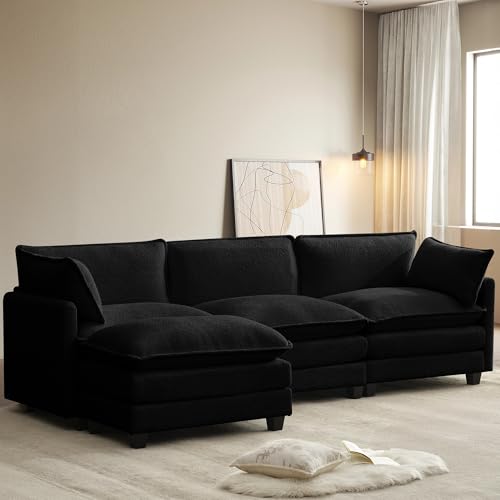
ROWHY 112'' Modular Sectional Cloud Couch with Movable Ottoman, 4 Seat Modern Chenille Sofa, Deep Seat L Shaped Couch for Living Room Bedroom Apartment,Jet Black
Check price on AmazonFinal Thoughts
A deep seat modular couch is a long-term furnishing decision, not a quick purchase. Focus on seat depth that fits your body and habits, a configuration that respects your room's walkways, and upholstery that matches your household's reality. When those three align, the couch becomes the most-used, most-relaxed seat in the home — and the modular format keeps it useful as your space and needs change.