
Modular Couches: The Complete Buying Guide
Discover how configurable sofa systems adapt to your space, your lifestyle, and your design taste. Learn the key differences between modular couches and fixed sectionals, and find the right setup for your living room.
Explore the GuideWhy modular? A modular couch is built from separate, interchangeable pieces that connect together. You can rearrange seats, add a chaise, remove an ottoman, or split the unit into two smaller seating groups when your room changes. This flexibility is the defining advantage over a traditional one-piece sofa or sectional.
What You Will Learn on This Page
- How modular couch systems differ from fixed sectionals and standard sofas
- The main types of modules and how they connect
- How to choose the right configuration for small, medium, and large rooms
- Upholstery options, frame construction, and tier-level differences
- Practical layout advice and maintenance tips
- Common questions answered before you commit to a modular system
Recommended Modular Couches
⚠️ AFFILIATE DISCLOSURE: This website contains affiliate links. As an affiliate Associate, we earn from qualifying purchases. If you make a purchase through these links, we may receive a small commission at no additional cost to you. Read our full affiliate policy.

Korser 108" L-Shaped Modular Sectional Sofa with Chaise, Boneless Comfy Corduroy Fluffy Couch with Deep Seat and Side Pockets, Flexible Module Combination for Living Room, No Assembly, Side Pockets
Check price on Amazon
Cloud Sectional Boneless Couch, L-Shaped Modular Couch, Dark Grey | Deep Seat, Supportive Backrest, Plush Corduroy, Left-Facing Modular, Family-Friendly Comfort, Apartment Use, No Assembly
Check price on Amazon
108'' Modular Sectional Sleeper Sofa Couches for Living Room, Dark Grey | L/U Shaped Sleeper Sofa, Pull Out Couch Bed, Hidden Storage, Modular Design, Comfy Corduroy, Removable Cover, Movable Ottoman
Check price on Amazon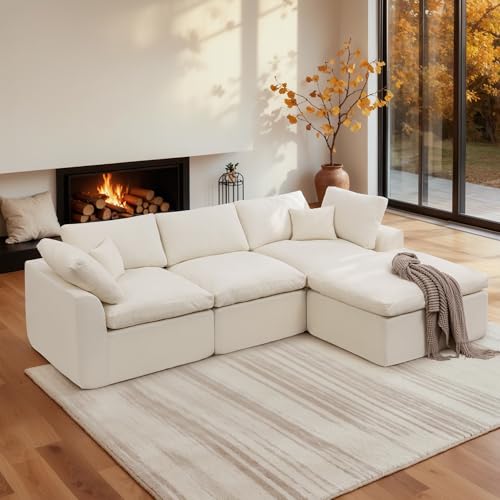
Korser 110" Cloud Sectional Couches for Living Room, Modern Modular Sectional Sofa with Ottoman, Boneless Cloud Couch with Comfy Deep Seats, Fluffy Chenille L-Shape Sofa Couch for Living Room, Beige
Check price on Amazon
MONVANE Modular Sectional Cloud Couch for Living Room - 130'' 6 Seater Convertible Chenille Couches Set with Ottoman, No Assembly Compression Sofas, Comfy Floor Sofa with Memory Foam, Grey
Check price on Amazon
Marsail 110" Modular Sectional Sleeper Sofa, Pull Out Sofa Bed with Storage | 7 Seat Comfy Cloud Sofas for Living Room, Chenille Sectional Couches with USB Ports & Cup Holders, Dark Gray
Check price on Amazon
Modular Sectional Cloud Couch, 140" U Shaped Sofa Couches for Living Room | Elegant Chenille, Cozy Armrest Support, Solid Construction, Effortless Assembly, Spacious Seating, Modern Look, Dark Gray
Check price on Amazon
GRUSIGN Cloud Sectional Boneless Couches for Living Room, Modular L Shaped Couch with Deep Seat Oversized Right Facing Chaise, Memory Foam Compressed Spineless 3 Seater Sofa for Apartment, Black
Check price on AmazonWhat Is a Modular Couch?
A modular couch is a seating system assembled from individual components — typically seat bases, corner units, armrests, backrests, chaise sections, and ottomans. Each piece locks or rests against its neighbor, forming a continuous sofa surface. Unlike a fixed sectional, a modular couch can be disassembled, rearranged, and expanded over time.
The core idea is adaptability. If you move to a new home, host more guests, or simply want a fresh layout, you reconfigure the modules rather than replacing the entire sofa. Many buyers start with a three-seat configuration and later add a corner or chaise as their needs evolve. For a deeper look at how these systems differ from fixed options, see our overview of modular couch systems and modular couches.
Modular designs also solve a practical delivery problem: large sectionals often cannot fit through narrow hallways or stairwells, while individual modules can be carried in piece by piece and assembled on site. That makes them a strong choice for apartments, townhouses, and rooms with tricky access.
Modular Couch vs. Sectional Sofa: Key Differences
The terms are sometimes used interchangeably, but they describe different construction approaches:
- Modular couch: Separate pieces connected by brackets, latches, or gravity alignment. Reconfigurable and expandable. Typically shipped in multiple boxes.
- Fixed sectional: A single welded or glued frame shaped into an L or U. Stable and seamless, but locked into one layout and harder to move.
- Standard sofa: A single fixed frame with two or three seats and no configurable elements.
If you need to fit seating around a corner, through a doorway, or into a room that may change function later, a modular couch offers more long-term flexibility. If you prefer a seamless, furniture-grade silhouette with no visible seams between pieces, a fixed sectional may be the better fit. Our sectional sofas guide covers fixed configurations in detail.
Types of Modular Couch Modules
Seat Module
The core building block. A single seat base with a backrest, usually 26–34 inches wide. Two seats form a loveseat; three form a standard sofa.
Corner Module
Angled piece that turns a straight run of seats into an L-shape. Essential for wrapping seating around a room corner or defining a conversation zone.
Chaise Module
Extended seat depth for lounging. Often used at the end of an L-shaped arrangement or paired with a corner to create a daybed-style section.
Ottoman Module
Backless seat that doubles as a footrest, coffee table substitute, or extra guest seating. Usually the most movable piece in the system.
Armrest / End Cap
Finishes the exposed end of a run. Some systems allow armless ends for a cleaner, more open look or to join two seating groups.
Sleeper Module
Optional pull-out or fold-down piece that converts part of the couch into a sleeping surface. Available on select mid-range and premium systems.
Most systems let you combine these modules freely, but connector compatibility matters: pieces from different product lines usually will not join securely. When planning an expansion, confirm that the manufacturer still produces matching modules in the same fabric and frame specification. Deep-seat variants are popular for lounging, and our guide to the deep seat modular couch explains how depth affects comfort and room planning.
How to Choose a Modular Couch
1. Measure Your Room and Access Path
Start with the room's usable floor area, then subtract walkways of at least 30 inches. A modular couch can be shaped around obstacles, but each module still needs clearance. Also measure doorways, hallways, and stair turns — the advantage of modular construction is that individual boxes are smaller, but a chaise module can still be bulky.
2. Decide on a Starting Configuration
Think in terms of how you actually use the room:
- Small living rooms: Start with two seats plus an ottoman, or a two-seat module with one corner. Add pieces later if space allows.
- Medium rooms: A three-seat run with a corner and chaise creates a classic L-shaped layout that seats four to five.
- Large or open-plan rooms: Combine multiple runs, add a second corner, or create two facing seating groups. Modular systems excel at defining zones in open floor plans.
If you are working with a compact footprint, our L-shaped couch for small space guide offers layout ideas that translate directly to modular setups.
3. Check Frame and Connector Quality
The frame determines how stable the assembled couch feels. Entry-level modular couches often use plywood or particleboard frames with simple gravity alignment. Mid-range systems typically use kiln-dried hardwood or engineered hardwood with metal connector brackets. Premium and luxury systems add reinforced steel plates, anti-slip pads, and tighter machining tolerances so the assembled couch feels like one piece.
If stability is a priority — especially in households with kids or pets — look for systems that use metal-on-metal connectors rather than plastic clips. A durable couch frame is a long-term investment that pays off in fewer squeaks and less sagging over time.
4. Choose Upholstery That Suits Your Household
Because modular pieces are exposed to more handling and rearrangement, upholstery durability matters. Consider:
- Performance fabric: Tight-weave synthetics that resist spills and staining. Popular for family rooms and pet-friendly homes.
- Cotton and linen blends: Breathable and textured, but more prone to wrinkling and staining. Best for low-traffic formal spaces.
- Leather and top-grain leather: Easy to wipe clean and develops a patina over time. A strong option if you want a consistent look across add-on modules years later.
- Velvet and chenille: Soft and visually rich, but require more careful maintenance.
Whatever you choose, confirm that the fabric is still available for future module purchases. Discontinued upholstery is the most common reason modular owners cannot expand their system later. Our leather sofas guide and performance fabric sofas guide go deeper on material trade-offs.
5. Plan for Cushion Comfort and Maintenance
Seat cushions on modular couches are usually removable, which makes cleaning and replacement easier. Foam densities vary: entry-level cushions may soften quickly, while mid-range and premium cushions use higher-density foam or foam wrapped in fiber for a balance of support and softness. Down-filled cushions feel plush but need regular fluffing. If you want to upgrade later, down-filled couch cushions and replacement couch cushions are practical options for extending the life of a modular system.
Tier Guide: What to Expect at Each Level
Modular couches span a wide range of construction quality. Use this tier framework to compare systems on features rather than on any single number:
| Tier | Frame & Connectors | Best For |
|---|---|---|
| Entry-level | Plywood or particleboard frame, simple gravity alignment or plastic clips | Occasional use, rentals, first apartments, budget-conscious setups |
| Mid-range | Kiln-dried hardwood or engineered hardwood, metal brackets, anti-slip pads | Daily family use, pet households, rooms where the couch is rearranged occasionally |
| Premium | Solid hardwood, reinforced steel connector plates, tight tolerances | Frequent reconfiguration, large open-plan layouts, long-term ownership |
| Luxury | Furniture-grade hardwood, precision-machined connectors, premium upholstery with long availability commitments | Design-led interiors, formal living rooms, buyers planning multi-year expansion |
Mid-range systems usually offer the strongest balance: connectors feel secure, cushions hold their shape, and the upholstery selection is broad enough for most design schemes. Entry-level systems can work well in secondary rooms or short-term setups, while premium and luxury tiers justify themselves when the couch is a centerpiece used daily for years.
Layout Ideas for Modular Couches
Modular seating rewards a little planning. Here are proven arrangements:
- L-shape with chaise: Three seats plus a corner and chaise. Classic for TV rooms and open living areas; the chaise provides a lounging spot without blocking traffic.
- U-shape conversation zone: Two facing runs joined by a corner. Effective in large rooms where the goal is face-to-face conversation rather than screen viewing.
- Two facing sofas: Split a modular system into two loveseat-sized groups facing each other. Works well in narrow rooms and formal sitting areas.
- Sofa plus floating ottoman: A straight run of seats with a movable ottoman. The ottoman doubles as a footrest, extra seat, or surface for a tray.
For rooms with a television as the focal point, arrange the main run parallel to the screen and use a corner module to wrap seating toward the center of the room. Our TV viewing layout guide covers sightline distances and walkway planning in more detail. If you are designing around a larger sectional footprint, see designing a living room with a sectional for zone-planning principles that apply equally to modular configurations.
Modular Couches for Specific Spaces
Small Apartments and Studios
Start with a compact configuration — two seats plus an ottoman, or a single seat plus corner and chaise. Keep at least one armless end so the couch can sit flush against a wall. Modular pieces can also be split between rooms if your needs change. Our apartment sofas guide and mini couch for room page offer complementary sizing advice.
Family Living Rooms
Choose a mid-range system with performance upholstery and metal connectors. A three-seat run with a corner and a large ottoman handles daily use and movie nights. If guests stay over, consider a system with a modular couch that turns into a bed module. Families with pets should also review pet damage prevention and durable couch guidance.
Open-Plan and Large Rooms
Modular systems shine in open floor plans because they can create visual boundaries without walls. A long run with two corners can separate a living zone from a dining area. For very large spaces, a large sectional couch configuration built from modules gives you the same footprint with the option to reconfigure later.
Care and Maintenance for Modular Couches
Modular construction makes routine care easier because you can remove and clean individual cushions and vacuum under each module. Key habits:
- Vacuum upholstery every two to four weeks with a soft brush attachment.
- Rotate seat cushions monthly to distribute wear evenly.
- Check connector brackets every few months and tighten any loose hardware.
- Clean spills promptly with a fabric-appropriate method; our fabric cleaning guide covers common upholstery types.
- Keep the couch out of direct sunlight to slow fading, especially on natural fibers.
For deeper cleaning, professional services can handle the whole system or individual modules. See getting a couch professionally cleaned for what to expect.
Frequently Asked Questions
What is a modular couch?
A modular couch is a sofa built from separate interchangeable pieces such as seats, corner units, chaise sections, and ottomans. These components connect through brackets, latches, or simple gravity alignment, letting you rearrange the configuration whenever your space or needs change.
Are modular couches good for small spaces?
Yes. Modular couches work well in compact rooms because you can start with only the pieces that fit and expand later. Corner and chaise modules let you shape the seating around doors, windows, and walkways rather than forcing a fixed frame into an awkward footprint.
How do modular couch pieces stay connected?
Most modular couches use metal brackets, interlocking latches, or hidden connectors that join the frames underneath the cushions. Higher-tier systems typically use reinforced connector plates and anti-slip pads, while entry-level models may rely on simpler gravity-based alignment.
Can a modular couch be used as a bed?
Many modular systems include optional sleeper modules or deep-seat configurations that convert into a sleeping surface. Check whether the frame depth and cushion firmness are designed for overnight use, since not every modular couch is intended for regular sleeping.
What upholstery works best for modular couches?
Performance fabrics and tight-weave synthetics are popular for modular couches because they resist spills and pet wear while keeping a consistent look across replacement or add-on modules. Leather and top-grain options suit households wanting a more formal, easy-wipe surface.
Can I add modules to my couch later?
Usually yes, but only if the manufacturer still produces compatible modules in the same frame specification and upholstery. Before buying, ask how long the product line and fabric are expected to remain available. Discontinued upholstery is the most common obstacle to future expansion.
Ready to Configure Your Modular Couch?
Browse our recommended modular couch options above, compare features across tiers, and choose the configuration that fits your room and lifestyle.
View Recommended Modular Couches