
Futon Couch: The Complete Buying Guide
Everything you need to choose a futon couch that fits your space, your guests, and your daily life — from frame construction and cushion quality to sizing and layout.
START READINGWhy futons deserve a second look: A futon couch is one of the few pieces of furniture that genuinely earns its footprint. It seats your guests during the day, sleeps them at night, and folds away when the room needs to breathe. This guide walks through what separates a well-built futon from a wobbly one, so you can shop with confidence.
What Is a Futon Couch, Exactly?
A futon couch is a convertible seating piece built around a folding frame and a single padded mattress. The frame hinges in the middle: upright, it functions as a sofa; laid flat, it becomes a bed. Unlike a traditional futon, which often sits low to the floor in a Japanese-inspired style, the modern futon couch borrows the silhouette of a conventional sofa and adds a fold-down mechanism for overnight guests.
The category sits somewhere between a sofa and a bed, which is precisely why it confuses so many shoppers. It is not a fold-out futon couch with a hidden mattress compartment, and it is not a conventional full sleeper sofa with a steel pull-out mechanism. Instead, the mattress itself is the seat and the bed — the frame simply changes its orientation. That single design choice explains both the futon's practical appeal and its trade-offs.
If you are furnishing a studio, a guest room, a home office that occasionally hosts visitors, or a first apartment, a futon couch solves a real problem: it lets one footprint do two jobs. The rest of this guide explains how to choose one that does those jobs well.
How a Futon Couch Works: Frame, Mattress, Mechanism
Every futon couch is a three-part system. Understanding each part separately is the fastest way to evaluate a specific model.
1. The Frame
The frame carries the entire load — your body weight, the mattress, and the repeated stress of folding and unfolding. This is where entry-level and mid-range futons diverge most sharply. Starter tier frames often use softwoods or thin metal tubing; they may feel acceptable in the showroom but develop creaks and loosened joints after a year of daily use. Mid-range and premium frames typically use solid hardwood such as oak or ash, or heavier-gauge steel with reinforced welded joints.
Look for a hardwood frame couch construction if the futon will be used daily. If the frame has a slatted base, check that the slats are thick, closely spaced, and secured at both ends — thin, widely spaced slats are the first thing to fail on a lighter-duty model. For a deeper dive into frame integrity, our guide to futon couch frames covers joint types and load ratings in detail.
2. The Mattress and Cushion
The mattress is the futon's comfort engine. Thickness matters, but construction matters more. Entry-level futon mattresses are often a single block of foam wrapped in fabric; they feel firm at first and compress unevenly over time. Mid-range and high-end tier models typically layer cotton batting, high-density foam, and sometimes pocket springs or latex for better pressure relief and shape retention. Our article on futon couch cushions explains the layered constructions and which ones hold up to nightly sleeping versus occasional lounging.
A useful rule of thumb: the more often the futon will be slept on, the more you should prioritize mattress construction over frame aesthetics. A premium mattress on a mid-range frame will deliver better sleep than the reverse.
3. The Folding Mechanism
The hinge is the futon's defining component. Basic models use a simple pin-and-lock hinge that requires you to lift and reposition the frame manually. Better models use a click-clack mechanism with multiple locking positions — a flat position for sleeping, an upright position for sitting, and often one or two reclined positions in between. Premium futons may use gas-assist or ratchet-style mechanisms that make the transition smoother and safer.
Always test the mechanism in person if possible, or read reviews that specifically mention the hinge after months of use. A stiff hinge is an inconvenience; a hinge that fails to lock is a safety issue.
Futon Couch Types and Configurations
Futons are not a single product category. The configuration you choose should follow from how the room will actually be used.
Standard Futon Couch
The classic two-position design: upright for seating, flat for sleeping. This is the most common configuration and the best starting point for most buyers. It suits guest rooms, home offices, and living rooms where the futon serves as a secondary seat.
Futon Sectional Couch
A futon sectional couch pairs a folding futon with a chaise or corner extension, giving you more seating area and a more substantial living-room presence. These work well in larger studios and open-plan spaces where a standard futon might look undersized. The trade-off is a larger footprint and a heavier frame that is harder to reposition.
Futon Style Couch
A futon style couch borrows the visual language of a futon — low arms, simple lines, a mattress-style seat — but may not fold flat. These are a good fit for buyers who like the aesthetic but only need occasional lounging rather than overnight sleeping.
Fold-Out and Floor Variants
Beyond the standard frame, there are related convertible formats worth knowing. A fold-out couch may use a different mechanism than a true futon, and a folding floor couch sits directly on the floor for a more casual, low-profile look. If you are working with a very small room, a floor couch arrangement can free up visual space, though it changes the ergonomics of sitting and standing.
Futon Couch Sizing: What Fits Your Room and Your Guests
Futon sizing is where many buyers make costly mistakes. A futon that is too large for the room becomes an obstacle; one that is too small fails as a guest bed. Measure the room and the intended sleeping area before you shop.
| Size | Best For | Sleeping Capacity | Space Consideration |
|---|---|---|---|
| Chair / Lounger | Reading nooks, studios with limited floor area | One child or occasional nap use | Smallest footprint; fits against a wall |
| Twin | Guest rooms, kids' rooms, home offices | One adult comfortably | Moderate; often fits along a single wall |
| Full | Primary guest sleeping, couples, apartments | One adult very comfortably; two adults snugly | Requires more depth when folded flat |
| Queen | Primary sleeping space, larger guest rooms | Two adults comfortably | Largest footprint; verify door clearances |
Two measurements matter most: the futon's footprint when upright (for day-to-day placement) and its depth when folded flat (for sleeping). A full-size futon folded flat can extend well into the room, so check that the sleeping position does not block a doorway, closet, or walkway. If you are specifically shopping for a full-size sleeping surface, our guide to the full size pull out couch format compares futon and pull-out dimensions side by side.
How to Evaluate a Futon Couch Before You Buy
Because futon quality varies so widely, a structured evaluation prevents surprises. Work through these criteria in order.
Frame Integrity and Joint Construction
Ask what the frame is made of and how the joints are secured. Bolted hardwood frames with metal corner brackets are the most reliable construction for daily use. Welded metal frames are strong but check for powder-coat finishes that resist rust over time. Avoid frames where the slats flex noticeably under hand pressure.
Mattress Construction and Thickness
Confirm the mattress thickness and internal layers. A futon intended for regular sleeping should generally be at least six inches thick with a layered construction. If the mattress is a single foam block with no batting or spring layer, treat it as a lounging futon rather than a guest bed.
Mechanism Quality and Safety
Test the fold and unfold motion. The hinge should lock firmly in both positions without requiring excessive force. If shopping online, look for reviews that mention the mechanism after several months of ownership — that is where weak designs reveal themselves.
Fabric and Cover Durability
Futon covers take heavy wear because the same surface is used for sitting and sleeping. Removable, washable covers are a significant practical advantage. For households with pets or children, performance fabrics or tightly woven upholstery resist snags and stains better than loose weaves.
Tier Positioning
Futons fall into clear market tiers. Entry-level futons suit occasional use in low-traffic rooms. Mid-range futons typically combine a hardwood or reinforced metal frame with a layered mattress and a multi-position hinge, making them the balanced choice for most households. Premium and high-end tier futons use solid hardwood, denser mattress layers, and smoother mechanisms for daily convertible use. Luxury-tier models may include custom upholstery and platform-style designs. Match the tier to how often the futon will actually be converted.
Futon Couch Layout Ideas for Small Spaces
A futon's value depends heavily on placement. Because it converts, it needs clearance in two states — upright and flat. Plan for both before you commit to a position.
Against the longest wall: The default and often the best choice. It keeps the folded-flat footprint directed into open floor area rather than toward a doorway. Pair it with a slim console or a floor lamp to define the seating zone.
Perpendicular to a window: Angling the futon so its back runs toward a window creates a natural room divider in a studio. Just confirm the folded-flat position does not block radiator or vent airflow.
In a guest room or home office: Position the futon so the folded-flat orientation runs parallel to the room's longest dimension. This preserves walking space and makes the conversion feel less disruptive. Pair it with a small side table that can double as a nightstand when guests stay.
In a narrow room: Choose a twin or chair-size futon and place it along the short wall. A folding floor couch can work in very tight spaces, but be honest about whether low seating suits your household's mobility and comfort needs.
For rooms where the futon will also anchor a media area, coordinate placement with your gaming setup or television viewing angle so the folded-flat position does not intrude on the screen sightline.
Futon Couch Care and Maintenance
A futon that is maintained properly will outlast one that is simply folded and forgotten. The routine is simple but consistent.
Rotate and flip the mattress: Futon mattresses compress where you sit most. Rotating the mattress every few weeks and flipping it periodically distributes wear and extends its usable life.
Clean the cover regularly: Vacuum the fabric surface monthly and spot clean spills promptly with a cleaner suited to the cover material. If the cover is removable, wash it according to its care label. For stubborn stains or deep odors, professional upholstery cleaning is worth considering — our guide to getting a couch professionally cleaned explains what to expect.
Inspect the frame and mechanism: Tighten bolts and check hinge alignment every few months. If the frame develops a wobble, address it early — a loose joint puts stress on neighboring joints and accelerates wear. Our frame repair guide covers common fixes for creaking and loosening.
Protect against moisture and sun: Keep the futon out of direct, prolonged sunlight to prevent fabric fading, and avoid placing it against a damp exterior wall. If the futon is in a basement or humid room, air it out periodically to prevent musty odors.
Who Should Buy a Futon Couch — and Who Should Not
A futon is an excellent fit for renters, studio dwellers, guest-room hosts, and anyone furnishing a space that needs to serve two functions. It is also a practical choice for a home office that hosts overnight visitors a few times a year, or a first apartment where a dedicated guest bed is out of reach.
It is a weaker fit for households that need a primary sofa for daily family lounging and a separate bed for regular overnight guests. In those cases, a dedicated full sleeper sofa or a fold out couch bed queen configuration may offer better long-term comfort. Similarly, if the futon will be slept on nightly by an adult, prioritize mattress quality above all else and consider a dedicated mattress upgrade.
If you are comparing convertible formats more broadly, our guides to the fold out couch and the foam couch bed explain how their mechanisms and comfort profiles differ from a futon's.
Frequently Asked Questions About Futon Couches
What is a futon couch and how does it differ from a sleeper sofa?
A futon couch uses a folding frame and a single padded mattress that converts from seating to sleeping position. A sleeper sofa hides a separate mattress inside a traditional sofa body. Futons tend to have simpler mechanisms and a more utilitarian design, while sleeper sofas offer upholstered comfort and a mattress that folds out from within.
What frame materials are best for a futon couch?
Solid hardwood frames, particularly oak or ash, offer the most durable construction and resist wobbling over time. Reinforced metal frames are also strong and suited to heavier daily use. Entry-level frames frequently use softer woods or thinner metal tubing and may develop creaking or looseness faster.
How thick should a futon mattress be for comfortable sleeping?
A futon mattress of around six to eight inches typically balances comfort and support for occasional sleeping. Thinner mattresses suit occasional lounging but may feel firm for overnight guests. Premium and high-end tier futon mattresses often use layered foam and cotton batting for better pressure distribution.
Can a futon couch work in a small apartment?
Yes. Futon couches are popular in small apartments because they serve as both seating and an occasional bed without requiring a separate guest room. A full-size futon in a studio can replace a sofa and a guest bed, freeing up floor area when folded into the seating position.
How do I maintain and clean a futon couch?
Rotate and flip the futon mattress regularly to distribute wear, vacuum the fabric surface periodically, and spot clean stains with a mild upholstery cleaner suited to the cover material. Check the frame bolts and joints every few months and tighten them as needed.
Is a futon couch comfortable enough for daily sleeping?
It can be, provided you choose a mid-range or higher model with a layered mattress of adequate thickness and a solid frame. Entry-level futons are generally better suited to occasional sleeping. If nightly sleep is the primary use, treat the mattress as the most important purchase decision.
Final Thoughts: Choosing the Right Futon Couch
The best futon couch is the one that matches your actual routine. If it will spend most of its life as a sofa and occasionally host a guest, a mid-range futon with a solid frame and a removable cover is a sensible, long-term investment. If it will be slept on frequently, prioritize the mattress and the mechanism above all else. And if the room is tight, choose your size first and your style second — a well-placed twin futon will serve you better than an oversized full that crowds the space.
Use the criteria in this guide as a checklist when you compare models: frame material and joint construction, mattress thickness and layering, mechanism quality, and cover durability. Those four factors, more than any aesthetic detail, determine whether a futon couch becomes a beloved space-saver or a piece you regret.
Recommended Futon Couches
⚠️ AFFILIATE DISCLOSURE: This website contains affiliate links. As an affiliate Associate, we earn from qualifying purchases. If you make a purchase through these links, we may receive a small commission at no additional cost to you. Read our full affiliate policy.
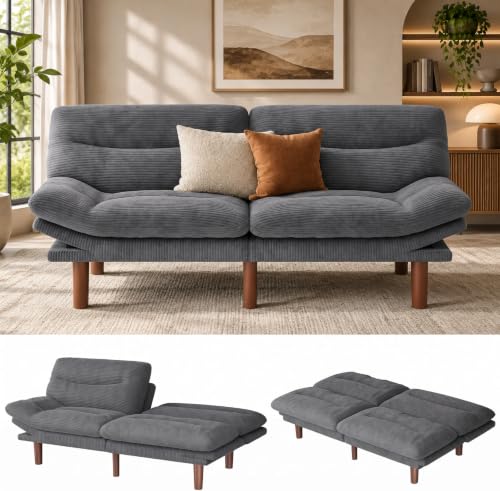
Marsail Futon Sofa Bed, Small Convertible Loveseat Couch, Grey | 66" Versatile 2-in-1 Sleeper Couch with Adjustable Backrest & Armrest, Corduroy Futon Couch for Small Apartment & Living Room
Check price on Amazon
Flamaker Futon Sofa Bed, Black Faux Leather Convertible Loveseat Couch | Modern Adjustable Folding Futon Set with 2 Cup Holders & Removable Armrests, Recliner Lounge for Living Room & Apartment
Check price on Amazon
Marsail Futon Sofa Bed, Small Convertible Loveseat Couch, Black | 66" Versatile 2-in-1 Sleeper Couch with Adjustable Backrest & Armrest, Corduroy Futon Couch for Small Apartment & Living Room
Check price on Amazon
Meilocar 64" Futon Sofa Bed, Small Loveseat, Cup Holders, Black | Small Couch with 3 Adjustable Angles, Removable Armrests, Small Sofa for Apartment, 5.3 FT
Check price on Amazon
COMAX Boneless Futon Sofa Bed, 59" Small Low-Profile Floor Couch, Black | 11.8 In Seat Height, Convertible Loveseat, Folding Couch Bed, Sleepover Bed, Dorm or Bedroom Sofa, Folding Floor Bed
Check price on Amazon
Mr IRONSTONE Folding Sofa Bed Couch with 2 Pillows, 2-Person Convertible Futon Floor Sofa Recliner with Armrests, Foldable Sleeper Couch for Living Room, Bedroom, Dorm, White
Check price on Amazon
65'' Convertible Futon Sofa Bed with USB, Small Couch for Living Room | Sleeper Sofa, Adjustable Folding Couch with Tufted Design and 2 USB Ports, Bedroom Apartment Office, Dark Grey
Check price on Amazon