
L Shaped Couch with Recliner and Pull Out Bed: The Complete Buyer's Guide
One piece of furniture, three functions. Learn how to evaluate layouts, reclining mechanisms, sleeper systems, and upholstery so you can choose a multi-function sectional that fits your room and your lifestyle.
Why this configuration deserves careful research: An L shaped couch with a recliner and a pull out bed sits at the intersection of three different engineering systems. The frame must support both a reclining seat and a folding bed mechanism, the cushioning must stay comfortable in both seated and sleeping modes, and the layout must work for everyday traffic as well as overnight guests. Buyers who understand these trade-offs before shopping make far better decisions than those who compare fabric swatches alone.
What Exactly Is an L Shaped Couch with Recliner and Pull Out Bed?
This category combines three features into a single sectional footprint. The L shaped couch forms a corner seating arrangement, usually with a longer main section and a chaise or return section. The recliner adds at least one seat that tilts backward and raises a footrest, either manually with a lever or electronically with a motor. The pull out bed hides a folding mattress and metal frame beneath the seat cushions, unfolding into a sleeping surface for guests.
In practice, most models on the market are sold as a l shaped couch with recliner that also includes a sleeper mechanism, or as an l shaped sectional couch with pull out bed that includes at least one reclining seat. The terminology varies between retailers, so always confirm that the specific configuration includes all three functions before ordering.
Buyers often arrive at this category after searching for related configurations such as an l shaped couch with sofa bed or an l shaped couch with fold out bed. These are closely related, and the differences usually come down to the bed mechanism style and whether the recliner is manual or powered.
Why This Multi-Function Layout Works So Well
A standard sofa does one job. An L shaped reclining sleeper does several, and that flexibility is the main reason buyers gravitate toward it. The corner layout makes efficient use of a living room wall and corner, while the recliner supports daily relaxation and the sleeper handles occasional guests without a dedicated guest room.
- Space efficiency: The L shape uses a corner that would otherwise be dead space, and the bed eliminates the need for a separate guest mattress. If your room is tight, review l shaped couch for small space layouts before choosing dimensions.
- Everyday comfort: Reclining seats are ideal for movie nights, reading, and recovery after long days. A powered recliner is especially helpful for older users or anyone with mobility limitations.
- Guest readiness: A pull out bed means overnight visitors have a proper sleeping surface without inflatable mattresses or floor space compromises.
- Anchoring the room: A large L shaped piece gives the living room a clear focal point and defines the conversation zone. For broader layout guidance, see l shaped couch for living room.
If your priority is the sleeping function above all else, compare this configuration with a dedicated l shaped couch bed or an l shaped couch with hide a bed, which sometimes offer a larger mattress in exchange for fewer reclining seats.
Understanding the Recliner Mechanism
The recliner is the component most likely to shape your daily experience, so it deserves more attention than the fabric sample. There are two main systems.
Manual Recliners
Manual mechanisms use a lever or a push-back motion to recline. They are simpler, have fewer electronic parts that can fail, and are generally easier to maintain over time. The trade-off is that the motion can feel less smooth than a powered mechanism, and reaching the lever may be awkward for users with limited mobility.
Power Recliners
Power recliners use a motor and a button or switch, often with USB charging ports built into the control panel. They offer smoother motion, precise positioning, and easier operation. Higher-tier models sometimes add power headrests and lumbar support. The main considerations are the need for a nearby power outlet and the long-term reliability of the motor and wiring.
Wall clearance matters: A traditional recliner needs several inches of space behind it to lean back. If you plan to place the couch near a wall, look for a wall-hugger or zero-wall mechanism, which reclines with minimal rear clearance. This detail is easy to overlook until the couch is already in the room.
For buyers comparing upholstery options within this category, the l shaped couch with recliners leather configuration is worth reviewing, since leather behaves differently from fabric around moving mechanisms and seams.
How the Pull Out Bed Works and What to Check
Pull out bed systems in sectionals generally fall into three types. Understanding the differences helps you match the couch to how often guests will actually sleep on it.
- Fold-out metal frame with mattress: The most common design. The seat cushions lift or slide, and a metal frame unfolds with a mattress attached. Mattress thickness and frame reinforcement are the key quality indicators.
- Pull-out trundle-style bed: A lower bed frame slides outward from beneath the seating area. These are often easier to operate but may offer a thinner sleeping surface.
- Pop-up or fold-up bed: Less common in large sectionals, but found in some compact designs. The sleeping surface rises or unfolds from the seat base.
When evaluating a sleeper mechanism, check the mattress thickness and density, the gauge of the metal frame, and whether the mechanism has a locking safety feature. A mid-range model usually offers a noticeably sturdier frame and a thicker mattress than an entry-level design, which translates into better support for adult guests. If you want to compare similar mechanisms in related layouts, review the l shaped sectional couch with pull out bed options as well.
Also confirm the deployed bed dimensions. A queen-size pull out bed needs substantially more open floor space than the couch's closed footprint, so measure the room with the bed extended before committing. For related sleeping configurations, see l shaped couch that turns into a bed.
Sizes, Layouts, and Room Fit
An L shaped reclining sleeper is a large piece of furniture, and the most common buying mistake is underestimating the required floor area. The table below summarizes typical categories rather than exact dimensions, since measurements vary by manufacturer.
| Tier / Category | Typical Footprint | Best For | Key Considerations |
|---|---|---|---|
| Compact / starter tier | Smaller L shape with one recliner and a compact sleeper | Apartments, small living rooms, first-time buyers | Verify bed size and recliner clearance; sleeping surface may suit shorter stays |
| Mid-range / balanced tier | Standard L shape with one or two recliners and a queen sleeper | Family living rooms, regular guest use | Better frame reinforcement, thicker mattress, smoother recline motion |
| Premium / high-end tier | Large L shape with multiple powered recliners and upgraded sleeper | Open floor plans, dedicated entertainment rooms | Power headrests, wall-hugger mechanisms, performance upholstery |
| Luxury / flagship tier | Oversized L shape with full power seating and premium sleeper system | Large rooms, households that host frequently | Top-grain leather, reinforced commercial-grade frame, high-density foam |
Before finalizing a size, map the couch footprint on your floor with painter's tape, including the chaise return and the full extended bed area. Pay attention to walkway widths, door swing clearance, and the position of heating vents. If you need help determining proportions, the guide on how big should my couch be walks through the measurement process.
For rooms where the L shape risks overwhelming the space, compare with an l shaped sectional for small living room configuration, which typically uses a shorter chaise and a more compact recliner footprint.
Upholstery and Frame Materials
Because this couch includes moving parts, the upholstery and frame need to handle friction, folding, and repeated reclining. The material choice affects durability, cleaning, and how the couch feels in both seated and sleeping modes.
Performance Fabric
Performance fabrics are engineered to resist stains, moisture, and abrasion. They are a practical choice for households with children or pets, and they clean more easily than conventional woven fabrics. The trade-off is that some performance fabrics feel slightly firmer than natural fibers.
Leather
Top-grain leather is durable and develops a patina over time, but it requires conditioning and is susceptible to scratches from pets. Leather also feels cooler in summer and warmer in winter, which some users prefer. Bonded leather is a lower-tier option and generally less durable around seams and high-friction areas.
Velvet and Woven Fabrics
Velvet offers a rich look but shows crushing and marks around recliner mechanisms. Woven fabrics vary widely in durability; check the abrasion rating and whether the fabric is treated for stain resistance. If you are comparing fabric types more broadly, the guide on is polyester a good couch fabric covers the practical differences.
Frame Construction
Look for kiln-dried hardwood or high-grade engineered wood frames with reinforced corner blocks. A sleeper mechanism places extra stress on the frame, so a solid build is not optional. Entry-level models sometimes use lighter frames that flex over time, while mid-range and premium models typically reinforce the sleeper cavity and recliner mounting points.
Practical Buying Checklist
Use this checklist to evaluate any L shaped couch with recliner and pull out bed before you commit.
- Measure twice: Confirm the closed footprint, the deployed bed footprint, and the recline clearance. Tape the outline on the floor.
- Test the recline: Sit in every reclining seat and check the motion, footrest height, and head support. If possible, test a power model and a manual model side by side.
- Inspect the sleeper: Ask about mattress thickness and frame gauge. If buying in store, unfold the bed and lie on it.
- Check wall clearance: Confirm whether the recliner is a wall-hugger design or needs rear clearance.
- Review upholstery: Match the material to your household. Performance fabric and leather are the most practical for high-traffic homes.
- Confirm delivery access: Large sectionals often ship in multiple boxes or require doorway clearance checks. Review how to get a couch through a door if access is tight.
- Read the warranty: Pay attention to coverage for the recliner motor and the sleeper mechanism, since these are the components most likely to need service.
If this is your first large furniture purchase, the broader guides on how to buy a good couch and how to shop for a couch provide useful context on showroom testing and online ordering.
Related Configurations Worth Comparing
Buyers researching this category often compare several closely related layouts. Each has a slightly different balance of seating, sleeping, and storage.
- L shaped couch with recliner and chaise: emphasizes lounging over sleeping.
- L shaped couch with storage and pull out: adds hidden storage, useful for bedding and pillows.
- L shaped couch with storage and bed: combines storage with a sleeper surface.
- L shaped couch with cup holders: a practical addition for home theater setups.
- L shaped couch and recliner set: a matching set that includes a standalone recliner.
- L shaped couch with large ottoman: adds flexible seating and a surface for trays.
- L shaped couch with chaise lounge: prioritizes extended leg support.
- L shaped sectional couch with chaise: a common alternative layout without a sleeper.
If you are furnishing a larger room and want to coordinate additional seating, review the large l shaped sectional with chaise options, which often pair well with a matching recliner.
Recommended L Shaped Couch with Recliner and Pull Out Bed
⚠️ AFFILIATE DISCLOSURE: This website contains affiliate links. As an affiliate Associate, we earn from qualifying purchases. If you make a purchase through these links, we may receive a small commission at no additional cost to you. Read our full affiliate policy.

107.8'' Sleeper Sofa Bed Queen Size, Pull Out Couches for Living Room Black | Chenille Recliner L-Shaped Sofa with Storage Chaise, USB, Table and Cup Holder, 4-seater Sofa Fit for Movie Nights, Apartment
Check price on Amazon
107.8'' Sleeper Sofa Bed Queen Size, Pull Out Couches for Living Room Khaki | Chenille Recliner L-Shaped Sofa with Storage Chaise, USB, Table and Cup Holder, 4-seater Sofa Fit for Movie Nights, Apartment
Check price on Amazon
JOCISLAND 104" Sofa Bed, Sectional Sleeper Sofa with Pull Out Bed-Gray | U Shaped 7 Seat Sectional Couches for Living Room, Sleeper Sofa with Storage, Side Pockets & Plush Armrest Pillow
Check price on Amazon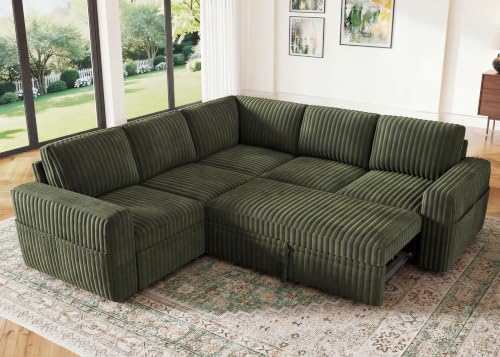
HONBAY Corduroy L Shaped Sectional Sleeper Sofa with Pull Out Bed,Green | modular design,built-In storage, couches for living room and apartment guest sleeping space,removable cushions
Check price on Amazon
107.8'' Sleeper Sofa Bed Queen Size, Pull Out Couches for Living Room, Gray | Chenille Recliner L-Shaped Sofa with Storage Chaise, USB, Table and Cup Holder, 4-seater Sofa Fit for Movie Nights, Apartment
Check price on Amazon
Ball & Cast 80" Sectional Sleeper Sofa Bed Pull Out Couches for Living Room | L Shaped Convertible Pull Out Sofa Bed with Storage Chaise, Foldable Table, USB Port, Cup Holder, Side Pocket for Small Space
Check price on Amazon
107.8'' Sleeper Sofa Bed Queen, Pull Out Couches for Living Room Moss Green | Chenille Recliner L-Shaped Sofa with Storage Chaise, USB, Table and Cup Holder, 4-seater Sofa Fit for Movie Nights, Apartment
Check price on AmazonFrequently Asked Questions
What is an L shaped couch with recliner and pull out bed?
It is a multi-function sectional that combines an L shaped corner layout, at least one reclining seat, and a pull out bed mechanism. The same piece serves as everyday seating, a lounging spot, and a guest sleeping surface.
How much floor space does an L shaped couch with recliner and pull out bed need?
Most models need roughly 100 to 130 inches along the long side and 60 to 90 inches along the chaise or return side. Add at least 18 to 24 inches of clearance in front of any reclining seat and leave enough open floor area for the bed to extend fully when deployed.
Is a pull out bed in a sectional comfortable for guests?
Pull out beds in mid-range and premium sectionals typically use a metal frame with a memory foam or innerspring mattress. Thicker mattresses with reinforced frames offer better support, while entry-level models may use thinner mattresses best suited for occasional short stays.
Can I place an L shaped reclining sleeper against a wall?
Yes, but you must choose a wall-hugger or zero-wall recliner mechanism. These designs let the seat recline with minimal rear clearance, so the couch can sit close to the wall without damaging the wall or blocking the recline motion.
Which upholstery works best for a multi-function couch with a bed?
Performance fabrics and top-grain leather are the most practical choices. They resist stains and wear, clean easily, and hold up well against the repeated friction of folding and unfolding the bed mechanism.