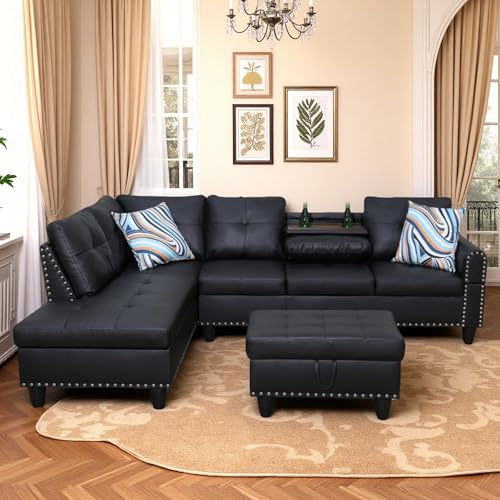
Why Choose an L Shaped Sectional for a Small Space?
Small living rooms present a familiar puzzle: you need comfortable seating for family and guests, but every extra piece of furniture eats into walkable floor area. An L shaped sectional solves this by combining a sofa and a chaise (or a sofa and a return) into one cohesive unit. Instead of two separate couches with a gap between them, you get a continuous seating arrangement that hugs the corner of the room.
The benefits go beyond floor space. A sectional creates a natural conversation zone, defines the living area in an open floor plan, and offers a lounge spot that doubles as a reading nook or a place to stretch out. For apartment dwellers, first-time homeowners, and anyone working with a compact footprint, a small L shaped couch is often the most efficient seating investment you can make.
If you are still comparing shapes, our guide to sectional L couch configurations breaks down how the chaise, return, and corner modules combine. And if you want to explore the broader category first, the types of couches for living room overview gives you a full map of the options.
Key Dimensions: What Actually Fits a Small Room
The most common mistake buyers make is choosing a sectional that is technically labeled "small" but still overwhelms the room. Before you shop, measure your space and keep these practical benchmarks in mind.
- Overall width: Look for sectionals measuring roughly 85 to 100 inches wide. Anything wider will dominate most small living rooms.
- Chaise depth: A chaise extending 60 to 65 inches from the back is comfortable without blocking the center of the room.
- Seat height and back height: Lower backs (under 32 inches) preserve sightlines and make the room feel taller.
- Leg clearance: Exposed legs — even short tapered ones — let the floor show through, which visually expands the space.
- Walkway clearance: Leave at least 30 inches between the sectional and any other furniture or doorway.
If your room is especially tight, a compact model such as a small corner couch may be an even better fit than a full sectional. And if you love the lounge potential of an L shape but want more flexibility, an L shaped futon couch offers convertible seating in a similarly compact footprint.
Quick Reference: Sizing Your Sectional
| Room Size | Recommended Sectional Width | Best Configuration |
|---|---|---|
| Under 150 sq ft | Up to 85 inches | Two-piece with reversible chaise |
| 150–200 sq ft | 85–95 inches | Two-piece L shape with corner wedge |
| 200–250 sq ft | 95–105 inches | Three-piece sectional with ottoman |
| 250+ sq ft | 105+ inches | Full modular or U-shaped options |
Layout Strategies That Make the Room Feel Bigger
Placement matters as much as size. A well-placed sectional can visually expand a room; a poorly placed one can make even a generous space feel cramped. Here are the layout strategies that consistently work in compact living rooms.
1. Float the Sectional Away from the Walls (When Possible)
In very small rooms, pushing the sectional against the wall is often unavoidable. But if you have even a few inches of breathing room, floating the sofa slightly forward creates depth and makes the room feel intentional rather than cramped. Use the space behind the sofa for a narrow console table or a slim bookshelf.
2. Anchor the Chaise in a Corner
The L shape naturally wraps a corner. Place the chaise end in the corner furthest from the main walkway, and let the longer section face the focal point (typically a TV, fireplace, or window). This keeps traffic flowing around the seating rather than through it.
3. Choose the Right Orientation
If your room is narrow, a right arm facing sectional with chaise may fit better than a left-arm version, depending on which wall is longer. Reversible chaise models remove the guesswork entirely and let you change orientation later.
4. Keep the Coffee Table Slim
A bulky coffee table will choke a small room. Choose a narrow oval or a nesting set that can be tucked away. Round shapes soften the hard lines of an L shaped sofa and improve traffic flow. For more ideas, explore living room furniture layouts that prioritize circulation.
5. Add a Modular Corner Sectional with Ottoman
If you want maximum flexibility, a modular corner sectional with ottoman lets you reconfigure the seating as your needs change — perfect for renters and growing families alike.
Materials and Upholstery for Compact Spaces
In a small room, every surface is visible and every texture counts. The right upholstery can make a compact sectional feel light and airy, while the wrong one can make it feel heavy and closed-in.
Light and Mid-Tone Fabrics
Lighter tones reflect natural light and make walls feel farther apart. If you love a neutral palette, explore cream couches or an off white sectional with recliner for a soft, spacious effect. For a cooler, more contemporary look, grey couches offer excellent versatility and hide everyday wear better than pure white.
Performance and Pet-Friendly Fabrics
Small spaces often mean shared spaces — including with pets and kids. A pet friendly couch with tight-weave performance fabric resists snags, stains, and odors. Pair it with pet covers for couch protection and waterproof sectional couch covers for pets for extra peace of mind.
Leather and Faux Leather
Leather is durable and easy to wipe clean, making it a strong choice for high-traffic small rooms. A reclining sectional with chaise leather adds function without adding visual clutter. If you prefer a softer look, velvet couches bring warmth and depth — just choose a low-pile velvet in a mid-tone to avoid overwhelming the room.
Features Worth Prioritizing in a Compact Sectional
Not every feature is essential, but some make a real difference in a small space. Use this checklist as your shopping framework.
Small-Space Sectional Checklist
- Reversible chaise: Lets you switch the L orientation without buying a new couch.
- Removable, washable covers: Essential for everyday life in a compact room.
- Low back height: Preserves sightlines and makes ceilings feel taller.
- Exposed legs: Allows floor to show through, visually expanding the room.
- Tight-back or bench cushions: Cleaner lines and less visual bulk than loose back pillows.
- Sleeper or pull-out function: Adds guest capacity without adding another piece of furniture. See our 2 piece sectional with pull out bed options.
- Built-in storage: Ottomans and under-seat compartments help keep clutter out of sight.
If you are furnishing a guest room or a multi-use space, a sleeper configuration can be a smart upgrade. Compare guest room sleeper options, or consider a pull out couch with good mattress if overnight comfort is a priority. For very small spaces, a convertible setup can do double duty.
Styling an L Shaped Sectional in a Small Room
Styling is where a small sectional can either shine or feel cluttered. The goal is to add personality without adding visual weight. Start with a restrained palette: two to three core colors, with one accent. Layer in texture through throw pillows and a lightweight throw rather than through extra furniture.
For a dark sectional, pillows for a dark gray couch or pillows for a navy blue couch can introduce light and contrast. Keep the coffee table surface mostly clear, and use vertical space — wall art, floating shelves, a slim floor lamp — to draw the eye upward. A table lamp set for living room adds warmth without floor clutter, while a side table that goes over couch arm keeps drinks and remotes off the cushions.
Seasonal styling can also refresh a compact space without buying new furniture. Our summer decor ideas and throw pillow guides show how a simple swap of textiles can change the entire mood of the room.
Common Mistakes to Avoid
- Buying too big: Measure twice, buy once. A sectional that blocks walkways will make the room feel smaller, not larger.
- Ignoring the chaise orientation: A chaise on the wrong side can block a doorway or create an awkward traffic bottleneck. Choose reversible when in doubt.
- Over-accessorizing: In a small room, every object counts. Keep surfaces clear and let the sectional be the focal point.
- Skipping the walkway test: Tape out the sectional's footprint on the floor with painter's tape before buying. Walk around it for a day.
- Choosing a heavy visual fabric: Dark, high-pile, or busy patterns can make a compact sofa feel massive. Light or mid-tone solids with subtle texture usually work best.
Frequently Asked Questions
What size L shaped sectional fits a small living room?
For small spaces, look for sectionals with overall dimensions under 100 inches wide and 65 inches deep. Compact two-piece models with reversible chaise configurations typically work best because they let you adapt the footprint to your room shape.
Can an L shaped sectional make a small room feel bigger?
Yes, when placed correctly. A sectional hugs the wall and consolidates seating into one footprint, which frees up floor area. Choose a low-back design and legs that expose floor space to enhance the sense of openness.
Which side should the chaise be on in a small room?
Position the chaise away from the room's main walkway and toward the least-used corner or window. If you are unsure, a reversible chaise model lets you switch orientation without buying a new couch.
What upholstery works best for a small space sectional?
Light-to-mid tone performance fabrics reflect light and hide everyday wear. Tight-back or bench-cushion designs keep sightlines clean, while removable, washable covers simplify maintenance in compact rooms.
Is an L shaped sectional better than a regular sofa for a small room?
It depends on your layout. A sectional is more efficient when you need to seat several people and can place the L along two walls or in a corner. A regular sofa works better in narrow rooms where a chaise would block traffic. If you are comparing, our couches and love seats guide can help.
How do I keep a small sectional from dominating the room?
Choose a low-back silhouette, exposed legs, and a light or mid-tone fabric. Keep the surrounding furniture slim and transparent (glass, metal, or open-frame), and limit accessories to a few intentional pieces.