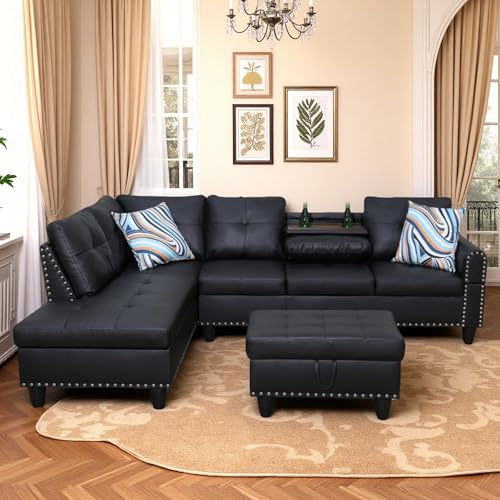
From classic three-seat sofas to modular sectionals and space-saving futons — understand every couch type before you commit to the centerpiece of your living room.
Why the couch type matters: The couch is the single largest and most-used piece of furniture in most living rooms. It determines seating capacity, circulation flow, visual balance and how comfortably your room supports everyday life. Choosing the right type before you compare finishes or upholstery will save you from the most common furniture regret.
The Complete Overview of Couch Types
Living room couches are not a single product category. They differ in seating capacity, footprint, mechanism, upholstery requirements and intended use. A family with young children, a couple in a compact apartment and a host who frequently welcomes overnight guests will each need a fundamentally different couch type. The sections below explain each major category in plain language, including who it suits best and which trade-offs to expect.
If you are still deciding between a two-seat and a multi-seat configuration, the guide on couches and love seats explains how the two categories differ in practice. For rooms where corner space is available, the article on sectional L couches covers corner efficiency in detail.
1. Standard Sofa (Three-Seat Couch)
Seats: 2–4Best for: Most living roomsTier: Essential to premium
The standard sofa is the default living room couch: a single, straight frame with two to four seat cushions and a matching back. It is the most widely available type and the easiest to arrange because it can face a television, a fireplace or a conversation area without blocking circulation. For most households it is the safest first choice.
Entry-level standard sofas typically use engineered wood frames and lower-density foam, while mid-range and premium models move to kiln-dried hardwood frames, sinuous spring or pocket-coil support, and high-resilience foam that holds shape far longer. If you plan to keep the couch for a decade or more, the construction tier matters more than the fabric tier.
Trade-offs: A standard sofa offers no corner seating and cannot wrap around a room. In very large open-plan spaces it can feel visually small, which is where sectionals become attractive.
2. Sectional Sofa
Seats: 3–6+Best for: Large and open-plan roomsTier: Mid-range to luxury
A sectional is a couch built from multiple connected pieces, usually with an L-shaped or U-shaped footprint. It maximizes seating per square meter because it uses the corner that a straight sofa leaves empty. Sectionals are especially strong in open-plan living rooms where the couch must visually anchor the space.
Common configurations include left-arm-facing and right-arm-facing chaise models, two-piece sectionals, and modular corner sectionals with an ottoman. Choosing the correct facing direction is critical — measure the wall and the walking path before ordering, because a sectional cannot be mirrored after delivery.
Trade-offs: Sectionals are heavy, harder to move, and lock the room into one arrangement. In narrow rooms they can create a bottleneck. For tight corners, a small corner couch or an L-shaped sectional for small spaces is a more sensible compromise than a full-size sectional.
3. Loveseat
Seats: 2Best for: Small rooms and pairsTier: Entry-level to premium
A loveseat is a two-seat couch, typically around 1.4 to 1.7 meters wide. It is the workhorse of compact living rooms, bedrooms, reading corners and paired seating arrangements. Many designers use a loveseat plus two accent chairs instead of one large sofa to keep a small room feeling open.
Loveseats are also the most practical choice for apartments where a full sofa would crowd the walking path. Because they weigh less, they are easier to move between rentals. The main limitation is obvious: they seat only two people comfortably, so they work best as a secondary couch or in households of one or two.
Trade-offs: Limited seating, and often a narrower seat depth than full-size sofas. Taller users should check seat depth before choosing a loveseat as their primary couch.
4. Sleeper Sofa
Seats: 2–3Sleeps: 1–2Tier: Mid-range to high-end
A sleeper sofa conceals a folding mattress mechanism inside a conventional sofa frame. It is the standard solution for guest rooms, studio apartments and homes that host visitors regularly. The quality difference between tiers is dramatic: entry-level models often use a thin foam mattress and a basic metal frame, while high-end tier models use memory-foam or innerspring mattresses with reinforced mechanisms rated for frequent use.
Trade-offs: Sleeper sofas are heavier and the mattress occupies space that would otherwise be cushion depth, so seating comfort can be slightly firmer than a dedicated sofa. They also require clearance in front of the couch when opened.
5. Futon
Seats: 2–3Sleeps: 1–2Tier: Entry-level to mid-range
A futon uses a folding frame with a single thick cushion that converts from a seating position to a flat sleeping surface. It is lighter, simpler and more portable than a sleeper sofa, which makes it popular in dorms, studios, guest rooms and multi-purpose rooms. Futons are also easier to move through narrow doorways.
Modern futons have moved well beyond the thin mattress of the past. A nice futon couch with a high-density foam or innerspring core can serve as a daily couch and an occasional bed without excessive compromise. An L-shaped futon couch adds corner seating while keeping the convertible function.
Trade-offs: Futons generally offer less long-term sleeping comfort than sleeper sofas, and the folding hinge can create a noticeable seam. They are best for occasional guests rather than nightly sleeping.
6. Reclining Sofa
Seats: 2–3Best for: Media rooms and loungingTier: Mid-range to high-end
A reclining sofa includes built-in footrests and adjustable backrests, usually operated by a manual lever or a power motor. It is the couch type most associated with comfort-first living rooms, home theaters and spaces where television viewing is the primary activity.
Power recliners with USB charging and wall-hugger mechanisms have become common in the mid-range and high-end tiers. A reclining sectional with chaise in leather combines reclining function with corner seating, while a two-recliner-plus-couch arrangement suits rooms that mix lounging and conversation.
Trade-offs: Reclining sofas need clearance behind the backrest (unless they are wall-hugger models) and they are visually bulkier than standard sofas. Motorized versions add an electrical dependency and more components that can require service over time.
7. Modular Sofa
Seats: ConfigurableBest for: Changing layoutsTier: Premium to luxury
A modular sofa is assembled from independent seat, corner, chaise and ottoman units that connect with brackets or clips. The appeal is flexibility: you can reconfigure the same couch when you move, when your family grows, or when you want to change the room layout without buying new furniture.
Modular systems are typically positioned in the premium and luxury tiers because each unit is built to standalone standards with reinforced connectors and consistent fabric matching. A modular corner sectional with ottoman is a common configuration that balances corner seating with a movable footrest.
Trade-offs: Modular couches are heavy, require more assembly, and the connection points can loosen with frequent reconfiguration. They also tend to have a more contemporary visual language that may not suit traditional interiors.
8. Chaise Lounge
Seats: 1Best for: Reading and relaxationTier: Mid-range to luxury
A chaise lounge is an elongated single-seat couch designed for reclining, with a backrest at one end and an extended seat at the other. It is a relaxation piece rather than a primary seating solution, and it works best as an accent in a reading corner, bedroom or large living room.
Chaise lounges are frequently paired with sectionals as the extended end unit, but a standalone chaise is a distinct furniture category. The main consideration is footprint: a chaise needs length, so it is rarely a good fit for narrow rooms.
Trade-offs: Single-user seating and a large footprint per seat. It is a lifestyle purchase rather than an efficient seating investment.
9. Settee
Seats: 2Best for: Formal and accent seatingTier: Premium to luxury
A settee is a small, often more formal two-seat couch with a narrower profile and a more decorative frame than a standard loveseat. Historically a formal parlor piece, modern settees are used in entryways, bedrooms, dining nooks and as accent seating in living rooms.
Settees are usually specified with higher-grade upholstery and more refined frame detailing than everyday loveseats. They are a design-forward choice, not a high-traffic family couch.
Trade-offs: Limited seating, often shallower seat depth, and a formal aesthetic that may not suit casual family rooms.
10. Apartment Sofa
Seats: 2–3Best for: Compact living roomsTier: Entry-level to mid-range
An apartment sofa sits between a loveseat and a full-size sofa. It is shorter in width and often shallower in depth, designed specifically for rooms where a standard three-seat couch would overwhelm the space. It usually seats two comfortably and three tightly.
Apartment sofas are the most sensible choice for studio units, small condos and rental living rooms where circulation space is limited. They pair well with a living space couch layout that prioritizes walking paths over maximum seating.
Trade-offs: Reduced seating capacity and often a firmer, more compact seat. Not ideal for families of four or more.
Couch Types Compared at a Glance
Couch Type
Seating
Typical Tier
Best For
Main Trade-off
Standard Sofa
2–4
Essential to premium
Most living rooms
No corner seating
Sectional Sofa
3–6+
Mid-range to luxury
Large and open-plan rooms
Heavy and layout-locking
Loveseat
2
Entry-level to premium
Small rooms and pairs
Limited seating
Sleeper Sofa
2–3
Mid-range to high-end
Guest rooms and studios
Heavier, firmer seat
Futon
2–3
Entry-level to mid-range
Multi-purpose rooms
Less sleeping comfort
Reclining Sofa
2–3
Mid-range to high-end
Media and lounging rooms
Bulkier footprint
Modular Sofa
Configurable
Premium to luxury
Changing layouts
Heavy and assembly-heavy
Chaise Lounge
1
Mid-range to luxury
Reading and relaxation
Large footprint per seat
Settee
2
Premium to luxury
Formal accent seating
Formal aesthetic
Apartment Sofa
2–3
Entry-level to mid-range
Compact living rooms
Reduced seating
How to Choose the Right Couch Type
Once you understand the categories, the decision comes down to five practical factors. Work through them in order — each one narrows the list before you start comparing materials or styling.
Room dimensions and circulation: Leave at least 40–45 cm of walking space between the couch and surrounding furniture. If the room is narrow, a loveseat or apartment sofa will almost always outperform a full-size sofa.
Number of regular users: Count the people who sit on the couch on a typical evening, not the maximum number of guests. A household of two rarely needs a six-seat sectional.
Primary activity: Television viewing favors reclining sofas and sectionals. Conversation favors standard sofas with accent chairs. Reading favors a chaise lounge or a loveseat with good armrests.
Guest sleeping needs: If overnight guests are frequent, a sleeper sofa or a couch that converts into a bed is more practical than a standard sofa plus an air mattress.
Upholstery and household reality: Households with pets or young children should prioritize performance fabric or leather. The guide on pet-friendly couches covers this in detail.
Planning tip: Measure the delivery path before you fall in love with a couch. Door width, hallway turns and elevator dimensions eliminate more couch choices than room size does. A sectional that fits the living room but not the stairwell is a common and avoidable mistake.
Recommended Couches for Living Room
⚠️ AFFILIATE DISCLOSURE: This website contains affiliate links. As an affiliate Associate, we earn from qualifying purchases. If you make a purchase through these links, we may receive a small commission at no additional cost to you.
Read our full affiliate policy.
Marsail 110" Modular Sectional Sleeper Sofa, Pull Out Sofa Bed with Storage | 7 Seat Comfy Cloud Sofas for Living Room, Chenille Sectional Couches with USB Ports & Cup Holders, Dark Gray
⚠️ Note: The purchase links above are affiliate links. As an Amazon Associate, we earn from qualifying purchases at no additional cost to you.
134" Boneless Couches for Living Room - Modular Sectional Sofa U Shaped Oversized Deep Seat High Back Corduroy No Assembly Modern Cloud Big Comfy Floor Couches (Black)
⚠️ Note: The purchase links above are affiliate links. As an Amazon Associate, we earn from qualifying purchases at no additional cost to you.
Boneless Couch, Cloud Couch Sofa, Sectional Couches for Living Room | Comfy L-Shaped Modern Sectional Sofa, Upholstered Corduroy Couch with Storage Pocket for Apartment, No Assembly Required
⚠️ Note: The purchase links above are affiliate links. As an Amazon Associate, we earn from qualifying purchases at no additional cost to you.
Trygoal Leather 3-Piece L-Shaped Couches for Living Room, Sectional Sofa with Storage Ottoman & Movable Chaise, Modular Convertible Couch for Bedroom & Apartment, Midnight Black
⚠️ Note: The purchase links above are affiliate links. As an Amazon Associate, we earn from qualifying purchases at no additional cost to you.
Korser 108" L-Shaped Modular Sectional Sofa with Chaise, Boneless Comfy Corduroy Fluffy Couch with Deep Seat and Side Pockets, Flexible Module Combination for Living Room, No Assembly, Side Pockets
What is the most common type of couch for a living room?
The standard three-seat sofa remains the most common living room couch because it balances seating capacity, footprint and versatility. Sectionals are a close second for larger or open-plan rooms where corner space can be used efficiently.
How do I choose between a sofa and a sectional?
Choose a standard sofa when you want flexible furniture arrangement and a smaller footprint. Choose a sectional when you have a defined corner, a large open-plan space, or a family that gathers around a single focal point such as a television or fireplace. The sectional L couch guide explains the corner measurement process in more detail.
What couch type works best for a small living room?
Loveseats, apartment sofas, settees and compact L-shaped sectionals work best in small living rooms because they reduce depth and visual weight while still providing comfortable seating for two to three people.
Are sleeper sofas and futons the same thing?
No. Sleeper sofas contain a hidden folding mattress mechanism inside a traditional sofa frame, while futons use a folding frame with a single thick cushion that converts from seating to sleeping surface. Sleeper sofas generally offer better long-term guest comfort, while futons are lighter and easier to move.
Is a reclining sofa a good choice for everyday use?
Yes, for households that prioritize comfort and television viewing. Reclining sofas are built for daily use, but choose a model with a reinforced mechanism and adequate clearance behind the backrest. Wall-hugger models reduce the clearance requirement considerably.
Disclaimer
The information provided on CouchFocus is for educational and informational purposes only. We are not professional interior designers or contractors, and our content should not replace professional advice. Always consult with a qualified expert regarding structural, safety, or design-related concerns. Some content may use AI assistance. Always check product warranties and safety standards before purchasing. If you do not agree, please do not use this website.
Read the full disclaimer.
We use cookies to provide you with a better browsing experience. By continuing to use our site, you consent to our cookie settings.
Learn more