
Modular Sectional Couch with Ottoman: The Complete Buying & Design Guide
One flexible seating system, endless configurations. Learn how to evaluate, plan, and style a modular sectional couch with ottoman so your living room works exactly the way you live.
Why this guide matters: A modular sectional couch with ottoman is one of the most adaptable furniture investments you can make. It combines reconfigurable seating, a movable footrest, and optional conversion into a sleeping surface. This guide walks you through configuration logic, comfort engineering, upholstery choices, and room planning so you can decide with confidence.
What Is a Modular Sectional Couch with Ottoman?
A modular sectional couch with ottoman is a seating system built from individual pieces called modules. Each module connects to its neighbors, so you can arrange the couch in a straight line, an L-shape, a U-shape, or a chaise configuration. The ottoman is a separate movable piece that serves as a footrest, extra seat, or surface extension.
Unlike a fixed sectional, a modular design lets you reshape the seating as your room or household changes. You can add a module when your family grows, rotate pieces when you rearrange the room, or separate the couch into individual seating units in a different space. The ottoman completes the system by adding comfort and versatility without committing to a permanent chaise.
Key Components of a Modular System
- Base modules: single-seat, corner, and armless units that form the seating line.
- Corner or wedge modules: create L-shaped and U-shaped turns.
- Ottoman module: a backless, armless piece that acts as a footrest, bench, or extra seat.
- Connectors: brackets or interlocking mechanisms that hold modules together and prevent sliding.
- Optional sleep modules: pull-out or fold-down pieces that convert the couch into a bed.
If you want to explore the broader category of flexible seating, the modular couch system overview explains how these pieces work together across different brands and layouts.
Why Choose a Modular Sectional with Ottoman
Homeowners researching this category are usually balancing several needs at once: seating capacity, room flexibility, comfort, and long-term durability. A modular sectional couch with ottoman addresses all four, but it is important to understand the trade-offs before you decide.
Advantages
- Reconfigurable layout: rearrange modules for movie nights, gatherings, or a quieter reading corner.
- Scalable seating: start with a smaller arrangement and add modules later.
- Movable ottoman: use it as a footrest, coffee table substitute, or extra seat for guests.
- Easier delivery: individual modules often fit through doorways and stairwells that a one-piece sectional cannot.
- Targeted replacement: if one module wears out, you may be able to replace just that piece rather than the whole couch.
Trade-Offs to Consider
- Connection stability: lower-tier connectors can allow modules to shift; inspect the locking mechanism carefully.
- Cushion gaps: seams between modules may collect crumbs and need regular vacuuming.
- Assembly time: more pieces mean more setup steps compared with a fixed sofa.
- Style consistency: adding modules years later can be difficult if the upholstery line is discontinued.
If you are still comparing categories, the modular couches guide and the modular sofas guide break down how these systems differ from traditional sectionals and fixed sofas.
Configuration Options and Room Fit
The right configuration depends on room shape, traffic flow, and how many people typically sit together. Below are the most common arrangements for a modular sectional couch with ottoman.
L-Shape with Corner Module
This is the most popular arrangement. A corner module connects two seating runs at a right angle, and the ottoman floats in front of the corner or at the open end. It works well in rectangular living rooms and open-plan spaces where the couch helps define the conversation zone.
U-Shape for Large Gatherings
Two corner modules and a longer run of seats create a U-shape that wraps around a coffee table. This layout is ideal for large families and frequent entertaining, but it requires a wider room and careful walkway planning so the seating does not block doorways.
Straight Run with Floating Ottoman
A row of armless and end modules forms a clean line against a wall or in the middle of an open floor plan. The ottoman can be placed in front of any seat or used as a bench along the side. This configuration suits narrow rooms and rental spaces where flexibility matters.
Chaise-Style with Ottoman Extension
Pair an ottoman with an end module to create a chaise-like lounging area without buying a dedicated chaise piece. This is a practical compromise for households that want reclining comfort but also need the ottoman to move out of the way for gatherings.
For households that need overnight guest capacity, a modular sectional with pull-out bed adds a sleep function to the same modular framework. If you prefer a dedicated convertible piece, the modular couch that turns into a bed guide explains the mechanisms involved.
The Ottoman: More Than a Footrest
The ottoman is often the most-used piece in a modular sectional setup. Understanding its roles helps you choose the right size, height, and features.
Primary Functions
- Footrest: place it in front of your favorite seat for lounging and reclining comfort.
- Extra seat: a firm ottoman can seat a guest during gatherings.
- Surface extension: with a tray on top, it becomes a temporary coffee table or serving surface.
- Chaise converter: align it with an end module to create a chaise-style lounging zone.
- Storage: storage ottomans hide blankets, remotes, and children's toys. See the modular sectional couch with storage guide for configurations that integrate storage modules.
Sizing the Ottoman
Match the ottoman height to the seat height of your couch modules. A difference of more than a couple of inches makes the ottoman uncomfortable as a footrest and awkward as an extension seat. Width should roughly match the module width so the ottoman aligns cleanly when pushed against the couch.
Firmness Matters
An ottoman used mainly as a footrest can be softer. An ottoman used as extra seating should be firmer so guests do not sink uncomfortably. If you plan to use a tray on top, choose a flat, stable top surface and avoid heavily crowned cushions.
Comfort and Build Quality Checklist
Comfort in a modular sectional couch with ottoman comes from the frame, suspension, cushion foam, and seat depth working together. Use this checklist when comparing options.
Frame and Suspension
- Frame material: kiln-dried hardwood or high-grade engineered wood resists warping better than softwood or particle board.
- Joint construction: reinforced corner blocks, dowels, and screws indicate durable construction.
- Suspension: sinuous springs, pocket coils, or high-density webbing should feel supportive without sagging. Sit near the edge to test for roll-off.
Cushion Foam and Fill
- High-density foam: holds shape longer than low-density foam, especially in frequently used seats.
- Foam density: higher density generally means better long-term support and less sagging.
- Wrapped coils: coil-wrapped foam cores add responsiveness and durability in mid-range and premium tiers.
- Down or fiber wraps: add a soft initial feel but require fluffing and may compress over time.
Seat Depth and Height
Standard seat depth suits upright sitting, while deeper seats encourage lounging. Measure the distance from the back cushion to the front edge and compare it with your leg length. A seat height that lets your feet rest flat on the floor is the most comfortable for long conversations.
Module Connection Test
Before buying, check how modules connect. Metal brackets with locking pins are more stable than simple hook-and-loop pads. A well-connected modular sectional should not separate when someone sits on the seam.
Upholstery and Material Selection
The upholstery determines how the couch feels, how it ages, and how much maintenance it requires. The right choice depends on your household.
Fabric Options
- Performance fabric: stain-resistant and easy to clean, making it a strong choice for families and pet owners. Learn more in the most durable couch fabric for families guide.
- Velvet: soft and visually rich, but requires regular brushing and careful cleaning.
- Linen blends: breathable and textured, though lighter colors show wear more quickly.
- Washable covers: removable, machine-washable covers simplify maintenance. See the modular sectional with washable covers guide for options.
Leather and Faux Leather
Leather develops a patina over time and wipes clean easily, but it can feel cold in winter and hot in summer. Faux leather is easier to maintain but may peel in lower tiers. For pet households, the most durable couch material for dogs guide compares scratch resistance across materials.
Pet and Child Considerations
Tight-weave fabrics resist snags better than loose weaves. Non-slip covers help keep seat cushions in place. If pets are part of the household, the non-slip couch covers for dogs guide covers protective options that work with modular pieces.
Quality Tiers Without the Guesswork
Modular sectional couches with ottomans are available across a wide range of quality levels. Rather than focusing on numbers, use these tier descriptors to compare products consistently.
Entry-Level
Basic frame construction, standard foam, and simpler connectors. Suitable for light use, guest rooms, or first apartments where the priority is flexibility over long-term durability.
Mid-Range
Better suspension, higher-density foam, and more stable metal connectors. A solid choice for daily family use with a balance of comfort and durability.
Premium
Hardwood frames, wrapped coil cushions, precision connectors, and performance upholstery. Built for heavy daily use and long-term investment.
What Changes Across Tiers
| Feature | Essential Tier | Balanced Tier | Top-Tier |
|---|---|---|---|
| Frame | Engineered wood | Mixed hardwood | Kiln-dried hardwood |
| Suspension | Webbing or basic springs | Sinuous springs | Pocket coils or reinforced springs |
| Cushion core | Standard foam | High-density foam | Wrapped coil with high-density foam |
| Connectors | Hook-and-loop or simple clips | Metal brackets | Locking metal brackets |
| Upholstery | Basic fabric | Performance fabric options | Premium performance or top-grain leather |
A mid-range model usually offers the most balanced combination of comfort and durability for everyday households, while premium tiers make sense for heavy daily use and long-term planning.
Layout and Measurement Planning
Measure twice before you order. A modular sectional couch with ottoman can be rearranged, but each module still needs to fit your room and walkways.
Step-by-Step Measurement Plan
- Measure the room: record the length and width, including doorways and window walls.
- Mark walkways: aim for at least 30 inches of clearance on main paths and 18 inches between the couch and a coffee table.
- Plan the footprint: sketch your intended configuration on graph paper or with tape on the floor.
- Check delivery paths: measure doorways, hallways, and stairwells against the dimensions of the largest module.
- Leave breathing room: avoid pushing the couch flush against heating vents or radiators.
Small Rooms
In smaller living rooms, choose a compact L-shape or a straight run with a movable ottoman. Floating the ottoman instead of attaching a chaise keeps the floor plan flexible. The small space layout guide offers additional techniques for maximizing seating without crowding the room.
Open Floor Plans
Use the back of the sectional to define the living zone without building a wall. A low-back modular design keeps sightlines open. The open floor plan guide explains how to position seating so it anchors the room without blocking flow.
TV and Conversation Zones
If the couch faces a television, keep a viewing distance that feels comfortable from the main seats. For conversation-focused rooms, arrange modules in an L or U so people can face each other. Pair the sectional with a modern coffee table and TV stand set to anchor the layout.
Care, Maintenance, and Longevity
Regular care keeps a modular sectional couch with ottoman looking fresh and extends its usable life.
Routine Maintenance
- Vacuum weekly: use an upholstery attachment to clear crumbs and dust from seams between modules.
- Rotate cushions: flip and rotate seat cushions every few months for even wear.
- Fluff back cushions: restore shape and prevent flat spots.
- Tighten connectors: check brackets periodically, especially if modules are moved often.
Stain and Odor Response
Blot spills immediately with a clean cloth and follow the upholstery cleaning code. For odors, the odor elimination guide covers safe methods for fabric and foam. If moisture causes problems, the mold and mildew treatment guide explains how to address dampness before it spreads.
Protecting the Ottoman
Use a tray on the ottoman to protect the fabric from drinks and snacks. If the ottoman doubles as a seat, keep sharp objects away from the surface. For households with pets, consider a washable cover or a performance fabric upgrade at purchase.
When to Repair vs. Replace
Because modular systems use separate pieces, you can often replace a single worn cushion or module instead of the whole couch. Check whether the manufacturer still produces the module and upholstery line before relying on this option.
Frequently Asked Questions
Is a modular sectional couch with ottoman good for small living rooms?
Yes, if you choose a compact configuration. A straight run of two or three modules with a movable ottoman can fit narrow rooms and still provide flexible seating. Measure walkways carefully and avoid deep modules that crowd the floor space.
Can the ottoman be used as a coffee table?
With a rigid tray on top, a firm ottoman can serve as a coffee table substitute. Choose an ottoman with a flat, stable top surface and avoid using it for hot items directly on the fabric.
How do I keep modular pieces from sliding apart?
Look for metal brackets with locking pins rather than simple hook-and-loop pads. On rugs, add a non-slip pad underneath the seating area. Check and tighten connectors periodically.
What is the best upholstery for a family with pets?
Performance fabrics with tight weaves resist stains, snags, and moisture better than loose-weave fabrics. Leather and faux leather wipe clean easily but may show scratches. The most durable couch material for dogs guide compares options in detail.
Can I add modules to a modular sectional later?
In many cases, yes, but availability depends on the brand and whether the upholstery line is still in production. Confirm the module and fabric availability before purchase if you plan to expand later.
How do I measure for delivery?
Measure doorways, hallways, stairwells, and elevators against the dimensions of the largest individual module, not the assembled couch. Modular pieces are easier to deliver than a one-piece sectional, but the largest module still needs to fit.
Should the ottoman be attached or movable?
A movable ottoman offers more flexibility for footrest use, extra seating, and clearing floor space. An attached or connected ottoman stays aligned with the couch but limits rearrangement. Choose based on how often you expect to reconfigure the room.
What seat height works best with an ottoman?
Match the ottoman height closely to the seat height. A close match keeps your legs comfortable when lounging and allows the ottoman to function as a chaise extension without an awkward step.
Ready to Compare Modular Sectional Options?
Explore our curated selection of modular sectional couches with ottomans and compare features, configurations, and quality tiers side by side.
View Recommended OptionsRecommended Modular Sectional Couches with Ottoman
⚠️ AFFILIATE DISCLOSURE: This website contains affiliate links. As an affiliate Associate, we earn from qualifying purchases. If you make a purchase through these links, we may receive a small commission at no additional cost to you. Read our full affiliate policy.
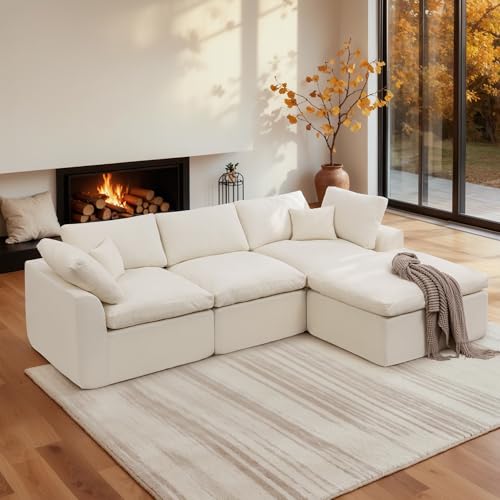
Korser 110" Cloud Sectional Couches for Living Room, Modern Modular Sectional Sofa with Ottoman, Boneless Cloud Couch with Comfy Deep Seats, Fluffy Chenille L-Shape Sofa Couch for Living Room, Beige
Check price on Amazon
Could Couch Modular Sectional Sofa with Ottoman,Down Filled 120inch V Shaped Couch,Convertible Sofa Bed Living Room Set,6 Seat Sleeper Couched Bed, Cover Washable and Replaceable, Gray
Check price on Amazon
ROWHY 112'' Modular Sectional Cloud Couch with Movable Ottoman, 4 Seat Modern Corduroy Sofa, Deep Seat L Shaped Couch for Living Room Bedroom Apartment, Beige
Check price on Amazon
108'' Modular Sectional Sleeper Sofa Couches for Living Room, Dark Grey | L/U Shaped Sleeper Sofa, Pull Out Couch Bed, Hidden Storage, Modular Design, Comfy Corduroy, Removable Cover, Movable Ottoman
Check price on Amazon
ohllob 110" Cloud Sectional Couches for Living Room, Convertible L-Shape Couch with Ottoman, 3 Seater Modular Sectional Sofa, Warm White
Check price on Amazon
Flyida 110" Cloud Couch Oversized U Shaped Dark Grey Sectional Couches for Living Room, Big Soft Comfy Fluffy Corduroy Couch Sectionals, Modular Sectional Sofa with Ottoman & Double Coushion
Check price on Amazon
ovios 108" Cloud Couch with Thicken Cushion, 3-Seat U-Shaped Modular Sectional Sofas with Movable Ottomans, Modern Comfy Deep Seat Chenille Couches for Living Room, Gray
Check price on Amazon