
Outdoor Furniture Cushions: Seat and Back Buying Guide
Everything you need to choose weather-ready seat and back cushions for patio chairs, benches, and outdoor sofas — from foam density and fabric performance to sizing and long-term care.
Explore Cushion OptionsWhy outdoor seat and back cushions deserve careful thought: A well-chosen cushion set transforms a hard patio frame into a genuinely comfortable seat — and it directly influences how often you actually use your outdoor space. The right pairing of foam, fill, and fabric determines comfort, drying speed, color retention, and how many seasons the cushions survive before replacement.
This guide walks you through every decision point so you can buy with confidence: measuring your frame, matching seat depth to back height, comparing fill types, interpreting fabric ratings, and building a realistic care routine that keeps cushions looking fresh.
Recommended Outdoor Seat and Back Cushions
⚠️ AFFILIATE DISCLOSURE: This website contains affiliate links. As an affiliate Associate, we earn from qualifying purchases. If you make a purchase through these links, we may receive a small commission at no additional cost to you. Read our full affiliate policy.

Summsun Outdoor Chair Cushions Set of 4, Faux Linen Patio Furniture Cushions, Water Resistant Backrest and Deep Seat Cushion Set with Ties, Removable Cover, Non-Slip Bottom, 24 x 24 Inch, Nature
Check price on Amazon
zanwu hwyd Outdoor Chair Cushions 42x21x4 Inch Set of 2, Dark Blue | Patio Cushions for Dining Rocking Chairs, High Back Soft Seat Pad with Ties, Waterproof Fade Resistant, Indoor Outside Use
Check price on Amazon
Zonamat Outdoor Loveseat Cushion Set, 46" x 26" Loveseat Cushions for Outdoor Furniture, Waterproof & Fade-Resistant Patio Furniture Cushions, Deep Seat Cushion for Bench, Swing and Couch, Navy Blue
Check price on Amazon
Favoyard Outdoor Patio Seat Cushions Set, 24 x 24 Inch, Waterproof, Beige | Fade-Resistant, Removable Cover, Deep Seat & Back Cushion, Tie Straps for Patio Furniture, Garden, Rocking Chair, Sofa Couch
Check price on Amazon
IPYNBAP Outdoor Cushions for Patio Furniture,Outdoor Seat Cushion Set 24 x 24 x 5.75 Inch,Waterproof & Fade Resistant Outdoor Chair Cushions,Deep Patio Chair Cushion with Removable Cover,Navy Blue
Check price on Amazon
Patio Cushion Covers Replacement, Deep Seat Patio Cushions Cover set of 4 | Waterproof Seat and Back Cushions Cover for Outdoor Furniture Chair, Sofa,Couch,28"x28"x6"+28"x17"x6"
Check price on Amazon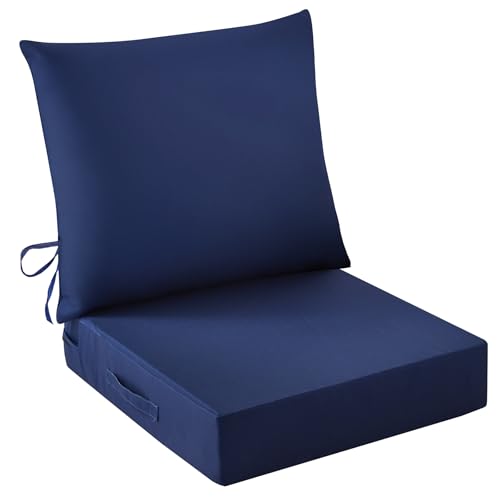
IASEAHK Outdoor Chair Cushions, 24 x 24 Inch Outdoor Cushion for Patio Furniture, Patio Chair Cushion, Waterproof & Fade Resistant Deep Patio Furniture Cushions Set with Handle and Ties, Navy Blue
Check price on Amazon
MuaMelop Outdoor Deep Seat Cushion Set, 24x24 Inch, Navy Blue, Set of 1 | Water-Resistant, Fade-Resistant, Removable Cover, For Patio Chair & Sofa&Furniture
Check price on AmazonUnderstanding the Seat-and-Back Cushion System
Outdoor cushions are not a single product but a system of two components that work together. The seat cushion carries your body weight and must resist compression over time; the back cushion provides lumbar and upper-back support and is usually thinner, lighter, and more decorative. Buying them as a matched set — or pairing them deliberately — is the difference between a patio chair that feels supportive for an hour and one that stays comfortable through a long evening outdoors.
How Seat and Back Cushions Differ
Seat cushions are typically 3 to 5 inches thick and use higher-density foam or a foam-and-fiber blend to support concentrated weight. Back cushions are generally 2 to 4 inches thick, often use softer fiber fill or a foam core wrapped in fiber, and may be attached to the chair frame with ties, straps, or hook-and-loop fasteners. Because back cushions rest against the frame rather than bear weight directly, they can be more forgiving in firmness — but they still need enough structure to avoid slumping after a season of use.
Measuring Your Frame Before You Buy
Measure the actual flat seating area of your chair or bench, not the frame's outer dimensions. Width should be measured at the widest usable point between armrests; depth should run from the front edge of the seat to the backrest; and thickness clearance should account for any crossbars or slats that the cushion will rest on. For back cushions, measure the height from the seat surface to the top of the frame, then subtract a small margin so the cushion sits naturally rather than bunching at the top.
- Measure seat width at the narrowest point between armrests
- Measure seat depth from front rail to backrest
- Confirm cushion thickness clears frame crossbars
- Measure back height from seat surface to frame top
- Check whether the frame has tie-down points or straps
- Note any tapered or curved shapes that need custom sizing
Fill, Foam, and Support: What Keeps You Comfortable
The internal fill is the single largest driver of comfort and longevity. Outdoor cushions face compression, humidity, and repeated drying cycles, so the fill must be able to recover its shape. Understanding the trade-offs between foam types, fiber fill, and wrapped constructions helps you predict how a cushion will feel on day one versus after two full seasons.
High-Density Foam
The workhorse of seat cushions. Dense polyurethane foam resists bottoming out and holds its shape longer than low-density alternatives. It is firm on arrival and softens slightly with use. Best for seat cushions in high-traffic patio sets.
Foam Core with Fiber Wrap
A dense foam core wrapped in polyester fiber. The wrap adds a plush surface feel while the core preserves support. This hybrid is common in mid-range seat cushions and offers a balance of comfort and durability.
Loose Fiber Fill
Softer and lighter, fiber fill is common in back cushions and decorative throw cushions. It feels plush immediately but compresses more quickly and needs regular fluffing. Best for back cushions rather than weight-bearing seats.
Quick-Dry Foam
An open-cell foam engineered to let water pass through and drain. It dries significantly faster than closed-cell foam after rain and reduces the risk of trapped moisture and mildew inside the cushion core.
Gel-Infused Foam
Foam blended with gel particles for a cooler initial feel and slightly better pressure distribution. Often found in premium seat cushions; benefits are most noticeable in hot climates and on long sitting sessions.
Wrapped Spring Units
Individual pocket springs encased in foam and fiber. These provide a more responsive, sofa-like feel and excellent weight distribution. Found in top-tier outdoor cushions and best for deep seating and longer lounging.
A practical rule: seat cushions should err on the firmer side, back cushions on the softer side. If you choose a single matched set, look for a set that specifies different constructions for the seat and back rather than identical foam slabs. For furniture that stays outdoors year-round, prioritize quick-dry or open-cell foam cores to reduce moisture retention.
Fabric Performance: Weather Resistance and Color Retention
Outdoor cushion covers face UV exposure, rain, chlorine or salt air, and abrasion from regular use. Fabric choice determines how well a cushion resists fading, how quickly it sheds water, and how easy it is to clean. The most reliable way to judge performance is to look for a stated UV resistance rating and a recognized outdoor fabric brand or treatment, rather than relying on a generic "outdoor fabric" label.
| Fabric Type | Weather Resistance | Comfort & Feel | Care Level | Best For |
|---|---|---|---|---|
| Solution-Dyed Acrylic | Excellent UV and fade resistance; water-repellent | Soft, canvas-like hand | Low — spot clean and air dry | Long-term outdoor exposure |
| Polyester with UV Treatment | Good; performance varies by treatment quality | Smooth, slightly slick | Low to moderate | Covered patios and seasonal use |
| Olefin | Very good moisture and mildew resistance | Textured, durable feel | Low — quick drying | Humid climates and poolside areas |
| Performance Polyester Blend | Good, with stain-release finishes | Soft, fabric-forward look | Moderate — removable covers help | Design-focused outdoor sets |
| PVC-Coated or Vinyl | Excellent water resistance; wipes clean | Firm, less breathable | Very low | High-moisture and heavy-use settings |
Beyond the fabric itself, look for these construction details: double-stitched seams reduce tear risk at stress points; piped edges hold shape and add structure; hidden zippers allow cover removal for washing; and tie straps or hook-and-loop tabs keep cushions anchored in wind. If your patio receives intense afternoon sun, favor solution-dyed acrylics — their color is locked into the fiber rather than applied as a surface dye, which is why they hold color far longer.
Comparing Cushion Tiers: Entry-Level to Luxury
Outdoor cushion sets sit in distinct quality tiers, and the differences show up in foam density, fabric brand, stitching, and expected lifespan. The table below uses neutral quality descriptors so you can compare sets on construction rather than on any single number.
| Tier | Foam & Fill | Fabric & Construction | Expected Lifespan | Best For |
|---|---|---|---|---|
| Entry-level | Standard-density foam; basic fiber back fill | Generic polyester; single-stitched seams | One to two seasons with care | Seasonal use, covered patios, occasional seating |
| Mid-range | Medium-density foam; fiber-wrapped core | UV-treated polyester or olefin; double-stitched | Three to four seasons | Year-round use on sheltered patios |
| Premium | High-density quick-dry foam; wrapped back cushions | Solution-dyed acrylic; piped edges; removable covers | Five or more seasons | Full-sun exposure, frequent entertaining |
| Luxury | Gel-infused or wrapped-spring cores; tailored fiber blend | Branded performance fabrics; reinforced stress points | Long-term investment with proper care | High-end outdoor living rooms and deep-seating sets |
The jump from entry-level to mid-range is usually the most meaningful upgrade: it buys you better foam recovery and more reliable UV treatment, which are the two factors most responsible for cushions that look tired after a single summer. Moving to premium and luxury tiers adds faster drying, better color retention, and more refined tailoring — worthwhile if your furniture lives outdoors uncovered or if you entertain regularly. If you are furnishing a larger patio set at once, it often makes sense to allocate the premium tier to the seats you use most and choose mid-range for secondary seating.
Matching Cushions to Your Outdoor Furniture
Different outdoor furniture types call for different cushion proportions. Dining chairs need thinner, firmer seat cushions that keep you at a comfortable height relative to the table, while lounge chairs and outdoor sofas support thicker, plusher seat cushions and taller back cushions. Benches typically use long single-piece seat cushions paired with separate back cushions or a cushion-and-pillow combination.
If you are building a coordinated outdoor seating area, start with the largest piece — often a patio couch or sectional — and use its cushion proportions as the reference for smaller chairs and benches. Consistent seat height across pieces creates visual rhythm and makes the whole set easier to move around. For sectional arrangements, look for sets that offer modular cushion sizes so individual seats can be replaced without re-buying the entire configuration. You can explore coordinated deep-seating options in our patio couch sectional guide, and for fire-pit-centered layouts see modern patio furniture with fire pit.
Round and curved furniture requires shaped cushions rather than standard rectangles. Measure the arc and radius carefully, and favor sets that specify the seat diameter. For dining areas, seat cushions should be slim enough that knees still clear the table apron; our outdoor dining table with gas fire guide covers how to balance table height with seating comfort.
Care and Maintenance for Long Cushion Life
Outdoor cushions reward a simple, consistent routine. The goal is to keep moisture from sitting inside the core and to remove organic debris before it stains the fabric. Most cushion damage happens not from sun or rain alone, but from cushions being stored damp or left with leaves and pollen on the surface.
- Brush off leaves and debris weekly before they break down into stains
- Shake and rotate cushions regularly to distribute wear and prevent compression
- Stand cushions on edge after rain so water drains and air circulates
- Spot clean spills promptly with mild soap and water — avoid harsh solvents
- Remove covers for machine washing only if the label explicitly allows it
- Store cushions in a dry, ventilated space during off-season or long rain periods
- Use a cover on the furniture when cushions stay outdoors overnight
For deeper cleaning, use a soft brush and a diluted mild detergent, rinse thoroughly, and allow full air drying on both sides before returning cushions to the frame. Never put outdoor foam cushions in a dryer — heat can break down the foam and shrink covers. If mildew appears, treat it outdoors with a diluted mild bleach solution on colorfast fabrics only, then rinse and dry completely. Regular conditioning of the frame and periodic inspection of straps and seams will prevent small issues from becoming replacement-level problems.
Final Buying Checklist
Before you commit to a cushion set, run through this checklist. It captures the decisions that most often lead to returns or early replacement.
- Frame measurements recorded for width, depth, thickness, and back height
- Seat cushion firmness matched to body weight and sitting duration
- Back cushion height supports the natural curve of your lower back
- Fabric has a stated UV resistance rating or recognized outdoor brand
- Quick-dry or open-cell foam specified for uncovered furniture
- Tie straps, ties, or fasteners included to keep cushions in place
- Covers removable and washable if the set will see heavy use
- Set offers modular sizing if you plan to expand the configuration
Frequently Asked Questions
How thick should outdoor seat and back cushions be?
Seat cushions typically range from 3 to 5 inches thick, with 4 inches being a versatile middle ground for lounge chairs and sofas. Back cushions are usually 2 to 4 inches thick. Dining chairs benefit from thinner 2 to 3 inch seat cushions so your knees still clear the table. The key is matching thickness to the frame: a cushion that is too thick can make a low chair uncomfortable, while one that is too thin lets you feel the frame beneath.
What is the best fabric for outdoor cushions that stay outside?
Solution-dyed acrylic is widely considered the most reliable fabric for cushions that remain outdoors year-round. Its color is locked into the fiber during manufacturing, so it resists fading far better than surface-dyed fabrics. Olefin is an excellent choice for humid climates because it resists moisture and mildew, while performance polyester blends offer a softer feel for covered patios. Regardless of fabric, look for double-stitched seams and a stated UV resistance rating.
Can I leave outdoor cushions out in the rain?
Brief rain is generally fine for water-resistant outdoor fabrics, but prolonged exposure will eventually soak through seams and saturate the core. The practical approach is to use quick-dry foam cores and removable covers, stand cushions on edge after rain so water drains, and cover the furniture during extended wet periods. If cushions stay outdoors overnight, a furniture cover is a worthwhile habit. For cushions on uncovered furniture, prioritize open-cell foam and breathable, water-repellent fabrics.
How do I keep outdoor cushions from sliding or blowing away?
Look for cushions with tie straps, hook-and-loop tabs, or zippered attachment points that connect to the chair frame. For cushions without built-in fasteners, add hook-and-loop strips to the underside of the cushion and the chair surface. Back cushions often use ties around the frame uprights. On open patios and decks, heavier high-density foam also helps cushions stay put in wind compared with lightweight fiber-filled alternatives.
How often should outdoor cushions be replaced?
Entry-level cushions typically need replacement after one to two seasons of regular outdoor exposure, mid-range sets after three to four seasons, and premium sets can last five or more seasons with consistent care. Signs that replacement is due include foam that no longer recovers after sitting, fabric that has become brittle or faded beyond cleaning, persistent mildew inside the core, and covers that tear easily at the seams. Proper storage and routine cleaning often extend each tier's lifespan by a full season or more.
Can I wash outdoor cushion covers in a washing machine?
Only if the care label explicitly permits it. Many outdoor cushion covers are machine washable on a gentle cycle with cold water and mild detergent, but some performance fabrics and laminated backs require spot cleaning only. Always air dry covers rather than using a dryer, since heat can damage water-repellent finishes and cause shrinkage. Before washing, remove the cover carefully and inspect seams; reattach the cover while the foam is fully dry to avoid trapping moisture inside.