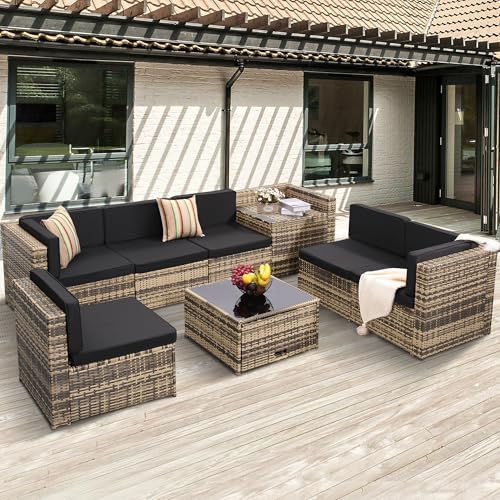
What Is an Outdoor Sectional with Cushion Storage?
An outdoor sectional with cushion storage combines L-shaped or U-shaped patio seating with a dedicated compartment for stowing seat and back cushions. Instead of carrying cushions inside every time it rains or the season ends, you lift a lid or open a drawer built into the sectional base and store everything on the spot.
These designs typically fall into three storage configurations:
- Under-seat storage compartments — hinged lids beneath individual seats, often with ventilated interiors.
- Storage ottoman attachments — a matching ottoman that doubles as a cushion bin and extra seating.
- Integrated storage benches — a bench section along the sectional base with a large continuous compartment.
The best configuration depends on how many cushions you own, how often you rearrange the layout, and whether the sectional stays assembled year-round. If you are still comparing broader patio seating options, our guide to outdoor sectionals covers layouts and frame types in more depth.
Why Cushion Storage Is Worth Prioritizing
Cushions are the most vulnerable part of any outdoor sofa. Sun exposure fades fabric, overnight dew breeds mildew, and sudden rain soaks foam cores that can take days to dry. Built-in storage addresses these problems directly:
Extends Cushion Lifespan
Shielding cushions from UV rays, rain, and debris when not in use slows fading and prevents moisture damage to foam and stitching.
Reduces Daily Effort
No more hauling armfuls of cushions through the house before a storm. Storage integrated into the sectional keeps everything within arm's reach.
Keeps the Patio Tidy
Cushions disappear into the furniture base, leaving a clean silhouette and freeing up floor space on decks and patios.
Protects Against Pests
Sealed or well-fitted compartments discourage insects, rodents, and nesting birds from settling into cushion seams.
Storage Types Compared
Not all storage compartments are built the same. Understanding the differences helps you match the sectional to your climate and routine.
| Storage Type | Best For | Key Considerations |
|---|---|---|
| Under-seat hinged compartments | Frequent daily use; quick stow-and-go routines | Check lid support arms and interior ventilation; individual compartments suit modular layouts |
| Storage ottoman attachment | Flexible layouts; extra seating plus cushion bin | Ottoman must lock securely to the sectional; verify interior depth fits folded back cushions |
| Integrated storage bench | Large cushion sets; permanent installations | Largest capacity but least flexible; confirm the bench is weather-sealed and drains properly |
Frame Materials and Weather Resistance
The storage compartment is only as good as the frame around it. Outdoor sectionals are typically built from powder-coated aluminum, high-grade steel, or all-weather wicker over a metal frame. Aluminum resists rust and stays light enough to rearrange; steel offers a heavier, more anchored feel but demands a rust-proof finish. Wicker wraps add texture and hide seams around storage lids particularly well.
Pair the frame with performance fabrics for the cushions — solution-dyed acrylic and olefin blends resist fading and mildew. If you plan to keep the sectional uncovered between uses, look for quick-dry foam cores and removable, machine-washable covers. Our guide to outdoor fabric sofas explains fabric ratings in detail, and if you are replacing worn upholstery, see outdoor furniture cushions for sectional seating.
Storage Compartment Must-Haves
- Ventilation slots or breathable liners — prevent trapped humidity from turning the compartment into a mildew incubator.
- Drainage channels — water inevitably enters; the compartment must let it escape rather than pool.
- Gas-strut or locking lid supports — hold lids open safely while you load cushions two-handed.
- Raised interior floor — keeps cushions off any water that reaches the base.
- Weather-rated gaskets — reduce dust, rain splash, and insect entry along the lid seam.
Sizing and Layout Planning
Storage eats into seating depth, so measure carefully before choosing. A standard deep-seat sectional offers generous lounging room; a storage-equipped model may trade a few inches of seat depth for the compartment below. Confirm that seat depth still suits your tallest household member.
Also map the footprint against your patio. L-shaped sectionals with a storage chaise suit corner placements, while U-shaped layouts anchor larger decks. Leave at least 24–36 inches of walkway around the sectional and ensure storage lids open without colliding with walls, railings, or dining furniture. For ideas on pairing seating with dining zones, see outdoor sectional couch with dining table arrangements.
Market Tiers: What Each Level Delivers
Outdoor sectionals with cushion storage span several market tiers. Rather than quoting figures, here is what differentiates each level in build quality and features:
| Tier | Frame & Storage Build | Best For |
|---|---|---|
| Entry-level | Lightweight aluminum frame, basic hinged lids with simple latches, thinner cushions | Covered patios, seasonal use, first-time patio buyers |
| Mid-range | Reinforced aluminum or steel frame, gas-strut lids, ventilated compartments, thicker high-resilience foam | Year-round use in moderate climates, families |
| Premium | Heavy-duty frame with rust-proof finish, sealed storage with drainage engineering, quick-dry premium cushions | Exposed decks, coastal or rainy climates, long-term investment |
| Luxury | Commercial-grade construction, precision-fitted compartments, designer performance fabrics, modular flexibility | High-end outdoor living spaces, hospitality-grade expectations |
Mid-range models typically hit the sweet spot: gas-strut lids and ventilated compartments make daily cushion stowing genuinely effortless, while the frame survives full sun and rain seasons without fuss.
Placement, Care, and Longevity
Position the sectional to minimize direct midday sun on cushions, and avoid low spots where water collects. Even with storage, plan a simple maintenance routine:
- Brush out storage compartments monthly and wipe down interiors after humid spells.
- Dry cushions fully before storing — a damp cushion sealed in a compartment invites mildew.
- Apply fabric protector to cushions and reapply per manufacturer guidance.
- Inspect lid hinges, struts, and gaskets each season; lubricate metal moving parts lightly.
If your sectional sits near a fire feature, review heat clearance guidance in our outdoor furniture for fire pit area resource before finalizing placement.
Pre-Purchase Checklist for Outdoor Sectionals with Cushion Storage
- Measure seat depth with storage in mind and confirm comfort for your household.
- Verify storage capacity against your full cushion set, including back cushions.
- Confirm the compartment has ventilation and drainage, not just a lid.
- Check frame finish for rust-proof claims and warranty coverage.
- Test lid hardware — gas struts or locking supports make loading much easier.
- Match cushion fabric to your climate; quick-dry cores help in humid regions.
- Plan walkway clearance and lid swing space before placing the order.
Related Reading
Broaden your research with these complementary guides:
- Outdoor sectional with storage underneath — alternative storage engineering and capacity comparisons.
- Outdoor sectional couch with storage — modular configurations and attachment options.
- Outdoor loveseat with storage ottoman — compact alternatives for smaller patios.
- Outdoor furniture cushions for couch — replacement and upgrade guidance.
- Outdoor furniture — the full category overview for patio furnishing.